

The best educational science reference book for most readers is The Science Book (DK Big Ideas), because it covers physics, biology, chemistry, and cosmology in a single volume with clear explanations that work for teens and adults alike. Younger readers are better served by the Usborne Science Encyclopedia, which pairs accurate science with visuals kids actually want to page through, while Super Simple Biology is the strongest pick for exam-focused students who need condensed, curriculum-aligned facts. The main tradeoff in this category is breadth versus depth: single-volume encyclopedias cover everything but skim each topic, while subject-specific sets and dictionaries go deeper but demand more from the reader. Age fit matters just as much as content, since a brilliant encyclopedia pitched ten years above a child’s reading level will sit unread on the shelf. Read on for the full breakdown of all 15 books, including who each one suits and which ones to skip.

Prime made for students and young adults
- Fast, free delivery for dorm and study essentials
- Prime Video and Amazon Music included
- Member-only deals
Key Takeaways
- DK’s Big Ideas and Knowledge Encyclopedia lines dominated the comparison, but they serve different ages: The Science Book suits teens and adults, while Knowledge Encyclopedia titles target the 9–14 range.
- Box sets like the Encyclopedia of Science (8 books) and the 6-book Children’s Collection offer the best cost-per-topic value, but only for families with shelf space and kids who won’t be intimidated by a wall of spines.
- Sciencia was the only true adult crossover pick — proof that ‘educational reference’ doesn’t have to mean juvenile, though its dense text rules it out for children.
- Visual reference books like The Elements Book and the Human Body encyclopedia work better as interest-sparkers than study tools; they get kids asking questions rather than answering homework ones.
- The Usborne Illustrated Dictionary of Science fills a niche the big encyclopedias can’t: quick definition lookup during study sessions, making it a complement to — not a replacement for — a main encyclopedia.
| The Usborne Science Encyclopedia: An In-depth Guide for Young Scientists |  | Best Multimedia Learning Pick | Format: Hardcover encyclopedia | Target Age: Approximately 8–14 years | Topics Covered: Gravity, flight, genes, DNA, and general science | VIEW LATEST PRICE | See Our Full Breakdown |
| Encyclopedia of Science (Set of 8 Books) |  | Best Library-Building Box Set | Format: Box set, 8 books | Coverage: Multiple scientific disciplines and discoveries | Audience: Students and science enthusiasts | VIEW LATEST PRICE | See Our Full Breakdown |
| Super Simple Biology: The Ultimate Bitesize Study Guide |  | Best Exam Prep Companion | Format: Paperback study guide | Subject: Biology only | Structure: Bitesize topic sections | VIEW LATEST PRICE | See Our Full Breakdown |
| The Science Book (DK Big Ideas) |  | Best Overall for Big-Picture Science | Format: Illustrated reference, DK Big Ideas series | Approach: Big-idea narrative with diagrams | Audience: Teens through adult general readers | VIEW LATEST PRICE | See Our Full Breakdown |
| Science Encyclopedia | 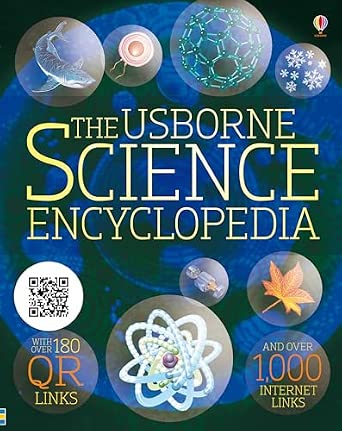 | Best Classic Single-Volume Reference | Format: Single-volume encyclopedia | Organization: Lookup-style reference structure | Visuals: Illustrated throughout | VIEW LATEST PRICE | See Our Full Breakdown |
| Simply Science (DK Simply) |  | Best for Youngest Learners | Format: Illustrated children’s science book | Publisher: DK (Simply series) | Target Audience: Young children / early learners | VIEW LATEST PRICE | See Our Full Breakdown |
| The Elements Book: A Visual Periodic Table Encyclopedia for Kids |  | Best Single-Topic Pick | Format: Visual encyclopedia (hardcover/print) | Publisher: DK Children | Subject Focus: Periodic table and chemical elements | VIEW LATEST PRICE | See Our Full Breakdown |
| Science Knowledge Encyclopedia for Children: Collection of 6 Books (Box Set) |  | Best Box Set Value | Format: Boxed set of 6 books | Content Type: Multi-topic children’s science encyclopedias | Target Audience: Young learners, elementary age | VIEW LATEST PRICE | See Our Full Breakdown |
| Knowledge Encyclopedia Human Body! Human Anatomy as You’ve Never Seen It Before |  | Best for Anatomy & Biology | Format: Hardcover visual encyclopedia | Publisher: DK (Knowledge Encyclopedia series) | Subject Focus: Human anatomy and physiology | VIEW LATEST PRICE | See Our Full Breakdown |
| Knowledge Encyclopedia Science! 2nd Edition |  | Best All-Ages General Reference | Format: Hardcover visual encyclopedia | Edition: 2nd Edition | Publisher: DK (Knowledge Encyclopedia series) | VIEW LATEST PRICE | See Our Full Breakdown |
| Knowledge Encyclopedia – Science for Children |  | Best First Science Encyclopedia | Format: Hardcover children’s encyclopedia | Audience: Early learners (approx. 5-8 years) | Approach: Topic-by-topic encyclopedia | VIEW LATEST PRICE | See Our Full Breakdown |
| National Geographic Kids Science Encyclopedia: Atom Smashing, Food Chemistry, Animals, Space, and More! |  | Best for Curious Middle-Grade Readers | Format: Illustrated encyclopedia (National Geographic Kids) | Audience: Approx. 8-12 years | Subjects covered: Chemistry, biology, space, animals, food science and more | VIEW LATEST PRICE | See Our Full Breakdown |
| Knowledge Encyclopedia Planet Earth! Our Exciting World As You’ve Never Seen It Before |  | Best Deep-Dive Single Subject | Format: Single-subject visual encyclopedia | Subject: Earth science: geology, geography, ecosystems | Audience: Broad — children through adults | VIEW LATEST PRICE | See Our Full Breakdown |
| Sciencia: Mathematics, Physics, Chemistry, Biology, and Astronomy for All |  | Best for Teens and Adult Learners | Format: Single-volume popular science survey | Audience: Teens and adults | Subjects covered: Mathematics, physics, chemistry, biology, astronomy | VIEW LATEST PRICE | See Our Full Breakdown |
| The Usborne Illustrated Dictionary of Science |  | Best Homework and Revision Reference | Format: Illustrated dictionary | Audience: Students approx. 11-16 years | Structure: Alphabetical definitions with diagrams | VIEW LATEST PRICE | See Our Full Breakdown |
| educational science reference book | Format | Audience | Visual Style |
|---|---|---|---|
| The Usborne Science Encycloped | Hardcover encyclopedia | — | — |
| Encyclopedia of Science | Box set, 8 books | Students and science enthusiasts | — |
| Super Simple Biology: The Ulti | Paperback study guide | — | — |
| The Science Book | Illustrated reference, DK Big Ideas series | Teens through adult general readers | — |
| Science Encyclopedia | Single-volume encyclopedia | Students and general science enthusiasts | — |
| Simply Science | Illustrated children’s science book | — | Colorful illustrations throughout |
| The Elements Book: A Visual Pe | Visual encyclopedia (hardcover/print) | — | Photographic and illustrated element entries |
| Science Knowledge Encyclopedia | Boxed set of 6 books | — | — |
| Knowledge Encyclopedia Human B | Hardcover visual encyclopedia | — | Detailed 3D-style anatomical illustrations |
| Knowledge Encyclopedia Science | Hardcover visual encyclopedia | — | Detailed illustrations and rendered graphics |
| Knowledge Encyclopedia | Hardcover children’s encyclopedia | Early learners (approx. 5-8 years) | Full-color illustrations throughout |
| National Geographic Kids Scien | Illustrated encyclopedia (National Geographic Kids) | Approx. 8-12 years | High-color photography and infographics |
| Knowledge Encyclopedia Planet | Single-subject visual encyclopedia | Broad — children through adults | 3D renders, cutaways and cross-sections |
| Sciencia: Mathematics | Single-volume popular science survey | Teens and adults | Text-forward with limited diagrams |
| The Usborne Illustrated Dictio | Illustrated dictionary | Students approx. 11-16 years | — |
More Details on Our Top Picks
The Usborne Science Encyclopedia: An In-depth Guide for Young Scientists
This option stands out for blending print and digital learning in a way no other entry here attempts. With over 180 video clips and 1,000 recommended websites, it turns a static reference into a springboard for independent exploration — something the Encyclopedia of Science box set, which is purely print, can’t match. Topics like gravity, flight, genes, and DNA are pitched at upper-elementary and middle-school readers, so it sits above The Elements Book in depth while remaining friendlier than adult-skewing titles like Sciencia. The tradeoff: very young children will find the text dense, and the multimedia links depend on web access that may go stale over time. This pick makes the most sense for families who want a book that grows alongside a curious kid’s screen habits.
Pros:- Blends print reference with 180+ video clips and curated web links
- Broad topic coverage spanning physics, genetics, and flight
- Encourages self-directed research skills for school projects
- Structured to serve readers across several grade levels
Cons:- Multimedia links require internet access and may become outdated
- Text density exceeds what very young children can absorb alone
Best for: Parents of curious 8–14 year olds who want a print reference supplemented by supervised online exploration
Not ideal for: Preschool or early-reader households — the reading level and topic depth assume confident independent readers
- Format:Hardcover encyclopedia
- Target Age:Approximately 8–14 years
- Topics Covered:Gravity, flight, genes, DNA, and general science
- Digital Extras:180+ video clips, 1,000 recommended websites
- Reading Level:Upper elementary to middle school
- Best Use:Home reference and school project research
Our verdict“A smart buy for families who want a science encyclopedia that actively pushes kids beyond the page.”
Encyclopedia of Science (Set of 8 Books)
Where most picks in this roundup are single volumes, this eight-book set takes a different approach: depth through division. Each volume handles its own territory, so a student researching chemistry doesn’t have to wrestle with one massive spine the way they would with The Science Book. Compared with the six-book Science Knowledge Encyclopedia for Children collection, this set aims slightly older, treating concepts and discoveries with more explanatory room rather than pure visual flash. The compromises are physical — eight volumes demand shelf space and can’t travel in a backpack the way Super Simple Biology can — and the set lacks the polished visual identity DK titles are known for. This is a buy for building a home study library, not for grabbing one quick answer.
Pros:- Eight separate volumes make individual subjects easier to navigate
- Covers concepts and discoveries in more depth than single-volume peers
- Suited to long-term reference use across school years
- Distributes weight and wear across the set
Cons:- Bulky footprint — far less portable than any single-volume option
- Visual design trails DK’s illustrated standards
Best for: Homeschooling families and students building a durable home science library across multiple subjects
Not ideal for: Anyone short on shelf space or needing a portable single-volume reference
- Format:Box set, 8 books
- Coverage:Multiple scientific disciplines and discoveries
- Audience:Students and science enthusiasts
- Portability:Low — designed for shelf reference
- Compared to Single Volumes:More subject depth, less convenience
- Best Use:Home library and extended study
Our verdict“Choose this set when the goal is a permanent multi-volume home library rather than one grab-and-go reference.”
Super Simple Biology: The Ultimate Bitesize Study Guide
Not every buyer needs an encyclopedia — some need revision, and this is where Super Simple Biology carves out a role nothing else in this lineup occupies. It compresses biology into bitesize, scannable sections, which makes it a pre-exam weapon rather than a shelf reference. Compared with The Science Book, it trades narrative breadth for speed: you can revisit a topic in minutes instead of wading through big-picture context. It also single-tracks on biology, unlike the everything-at-once Usborne Science Encyclopedia, so it won’t help a student who also needs physics or chemistry. The honest drawback is depth — condensed format means thin explanations, so learners encountering material for the first time may struggle. This pick makes the most sense as a second book, not the only one.
Pros:- Bitesize sections enable rapid review sessions
- Simplifies complex biology into digestible summaries
- Lightweight and easy to carry to study sessions
- Well suited to exam-prep workflows
Cons:- Condensed explanations can’t support first-time learning
- Biology-only scope excludes other sciences
Best for: Middle and high school students revising biology before tests who already have a main textbook
Not ideal for: First-time learners or students needing multi-subject coverage — the condensed, biology-only scope will leave gaps
- Format:Paperback study guide
- Subject:Biology only
- Structure:Bitesize topic sections
- Primary Use:Exam review and quick revision
- Depth Level:Concise overview, not advanced
- Portability:High — travel-friendly
Our verdict“A revision tool, not a library — buy it to review faster, not to learn from scratch.”
The Science Book (DK Big Ideas)
This is the pick I’d hand to a reader who wants to understand how science’s big ideas connect — evolution, relativity, quantum theory — rather than memorize facts. Its accessible big-idea framing gives it wider appeal than the age-targeted Usborne Science Encyclopedia, serving teens through adults, while DK’s diagrams keep it visually engaging where drier encyclopedias lose casual readers. Compared with the eight-volume Encyclopedia of Science set, it trades granular subject coverage for a coherent narrative arc, which is exactly the point. The tradeoff runs the other way too: readers wanting rigorous technical detail or homework-answer depth will find the explanations approachable to a fault. For curious generalists, though, this format beats a traditional encyclopedia on readability every time.
Pros:- Connects major scientific concepts into a coherent narrative
- Illustrations and diagrams make abstract ideas visual
- Broad age appeal from teens to adults
- Readable structure suited to cover-to-cover browsing
Cons:- Explanations prioritize accessibility over technical rigor
- Less useful as a quick-lookup reference than a true encyclopedia
Best for: Teens and adults who want a readable, visually engaging tour of science’s landmark ideas
Not ideal for: Students needing a lookup-style reference for specific homework answers or technical depth
- Format:Illustrated reference, DK Big Ideas series
- Approach:Big-idea narrative with diagrams
- Audience:Teens through adult general readers
- Coverage:Fundamental concepts and discoveries across sciences
- Reading Style:Browsable cover to cover
- Depth Level:Accessible, not technically rigorous
Our verdict“The strongest all-around choice for readers who want to understand science’s big ideas, not just look them up.”
Science Encyclopedia
When the priority is one dependable volume that answers homework questions on the spot, this encyclopedia does the traditional job well: detailed explanations paired with illustrations, arranged for lookup rather than leisurely reading. Unlike The Science Book, which frames science as a story of ideas, this is organized as a conventional A-to-Z style reference, which suits fact-finding better than narrative browsing. It also skips the digital scaffolding of the Usborne Science Encyclopedia, meaning nothing here depends on web links that might expire — but it also forgoes that multimedia payoff. Compared with the eight-book set, it sacrifices per-subject depth in exchange for grab-it-off-the-shelf convenience. Ambiguity around edition details is the main shopping caveat, so buyers should confirm they’re getting the printing they expect.
Pros:- Detailed explanations supported by clear illustrations
- Single-volume format keeps answers fast to find
- No dependence on web links or digital access
- Works across student and enthusiast reading levels
Cons:- Less contextual storytelling than big-idea style titles
- Edition and publication details are unclear, so verify before buying
Best for: Families and students who want a self-contained, no-internet-required desk reference for schoolwork
Not ideal for: Readers wanting narrative context or digital extras — this is pure lookup-style reference material
- Format:Single-volume encyclopedia
- Organization:Lookup-style reference structure
- Visuals:Illustrated throughout
- Digital Components:None — fully self-contained
- Audience:Students and general science enthusiasts
- Portability:Moderate — one volume, desk-oriented
Our verdict“A reliable pick when the job is straightforward — one book, one shelf, instant answers.”
Simply Science (DK Simply)
Simply Science earns its spot as the gentlest entry point in this lineup. Where The Elements Book assumes kids can already grasp chemistry concepts, this title meets children at the very beginning, pairing colorful illustrations with simple hands-on experiments that turn abstract ideas into playful discovery. That experiment component is what sets it apart from more passive encyclopedias like the Knowledge Encyclopedia Human Body!, which is rich in imagery but offers nothing to do. The tradeoff is real, though: compared with Knowledge Encyclopedia Science! 2nd Edition, the depth here is thin, so a curious ten-year-old will outgrow it quickly. This pick makes the most sense for parents building a first science library rather than a lasting reference shelf.
Pros:- Simple experiments encourage active participation rather than passive reading
- Bright, approachable illustrations lower the intimidation factor for beginners
- Broad introduction to core scientific concepts in one friendly volume
- Well suited to shared reading between parent and child
Cons:- Lacks the detailed scientific depth older students need for schoolwork
- No stated age range, making it hard to judge fit before buying
Best for: Parents of preschool and early elementary children who want a friendly first science book with activities, not just facts
Not ideal for: Families with older kids or advanced readers — the conceptual depth is too shallow to serve as a genuine reference
- Format:Illustrated children’s science book
- Publisher:DK (Simply series)
- Target Audience:Young children / early learners
- Content Type:Fundamental science concepts with simple experiments
- Visual Style:Colorful illustrations throughout
- Series:DK Simply
Our verdict“Choose this as a spark for very young scientists, not as a reference they’ll return to for years.”
The Elements Book: A Visual Periodic Table Encyclopedia for Kids
Rather than skimming every branch of science, The Elements Book goes deep on one: the periodic table. That focus is its greatest strength. Compared with the broad-but-shallow coverage of Knowledge Encyclopedia Science! 2nd Edition, this volume gives each element its own visual treatment, which helps kids actually remember what argon or zinc is instead of glossing past it. It also complements Simply Science well — where that book introduces general curiosity, this one rewards a child who has already shown a specific interest in chemistry. The drawback is obvious: it is a supplement, not a core reference. A buyer expecting the all-subjects breadth of the Science Knowledge Encyclopedia box set will find this covers exactly one domain, and older students may find the explanations too elementary.
Pros:- Focused deep treatment of the periodic table rather than scattered overview
- Visual element-by-element layout aids memory and browsing
- Engaging facts keep reluctant readers turning pages
- Clear explanations tailored to young learners
Cons:- Too basic for middle schoolers and up studying formal chemistry
- Single-topic scope means it can’t serve as a standalone reference
Best for: Kids aged roughly 7–12 who have shown a specific fascination with chemistry and want the periodic table made visual
Not ideal for: Buyers wanting a general-purpose science reference — this covers only the elements, not biology, physics, or earth science
- Format:Visual encyclopedia (hardcover/print)
- Publisher:DK Children
- Subject Focus:Periodic table and chemical elements
- Target Audience:Elementary and middle-grade children
- Visual Style:Photographic and illustrated element entries
- Structure:Element-by-element visual reference
Our verdict“A winning supplemental pick for chemistry-curious kids, but pair it with a broader encyclopedia for full coverage.”
Science Knowledge Encyclopedia for Children: Collection of 6 Books (Box Set)
This six-volume box set takes the opposite approach from The Elements Book: instead of depth in one area, it spreads across multiple science disciplines, making it the strongest option here for building a home library in one purchase. Homeschooling families get the most from it, since separate volumes can be assigned by topic the way the single-volume Knowledge Encyclopedia Science! 2nd Edition never allows. Compared with DK’s standalone titles, though, the production polish is harder to verify — the listing provides no details on individual books, so buyers are trusting the publisher’s curation sight-unseen. That opacity is the set’s real weakness: unlike Simply Science, where you know exactly what you’re getting, here the reading level and illustration quality per volume remain a gamble.
Pros:- Six separate volumes allow topic-by-topic study and sharing between kids
- Broad coverage across multiple science disciplines in one purchase
- Well suited to homeschool curricula and classroom libraries
- Box format keeps the collection organized on a shelf
Cons:- No details provided about the individual books’ content or reading level
- Difficult to compare quality against established single-volume encyclopedias before buying
Best for: Homeschooling parents and classroom teachers who want broad multi-subject coverage across separate themed volumes
Not ideal for: Buyers who want to vet content before purchasing — the lack of per-book details makes the set a bit of a leap of faith
- Format:Boxed set of 6 books
- Content Type:Multi-topic children’s science encyclopedias
- Target Audience:Young learners, elementary age
- Use Case:Homeschooling and classroom reference
- Coverage:Multiple science disciplines across six volumes
- Packaging:Collection box set
Our verdict“A sensible bulk buy for structured learning environments, provided you’re comfortable buying without per-volume details.”
Knowledge Encyclopedia Human Body! Human Anatomy as You’ve Never Seen It Before
Knowledge Encyclopedia Human Body! stands out for doing one subject exceptionally well, much like The Elements Book does for chemistry — but here the subject is human anatomy, rendered with the cross-sectional and 3D-style visuals DK is known for. Compared with Super Simple Biology, which condenses topics for exam revision, this volume prioritizes visual understanding over study-guide brevity, making it better for browsing and fascination than for test prep. The detail level is genuinely high — which cuts both ways. A casual reader may find the anatomical depth more than they wanted, whereas the same depth is exactly why it stays useful into the teen years. This option is better suited to a child who lingers on the body pages of a general encyclopedia and wants the full story.
Pros:- Stunning visual renderings make complex anatomy genuinely understandable
- Detailed enough to remain useful through the teenage years
- Single-subject depth surpasses what general encyclopedias offer on the body
- Appeals across a wide age range, including adults
Cons:- Content may be too dense and detailed for casual or very young readers
- Covers only human biology, so it can’t replace a general science reference
Best for: Kids, teens, and adults fascinated by how the body works who want visually rich anatomical detail
Not ideal for: Casual young readers who only want light science facts — the anatomical detail can overwhelm
- Format:Hardcover visual encyclopedia
- Publisher:DK (Knowledge Encyclopedia series)
- Subject Focus:Human anatomy and physiology
- Target Audience:Broad range, approximately 8 years to adult
- Visual Style:Detailed 3D-style anatomical illustrations
- Series:DK Knowledge Encyclopedia
Our verdict“The definitive anatomy pick for this roundup — buy it for the body-obsessed learner and skip it if you need broad coverage.”
Knowledge Encyclopedia Science! 2nd Edition
If one book has to cover everything, this is the strongest generalist in this batch. Knowledge Encyclopedia Science! 2nd Edition spans physics, chemistry, biology, and beyond with updated facts and detailed illustrations, giving it the breadth that single-subject titles like Knowledge Encyclopedia Human Body! deliberately sacrifice. The second-edition refresh matters for a reference book: science facts age, and an older encyclopedia quietly teaches outdated information. Compared with the six-volume Science Knowledge Encyclopedia box set, this single volume trades modular organization for convenience — everything in one place, no hunting for the right book. The compromises are familiar ones for broad coverage: no topic gets the depth of a dedicated volume, and the listing is vague about what the new edition actually changes, so buyers upgrading from the first edition are buying partly on faith.
Pros:- Broad coverage of all major science disciplines in one volume
- Updated second-edition content keeps facts current
- Detailed illustrations make complex concepts accessible across age groups
- Single-volume format is easy to store, browse, and share
Cons:- Shallow on any single topic compared with dedicated single-subject books
- Publisher provides little clarity on what the second edition actually updates
Best for: Families and learners of mixed ages who want one up-to-date, visually rich science reference covering all major disciplines
Not ideal for: Students needing deep single-subject study — breadth here comes at the cost of specialized depth
- Format:Hardcover visual encyclopedia
- Edition:2nd Edition
- Publisher:DK (Knowledge Encyclopedia series)
- Subject Focus:General science across multiple disciplines
- Target Audience:All ages, family reference
- Visual Style:Detailed illustrations and rendered graphics
- Content Currency:Updated scientific facts and figures
Our verdict“The best default general reference in this batch — pick it when you want current, all-purpose coverage instead of specialist depth.”
Knowledge Encyclopedia – Science for Children
For a child’s very first dip into science reference books, this option stands out for its simple, approachable framing. Where the National Geographic Kids Science Encyclopedia packs in dense facts across many disciplines, this one paces itself for younger readers who are still building vocabulary, which makes it a gentler on-ramp rather than a direct competitor. The colorful illustration-led layout means kids can browse without adult help, turning idle flipping into accidental learning.
The tradeoff is ceiling: compared with the Usborne Illustrated Dictionary of Science, the explanations here are thinner, so a strong reader will outgrow it within a couple of years. It also covers fewer topics in depth than full encyclopedias in this roundup.
Pros:- Illustration-led pages that work for pre-readers and early readers
- Simple explanations that don’t require adult supervision
- Builds curiosity through bite-sized browsing rather than chapters
- Lighter and less overwhelming than multi-volume encyclopedias
Cons:- Explanations are shallow compared with fuller encyclopedias like the Usborne Science Encyclopedia
- Kids will outgrow it within a few years
- Fewer topics covered than wider-ranging competitors
Best for: Parents buying a first science reference for children roughly 5-8 years old who want browsing-friendly, picture-driven content
Not ideal for: Families with older or advanced readers — the simplified explanations will feel too basic and quickly abandoned
- Format:Hardcover children’s encyclopedia
- Audience:Early learners (approx. 5-8 years)
- Approach:Topic-by-topic encyclopedia
- Visual style:Full-color illustrations throughout
- Reading level:Beginner, simple vocabulary
- Coverage:Broad general science topics
Our verdict“This pick makes the most sense as a child’s first science book, not a lasting reference for the whole family.”
National Geographic Kids Science Encyclopedia: Atom Smashing, Food Chemistry, Animals, Space, and More!
This is the pick that hits the sweet spot between entertainment and real content. Compared with the Knowledge Encyclopedia – Science for Children, it stretches further up the age range — food chemistry and atom-smashing are genuinely meatier subjects — while keeping the trademark National Geographic visual energy that keeps kids flipping pages. Compared with the Usborne Illustrated Dictionary of Science, it reads more like a magazine-style exploration and less like a lookup tool.
The compromise is structure: it’s built for browsing and fascination, not systematic study, so a student who needs definitions or curriculum-aligned revision will find it scattered. Older middle schoolers may also find some sections skim the surface.
Pros:- Unusually wide topic range from chemistry to space to zoology
- Signature National Geographic photography and graphics
- Fun-fact tone that sustains reluctant readers’ attention
- More substantive than most picture-first children’s encyclopedias
Cons:- Browsing format makes it poor as a lookup or revision reference
- Content can feel too basic for confident older students
- No systematic chapter structure for classroom use
Best for: Curious readers aged roughly 8-12 who enjoy fact-dense, magazine-style science books rather than textbooks
Not ideal for: Students needing a structured study or revision reference — the fact-led format isn’t organized for looking things up quickly
- Format:Illustrated encyclopedia (National Geographic Kids)
- Audience:Approx. 8-12 years
- Subjects covered:Chemistry, biology, space, animals, food science and more
- Visual style:High-color photography and infographics
- Structure:Fact-led, browsable sections
- Reading level:Middle-grade
Our verdict“This model is better suited to feeding curiosity at home than supporting schoolwork, and it does that job brilliantly.”
Knowledge Encyclopedia Planet Earth! Our Exciting World As You’ve Never Seen It Before
Most entries in this roundup spread themselves across all of science; this one goes deep on a single subject, and that focus pays off. The rendered cross-sections and cutaway visuals of Earth’s geology and ecosystems are more dramatic than anything in the generalist National Geographic Kids Science Encyclopedia, and the depth of information about tectonics, weather, and habitats sits a clear step above. It pairs naturally with the Knowledge Encyclopedia Human Body! for families who prefer specialist volumes over one giant book.
The flip side of specialization is obvious: if you want chemistry, space, or physics, they simply aren’t here. Buyers wanting one book to cover everything should skip this in favor of a general encyclopedia.
Pros:- Exceptional 3D-style cutaway and cross-section imagery
- Genuine depth on geology, geography and ecosystems
- Appeals across a wide age range, from kids to adults
- Stronger visuals than most generalist encyclopedias in this roundup
Cons:- Earth science only — no chemistry, physics or general science coverage
- Heavier and more expensive-feeling commitment than a general kids’ encyclopedia
- Not aligned with any curriculum structure
Best for: Families and students who want a visually rich, in-depth Earth science reference to complement general encyclopedias
Not ideal for: Anyone seeking a single all-in-one science reference — the single-subject focus leaves most sciences uncovered
- Format:Single-subject visual encyclopedia
- Subject:Earth science: geology, geography, ecosystems
- Audience:Broad — children through adults
- Visual style:3D renders, cutaways and cross-sections
- Depth:In-depth single topic
- Publisher series:DK Knowledge Encyclopedia
Our verdict“This pick makes the most sense as a specialist second book for readers already captivated by how the planet works.”
Sciencia: Mathematics, Physics, Chemistry, Biology, and Astronomy for All
While the rest of this lineup is aimed at children, Sciencia serves the reader who has outgrown illustration-led encyclopedias but still wants an accessible, unified tour of the sciences. Compared with The Usborne Illustrated Dictionary of Science, the writing here assumes genuine adult curiosity — think compact essays connecting math, physics, chemistry, biology and astronomy into one narrative rather than definitions with pictures.
That maturity is also its limitation. Younger children will find it dry, and compared with The Science Book (DK Big Ideas) there are fewer diagrams to carry the explanations, so it leans on the reader’s willingness to work through text. It’s also a survey, not a substitute for textbooks.
Pros:- Covers five core sciences in one coherent, connected volume
- Written for adults and teens, not simplified for children
- Compact single-volume format, easy to carry and read cover to cover
- Connects disciplines rather than isolating them in silos
Cons:- Fewer illustrations and diagrams than DK or Usborne alternatives
- Shallow on technical depth for anyone wanting to actually study a subject
- Dry presentation for readers who rely on visuals
Best for: Teens and adults who want a compact, readable overview of all five core sciences without returning to kids’ books
Not ideal for: Children and visual learners — the text-forward, diagram-light approach will lose younger readers quickly
- Format:Single-volume popular science survey
- Audience:Teens and adults
- Subjects covered:Mathematics, physics, chemistry, biology, astronomy
- Approach:Connected essays across disciplines
- Visual style:Text-forward with limited diagrams
- Reading level:Accessible adult non-fiction
Our verdict“This option stands out as the grown-up’s entry point to science basics — buy it for yourself, not your eight-year-old.”
The Usborne Illustrated Dictionary of Science
This is the only true dictionary in the batch, and that changes how it should be used. Where the National Geographic Kids Science Encyclopedia is built for browsing, this is built for looking things up fast — a student mid-homework needs a definition and a diagram in thirty seconds, not a spread of fun facts. The illustrated definitions make it a natural companion to the fuller Usborne Science Encyclopedia: one explains, the other defines.
The tradeoff is narrative. There’s no story or flow to pull a reluctant reader through, so as a bedside browsing book it falls flat. Advanced students will also hit its ceiling on tricky topics, where the concise format can’t carry full explanations.
Pros:- Fast alphabetical lookup, ideal during homework
- Clear definitions reinforced with supporting illustrations
- Covers scientific vocabulary across multiple disciplines
- More curriculum-friendly than fact-led encyclopedias
Cons:- Concise entries can’t handle advanced or nuanced topics
- No browsing appeal — dry as a cover-to-cover read
- Superseded in depth by the full Usborne Science Encyclopedia
Best for: Secondary school students who need a quick-lookup reference for homework and revision
Not ideal for: Reluctant readers looking for an engaging browsable book — the dictionary format has no narrative pull
- Format:Illustrated dictionary
- Audience:Students approx. 11-16 years
- Structure:Alphabetical definitions with diagrams
- Coverage:Core scientific terms across physics, chemistry and biology
- Primary use:Homework and revision lookup
- Publisher:Usborne
Our verdict“This pick makes the most sense on a student’s desk rather than a coffee table — it’s a tool first, a book second.”

How We Picked
I evaluated each book against four criteria that actually predict whether a reference book gets used or gathers dust. Accuracy and currency came first: science references have a shelf life, so editions that were recently revised or avoid fast-moving claims ranked higher. Age-appropriate depth mattered just as much — a book can be factually excellent and still fail if it’s pitched wrong for its audience, so I judged each title against the reading level and attention span of its intended reader. Navigation and lookup design separated true references from cover-to-cover reads: indexed, well-organized, glossary-equipped books scored higher because reference buyers reach for a book to answer a question in two minutes, not to finish a chapter.
Beyond content, I weighed durability and format — hardcovers and box sets cost more upfront but survive a decade of school use — and versatility across the household, favoring books that a 9-year-old, a 14-year-old, and a curious parent could all open without frustration. Ranking then followed a simple logic: the best overall pick had to serve the widest audience with the fewest compromises, value picks had to deliver most of that utility for less commitment, and specialist picks earned their places by doing one job — anatomy, elements, exam prep — better than any generalist could.
Factors to Consider When Choosing Educational Science Reference Books
Choosing between these books comes down to matching a few structural differences to your reader. Before buying, think through the factors below — they explain most of the regret I see in this category.Single Volume vs. Box Set
The biggest structural decision is whether to buy one thick encyclopedia or a multi-book set, and each format fails differently. A single volume like The Science Book keeps everything in one place and travels easily to a desk or library, but topics get compressed to a page or two, which frustrates a student mid-project. Box sets such as the 8-book Encyclopedia of Science give each discipline room to breathe and let a child own ‘their’ volume, but they cost more, take up shelf space, and often go half-read because no single book feels complete on its own. A common mistake is assuming more books equals more content — sometimes a set simply slices one encyclopedia’s worth of material across more spines. If your reader dives deep into one favorite subject, sets win; if they graze across topics, one strong volume usually serves better.
Reading Level and Age Fit
Age ratings on science books are rough guides at best, and mismatching them is the most frequent buying error in this category. A book labeled for ages 8–12 may still assume vocabulary or abstract reasoning a younger child lacks, particularly with topics like genetics or atomic structure that can’t be fully shown in pictures. Conversely, buying ‘down’ wastes money on a book a strong reader outgrows within a year. The practical test: read one full page aloud together before committing, and ask the child to explain it back in their own words. Also remember that visual density compensates for text difficulty — books like the DK Knowledge Encyclopedia line carry harder concepts than their reading level suggests because the imagery carries part of the explanatory load.
Reference Use vs. Cover-to-Cover Reading
Not every science book in this category is actually a reference book, and confusing the two purposes leads to disappointment. True references — the Usborne Illustrated Dictionary of Science, for instance — are built for fast lookup: alphabetical organization, dense entries, minimal narrative. Big-idea surveys like The Science Book (DK Big Ideas) are structured as a reading journey through chained concepts, which makes them engaging but slower when a homework question needs answering in the next ten minutes. Think honestly about how the book will be used. If it lives beside the homework desk, prioritize index quality and entry independence. If it’s bedtime or weekend browsing material, narrative flow and visual hooks matter more, and the dictionary-style books will feel dry no matter how good they are.
Curriculum Alignment for Students
If the book supports schoolwork, alignment matters more than raw quality. Study-guide formats like Super Simple Biology are built around syllabus topics — cells, genetics, ecology — with diagrams and summary boxes that mirror how exams test the material, which a general encyclopedia simply doesn’t do. General references excel at context and curiosity but often present information at the wrong depth or in the wrong vocabulary for a specific grade’s curriculum. One warning: curricula differ between school systems and change over time, so a ‘curriculum-friendly’ label from another country’s publisher may not match your child’s syllabus exactly. For exam-year students, a subject-specific study guide plus a general encyclopedia for background is usually a stronger pairing than either alone.
Visual Style and Illustration Quality
Illustration is not decoration in science reference books — it’s often the primary explanation. Rendered cross-sections (as in the Human Body encyclopedia) can communicate anatomy in seconds what paragraphs cannot, and photographed or rendered elements make abstract chemistry tangible. But visual styles differ meaningfully: some books use clean diagrammatic art that supports learning, while others lean on busy, cartoonish layouts that entertain without informing. Check whether images carry captions that stand alone, because a child will often browse pictures first and read text second. Also note that heavily illustrated spreads age faster visually than text entries, so if you want a book to last a decade, favor restrained, diagram-led design over trend-driven layouts.
Longevity and Build Quality
A reference book that survives needs to survive physically and intellectually. Hardcovers with sewn or reinforced bindings handle a decade of school use; paperback box sets are cheaper but rarely survive being carried in a backpack for a year. On the content side, avoid books making claims about fast-moving fields — AI, climate data, space missions — unless the edition is recent, because those sections date fastest. Foundational science (periodic table mechanics, Newtonian physics, cell biology) barely changes, so books anchored in fundamentals hold value far longer than ones chasing current events. If you’re buying for multiple children over many years, spending more on a durable, fundamentals-focused hardcover is usually the smarter long-term move than replacing a cheaper set twice.
Frequently Asked Questions
Should I buy a general science encyclopedia or subject-specific books?
It depends on the reader’s stage rather than their interest level. A general encyclopedia like The Science Book (DK Big Ideas) or the Usborne Science Encyclopedia makes sense when a child is still exploring — it exposes them to physics, biology, and chemistry together and lets interests emerge naturally. Subject-specific books like Super Simple Biology or the Human Body encyclopedia win once a genuine focus exists, because they go two or three levels deeper than any generalist can afford to. For school support specifically, subject books usually align better with how topics are actually taught and tested. Many families end up with one strong general encyclopedia plus one or two subject titles added over time, which spreads the cost and matches how interests genuinely develop.
Are box sets worth the extra cost compared to a single encyclopedia?
Box sets deliver better value only under specific conditions: multiple children, real shelf space, and a reader who won’t feel overwhelmed by volume count. Per-book, sets like the 8-volume Encyclopedia of Science or the 6-book Children’s Collection cost less than buying equivalent single titles, and separate volumes are easier for a child to handle and carry. The catch is that some sets repackage the same material a single encyclopedia contains, sliced thinner across more spines — check whether each book covers a full discipline or just reorganizes general content. Sets also lose coherence for homework, since a topic that spans disciplines may be split awkwardly across volumes. If your child fixes on one subject, a set lets them burrow; if they graze, one comprehensive volume usually serves better.
What age is too old for ‘kids’ science encyclopedias?
Roughly 14 to 15 is the ceiling for most children’s encyclopedias, though strong readers outgrow them earlier. The National Geographic Kids and DK Knowledge Encyclopedia lines target 9–14, and by mid-secondary school the explanations start feeling simplified and the visual style juvenile, which can quietly put teens off using the book at all. At that point, titles like The Science Book (DK Big Ideas) or Sciencia step in with adult-level depth while remaining accessible to a motivated beginner. There’s no harm in keeping a kids’ encyclopedia around for quick visual reference, but a 15-year-old revising for exams will get more from a study guide or adult survey. The mistake to avoid is assuming a bright 11-year-old should skip straight to adult books — vocabulary gaps make them abandon reading entirely.
How often do science reference books need replacing?
Less often than most buyers fear, provided you choose the right book. Core science — the periodic table’s structure, cell biology, classical physics, human anatomy — changes on decade timescales, so a well-built encyclopedia of fundamentals stays useful for many years and can be handed down between siblings. What dates quickly is anything tied to current events: space missions, climate statistics, computing, and medical breakthroughs, which is why checking a book’s edition year matters more for some titles than others. Revised editions, like the second edition of Knowledge Encyclopedia Science!, exist partly to refresh those perishable sections. A sensible rule: buy fundamentals-focused books to keep, and treat fast-moving-topic books as shorter-term purchases you’ll replace in a few years.
Is a visual encyclopedia enough for schoolwork, or do I need a study guide too?
They do different jobs, and serious students usually need both. Visual encyclopedias like the DK Knowledge Encyclopedia titles are outstanding for building understanding — rendered diagrams and cross-sections explain concepts in ways text alone can’t — but they aren’t organized around curricula, so they don’t tell a student what to revise or how it will be examined. Study guides like Super Simple Biology mirror syllabus structure, condense definitions into memorable form, and flag the terminology exams expect, which is exactly what revision requires. The efficient pattern: use the encyclopedia to understand a topic the first time, then the study guide to consolidate and revise it. If budget forces a single choice during an exam year, take the study guide; if it’s a general interest purchase, the encyclopedia gives far more lasting value.
Conclusion
Matching the right book to the right reader matters more than any single title’s quality. For best overall, The Science Book (DK Big Ideas) covers the most ground at a depth teens and adults can genuinely use, with the Usborne Science Encyclopedia taking that honor for younger households. The best value picks are the box sets — the 8-book Encyclopedia of Science and 6-book Children’s Collection — for families with shelf space and multiple kids, while Super Simple Biology is the value choice for exam students who need focused revision. For best premium, the Knowledge Encyclopedia line, especially the Human Body and Science! editions, delivers rendered visuals and production quality nothing else in this lineup matches. Beginners and younger readers should start with the National Geographic Kids Science Encyclopedia or The Elements Book, which spark curiosity before demanding it. Specific needs: choose the Usborne Illustrated Dictionary of Science for homework lookup, Sciencia for adult readers who want real depth, Knowledge Encyclopedia Planet Earth! for earth-science obsessives, and Simply Science for absolute newcomers to scientific reading. Whatever you pick, buy for the reader you actually have — age fit beats content volume every time.
Halloween Picks
halloween
As an affiliate, we earn on qualifying purchases.