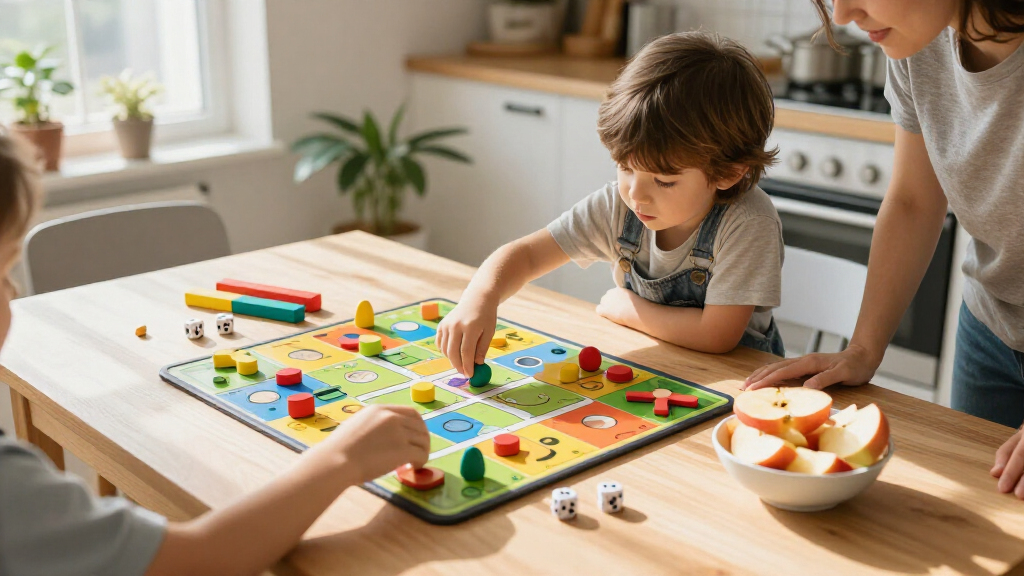

Educational board games for kids can make early reading, math, memory, and social skills part of family play. My best overall pick is ThinkFun Zingo!, which gives pre-readers and early readers a clear, repeatable way to connect words with pictures. For broader learning, Scholastic Race Across the USA brings geography into a shared challenge, while Jax Sequence for Kids adds pattern recognition and planning. The main tradeoff is between focused practice that suits a particular age or skill and games with broader replay appeal. Read on for the full breakdown and help matching a game to your child’s age, interests, and learning goals.

Get school and study supplies delivered free — and shop member deals
- Fast, free delivery on millions of items
- Access to Prime Big Deal Days deals on October 6–7
- Prime Video, Amazon Music and more included
Key Takeaways
- Zingo! leads for early literacy because its picture-and-word matching format gives young children a concrete way to practice without relying on long instructions.
- Race Across the USA stands apart for older kids: its geography focus suits children ready for more facts and strategy than preschool matching games provide.
- Learning goals vary sharply across the lineup—from counting in Hi Ho! Cherry-O and Number Hunter to vocabulary in Scrabble Junior and Sentence Search.
- Simple rules support younger players but can limit replay; Candy Land and Chutes and Ladders are easier to start than games that ask children to read, plan, or explain.
- Social learning has a distinct place: Junior Learning’s four-game set focuses on social skills, while Guess Who? Plus practices questions and deduction through play.
| Hasbro Gaming Candy Land Board Game for Kids, Ages 3 and Up |  | Best for First-Time Players | Brand: Hasbro Gaming | Game: Candy Land | Recommended age: 3 years and up | VIEW LATEST PRICE | See Our Full Breakdown |
| Hasbro Gaming Hi Ho! Cherry-O Board Game for 2–4 Players, Ages 3+ | 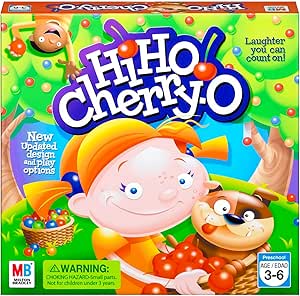 | Best for Early Counting Practice | Brand: Hasbro Gaming | Players: 2–4 | Recommended age: 3 years and up | VIEW LATEST PRICE | See Our Full Breakdown |
| Operation Electronic Board Game by Hasbro Gaming |  | Best for Fine-Motor Skills | Manufacturer: Hasbro Gaming | Age range: 6+ | Players: 1 or more | VIEW LATEST PRICE | See Our Full Breakdown |
| Chuckle & Roar Alphabet Matching Memory Game for Kids Ages 3+ |  | Best for Letter Recognition on the Go | Brand: Chuckle & Roar | Recommended age: 3–5 years | Game type: Alphabet matching memory game | VIEW LATEST PRICE | See Our Full Breakdown |
| Hasbro Gaming Chutes and Ladders Board Game |  | Best for Number Recognition and Group Play | Brand: Hasbro Gaming | Players: 2–4 | Recommended age: 3 years and up | VIEW LATEST PRICE | See Our Full Breakdown |
| Jax Sequence for Kids Strategy Game, 2–4 Players |  | Best for Early Strategy | Brand: Jax | Players: 2–4 | Recommended age: 3–6 years | VIEW LATEST PRICE | See Our Full Breakdown |
| ThinkFun Zingo! Bingo Game for Pre-Readers and Early Readers, Ages 4+ |  | Best for Early Language Practice | Brand: ThinkFun | Age range: 4 years and up | Players: Up to 7 | VIEW LATEST PRICE | See Our Full Breakdown |
| Hasbro Gaming Scrabble Junior Board Game |  | Best for Growing Spellers | Brand: Hasbro Gaming | Players: 2–4 | Age range: 5 years and up | VIEW LATEST PRICE | See Our Full Breakdown |
| Scholastic Race Across the USA Geography Board Game for Kids, Ages 8+ |  | Best for U.S. Geography | Recommended age: 8+ | Game type: Geography board game | Objective: Visit six states, answer questions, and return to your home state | VIEW LATEST PRICE | See Our Full Breakdown |
| Skillmatics Sentence Search Educational Board Game for Kids |  | Best for Sentence Building | Brand: Skillmatics | Age range: 5–8 years | Included components: 120+ color-coded word tiles, 20 wooden sentence-builder tiles, 2 cloth bags, instruction manual | VIEW LATEST PRICE | See Our Full Breakdown |
| Number Hunter Math Board Game for Kids Ages 5–7 |  | Best for Active Early-Math Practice | Recommended age: 5–7 years | Skills: Addition, subtraction, even and odd numbers, critical thinking, and problem-solving | Players: Not specified | VIEW LATEST PRICE | See Our Full Breakdown |
| Hasbro Gaming Guess Who? Plus Board Game with People and Pet Cards |  | Best for Yes-or-No Reasoning | Players: 2 | Recommended age: 6+ | Character sets: People and pets | VIEW LATEST PRICE | See Our Full Breakdown |
| Mathemagical World Addition & Subtraction Math Board Game for Kids |  | Best for Adjustable Math Practice | Players: 2–4 | Recommended age: 5+ | Difficulty levels: 2 | VIEW LATEST PRICE | See Our Full Breakdown |
| Junior Learning Social Skills Board Games, 4 Games for Kids Ages 5–8 |  | Best for Social-Emotional Learning | Age range: 5–8 years | Suggested grades: 1–2 | Educational focus: Empathy, friendship, manners, and emotional understanding | VIEW LATEST PRICE | See Our Full Breakdown |
| educational board games for kid | Recommended age | Players | Brand |
|---|---|---|---|
| Hasbro Gaming Candy Land Board | 3 years and up | — | Hasbro Gaming |
| Hasbro Gaming Hi Ho! Cherry-O | 3 years and up | 2–4 | Hasbro Gaming |
| Operation Electronic Board Gam | — | 1 or more | — |
| Chuckle & Roar Alphabet Matchi | 3–5 years | — | Chuckle & Roar |
| Hasbro Gaming Chutes and Ladde | 3 years and up | 2–4 | Hasbro Gaming |
| Jax Sequence for Kids Strategy | 3–6 years | 2–4 | Jax |
| ThinkFun Zingo! Bingo Game for | — | Up to 7 | ThinkFun |
| Hasbro Gaming Scrabble Junior | — | 2–4 | Hasbro Gaming |
| Scholastic Race Across the USA | 8+ | — | — |
| Skillmatics Sentence Search Ed | — | — | Skillmatics |
| Number Hunter Math Board Game | 5–7 years | Not specified | — |
| Hasbro Gaming Guess Who? Plus | 6+ | 2 | — |
| Mathemagical World Addition & | 5+ | 2–4 | — |
| Junior Learning Social Skills | — | — | — |
More Details on Our Top Picks
Hasbro Gaming Candy Land Board Game for Kids, Ages 3 and Up
Candy Land is the gentlest starting point in this group: children follow colored cards along a picture-filled path, so they can join in before they can read or count confidently. Its simple race-to-the-castle goal makes turns easy to follow, while the changing destinations give young players something to anticipate. Compared with Chutes and Ladders, it leans more on color matching than number recognition; compared with Hi Ho! Cherry-O, it asks for less counting and has fewer opportunities to practice arithmetic. That simplicity is its main strength and its limit. Children who are ready to make choices or solve more involved challenges may outgrow the play quickly, and the game offers little direct skill practice beyond recognizing colors and following a sequence.
Pros:- No reading is needed to take a turn.
- Color-based movement is accessible to very young players.
- Illustrated destinations help keep the route engaging.
- Simple rules make it easy to start a family game.
Cons:- Offers less counting practice than Chutes and Ladders or Hi Ho! Cherry-O.
- Limited decision-making can make repeat play less engaging for older children.
- Its learning focus is narrow, centered mainly on colors and turn-taking.
Best for: Families introducing a first board game to preschoolers who are not yet reading and benefit from simple color-based turns.
Not ideal for: Parents seeking sustained number practice, strategic choices, or a game that will challenge older elementary-age children.
- Brand:Hasbro Gaming
- Game:Candy Land
- Recommended age:3 years and up
- Reading required:No
- Game pieces:Gingerbread man pawns
- Objective:Race to the castle
Our verdict“Choose Candy Land as a low-pressure first game for preschoolers, but pick a counting-focused option if number practice is the priority.”
Hasbro Gaming Hi Ho! Cherry-O Board Game for 2–4 Players, Ages 3+
Hi Ho! Cherry-O gives preschoolers a clear reason to count: collect fruit into a basket, with the first player to gather 10 cherries winning. The different fruit pieces and spinner turns also create basic chances to add or subtract, making its learning focus more concrete than Candy Land, which mainly relies on color matching. It accommodates two to four players and has a listed playing time of about 15 minutes, a useful fit for short family sessions. The tradeoff is that the spinner can undo a child’s progress by sending fruit back or spilling a basket. Since luck can outweigh counting skill, this is better for informal number practice than for children who expect each choice to determine the outcome.
Pros:- Collecting fruit gives counting practice a clear, physical purpose.
- Turns can reinforce basic addition and subtraction.
- Supports two to four players.
- The listed playing time is about 15 minutes, suiting shorter play sessions.
Cons:- Spinner results can reverse progress and frustrate young players.
- Luck has a strong influence on who wins.
- The counting practice is basic rather than progressively challenging.
Best for: Families with preschoolers who are beginning to count and want a short, hands-on game for up to four players.
Not ideal for: Children who become frustrated when a spinner sends their collected fruit back, or families looking for skill to outweigh luck.
- Brand:Hasbro Gaming
- Players:2–4
- Recommended age:3 years and up
- Playing time:15 minutes
- Language:English
- Included components:Game board, spinner with arrow and base, 9-piece puzzle, 4 fruit baskets, 40 fruit pieces, instructions
- Fruit pieces:10 each of cherries, blueberries, apples, and oranges
- Edition:Standard Edition
Our verdict“Choose Hi Ho! Cherry-O for playful preschool counting practice if your child can handle setbacks caused by the spinner.”
Operation Electronic Board Game by Hasbro Gaming
Operation shifts the focus from counting and letter recognition to careful hand control. Players use tweezers to remove pieces without triggering the buzzer, turning fine-motor coordination and patience into the central challenge. Unlike the preschool-friendly turns in Candy Land and Hi Ho! Cherry-O, this game suits children from age six and can be played solo or with a group. Cards and play money add variety to the basic task, though the supplied details do not spell out how much they change each session. The main tradeoffs are practical: it needs two AA batteries, and its buzzer may be disruptive in quiet settings. It also offers less direct academic practice than the letter- and number-focused games in this roundup.
Pros:- Tweezers-based play encourages fine-motor control and hand-eye coordination.
- Can be played solo or with other players.
- Easy-to-learn rules suit quick family sessions.
- Cards and play money add components beyond the core board task.
Cons:- Requires two AA batteries.
- The buzzer can be disruptive in quiet rooms.
- Its learning emphasis is motor skill rather than core academic practice.
Best for: Families with children six and older who want a hands-on game that practices careful movements and hand-eye coordination.
Not ideal for: Households needing a quiet, battery-free game or parents prioritizing explicit reading, letter, or math instruction.
- Manufacturer:Hasbro Gaming
- Age range:6+
- Players:1 or more
- Batteries required:2 AA batteries
- Components:Game board, tweezers, 26 cards, 12 Funatomy parts, play money, rubber band, instructions
- Model number:4545
Our verdict“Pick Operation for children ready for a hands-on coordination challenge, not for a quiet game centered on school subjects.”
Chuckle & Roar Alphabet Matching Memory Game for Kids Ages 3+
Chuckle & Roar Alphabet Matching Memory Game combines a memory challenge with a specific early-literacy goal: matching uppercase and lowercase letters. That gives it a more focused learning purpose than Candy Land, while its portable format makes it easier to bring along than a traditional board-and-spinner game such as Chutes and Ladders. It supports solo or group play, so a child can practice independently or turn the tiles into a shared activity. Its narrow focus is also a limitation: it is designed for ages three to five and does not offer the broader counting practice found in Hi Ho! Cherry-O. The cardboard tiles keep the game travel-friendly but may wear with heavy use, so frequent handling is a tradeoff for portability.
Pros:- Practices recognition of uppercase and lowercase letters.
- Memory play also exercises concentration.
- Offers both solo and group play.
- Portable format works for travel or classroom use.
Cons:- Cardboard tiles may wear with heavy use.
- The recommended age range of three to five limits its appeal as children grow.
- Letter matching is a narrower learning focus than games that practice counting.
Best for: Caregivers and educators seeking a portable, focused way for children ages three to five to practice matching uppercase and lowercase letters.
Not ideal for: Families wanting a durable game for frequent rough handling, broad age appeal, or counting and arithmetic practice.
- Brand:Chuckle & Roar
- Recommended age:3–5 years
- Game type:Alphabet matching memory game
- Tile material:Cardboard
- Play options:Solo or group
- Portability:Travel-friendly
Our verdict“Choose this for portable early-letter practice, but favor a broader or more durable game for frequent long-term play.”
Hasbro Gaming Chutes and Ladders Board Game
Chutes and Ladders makes counting part of every move: players spin, advance along the board, and recognize numbers as they go. For children who are ready to practice number sequences, that gives it a clearer math connection than Candy Land, whose colored cards do not require counting. It also supports two to four players and needs no reading, making it an accessible choice for mixed preschool-age groups. Its central tradeoff is built into the ladder-and-chute mechanic: a chute can undo progress, so the game relies on luck and may disappoint children who dislike setbacks. Compared with Hi Ho! Cherry-O, it offers more direct movement-based number recognition, while Cherry-O adds collection and basic arithmetic practice.
Pros:- Movement and spinning provide repeated counting practice.
- No reading is required.
- Supports two to four players.
- Instructions are provided in English and Spanish.
Cons:- Landing on a chute can erase progress and frustrate some children.
- Luck, rather than player decisions, drives much of the outcome.
- Counting practice is more basic than the addition and subtraction in Hi Ho! Cherry-O.
Best for: Families with children ages three and up who want a no-reading group game that practices counting and number recognition.
Not ideal for: Children who find setbacks upsetting, or families seeking arithmetic practice and meaningful strategic choices.
- Brand:Hasbro Gaming
- Players:2–4
- Recommended age:3 years and up
- Edition:Standard Edition
- Contents:Game board, cardboard playing pieces, and spinner
- Reading required:No
- Skill:Counting
- Instructions:English and Spanish
Our verdict“Choose Chutes and Ladders for accessible group counting practice if your child can enjoy the game even when a chute sends them backward.”
Jax Sequence for Kids Strategy Game, 2–4 Players
Sequence for Kids introduces planning without asking young players to read: children match animal cards to board spaces, then aim to connect four chips. That makes it a better fit for practicing visual matching and simple strategy than Zingo!, which puts more emphasis on quick word and picture recognition. Unicorn and dragon cards add special moves that can change a turn, giving children a gentle introduction to adapting a plan. The folding board and play for up to four suit family sessions, but small chips and cards need close supervision around children who still mouth objects. Its strategy also stays fairly simple, so older children looking for more involved word or geography challenges may prefer Scrabble Junior or Race Across the USA.
Pros:- Animal-card matching makes play accessible without reading
- Four-in-a-row objective encourages simple planning
- Unicorn and dragon cards add variety to turns
- Supports two to four players
Cons:- Small cards and chips pose a choking risk for young children
- Strategy and learning challenges may feel limited as children get older
Best for: Families with children ages 3–6 who want a first strategy game that does not depend on reading.
Not ideal for: Households with children who still put small objects in their mouths, or older kids ready for more advanced vocabulary and geography play.
- Brand:Jax
- Players:2–4
- Recommended age:3–6 years
- Game type:Strategy
- Contents:Folding game board, 42 playing cards, 84 colored chips, instructions
- Batteries:Not required
- Dimensions:10.5 × 2 inches
- Weight:1.5 pounds
Our verdict“Choose Sequence for Kids for a low-reading introduction to strategy, provided an adult can supervise the small pieces.”
ThinkFun Zingo! Bingo Game for Pre-Readers and Early Readers, Ages 4+
Zingo! earns its place for children learning to connect spoken words, pictures, and early reading. Players use the dispenser to reveal tiles and match them to their cards, keeping turns brisk and giving up to seven people a way to join in. Its two levels of play offer a small step up in challenge, while the easy-cleanup unit helps keep loose tiles together between rounds. Compared with Sequence for Kids, Zingo! puts more weight on language and rapid matching than on planning a route to a win. That focus is useful for pre-readers, but the game is designed for young children and may lose appeal as reading skills advance. The listing does not specify a manufacturer warranty, which may matter to buyers seeking that coverage.
Pros:- Builds early language and matching skills through repeated play
- Two play levels offer a modest increase in challenge
- Accommodates up to seven players
- Dispenser and easy-cleanup unit help manage tiles
Cons:- The young-child focus may limit replay appeal as reading skills grow
- Manufacturer warranty is not included
Best for: Families, preschool groups, or early-reading classrooms that want a lively language game for up to seven players.
Not ideal for: Older children seeking sustained strategy or advanced reading challenges, since the play is aimed at young learners.
- Brand:ThinkFun
- Age range:4 years and up
- Players:Up to 7
- Levels of play:2
- Included components:6 double-sided Zingo! cards, 72 double-sided tiles, Zingo! Zinger with easy-cleanup unit, parent’s guide
- Model number:97700
- Edition:Newest Edition
Our verdict“Pick Zingo! for group-friendly early language practice, rather than for the deeper planning found in Sequence for Kids.”
Hasbro Gaming Scrabble Junior Board Game
Scrabble Junior stands out for a clear learning path: one side has children match letters to printed words, while the reverse asks them to form words themselves. That progression makes it a stronger choice for spelling practice that can grow with a child than Zingo!, whose two levels stay centered on matching. With 105 letter tiles and play for two to four, it gives children plenty of material for repeated rounds and shared word-building. The tradeoff is that early play relies on the words already printed on the board, so children seeking open-ended spelling from the start may find the first side restrictive. Compared with Sentence Search, Scrabble Junior focuses more directly on spelling words than on constructing sentences and practicing grammar.
Pros:- Two-sided board progresses from letter matching to making words
- Supports spelling and vocabulary practice
- Includes 105 letter tiles for repeated play
- Works for two to four players
Cons:- The matching side limits early turns to words printed on the board
- Designed for indoor play
- Manufacturer warranty is not included
Best for: Families with children five and older who want a word game that moves from letter recognition toward independent spelling.
Not ideal for: Children not yet ready to recognize letters, or families seeking sentence construction and grammar practice rather than word spelling.
- Brand:Hasbro Gaming
- Players:2–4
- Age range:5 years and up
- Game type:Word-building
- Included components:Double-sided gameboard, 4 tokens, 105 letter tiles, game guide
- Educational objective:Spelling and vocabulary
- Dimensions:1.89 × 13.11 × 10.51 inches
- Weight:1.6 pounds
Our verdict“Choose Scrabble Junior when you want spelling practice to advance beyond matching, rather than a broader sentence-building activity.”
Scholastic Race Across the USA Geography Board Game for Kids, Ages 8+
Race Across the USA is the geography-focused pick in this group: players visit six states, answer questions, and return home, turning U.S. locations into part of the game’s goal rather than a separate quiz. Grade-level question tailoring helps children from different grades play together, while clues on the board can support recall instead of leaving every answer to prior knowledge. Compared with Scrabble Junior, this game shifts learning from language to geography and rewards knowledge about states. That narrow subject focus is also its main limitation; it will not cover broader geography or offer the word-building practice of Scrabble Junior. The listing does not give a player count or play time, so it is harder to judge fit for a particular group or schedule.
Pros:- Makes U.S. geography part of a race-and-return objective
- Grade-level questions support mixed-age play
- Board clues can help players work toward answers
- Suitable for family and classroom settings
Cons:- Focuses specifically on U.S. geography
- Player count is not specified in the listing
- Play time is not specified in the listing
Best for: Families with children aged eight and up, or mixed-grade classrooms looking for an interactive introduction to U.S. states and geography.
Not ideal for: Buyers seeking broad subject coverage, a game for younger children, or confirmed player-count and session-length details.
- Recommended age:8+
- Game type:Geography board game
- Objective:Visit six states, answer questions, and return to your home state
- Question levels:Tailored to each player’s grade level
- Player information:Supports children from different grades playing together
- Learning focus:U.S. geography
Our verdict“Choose Race Across the USA for age-eight-plus players who want geography practice, not a general learning game.”
Skillmatics Sentence Search Educational Board Game for Kids
Sentence Search is the most direct fit here for children who need practice combining words into sentences. Color-coded word tiles and wooden sentence-builder tiles make the task hands-on, supporting grammar, vocabulary, reading, comprehension, and critical thinking without a screen. Compared with Scrabble Junior, which builds from letter matching toward individual words, this game centers on how words work together in a sentence. Its 120-plus word tiles give children material to vary their attempts, and the included instruction manual can help adults get play started. The tradeoff is that the supplied age range is relatively focused at five to eight, and the listing does not specify player count or play time. Families wanting a conventional race-style board game may prefer Race Across the USA.
Pros:- Practices sentence building and basic grammar
- Color-coded word tiles make word selection hands-on
- Supports vocabulary, reading, comprehension, and critical thinking
- Can be used for independent or collaborative play
Cons:- The listed age range of five to eight may not suit older children
- Player count is not specified in the product data
- Play time is not specified in the product data
Best for: Adults seeking a screen-free, hands-on language activity for children ages five to eight who are ready to build simple sentences.
Not ideal for: Buyers who need a specified player count or play duration, or children looking for a traditional board-and-race format.
- Brand:Skillmatics
- Age range:5–8 years
- Included components:120+ color-coded word tiles, 20 wooden sentence-builder tiles, 2 cloth bags, instruction manual
- Word tile size:1.3 × 1 inches
- Unit count:1
- Model year:2024
- Model number:SKILL1134SS
- Manufacturer:Grasper Global Private Limited
Our verdict“Choose Sentence Search for focused, screen-free sentence practice; choose Scrabble Junior instead for letter and spelling progression.”
Number Hunter Math Board Game for Kids Ages 5–7
Number Hunter makes early arithmetic part of the race: players roll dice, solve addition or subtraction problems, and respond to challenges on star tiles. That mix gives children practice with even and odd numbers as well as chances to think through a problem, rather than simply moving along a track. Compared with Mathemagical World, which offers two difficulty levels and several themed islands, Number Hunter’s appeal is its combination of math questions and movement-style challenges. The tradeoff is that the listing does not specify player count or play time, so it is harder to tell whether it fits a particular family’s game-night routine. Its age guidance is also more useful than the description’s broader grade references, which leave the intended difficulty somewhat unclear. I’d pick it for families or homeschoolers who want math practice to feel active, not worksheet-like.
Pros:- Practices addition, subtraction, and even and odd numbers in one game.
- Combines dice-based math questions with star-tile challenges.
- Adds movement and problem-solving to early arithmetic practice.
- Fits family game nights and homeschool learning.
Cons:- The player count and play time are not specified.
- The description’s grade-level references make the intended difficulty less clear.
- The listed math focus may be too narrow for buyers seeking reading or broader subject practice.
Best for: Families with children ages 5–7 who want a playful way to practice basic arithmetic and even-or-odd number recognition together.
Not ideal for: Buyers who need a known player count, a predictable session length, or clearly tiered math difficulty before choosing a game.
- Recommended age:5–7 years
- Skills:Addition, subtraction, even and odd numbers, critical thinking, and problem-solving
- Players:Not specified
- Gameplay:Roll dice, solve math problems, complete star-tile challenges, and race to the finish
- Play settings:Family game nights and homeschool use
- Math practice:Early addition and subtraction
Our verdict“Choose Number Hunter for active math practice with children ages 5–7, but skip it if you need clear player-count or session-length details.”
Hasbro Gaming Guess Who? Plus Board Game with People and Pet Cards
Guess Who? Plus turns careful questioning into a simple logic exercise: two players ask yes-or-no questions to narrow down an opponent’s mystery person or pet. The people and pet card sets add variety without changing the core rules, so children can focus on deduction and asking useful questions. Compared with Jax Sequence for Kids, which brings together a larger group and introduces a more strategic matching challenge, Guess Who? is easier to learn but strictly a two-player activity. Its quick-load frame and fold-up case make setup and travel simpler than a larger, multi-piece family game, though the compact format does not solve the player-count limit. I’d choose it for siblings or an adult and child who want a short, head-to-head game that encourages observation and clear communication; households seeking a whole-family activity should look elsewhere.
Pros:- Practices deduction through yes-or-no questions.
- Includes both people and pet character sets.
- Easy-load frame supports quick setup.
- Fold-up case makes storage and travel convenient.
Cons:- Designed for only two players.
- The learning focus is primarily reasoning and communication, not an academic subject such as math or reading.
- Repeated rounds use the same basic question-and-elimination format.
Best for: Two-player households, especially siblings or an adult and child who want an easy-to-learn game that practices questioning and deduction.
Not ideal for: Families looking for a game that includes three or more players at once, or children who prefer math, reading, or group collaboration.
- Players:2
- Recommended age:6+
- Character sets:People and pets
- Gameplay:Ask yes-or-no questions to identify an opponent’s mystery character
- Setup:Easy-load frame with one-motion setup
- Storage:Fold-up case
Our verdict“Pick Guess Who? Plus for a portable two-player logic game, but choose a different option if you need a group activity.”
Mathemagical World Addition & Subtraction Math Board Game for Kids
Mathemagical World is the most varied math-focused pick here, pairing addition and subtraction with doubles and halves across eight themed islands. Its two difficulty levels give families a way to adjust the challenge as children build fluency, while support for two to four players makes it easier to include siblings than two-player Guess Who? Plus. The themed settings can also give repeated practice a changing backdrop, though the listing does not explain how much the rules or activities differ from island to island. It is described for preschool and kindergarten learners and also mentions OLSAT and COGAT preparation, so buyers should check that the child’s current math level fits the intended material rather than assuming every activity suits every age. Missing playtime and component details make planning harder. I’d favor it when math breadth and adjustable challenge matter more than known session logistics.
Pros:- Covers addition, subtraction, doubles, and halves.
- Two difficulty levels can accommodate different stages of practice.
- Eight themed game worlds provide varied settings.
- Supports two to four players.
Cons:- The listing does not provide playtime or component details.
- The intended learner level may need checking because the description spans preschool and kindergarten content and mentions test preparation.
- Its focus is math, so it offers less subject variety than a multi-skill learning set.
Best for: Families with children around preschool or kindergarten level who want several foundational math concepts, two difficulty options, and play for up to four people.
Not ideal for: Buyers who need published playtime and component details, or who want a game centered on subjects beyond early math.
- Players:2–4
- Recommended age:5+
- Difficulty levels:2
- Math concepts:Addition, subtraction, doubles, and halves
- Game worlds:Desert, Dinosaur, Pirate, Zombie, Unicorn, Ice, Dragon, and Ninja Islands
- Additional content:OLSAT and COGAT preparation
- Intended learners:Preschool and kindergarten learners
Our verdict“Choose Mathemagical World for adjustable, multi-concept math play with two to four players, provided the sparse play and component details are not a dealbreaker.”
Junior Learning Social Skills Board Games, 4 Games for Kids Ages 5–8
This four-game set focuses on skills that arithmetic and word games do not teach directly: empathy, friendship, manners, and emotional understanding. Its mix of action and sentence-building games gives children different ways to talk about social situations, making it a distinct choice from math-centered Number Hunter or deduction-focused Guess Who? Plus. The listed counters, spinner, die, and answer sheet support the activities, and the age range suits early elementary family or classroom use. The tradeoff is that the product information does not specify player count or play time, and it gives no detail about how the four games divide up or vary in difficulty. That makes it harder to plan for a particular group or lesson. I’d select it when social-emotional learning is the priority, rather than when a child needs a clearly defined academic subject drill.
Pros:- Addresses empathy, friendship, manners, and emotional understanding.
- Includes four games rather than one activity format.
- Combines action and sentence-building gameplay.
- Designed for both classroom and family settings.
Cons:- Player count and play time are not specified.
- The listing does not detail how the four games differ or how difficulty progresses.
- Social-emotional learning is the focus, so it does not replace subject-specific math or reading practice.
Best for: Parents and teachers of children ages 5–8 who want guided activities around empathy, friendship, manners, and understanding emotions.
Not ideal for: Buyers seeking math or literacy practice, or those who need a specified player count and session length for classroom planning.
- Age range:5–8 years
- Suggested grades:1–2
- Educational focus:Empathy, friendship, manners, and emotional understanding
- Included games:4 board games
- Included components:6 counters, 1 spinner, 1 die, and 1 answer sheet
- Gameplay formats:Action and sentence-building games
- Suggested settings:Classroom and family play
Our verdict“Choose this set when social-emotional learning is the goal for children ages 5–8, but look elsewhere for academic subject practice or defined session logistics.”
How We Picked
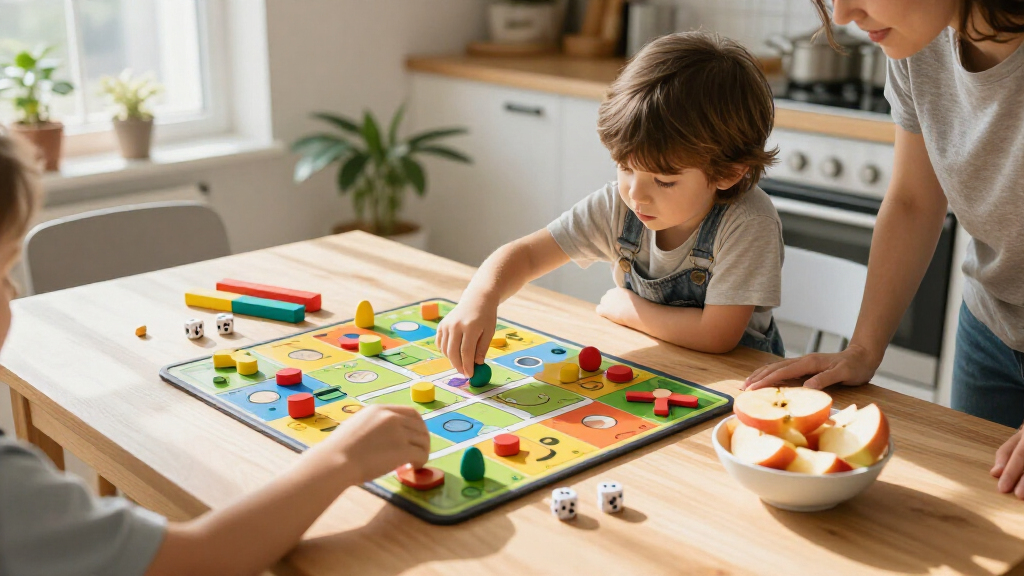
I compared these 14 games as learning tools for children, looking at the skill each one practices, how clearly its play supports that skill, and whether the intended age range appears suited to the rules and demands. I also weighed setup and rule complexity, opportunities for children to take independent turns, replay potential, and whether play can include different ages or abilities.
The ranking favors games that connect an identifiable learning goal with playable, repeatable rounds. Zingo! ranks first for its direct early-literacy focus and accessible matching format; broader or more specialized picks rank higher for the families they serve than as universal choices. Familiar classics such as Candy Land and Chutes and Ladders can be easy entry points, but they rank below games with a clearer or richer educational connection. The list includes different ages and subjects, so the best fit depends on the learner rather than a single definition of “educational.”
| educational board games for kid | Brand |
|---|---|
| Hasbro Gaming Candy Land Board | Hasbro Gaming |
| Hasbro Gaming Hi Ho! Cherry-O | Hasbro Gaming |
| Operation Electronic Board Gam | — |
| Chuckle & Roar Alphabet Matchi | Chuckle & Roar |
| Hasbro Gaming Chutes and Ladde | Hasbro Gaming |
| Jax Sequence for Kids Strategy | Jax |
| ThinkFun Zingo! Bingo Game for | ThinkFun |
| Hasbro Gaming Scrabble Junior | Hasbro Gaming |
| Scholastic Race Across the USA | — |
| Skillmatics Sentence Search Ed | Skillmatics |
| Number Hunter Math Board Game | — |
| Hasbro Gaming Guess Who? Plus | — |
| Mathemagical World Addition & | — |
| Junior Learning Social Skills | — |
Factors to Consider When Choosing Educational Board Games For Kids
Before choosing, I would match the game to the child’s current interests and attention span—not just the skill an adult hopes to teach. These factors can help separate a game that gets regular play from one that feels like a lesson disguised as a board game.
Match the Learning Goal to the Child’s Current Skills
Pick one main goal, such as recognizing letters, practicing addition, learning geography, or taking turns with others. A game that asks a child to read independently may frustrate a beginner, even if it is designed around literacy. Check whether the activity practices a skill the child is learning now or expects them to already have it. For children who are still developing foundational skills, picture cues and short turns can make participation easier. For a confident reader or older child, a game with more decisions may hold attention longer. Avoid choosing only by a broad label like “educational”; the specific task matters more.
Treat Age Guidance as a Starting Point
Age labels offer a rough guide, but children of the same age can differ in reading fluency, patience, and comfort with competition. Look at what players actually need to do: count accurately, recognize words, remember visual details, or follow multi-step rules. A younger child may enjoy a game intended for older players if an adult can simplify play, while an older child may find a very simple game repetitive. Consider whether siblings can play on equal footing or whether one will need support. A small adjustment to rules can help, but avoid a setup where an adult must manage every turn. The most useful choice lets the child take part with an appropriate level of help.
Balance Practice With Replay Appeal
A focused game can reinforce one subject well, but repeated practice only helps if the child is willing to play again. Some families will prefer a narrow, direct activity for a current learning goal; others will get more use from a game with choices, changing outcomes, or several ways to play. Ask whether the child enjoys the theme and activity, not only whether the skill is useful. Repeated rounds of the same task can become predictable, especially for children who move quickly through early concepts. On the other hand, a game with too many mechanics can distract from the learning aim. The strongest match is one where the educational task feels like part of play rather than a separate assignment.
Think About Group Size and Adult Support
Check the listed player count against the way your household or classroom usually plays. A game that works well with two players may not suit a larger family gathering, and a group activity can require more turn-taking than a child is ready for. Consider whether children can manage the rules themselves after an adult explains them or whether the game needs ongoing guidance. Adult support can be helpful for introducing new words or explaining a math concept, but too much supervision can make a game hard to bring out casually. For mixed-age groups, look for ways younger players can participate meaningfully without having every decision made for them. A good fit reflects the real play group, not an ideal one.
Check Component Demands and Practical Fit
Small pieces, cards, spinners, and electronic parts affect how a game fits into daily life. Younger children may need closer supervision around pieces that are easy to lose or unsuitable for their age. If the game will travel between rooms or homes, think about setup time, storage, and whether the components are simple to pack away. Electronic features can add an engaging task, but they also introduce batteries and another component to manage. A game with many cards or pieces may offer varied play while asking for more sorting and cleanup. Choose the level of upkeep your household will realistically accept, since a game that is cumbersome to set up may see less play.
Decide When a Specialized Game Is Worth It
A specialized game makes sense when a child has a clear interest or would benefit from practice in a particular area, such as sentence building, social interaction, or arithmetic. A broader family game may get played by more people, but it may not give as much focused practice in one skill. Before paying more for a larger set or a more involved format, ask whether its extra content changes how children play or simply adds components. If a child is reluctant to practice a subject, a game built around a favorite theme or social activity may be a better entry point than a more intensive learning tool. Families with several children may favor flexible games that can be adapted across skill levels. Match the scope of the game to a real need rather than assuming more content means a better fit.
Frequently Asked Questions
Which game is a good first choice for a child who is not reading yet?
I would start with a game that lets children take part through pictures, matching, or simple actions rather than expecting them to read instructions or cards independently. Zingo! is the clearest literacy-oriented option in this roundup for pre-readers and early readers, while Candy Land offers an easier, less skill-focused introduction to turn-based board play. The right choice depends on whether you want the first game to practice language or simply teach basic game routines. An adult may still need to explain turns and help manage pieces. Check that the child can understand the main task without feeling tested.
Are games that focus on one subject better than general family games?
Neither type is automatically better; they serve different purposes. A focused game can give children repeated practice in a specific area, such as counting, vocabulary, or geography, while a broader game may be easier to bring out for casual family play. If you are addressing a clear learning goal, subject-specific play can make the activity more purposeful. If your child loses interest when play feels like schoolwork, a familiar game with a lighter learning connection may be more inviting. I would favor the game the child will actually want to play, then look at how well its central activity supports the intended skill.
How can I choose a game for siblings with different ages or reading levels?
Compare what each player must do, not only the age printed on the box. Games based on simple matching or turns can be easier to share, while games that rely on reading, strategy, or subject knowledge may give one sibling an advantage. An adult can sometimes adapt a rule, read prompts aloud, or provide a limited hint, but the younger child should still make meaningful choices. Try to avoid a setup where the older player wins mainly because they can do the core task faster. If the gap is wide, separate games for different skill levels may create a better play experience than forcing one game to suit everyone.
What should I look for if my child dislikes losing?
Look at how strongly the game depends on direct competition and whether children have ways to stay engaged when they fall behind. Games with simple, quick turns may be easier to revisit than long rounds where one player’s lead is hard to overcome. You can also agree on a cooperative house rule, such as helping younger players learn the task, though that changes the competitive experience. Avoid presenting a learning game as a test of ability; focus on the choices, words, or ideas the child practiced. If frustration remains high, a less competitive activity or a shorter session may be a better fit than trying to push through a full game.
Should I choose a game for a skill my child already enjoys or one they find difficult?
Start with the child’s response to the activity. A game built around a favorite subject can make repeated play easier and let the child stretch beyond what they already know. A game targeting a difficult skill may help, but only if the task is approachable and the child does not feel corrected on every turn. Look for prompts that allow success with some thought, rather than a game that assumes mastery. You can also pair a challenging game with an adult who can offer gentle help without taking over. The best choice is usually a manageable step beyond the child’s current ability, not a substitute for formal instruction or a source of pressure.
Conclusion
For one broadly useful first pick, I recommend Zingo! as best overall for its accessible early-literacy play. Best value for straightforward family play goes to Hi Ho! Cherry-O, which gives young children a simple way to practice counting; choose it for ease, not subject breadth. I’d call Race Across the USA the best premium-style pick for families seeking a more involved geography challenge for older children, while Candy Land is best for beginners who are learning how to take turns in a board game. For a specific learning need, pick Number Hunter or Mathemagical World for math, Scrabble Junior or Sentence Search for language, and Junior Learning Social Skills Board Games for social practice. The right choice is the one whose learning task fits your child and whose play they will want to repeat.
Halloween Picks
halloween
As an affiliate, we earn on qualifying purchases.