

Choosing among educational science reference books comes down to one big tradeoff: visual engagement versus depth of information. Colorful children’s encyclopedias like The Usborne Science Encyclopedia and Knowledge Encyclopedia Science! keep young readers turning pages but oversimplify, while adult references like Scientific American Science Desk Reference and A Dictionary of Science offer far more rigor at the cost of visual appeal. My best overall pick, the Science Book: Everything You Need to Know About the World and How It Works, lands in the middle — broad coverage, strong visuals, and accessibility for a wide age range. The Way Things Work stands out for explaining mechanics and engineering in a way no other book here matches. Read on for the full breakdown by age group, subject focus, and budget.

Prime made for students and young adults
- Fast, free delivery for dorm and study essentials
- Prime Video and Amazon Music included
- Member-only deals
Key Takeaways
- The strongest all-around pick, Science Book: Everything You Need to Know, won because it balances visual diagrams with substantive explanations — most competitors lean too heavily toward one or the other.
- Age labeling matters more here than in most book categories: three of the twelve titles (the Elementary Science Dictionary, Physical Science, and The Animal Book) are genuinely unusable past age 11, so overshooting the age range is the safer buy.
- Oxford’s A Dictionary of Science is the only pick that serves high school and college students directly, but it assumes prior vocabulary — it is a lookup tool, not a learning tool.
- The two premium encyclopedias (Usborne and Knowledge Encyclopedia Science!) overlap heavily in content; buyers should choose based on reading level and layout preference, not coverage, since owning both is redundant.
- Sciencia is the outlier of the group: a compact, elegant volume that trades child-friendly design for conceptual beauty, making it the best gift-style pick for curious teens and adults.
| Scientific American Science Desk Reference |  | Best Overall Reference | Publisher: Wiley (Scientific American) | Format: Hardcover single-volume reference | Subjects Covered: Physics, chemistry, biology, earth science, astronomy, mathematics | VIEW LATEST PRICE | See Our Full Breakdown |
| Sciencia: Mathematics, Physics, Chemistry, Biology, and Astronomy for All (Wooden Books, 37) |  | Best Visual Browsing Pick | Series: Wooden Books, Book 37 | Publisher: Walker Books | Format: Compact hardcover | VIEW LATEST PRICE | See Our Full Breakdown |
| Science Book: Everything You Need to Know About the World and How It Works |  | Best for Visual Learners | Publisher: National Geographic | Format: Large-format hardcover | Subjects Covered: Physical sciences, life sciences, earth and space science, technology | VIEW LATEST PRICE | See Our Full Breakdown |
| Illustrated Elementary Science Dictionary: An Essential Reference for Kids Ages 7-10 |  | Best for Young Learners | Target Age: 7-10 years | Format: Illustrated softcover/hardcover dictionary | Structure: Alphabetical definitions with supporting images | VIEW LATEST PRICE | See Our Full Breakdown |
| Encyclopedia of Science |  | Best Family Reference Value | Publisher: DK | Format: Illustrated hardcover encyclopedia | Subjects Covered: Physics, chemistry, biology, earth science, space, and technology | VIEW LATEST PRICE | See Our Full Breakdown |
| The Usborne Science Encyclopedia: An In-Depth Guide for Young Scientists |  | Best Multimedia Learning Pick | Format: Hardcover encyclopedia | Reading Level: Ages 8-12 | Topics Covered: Gravity, flight, genes, DNA, and general science | VIEW LATEST PRICE | See Our Full Breakdown |
| Knowledge Encyclopedia Science! 2nd Edition |  | Best All-Ages Visual Reference | Format: Illustrated hardcover encyclopedia | Edition: 2nd Edition | Reading Level: All ages, roughly 9-adult | VIEW LATEST PRICE | See Our Full Breakdown |
| The Way Things Work: Newly Revised Edition |  | Best for Engineering-Minded Kids | Format: Illustrated hardcover | Edition: Newly Revised Edition | Reading Level: Ages 8-14 and up | VIEW LATEST PRICE | See Our Full Breakdown |
| Physical Science (Early Science Encyclopedias) | 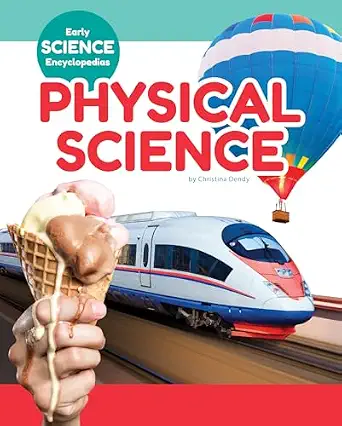 | Best for Early Learners | Format: Early learner encyclopedia | Reading Level: Ages 5-8 | Topics Covered: Matter, energy, forces, motion, basic physics | VIEW LATEST PRICE | See Our Full Breakdown |
| The Animal Book: A Visual Animal Kingdom Encyclopedia for Kids |  | Best Specialized Subject Pick | Format: Visual encyclopedia, hardcover | Reading Level: Ages 7-11 | Subject: Zoology and animal habitats | VIEW LATEST PRICE | See Our Full Breakdown |
| A Dictionary of Science (Oxford Quick Reference) |  | Best for Quick Terminology Lookups | Format: Paperback | Publisher: Oxford University Press | Series: Oxford Quick Reference | VIEW LATEST PRICE | See Our Full Breakdown |
| The Elements Book: A Visual Periodic Table Encyclopedia for Kids |  | Best Visual Pick for Young Chemists | Format: Hardcover | Publisher: DK Children | Subject Focus: Periodic table of elements / chemistry | VIEW LATEST PRICE | See Our Full Breakdown |
| educational science reference book | Format | Reading Level | Publisher | Subjects Covered |
|---|---|---|---|---|
| Scientific American Science De | Hardcover single-volume reference | Adult / high school and up | Wiley (Scientific American) | Physics, chemistry, biology, earth science, astronomy, mathematics |
| Sciencia: Mathematics | Compact hardcover | All ages, roughly 12 and up | Walker Books | Mathematics, physics, chemistry, biology, astronomy |
| Science Book: Everything You N | Large-format hardcover | Teen through adult | National Geographic | Physical sciences, life sciences, earth and space science, technology |
| Illustrated Elementary Science | Illustrated softcover/hardcover dictionary | Early independent readers | — | Elementary physics, biology, chemistry, and earth science vocabulary |
| Encyclopedia of Science | Illustrated hardcover encyclopedia | Middle school through early high school; family reference | DK | Physics, chemistry, biology, earth science, space, and technology |
| The Usborne Science Encycloped | Hardcover encyclopedia | Ages 8-12 | — | — |
| Knowledge Encyclopedia Science | Illustrated hardcover encyclopedia | All ages, roughly 9-adult | — | — |
| The Way Things Work: Newly Rev | Illustrated hardcover | Ages 8-14 and up | — | — |
| Physical Science | Early learner encyclopedia | Ages 5-8 | — | — |
| The Animal Book: A Visual Anim | Visual encyclopedia, hardcover | Ages 7-11 | — | — |
| A Dictionary of Science | Paperback | — | Oxford University Press | Physics, chemistry, biology, earth sciences, and more |
| The Elements Book: A Visual Pe | Hardcover | — | DK Children | — |
More Details on Our Top Picks
Scientific American Science Desk Reference
This volume earns the top spot because it does something the more visual titles here, like the Encyclopedia of Science, don’t attempt: it treats the reader as a serious adult. Scientific American’s editorial pedigree shows in writing that explains concepts without dumbing them down, and the single-volume desk format makes it easy to pull off the shelf when a question comes up mid-reading. Compared with Sciencia, it covers far more ground and with more rigor, though it sacrifices the visual polish that makes Wooden Books titles so inviting. The tradeoff is real: this is a reference you consult, not one you browse for fun, and its breadth means no single topic gets deep treatment. Buyers wanting a graduate-level text should look elsewhere.
Pros:- Broad, credible coverage across all major scientific disciplines
- Clear, accessible explanations from a trusted editorial brand
- Single-volume format that works as a true desk reference
- Written for adults and students rather than children
Cons:- Coverage is broad but shallow — no advanced or specialized depth
- No recent updated edition, so cutting-edge topics are missing
- Sparse illustrations compared with visual encyclopedias
Best for: Adults, college students, and serious hobbyists who want one authoritative single-volume science reference for the home desk
Not ideal for: Visual learners and casual browsers who want illustrations and infographics — this is a text-forward reference
- Publisher:Wiley (Scientific American)
- Format:Hardcover single-volume reference
- Subjects Covered:Physics, chemistry, biology, earth science, astronomy, mathematics
- Reading Level:Adult / high school and up
- Structure:Organized by scientific discipline with index and appendices
- Illustrations:Charts, tables, and diagrams; minimal photography
- Use Case:Desk reference and study supplement
Our verdict“If you want one trustworthy, all-purpose science reference for an adult household, this is the pick that balances authority and usability best.”
Sciencia: Mathematics, Physics, Chemistry, Biology, and Astronomy for All (Wooden Books, 37)
Sciencia takes the opposite approach from the Scientific American Science Desk Reference: instead of exhaustive text, it distills five core sciences into compact, beautifully illustrated essays. The Wooden Books design language — dense geometric illustrations on every spread — makes abstract ideas like symmetry, orbits, and number patterns feel tangible in a way text-heavy references can’t match. It’s also the most gift-worthy book in this batch. The tradeoff is depth: each discipline gets roughly equal, fairly light treatment, so it functions as an appetizer rather than a reference. A student needing definitions would be better served by a dictionary-style title; a curious reader wanting to fall back in love with science will prefer this.
Pros:- Striking illustrations that make abstract concepts visual
- Covers five disciplines in one slim, portable volume
- Accessible to readers from middle school through adulthood
- Elegant design makes it a great coffee-table or gift book
Cons:- Very little technical depth on any single subject
- Essay format makes it poor for quick fact-checking
- Compact size limits the number of topics covered
Best for: Curious readers of any age who want an elegant, illustrated sampler of the big ideas across five sciences
Not ideal for: Students who need a lookup reference for homework — it’s organized as essays, not an A-to-Z or topical encyclopedia
- Series:Wooden Books, Book 37
- Publisher:Walker Books
- Format:Compact hardcover
- Subjects Covered:Mathematics, physics, chemistry, biology, astronomy
- Reading Level:All ages, roughly 12 and up
- Illustrations:Black-and-white geometric diagrams throughout
- Structure:Short illustrated essays across five disciplines
Our verdict“This is the pick for inspired browsing and gift-giving, not for rigorous study or reference lookups.”
Science Book: Everything You Need to Know About the World and How It Works
National Geographic’s entry sits between Sciencia and the Scientific American Science Desk Reference on the depth-versus-visuals spectrum. It pairs big, glossy visuals with substantive explanations of how everything from atoms to ecosystems works, making it the strongest choice for readers who absorb information through images and diagrams rather than dense prose. Compared with the Encyclopedia of Science, the layout here feels more narrative and less purely alphabetical, which suits cover-to-cover browsing. The catch is familiar for this category: breadth wins over depth, and anyone past an introductory level will hit the ceiling quickly. It’s also a hefty book, so it lives on a table rather than in a bag.
Pros:- Rich National Geographic photography and diagrams on nearly every page
- Explains mechanisms and processes, not just facts
- Works for both browsing and structured reading
- Appeals across a wide age range, from teens to adults
Cons:- Introductory-level treatment with little technical depth
- Large and heavy — not portable
- Visual emphasis means fewer entries per topic than text references
Best for: Teens and adults who learn best from diagrams and photography and want an engaging survey of how science works
Not ideal for: Advanced students or professionals who need precise, technical detail at a reference level
- Publisher:National Geographic
- Format:Large-format hardcover
- Subjects Covered:Physical sciences, life sciences, earth and space science, technology
- Reading Level:Teen through adult
- Illustrations:Full-color photography, diagrams, and timelines
- Structure:Topical sections with visual explainers
- Use Case:Browsing, survey reading, and visual study
Our verdict“Choose this if you want science explained visually and readably; skip it if you need textbook-level rigor.”
Illustrated Elementary Science Dictionary: An Essential Reference for Kids Ages 7-10
Every roundup like this needs a true entry point, and this dictionary is it. While titles such as the Science Book aim at teens and adults, this one targets the 7-to-10 age band with simple definitions and illustrations designed to build vocabulary and confidence before formal science instruction gets intimidating. The A-to-Z structure matters here: unlike the thematic Sciencia, a child can look up a word they encountered at school and find it directly, which is exactly how kids actually use reference books. The obvious tradeoff is scope — definitions are short and simplified, and any child past elementary school will outgrow it quickly. Parents get a confidence-builder, not a lasting resource.
Pros:- Age-appropriate definitions kids can read independently
- Illustrations support comprehension for early readers
- Alphabetical lookup format mirrors how kids use dictionaries
- Builds science vocabulary and confidence early
Cons:- Limited to elementary-level topics and vocabulary
- Quickly outgrown once a child moves past age 10
- Not useful as a family reference for older students
Best for: Parents of elementary-school children ages 7-10 who need homework support and vocabulary-building at home
Not ideal for: Middle schoolers and up — the definitions are too simplified and the topic range too narrow
- Target Age:7-10 years
- Format:Illustrated softcover/hardcover dictionary
- Structure:Alphabetical definitions with supporting images
- Subjects Covered:Elementary physics, biology, chemistry, and earth science vocabulary
- Reading Level:Early independent readers
- Illustrations:Color illustrations on most entries
- Use Case:Homework help and vocabulary building
Our verdict“A smart first science reference for the 7-10 crowd — just plan to upgrade within a few years.”
Encyclopedia of Science
DK’s Encyclopedia of Science occupies the middle ground this roundup needed: more structured and thorough than Sciencia, more affordable and family-friendly than the adult-oriented Scientific American Science Desk Reference. Its topic-by-topic organization with DK’s signature annotated visuals makes it the book a household with kids of different ages can actually share — a fourth grader and a ninth grader can both get something from the same spread. The tradeoff versus the Science Book is stylistic: this reads more like a structured encyclopedia and less like an engaging narrative, so it’s stronger for looking things up than for reading straight through. It also lacks the brand-name science pedigree of Scientific American, though the editorial quality holds up for its audience.
Pros:- Well-organized topical structure that suits quick lookups
- DK’s annotated visual style works for a wide age range
- Covers a broad spread of scientific disciplines in one volume
- Strong price-to-coverage ratio for a family library
Cons:- Depth is introductory; serious students will need supplementation
- Visual-heavy pages can feel cluttered for text-preferring readers
- Some editions show their age in fast-moving fields
Best for: Families with multiple kids of different ages who need one shared, affordable science encyclopedia for schoolwork
Not ideal for: Adults wanting an authoritative desk reference — the treatment is pitched at students, not serious enthusiasts
- Publisher:DK
- Format:Illustrated hardcover encyclopedia
- Subjects Covered:Physics, chemistry, biology, earth science, space, and technology
- Reading Level:Middle school through early high school; family reference
- Structure:Topical encyclopedia entries with annotated visuals
- Illustrations:Full-color photos, diagrams, and cutaway illustrations
- Use Case:Homework reference and family library
Our verdict“The sensible middle pick for a shared family shelf — broad, organized, and priced for what most households actually need.”
The Usborne Science Encyclopedia: An In-Depth Guide for Young Scientists
What separates this Usborne encyclopedia from Knowledge Encyclopedia Science! is its hybrid approach: alongside the printed pages, readers get over 180 video clips and 1,000 curated website links. For a child who learns better from moving visuals than static diagrams, that layer of multimedia turns a reference book into a launchpad for independent research. Coverage spans gravity, flight, genetics, and DNA, so it works as a spine for homeschool science units or homework support. The tradeoff is durability — QR codes and links age poorly, and some web resources will eventually go dark, which print purists may find frustrating. Compared with the Science Book: Everything You Need to Know About the World and How It Works, the written depth is thinner, with explanations pitched at a middle-reader level rather than a true encyclopedia register.
Pros:- Over 180 linked video clips reinforce printed explanations
- 1,000 vetted websites encourage independent follow-up research
- Broad topical range from physics to genetics
- Accessible language for upper-elementary readers
Cons:- Web links and clips can become outdated over time
- Explanations are less deep than adult-oriented science references
Best for: Parents and homeschoolers of kids ages 8-12 who want print and screen learning to work together
Not ideal for: Families limiting screen time or wanting a purely offline reference — the book leans heavily on its digital companions
- Format:Hardcover encyclopedia
- Reading Level:Ages 8-12
- Topics Covered:Gravity, flight, genes, DNA, and general science
- Video Clips:180+
- Linked Websites:1,000+
- Learning Style:Print plus multimedia hybrid
Our verdict“This pick makes the most sense for screen-friendly households where a child will actually use the digital extensions rather than skip them.”
Knowledge Encyclopedia Science! 2nd Edition
If the household includes a curious 10-year-old and an adult who wants a refresher, this is the title that bridges both. The 2nd edition refreshes its scientific facts, so buyers aren’t stuck with a decade-old astronomy section — a real weakness of many discounted first editions. Where The Animal Book narrows to zoology, this volume spreads across physics, chemistry, biology, and space with the kind of detailed 3D-style illustrations DK is known for, making abstract concepts like atomic structure legible without a textbook’s jargon. The tradeoff: breadth means shallowness. Compared with the Encyclopedia of Science, topics get two-page spreads rather than deep dives, so a student writing a report on, say, thermodynamics will outgrow it quickly. It works best as a browsing and sparking-curiosity book, not a study text.
Pros:- Updated facts reflect current scientific understanding
- Detailed illustrations clarify abstract concepts
- Genuinely accessible across a wide age range
- Broad multi-disciplinary coverage in one volume
Cons:- Topic depth is limited by wide coverage
- Heavier and less portable than themed single-topic books
Best for: Families wanting one visually rich science book that works for both kids and adults
Not ideal for: Middle-schoolers needing report-grade depth on any single topic — coverage is a mile wide and an inch deep
- Format:Illustrated hardcover encyclopedia
- Edition:2nd Edition
- Reading Level:All ages, roughly 9-adult
- Topics Covered:Physics, chemistry, biology, space science
- Visual Style:Full-color detailed illustrations and diagrams
- Fact Currency:Updated for this edition
Our verdict“Choose this as the family room’s shared science browswer if your goal is sparking curiosity across ages, not intensive study.”
The Way Things Work: Newly Revised Edition
David Macaulay’s classic occupies a niche none of the other picks in this roundup attempt: instead of surveying science broadly like Knowledge Encyclopedia Science!, it answers one question obsessively — how do machines actually work? The newly revised edition folds in modern technology, so alongside levers and gears, readers get explanations of smartphones and renewable energy systems. The woolly-mammoth illustrations make mechanical principles memorable in a way straight diagrams don’t, which is why this book has stayed in print for decades. The tradeoff is scope: this is applied physics and engineering, not a general science reference — a child asking about cells or the periodic table needs The Elements Book or a broad encyclopedia instead. There’s no multimedia component either, unlike the Usborne option, so all the explanatory load sits on the printed page.
Pros:- Decades-proven explanations of mechanical principles
- Revised edition includes modern technology like smartphones
- Charming illustrations make abstract physics memorable
- Works equally well for browsing and focused reading
Cons:- Narrow engineering focus rather than general science
- No digital or multimedia companion content
Best for: Kids ages 8-14 who take apart appliances and want to understand mechanisms and machines
Not ideal for: Buyers seeking general science coverage — biology, chemistry, and earth science are largely absent
- Format:Illustrated hardcover
- Edition:Newly Revised Edition
- Reading Level:Ages 8-14 and up
- Focus:Machines, technology, and applied physics
- Illustrator:David Macaulay
- Content Update:Includes modern devices and renewable energy
Our verdict“This model is better suited to a young tinkerer than a general science student — buy it as a complement to a broad encyclopedia, not a replacement.”
Physical Science (Early Science Encyclopedias)
Most entries in this roundup assume a confident reader; this one doesn’t. Physical Science pitches fundamental concepts — matter, energy, forces, motion — at an early-elementary reading level, with illustrations doing much of the explanatory work. Compared with the Illustrated Elementary Science Dictionary, which defines terms, this volume teaches connected concepts in sequence, so it functions better as a first read-through than a lookup resource. The obvious tradeoff is ceiling: everything here is re-covered, more deeply, in The Usborne Science Encyclopedia, so a strong reader in fourth grade or above will find it thin. What it does, it does well — it builds a vocabulary and conceptual base that makes the bigger encyclopedias less intimidating later. The absence of any interactive or digital extras also keeps it a straightforwardly traditional print experience.
Pros:- Reading level matches true beginners, not confident readers
- Concepts taught in logical sequence, not just defined
- Illustrations carry explanations where text cannot
- Builds vocabulary for later, bigger references
Cons:- Very limited depth — advanced topics are absent entirely
- Quickly outgrown as reading skills improve
Best for: Kindergarten through second-grade classrooms and homes building early science vocabulary
Not ideal for: Readers at grade 4 and up — they’ll exhaust the content quickly and should move to the Usborne or DK volumes
- Format:Early learner encyclopedia
- Reading Level:Ages 5-8
- Topics Covered:Matter, energy, forces, motion, basic physics
- Series:Early Science Encyclopedias
- Visual Style:Illustration-heavy with simple text
- Pedagogical Approach:Sequential concept introduction
Our verdict“This pick makes the most sense as a first science book for ages 5-8, with the understanding that it’s a stepping stone rather than a lasting reference.”
The Animal Book: A Visual Animal Kingdom Encyclopedia for Kids
Where Knowledge Encyclopedia Science! gives animals a few spreads inside a broad survey, this book gives the entire animal kingdom the full treatment — species, habitats, behaviors, and the odd gross fact kids adore. The vivid photography is the real draw: for a child whose interest in science starts with animals, images create engagement that text-first references like A Dictionary of Science simply can’t match for this age group. It’s an excellent gateway book, because animal curiosity often branches into biology, ecology, and conservation more broadly. The tradeoffs are symmetry: it’s a single-subject reference in a roundup of general-science titles, so physics and chemistry get nothing here. There are also no interactive elements — unlike the Usborne encyclopedia’s video links — and the density of information can overwhelm a five-year-old despite the kid-friendly framing.
Pros:- Stunning photography drives engagement for visual learners
- Genuinely broad coverage of species and habitats
- Strong gateway into biology and ecology
- Kid-friendly facts encourage repeated browsing
Cons:- Single-subject scope — no physics, chemistry, or space content
- Detail level can overwhelm younger readers
- No interactive or multimedia elements
Best for: Animal-obsessed kids ages 7-11 who engage more with photos than diagrams
Not ideal for: Buyers wanting balanced science coverage — this is zoology only, and very young children may find the detail level heavy
- Format:Visual encyclopedia, hardcover
- Reading Level:Ages 7-11
- Subject:Zoology and animal habitats
- Visual Style:Full-color photography throughout
- Content Type:Species profiles, facts, and habitat overviews
- Scope:Animal kingdom only
Our verdict“Buy this as a reward for a child already hooked on animals, and pair it with a general encyclopedia for the rest of the sciences.”
A Dictionary of Science (Oxford Quick Reference)
While most books in this roundup — like the Science Book: Everything You Need to Know About the World and How It Works — aim to teach science through narrative and visuals, this dictionary serves a different job entirely: fast, authoritative definitions when you need to confirm what a term means right now. It covers terminology across physics, chemistry, biology, and earth sciences in a compact format that sits happily on a desk beside a textbook. Compared with the Scientific American Science Desk Reference, it trades depth for speed and portability — you will not find diagrams or extended explanations here, just clean, concise entries. That narrow focus is its strength and its limitation. For homework sessions, lab reports, or reading dense science journalism, this pick makes the most sense for students and professionals who need reliable answers in seconds rather than a lesson.
Pros:- Covers terminology across all major scientific disciplines in one compact volume
- Clear, concise definitions written to academic standards
- Alphabetical format makes lookups fast and intuitive
- Portable enough to keep at a desk or in a school bag
- Trusted Oxford reference pedigree for accuracy
Cons:- Definitions only — no diagrams, photos, or worked examples to build understanding
- Lacks the contextual depth needed to actually learn a topic from scratch
Best for: High school and college students, educators, and professionals who need rapid, accurate definitions of scientific terms while studying or writing
Not ideal for: Visual learners and younger readers — it has no illustrations or explanatory context, so kids who enjoyed the Usborne Science Encyclopedia will find it dry
- Format:Paperback
- Publisher:Oxford University Press
- Series:Oxford Quick Reference
- Subjects Covered:Physics, chemistry, biology, earth sciences, and more
- Content Type:Alphabetical dictionary of scientific terms
- Intended Audience:Students, educators, and professionals
- Illustrations:None — text-only definitions
Our verdict“Buy this as a companion lookup tool rather than a teacher — it is the reference you reach for mid-assignment, not the book you read to learn science.”
The Elements Book: A Visual Periodic Table Encyclopedia for Kids
Where the Illustrated Elementary Science Dictionary spreads itself across all of elementary science, this book drills into one subject — the periodic table — and makes it genuinely fun. Each element gets a photographic spread with real-world examples, so a child can see where sodium lives in table salt or why neon glows. Compared with the broader Knowledge Encyclopedia Science!, it sacrifices range for a level of visual detail on chemistry that general encyclopedias simply cannot match. The tradeoff is real: there are no equations, no atomic theory in any depth, and a curious teen will outgrow it within a couple of years. But for the target age range, this option stands out for turning an abstract chart into something a child browses voluntarily at bedtime — which is half the battle in science education.
Pros:- Stunning photographic layouts make every element memorable
- Connects abstract chemistry to familiar everyday objects
- Element-by-element structure is easy to dip in and out of
- Builds early comfort with the periodic table before formal chemistry classes
Cons:- Chemistry-only scope — no coverage of physics, biology, or earth science
- Explanations stay surface-level, so advanced or older students will find it thin
Best for: Curious kids roughly ages 7–12 who show interest in chemistry and learn best from photographs and visual layouts
Not ideal for: Middle schoolers and up who need detailed scientific explanations — the content is too simplified to support serious study
- Format:Hardcover
- Publisher:DK Children
- Subject Focus:Periodic table of elements / chemistry
- Intended Audience:Children, roughly ages 7–12
- Content Type:Visual encyclopedia with photographic element profiles
- Reading Style:Browsable, element-by-element spreads
- Depth Level:Introductory — facts and visuals, minimal theory
Our verdict“This is the book that gets a child excited about chemistry through pictures rather than formulas — perfect as a first periodic table, but not a lasting reference.”

How We Picked
I evaluated each book against four criteria that actually determine whether a science reference gets used or sits on a shelf: age-appropriateness of the writing, breadth and accuracy of coverage, quality of visual explanations (diagrams, photos, and infographics that clarify rather than decorate), and longevity — whether the book stays relevant as the reader grows. A reference book fails its purpose if a child outgrows it in a year or if an adult finds the explanations too thin to trust.
The ranking logic follows buyer intent rather than raw quality scores. Books that serve the widest audience over the longest period rank higher, which is why cross-age titles like the Science Book and The Way Things Work sit near the top. Specialist picks — the animal encyclopedia, the periodic table book, the Oxford dictionary — are ranked within their niches, because a buyer shopping for a chemistry-obsessed ten-year-old cares more about The Elements Book than about a generalist ranking. Durability, edition currency, and price-per-use also factored into value assessments, since heavily discounted older editions often deliver 90% of the content at half the cost.
| educational science reference book | Publisher | Subjects Covered | Illustrations |
|---|---|---|---|
| Scientific American Science De | Wiley (Scientific American) | Physics, chemistry, biology, earth science, astronomy, mathematics | Charts, tables, and diagrams; minimal photography |
| Sciencia: Mathematics | Walker Books | Mathematics, physics, chemistry, biology, astronomy | Black-and-white geometric diagrams throughout |
| Science Book: Everything You N | National Geographic | Physical sciences, life sciences, earth and space science, technology | Full-color photography, diagrams, and timelines |
| Illustrated Elementary Science | — | Elementary physics, biology, chemistry, and earth science vocabulary | Color illustrations on most entries |
| Encyclopedia of Science | DK | Physics, chemistry, biology, earth science, space, and technology | Full-color photos, diagrams, and cutaway illustrations |
| The Usborne Science Encycloped | — | — | — |
| Knowledge Encyclopedia Science | — | — | — |
| The Way Things Work: Newly Rev | — | — | — |
| Physical Science | — | — | — |
| The Animal Book: A Visual Anim | — | — | — |
| A Dictionary of Science | Oxford University Press | Physics, chemistry, biology, earth sciences, and more | None — text-only definitions |
| The Elements Book: A Visual Pe | DK Children | — | — |
Factors to Consider When Choosing Educational Science Reference Books
Before picking a specific title, it helps to understand what separates a science reference book that gets used weekly from one that gathers dust. These are the factors that shaped my ranking and should shape your decision.Match the Reading Level, Then Add a Year or Two
The most common mistake in this category is buying at the child’s exact current reading level. A reference book, unlike a novel, is meant to be consulted for years, so a child at the top of a book’s stated range will outgrow it within months. Publishers’ age ranges also vary wildly in honesty — one publisher’s “ages 7-10” may be another’s “ages 9-12”. My advice is to read a sample page before buying and judge whether the sentence complexity and vocabulary stretch the reader without defeating them. For adults, the reverse applies: children’s encyclopedias marketed as “for all ages” are rarely satisfying past middle school. If the buyer is a high schooler or college student, only the dictionary-style references in this lineup will genuinely serve them.
Generalist or Specialist?
General science encyclopedias cover physics, chemistry, biology, and earth science in one volume — great for homework help and curiosity browsing, but each subject gets shallow treatment. Specialist volumes like The Elements Book or The Animal Book go far deeper in one domain and often spark stronger interest in a child who already shows a preference. A useful rule: buy generalist first, specialist second. A child with no stated interest will browse a broad encyclopedia and discover what excites them; a child already obsessed with animals or chemistry will find a generalist book frustratingly thin. Families building a home library usually end up with one general reference plus two or three specialist titles, and that sequence works better than the reverse.
Visuals Should Explain, Not Just Attract
Nearly every book in this category is heavily illustrated, but illustration quality varies enormously. Look for labeled cutaway diagrams, step-by-step process graphics, and comparison charts — these teach independently of the text. Decorative photography, however attractive, adds little reference value. The test I apply: cover the caption and ask whether the image still communicates something. The best visual references in this lineup can be understood by a pre-reader flipping through alone, which effectively extends the book’s usable age range downward by two years. This is also where the premium encyclopedias justify their price — the difference between a $15 dictionary-style reference and a $30 visual encyclopedia is mostly in diagram quality, not text.
Currency and Edition Age
Science references age faster than most nonfiction. Astronomy sections lose accuracy quickly (Pluto’s status, exoplanet counts), and anything touching genetics or climate shifts noticeably over a decade. Check the publication or revision date before buying, and prefer revised editions over originals even at a higher price — The Way Things Work’s revised edition, for example, added modern technology coverage the original lacked. That said, do not overpay for currency in slow-moving fields: a periodic table reference or an animal kingdom encyclopedia from ten years ago remains almost entirely accurate. The risk concentrates in space science, computing, and medicine, so scrutinize those sections most carefully in older editions.
Format and Physical Durability
Reference books get handled roughly — propped open, carried in backpacks, consulted with sticky fingers. Hardcover construction genuinely matters here, and the price difference between formats is small relative to lifespan. Size is the other tradeoff: large-format visual encyclopedias are beautiful but stay home, while compact volumes like Sciencia or the Oxford paperback travel to class. Think about where the book will live. A desk reference should be big and flat enough to stay open on its own; a school-bag reference should survive being crammed next to a lunchbox. If buying for a classroom or library where multiple children use one copy, hardcover is non-negotiable.
Price-per-Use Beats Price
A $35 encyclopedia consulted weekly for four years costs less per use than a $12 paperback abandoned after a month. The expensive generalist encyclopedias in this roundup carry their price because they function as homework infrastructure for an entire school career. Conversely, cheap children’s dictionaries represent poor value if the child is already reading above them. Set the budget around lifespan, not sticker price. One honest caveat: sales and used copies of prior editions are abundant in this category, and for slow-changing subjects the savings are real. The exception is buying used for a gift — a reference book with a previous owner’s name in it loses much of its appeal.
Frequently Asked Questions
Should I buy a children’s encyclopedia or wait until my child is older and buy an adult reference?
Buy the children’s version now. The premise that an adult reference “grows into” a child rarely works in practice, because the vocabulary and assumed background frustrate young readers and teach them that science books are boring — an outcome far costlier than the price of a book. A well-made children’s encyclopedia like the Usborne or Knowledge Encyclopedia titles covers the same conceptual ground with accessible language and better diagrams. Most kids will use a good children’s encyclopedia from ages 8 to 13, which is excellent value. The adult reference becomes worthwhile around high school, when the child needs precise terminology and denser explanations. A dictionary-style reference like Oxford’s A Dictionary of Science makes a natural second purchase at that stage, and the two types complement rather than replace each other.
Do I need both a general science encyclopedia and a specialist book like The Elements Book?
It depends on how your child engages with science. If they browse randomly and follow whatever catches their attention, the general encyclopedia alone will keep them busy for years. But if they’ve already latched onto one subject — animals, chemistry, space — the generalist book will feel thin, and the specialist volume delivers the depth that sustains real interest. The two formats serve different cognitive modes: browsing versus digging. My suggestion for gift-givers is the general encyclopedia first, because you rarely know which subject will hook a child until they’ve sampled everything. The Elements Book and The Animal Book also work well as follow-up gifts in subsequent years, which spreads the cost. What I’d avoid is buying three generalist encyclopedias, since their content overlaps by 70% or more.
Are the illustrated encyclopedias actually educational, or just picture books?
The good ones are genuinely educational, and the illustrations are part of the pedagogy rather than decoration. Concepts like plate tectonics, DNA replication, and aerodynamics are inherently spatial, and a well-designed diagram communicates them faster and more accurately than paragraphs of text. The titles I ranked highest — the Science Book and The Way Things Work in particular — use cutaways and process graphics that a child can decode independently. The honest caveat is that visual encyclopedias compress information, so a student writing a report will hit their depth limit quickly and need library or internet sources. Treat them as conceptual foundations and interest-builders, not as complete academic sources. For coursework requiring precise definitions, a dictionary-style reference fills the gap.
Is an older, cheaper edition of a science encyclopedia worth buying?
Usually yes, with caveats about subject matter. Animal kingdom references, chemistry fundamentals, and mechanical explanations barely change over a decade, so a discounted prior edition delivers nearly identical content at a fraction of the price. The risk sits in astronomy, computing, climate science, and medicine, where even five-year-old editions can contain outdated counts, models, or technology coverage. Check the copyright page and flip to the space section — if it mentions spacecraft or discoveries that have since been superseded, weigh whether that bothers you. For a child’s general reference, minor factual drift rarely harms learning; for a student citing the book in schoolwork, currency matters more. Revised editions of classics like The Way Things Work are the exception where paying full price is justified, since the revisions often add substantial new material rather than cosmetic updates.
Which of these books works best for a teenager preparing for high school science?
For a teen, the calculus changes: most of this category is built for younger readers, and a 14-year-old will find illustrated children’s encyclopedias condescending. The best fit is A Dictionary of Science, which covers the terminology they’ll meet in biology, chemistry, and physics courses with academic precision. Pair it with the Science Book for conceptual review, since the dictionary defines terms but doesn’t teach ideas from scratch. Sciencia also suits motivated teens — its elegant, compact treatment of mathematics and the physical sciences reads as sophisticated rather than childish, which matters enormously at that age. If the teen struggles with science rather than excelling at it, though, drop back to the Knowledge Encyclopedia titles, since confidence-building visuals still help through the early high school years.
Conclusion
Every book in this lineup earns its place, but they serve very different readers. For the best overall pick, I recommend the Science Book: Everything You Need to Know About the World and How It Works — it covers the most ground at a reading level that spans late elementary through middle school, with visuals that genuinely teach. The best value pick is Scientific American Science Desk Reference, which delivers adult-level depth at a modest price if you don’t need color photography. For the best premium option, the Usborne Science Encyclopedia justifies its cost with diagram quality and a linked website that extends the content well beyond the page.
For beginners — early elementary readers ages 7-10 — the Illustrated Elementary Science Dictionary is the gentlest entry point. Best for teens and students goes to A Dictionary of Science, the one true academic reference here. And for specific interests: The Elements Book for a chemistry-loving kid, The Animal Book for a budding zoologist, The Way Things Work for the engineer who takes the toaster apart, and Sciencia as the elegant gift for a curious adult. Match the book to the reader, not to the age on the cover, and any of these will earn its shelf space.
Fall Picks
fall essentials
As an affiliate, we earn on qualifying purchases.