Sustainable parenting involves making eco-friendly choices that teach your kids about caring for the planet. You can start by switching to organic or biodegradable diapers and adopting cloth options to reduce waste. Choose zero waste toys made from natural or recycled materials, and support local artisans. Small, consistent changes like these help instill environmental values early on. Keep exploring ways to create a greener future for your family—you’ll find many simple tips to incorporate in everyday life.
Key Takeaways
- Opt for cloth or biodegradable diapers to reduce landfill waste and minimize chemical exposure for children.
- Choose natural, zero waste toys made from wood or organic materials to promote sustainability and safety.
- Incorporate eco-friendly products and sustainable materials into your baby’s daily routine gradually.
- Educate children on caring for the environment through mindful consumption and eco-conscious choices.
- Support local artisans and sustainable brands to encourage ethical production and reduce environmental impact.

Sustainable parenting means making choices that support your child’s well-being while also protecting the environment for future generations. You want to give your little one the best start in life, but you also recognize that your decisions can impact the planet. One simple way to start is by choosing eco friendly diapers. Traditional disposable diapers generate a massive amount of waste, often taking hundreds of years to decompose. Switching to eco friendly diapers helps reduce that waste and minimizes your child’s exposure to harmful chemicals found in some conventional options. Cloth diapers, for example, are reusable and better for the environment, especially when you opt for organic, natural fabrics. They might require a bit more effort in cleaning, but they pay off in the long run by reducing landfill contribution and chemical exposure. Plus, many brands now offer biodegradable disposables that break down more quickly, giving you options that align with your eco-conscious values.
Along with eco friendly diapers, you can also focus on zero waste toys. Traditional plastic toys often contribute to pollution and are made from non-renewable resources. Zero waste toys prioritize sustainability by using natural, biodegradable, or recycled materials. These toys are designed to last longer and often come from small or local artisans, supporting ethical craftsmanship. When you choose zero waste toys, you’re teaching your child the importance of mindful consumption, which can influence their attitude toward sustainability as they grow. Consider toys made from wood, organic cotton, or other natural fibers, which are safer for your child’s health and kinder to the environment. Avoiding single-use plastic toys also means fewer pieces ending up in landfills and oceans, reducing pollution and harm to wildlife. Incorporating STEM toys that promote problem-solving and critical thinking can also support your child’s development while aligning with eco-friendly principles, especially if you select those made from sustainable materials.
Integrating these practices into your parenting routine doesn’t have to feel overwhelming. Start small by replacing one or two disposable diapers with cloth options and gradually incorporate zero waste toys into your child’s collection. Over time, these choices become second nature, and your child learns the value of caring for the planet from an early age. Remember, sustainability isn’t about perfection but about making more conscious choices whenever possible. By adopting eco friendly diapers and zero waste toys, you’re not only protecting the environment but also setting a powerful example for your child to follow. These actions show that caring for the planet and caring for your family go hand-in-hand, fostering a sense of responsibility and respect that will stay with your little one for years to come.
Frequently Asked Questions
How Can I Teach My Child About Sustainability Effectively?
You can teach your child about sustainability by engaging them in fun educational activities like nature walks, recycling projects, and planting gardens. Use eco-conscious communication to explain how their actions impact the environment, making it relatable and understandable. Encourage questions and practice together, showing them real-life examples of eco-friendly habits. This hands-on approach helps your child develop a strong sense of responsibility and appreciation for the planet.
Are Eco-Friendly Toys Safer for Children Than Traditional Ones?
Eco-friendly toys are generally safer for children because they’re made with stricter manufacturing standards and fewer toxic chemicals. You can feel confident choosing these toys, as they often avoid harmful substances found in traditional ones. Always check labels for certifications, and opt for natural, non-toxic materials. By doing so, you reduce your child’s exposure to toxic chemicals and promote safer, eco-conscious play.
How Do I Balance Eco-Friendly Living With Budget Constraints?
To balance eco-friendly living with budget constraints, you should focus on eco-conscious budgeting and budget shopping. Prioritize buying secondhand or upcycled items, which are often cheaper and more sustainable. Shop during sales or use coupons for eco-friendly products. Additionally, invest in durable, multi-purpose items that last longer. You can also make DIY eco-friendly toys and cleaning supplies, saving money while reducing waste and supporting your sustainability goals.
What Are Some Sustainable Diapering Options?
Imagine a world where your baby’s diaper changes leave no lasting footprint. You can choose cloth diapers for a reusable, eco-friendly option that saves money over time. Or, opt for biodegradable disposables that break down faster in landfills, reducing environmental impact. Both choices help protect the planet while keeping your little one comfortable. By making these mindful decisions, you’re actively contributing to a healthier, more sustainable future.
How Can I Involve Kids in Eco-Friendly Household Chores?
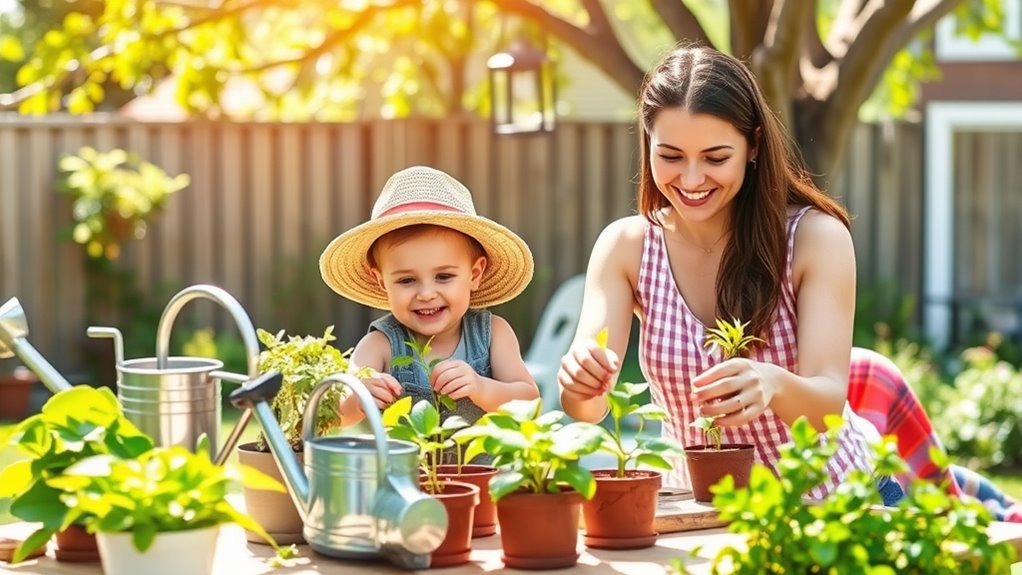
You can involve your kids in eco-friendly household chores by turning recycling art projects into fun activities. Encourage them to sort recyclables and create crafts from recycled materials, fostering creativity and environmental awareness. Additionally, involve them in gardening activities like planting seeds or watering plants, teaching them the importance of caring for the environment. These hands-on tasks make sustainability enjoyable and instill eco-conscious habits early on.
Conclusion
By embracing eco-friendly parenting, you’re not just raising kids—you’re shaping the future of our planet. Every small step you take, from recycling to choosing sustainable products, makes a massive difference. Think of your efforts as planting tiny seeds that will grow into towering trees of change. Keep going, because your dedication is truly the most powerful force in creating a greener, brighter world for your children and generations to come.