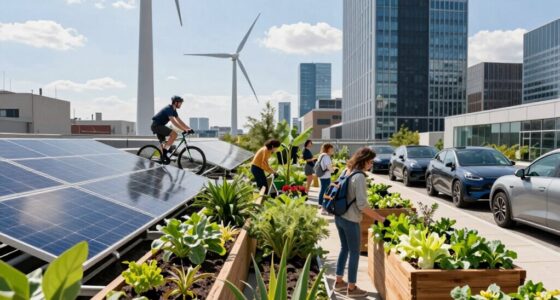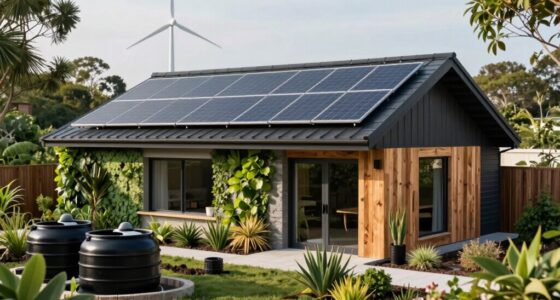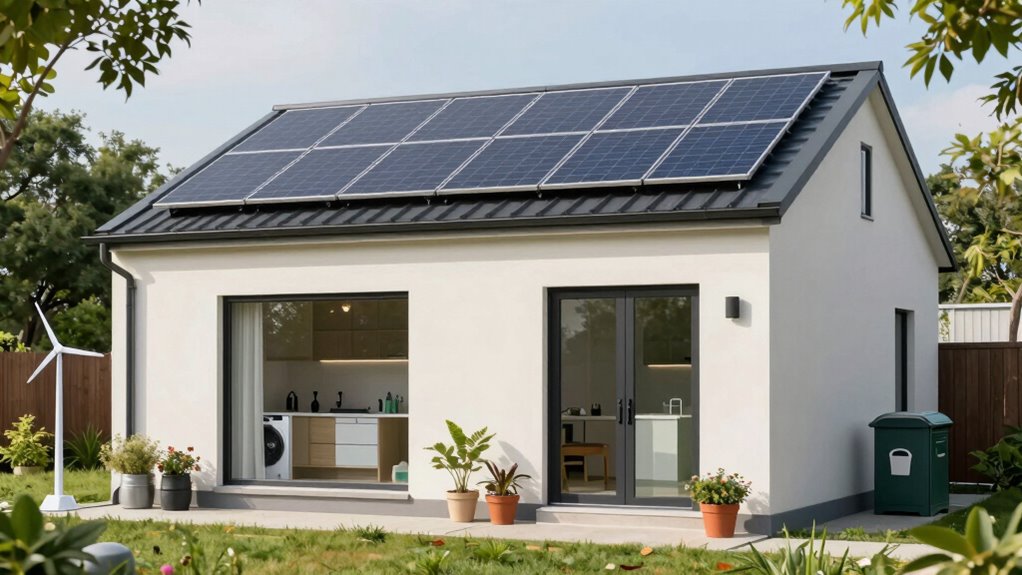

Living net zero at home means actively reducing your energy use while generating your own clean power with solar panels or small wind turbines. You’ll upgrade to energy-efficient appliances, improve insulation, and adopt smart technology to monitor your consumption. Small lifestyle changes, like turning off unused devices and adjusting routines, make a big difference. Achieving net zero is an ongoing process that benefits your wallet and the environment—continue exploring to see how you can make it happen.

Prime made for students and young adults
- Fast, free delivery for dorm and study essentials
- Prime Video and Amazon Music included
- Member-only deals
Key Takeaways
- Achieving net zero involves generating renewable energy on-site, like solar panels and small wind turbines.
- It requires implementing energy-efficient appliances, insulation, and smart home technologies to reduce consumption.
- Continuous monitoring of energy use helps identify waste and optimize consumption patterns.
- Behavioral habits, such as turning off unused devices and adjusting routines, play a crucial role.
- Net zero living is an ongoing process that maximizes environmental benefits and reduces energy costs over time.

Have you ever wondered how you can reduce your carbon footprint without sacrificing comfort? Achieving net zero living at home is about making strategic choices that balance energy consumption with sustainable solutions. It starts with understanding how renewable energy sources can power your household, reducing reliance on fossil fuels. Installing solar panels or small wind turbines can provide clean, renewable energy, allowing you to generate your own electricity and lessen your environmental impact. Not only does this cut down your greenhouse gas emissions, but it can also save you money in the long run. Pairing renewable energy with a focus on energy efficiency makes the process even more effective. Upgrading your appliances, insulating your home properly, and sealing leaks help you use less energy overall, which means your renewable energy systems don’t have to work as hard. This synergy ensures you’re not just generating clean energy but also consuming it wisely.
Living net zero isn’t about going off the grid entirely; it’s about creating a balanced, responsible energy ecosystem within your home. You might consider installing smart thermostats that optimize heating and cooling based on your habits, minimizing unnecessary energy use. LED lighting and energy-efficient windows further reduce waste, helping you maintain a comfortable environment while consuming less power. Behavior plays a vital role too—being mindful of turning off unused devices, washing clothes in cold water, and limiting unnecessary electronic use can make a significant difference. These small, consistent actions, combined with technological upgrades, push your home closer to net zero. Additionally, understanding your energy production and consumption patterns with monitoring systems can help you make smarter decisions and identify areas for improvement.
Smart thermostats, energy-efficient windows, and mindful habits help create a balanced, sustainable home environment.
The process also involves understanding your energy production and consumption patterns. Monitoring systems can give you real-time insights into where your energy is coming from and how it’s being used. This information helps you identify areas for improvement and adjust your habits accordingly. Additionally, renewable energy sources like solar and wind provide sustainable power options that can significantly reduce your carbon footprint. Over time, you’ll notice a reduction in your energy bills and a smaller carbon footprint, making your home more sustainable. It’s about creating a lifestyle where sustainability becomes second nature, seamlessly integrated into your daily routines.
Ultimately, net zero living at home is an ongoing journey rather than a one-time achievement. It’s about making smarter choices, investing in renewable energy, and maximizing energy efficiency. By doing so, you actively participate in combating climate change while enjoying a comfortable, modern lifestyle. Small steps lead to significant change, and your home can become a powerful example of how sustainable living is not only possible but also rewarding.
Popular right now

Samsung 42-Inch S90H OLED 4K Smart TV Bundle

Sony WH-1000XM6 Wireless Noise-Canceling Over-Ear Headphones, Blue, Bundle

Ninja Luxe Café Premier 3-in-1 Espresso Machine, Drip Coffee & Cold Brew
As an affiliate, we earn on qualifying purchases.
Frequently Asked Questions
How Much Does a Net Zero Home Typically Cost to Build?
A net zero home typically costs between 10% to 30% more to build than a conventional house, mainly due to additional energy-efficient features. Cost considerations include premium insulation, solar panels, and advanced HVAC systems. Design challenges might raise upfront expenses, but these investments pay off through lower energy bills. You should plan for these costs early, balancing initial investments with long-term savings and environmental benefits.
What Are the Most Effective Renewable Energy Sources for Homes?
You should consider installing solar panels and wind turbines as the most effective renewable energy sources for your home. Solar panels harness sunlight to generate electricity, reducing your reliance on the grid, while small wind turbines can provide additional power, especially if you live in a windy area. Together, these options can help you achieve net zero living, lowering your carbon footprint and saving you money on energy costs over time.
How Long Does It Take to Achieve Net Zero Status?
Achieving net zero status can take anywhere from several months to a few years, depending on your home’s starting point and efforts. You’ll need to implement sustainable landscaping and use eco-friendly materials, which can speed up the process. Regularly monitoring your energy usage and making incremental upgrades help. With dedication, you’ll reduce your carbon footprint faster, making your home more sustainable and aligned with net zero goals.
Are There Government Incentives for Net Zero Home Upgrades?
Yes, government incentives are like a guiding lighthouse for your net zero journey. Policy incentives might include tax credits or rebates, helping your upgrades become more affordable. Financing options, such as low-interest loans, act as stepping stones, making sustainable changes easier to pursue. These incentives light your path toward energy independence, turning your home into a symbol of hope—and a demonstration that eco-friendly living is within reach.
How Do Net Zero Homes Handle Energy Storage and Backup?
Net zero homes typically use advanced energy management systems to optimize energy use and integrate backup solutions like batteries or thermal storage. These backup solutions store excess energy generated from solar panels, ensuring you have power during cloudy days or outages. By actively managing energy flow and backup options, you maintain a reliable, sustainable home that minimizes reliance on the grid, even when renewable energy production fluctuates.
Conclusion
Living net zero at home isn’t just about saving energy—it’s about transforming your entire life into a powerhouse of sustainability. Every small change, from solar panels to mindful consumption, adds up to a revolution that could save the planet. Imagine every home a beacon of hope, glowing brighter than a thousand suns, leading humanity into a future where our very existence is a proof of our love for Earth. It’s not just living; it’s leading the charge.