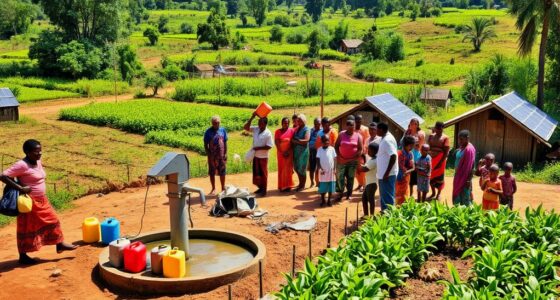
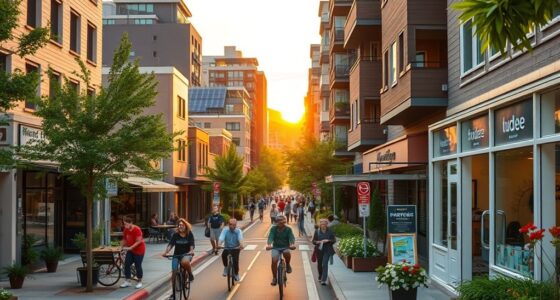
When neighbors team up for renewable power, they create community energy projects that make clean energy more affordable and accessible. By pooling resources and sharing the benefits, you can reduce energy costs and strengthen local resilience. Small wind turbines and solar panels are common options, often supported by incentives and grants. Managing these initiatives involves planning, permits, and agreements, but the rewards include environmental benefits and community bonding—continue to explore how you can join or start such efforts.

Prime made for students and young adults
- Fast, free delivery for dorm and study essentials
- Prime Video and Amazon Music included
- Member-only deals
Key Takeaways
- Neighbors collaborate on renewable energy projects like solar and wind to reduce reliance on utilities.
- Community initiatives promote shared ownership, collective benefits, and local resilience through renewable resources.
- Solar incentives from government programs make solar installations more affordable and accessible for communities.
- Small-scale wind turbines can serve multiple households, benefiting areas with consistent wind patterns.
- Successful projects require coordination on permits, funding, agreements, and partnership with local organizations.

Community Energy
Have you ever wondered how communities can generate their own power and reduce reliance on large utility companies? The answer lies in community energy projects, where neighbors come together to harness renewable resources like solar and wind. By pooling resources and sharing benefits, you and your community can create a more sustainable and affordable energy future. One of the first steps in this process is understanding the available solar incentives. These incentives, offered by federal, state, and local governments, can markedly offset the costs of installing solar panels. They make going solar more accessible and financially attractive, encouraging more residents to participate. When you take advantage of these incentives, you reduce your upfront investment and accelerate your return on investment, making the switch to renewable energy a smart choice for both your wallet and the environment.
In addition to solar, wind turbines are another powerful option for community energy projects. Small-scale wind turbines can be installed on community land or shared properties to generate electricity for multiple households. Wind turbines work best in areas with consistent wind patterns, making local assessments essential before installation. When you and your neighbors decide to invest in wind turbines, you’re not just generating clean energy—you’re also creating a sense of shared ownership and purpose. Community-based wind projects can be more cost-effective and efficient than individual efforts, leveraging economies of scale and collective expertise. Moreover, understanding the technical aspects of hydraulics and safety is crucial for successful installation and operation, ensuring the longevity and safety of your renewable energy systems.
Bringing solar incentives and wind turbines into your community energy plan requires careful planning and cooperation. You’ll need to navigate permitting processes, secure funding, and establish agreements on how energy and savings are distributed. Many communities form cooperative organizations or energy groups that handle these logistics, making participation straightforward for residents who might lack technical expertise. These groups often work with local governments or nonprofit organizations to access grants and additional incentives, further reducing costs. The collective effort not only cuts energy bills but also fosters local resilience, job creation, and environmental benefits.
Popular right now
Dyson Car+Boat Cordless Handheld Vacuum

KitchenAid Classic Series 4.5 Quart Tilt-Head Stand Mixer K45SS, Onyx Black

Shark Rocket Pet Plus Corded Stick Vacuum, Bordeaux, HV322
As an affiliate, we earn on qualifying purchases.
Frequently Asked Questions
How Do Community Energy Projects Impact Local Property Values?
Community energy projects can positively impact your property appreciation by enhancing neighborhood development. When renewable energy initiatives are introduced, they often boost the area’s appeal, making homes more desirable. This can lead to increased property values as the community becomes more sustainable and attractive. Your involvement in or support of these projects not only benefits the environment but also contributes to a healthier, more vibrant neighborhood, increasing overall property appreciation.
What Are the Initial Costs to Join a Community Renewable Energy Program?
The initial costs to join a community renewable energy program vary, but you should consider the cost considerations carefully. Membership fees typically cover project development and maintenance, often ranging from a few hundred to a few thousand dollars upfront. While these costs might seem significant, they’re a small price to pay for long-term savings and environmental benefits. Weigh these fees against potential energy savings to decide if it’s a worthwhile investment for you.
How Is the Energy Output of Community Projects Measured and Verified?
You measure the energy output of community projects through energy output measurement tools like smart meters and data logging systems that track generated power in real-time. Project verification involves independent audits and certifications from authorized agencies to confirm the accuracy of the energy output data. This process guarantees transparency, reliability, and accountability, giving you confidence that the renewable energy produced meets the claimed amounts and supports community sustainability goals.
Can Residents Opt Out Once They Join a Community Energy Initiative?
Yes, residents can usually opt out of community energy initiatives. Most programs have clear opt out policies, allowing you to withdraw if your circumstances change or you prefer not to participate anymore. Participation flexibility is important, so check the specific rules of your project. Keep in mind, opting out might affect your ability to benefit from shared renewable energy or savings, so consider your decision carefully before joining.
What Legal or Regulatory Hurdles Exist for Establishing Community Energy Schemes?
You might face legal or regulatory hurdles like zoning restrictions that limit where you can install renewable energy projects, and licensing requirements that you must meet to operate legally. These hurdles can delay or complicate establishing community energy schemes. To navigate them, you’ll need to work closely with local authorities and guarantee your project complies with all relevant laws and regulations, making the process smoother and more successful.
Conclusion
By teaming up with your neighbors, you’re not just sharing energy—you’re igniting a revolution that could power entire communities with renewable resources. Your collective effort has the potential to transform the way we think about energy, making it more sustainable and accessible. Remember, this isn’t just a small step; it’s a giant leap toward a cleaner, brighter future. Together, you’re proving that unity truly has the power to change the world—one neighborhood at a time.