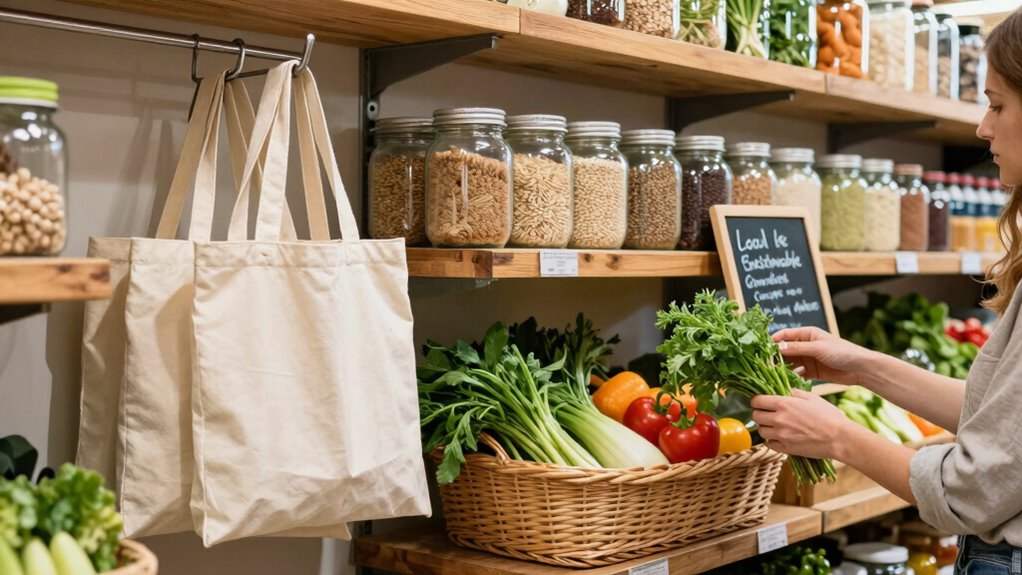

To plan a more sustainable grocery trip, bring reusable bags, containers, and produce nets to cut down on plastic waste. Shop at farmers’ markets or buy directly from local farmers to support sustainable practices and reduce your carbon footprint. Make a detailed, seasonal meal plan, so you buy only what you need and avoid food waste. Focus on eco-friendly packaging, bulk items, and locally sourced produce—discover more ways to shop green with simple strategies that make a difference.

Prime made for students and young adults
- Fast, free delivery for dorm and study essentials
- Prime Video and Amazon Music included
- Member-only deals
Key Takeaways
- Create a detailed shopping list based on seasonal, local produce to avoid impulse buys and reduce food waste.
- Bring reusable bags, containers, and produce nets to minimize plastic packaging.
- Shop at farmers’ markets or directly from local growers to support sustainable agriculture.
- Choose products with minimal or eco-friendly packaging, preferring bulk options when possible.
- Plan meals around available ingredients to prevent spoilage and unnecessary purchases.
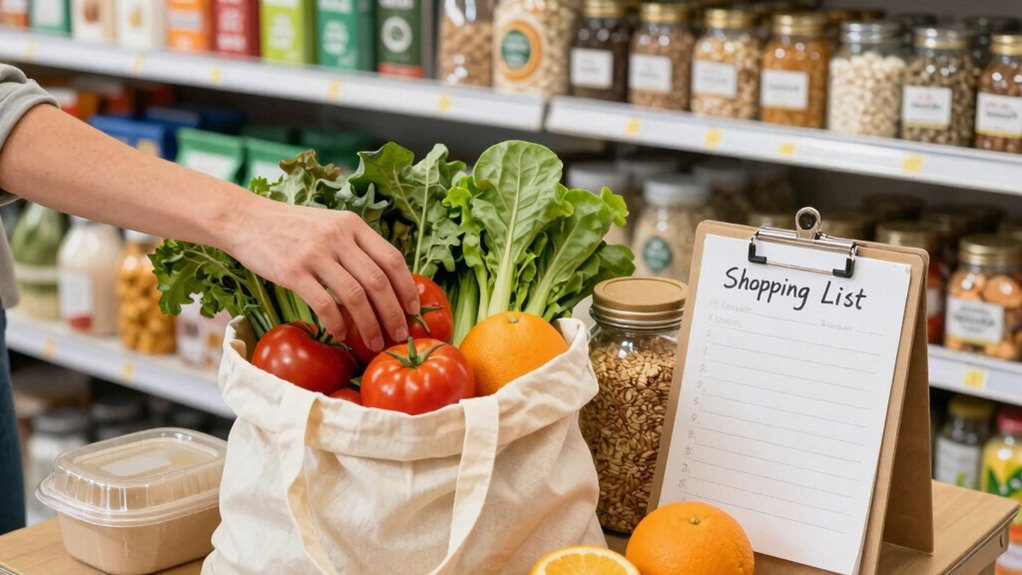
Planning a more sustainable grocery trip starts with mindful choices that reduce waste and minimize environmental impact. One of the most effective ways to do this is by reducing plastic waste. Bring your own reusable bags, containers, and produce nets to the store. Instead of accepting single-use plastic bags, have your own sturdy, eco-friendly options ready. Use glass jars or cloth produce bags for fruits and vegetables, which not only cut down on plastic but also help you avoid packaging that often ends up in landfills or oceans. When possible, choose products sold without excessive packaging or in bulk sections, allowing you to purchase only what you need and cut down on unnecessary waste.
Reduce waste by bringing reusable bags and containers, choosing minimal or bulk packaging, and avoiding single-use plastics.
Supporting local farmers is another essential step in creating a greener grocery routine. Shop at farmers’ markets or join a community-supported agriculture (CSA) program to buy directly from growers. Not only does this reduce the carbon footprint associated with long-distance transportation, but it also encourages sustainable farming practices. Locally sourced produce tends to be fresher and often grown with less reliance on harmful chemicals and synthetic fertilizers. By choosing local, you’re fostering a stronger community connection and supporting small-scale farmers who prioritize environmentally friendly methods. Additionally, being aware of biodiversity can guide you in selecting more sustainable and diverse food options. Incorporating a variety of foods from different sources can also enhance your diet and reduce dependence on monocultures that threaten ecosystems.
Planning your grocery list based on what’s in season and available locally helps you avoid impulse buys and reduces food waste. When you know exactly what you need, you’re less likely to over-purchase or let perishable items go bad. This planning also allows you to be more strategic about what you bring home, ensuring every item has a purpose and reducing the likelihood of throwing away unused food. Making a detailed meal plan can further support this effort by aligning your shopping with your weekly menu, thereby minimizing excess. Being mindful of packaging waste can further guide your choices toward more environmentally friendly options, helping to reduce the burden on landfills and recycling systems. You might also consider researching brands that prioritize eco-conscious packaging to make more informed decisions.
As an affiliate, we earn on qualifying purchases.
Frequently Asked Questions
How Can I Reduce Plastic Waste During Grocery Shopping?
You can reduce plastic waste during grocery shopping by bringing reusable bags instead of single-use plastic ones. Opt for bulk purchasing to buy only what you need, cutting down on packaging. Additionally, choose products with minimal or no plastic packaging, and carry your own containers for produce or deli items. These simple steps help you cut down on plastic waste and make your grocery shopping more eco-friendly.
Are There Specific Certifications to Look for on Sustainable Products?
Think of certification labels as your green passport—they guide you through eco-friendly choices. Look for labels like USDA Organic, Fair Trade, and Rainforest Alliance, which verify sustainable practices. These certifications often indicate eco-friendly packaging and responsible sourcing. By choosing products with these labels, you’re supporting brands committed to sustainability, making your grocery trip a step toward a healthier planet. Always read labels carefully to make the most eco-conscious decision.
How Do Seasonal Foods Impact Sustainability?
Seasonal eating considerably boosts sustainability by reducing the environmental impact of food production and transportation. When you choose seasonal foods, you’re supporting local sourcing, which cuts down on carbon emissions linked to long-distance shipping. By aligning your grocery list with what’s in season, you help promote eco-friendly farming practices and enjoy fresher, healthier options, making your shopping more sustainable and beneficial for the planet.
Can Shopping Online Be More Eco-Friendly Than In-Store?
Sure, shopping online can be more eco-friendly—imagine your groceries traveling in eco-friendly packaging, avoiding the chaos of in-store traffic. By choosing local vendors and minimizing packaging waste, you reduce your carbon footprint. Plus, you cut out the emissions from driving and store energy use. So, next time you’re tempted to brave the aisles, consider the planet’s peace of mind—your online cart might just save the day.
What Are the Best Practices for Storing Groceries Sustainably?
To store groceries sustainably, start by using reusable bags for your shopping trips to cut down on plastic waste. When you get home, prioritize bulk purchasing to minimize packaging and store items in reusable containers or glass jars. Keep perishables like fruits, vegetables, and dairy in the fridge, and make certain your freezer is organized for longer-lasting storage. Properly labeling and rotating items also reduces waste and makes your grocery routine eco-friendly.
eco-friendly shopping containers
As an affiliate, we earn on qualifying purchases.
As an affiliate, we earn on qualifying purchases.
Conclusion
As you step into the grocery store, imagine the gentle ripple your choices create—bright vegetables, fresh from local farms, and packages made from eco-friendly materials. Each mindful decision you make today paints a vivid picture of a healthier planet, one trip at a time. With every sustainable choice, you’re weaving a vibrant tapestry of care and consciousness, turning your shopping routine into a powerful act of kindness for the Earth.
As an affiliate, we earn on qualifying purchases.
As an affiliate, we earn on qualifying purchases.
Fall Picks
fall essentials
As an affiliate, we earn on qualifying purchases.