
To conduct a home energy audit, start by inspecting your walls, attic, and basement for insulation gaps or compression. Check for drafts around windows, doors, and outlets, sealing leaks with weatherstripping or caulk. Evaluate your appliances’ efficiency and replace outdated ones with ENERGY STAR models. Regularly maintain your HVAC system, changing filters and scheduling tune-ups. Addressing these areas can markedly cut energy waste. Keep going to discover more simple steps to maximize savings and home comfort.
Key Takeaways
- Inspect insulation in walls, attic, and basement, sealing gaps or adding insulation to improve energy efficiency.
- Assess appliance ages and efficiency; unplug unused devices and replace outdated appliances with ENERGY STAR models.
- Identify and seal leaks around windows, doors, outlets, and vents with weatherstripping or caulk to prevent energy loss.
- Perform regular maintenance on heating and cooling systems, including filter changes and professional tune-ups.
- Use proper window treatments and optimize indoor climate control to maximize energy savings and home comfort.
Conducting a home energy audit is an effective way to identify areas where your house is losing energy and to find opportunities for savings. One of the first steps is performing an insulation inspection. You want to check if your walls, attic, and basement have enough insulation to keep warm air in during winter and cool air in during summer. Look for gaps, sagging, or compressed insulation, all of which reduce its effectiveness. If you notice that certain areas are poorly insulated, sealing or adding more insulation can considerably cut your energy bills. Proper insulation not only improves comfort but also minimizes the workload on your heating and cooling systems, making your home more energy-efficient. Additionally, understanding the contrast ratio of your lighting and window treatments can help optimize indoor climate control and energy use.
Perform an insulation check to improve comfort and reduce energy bills.
Next, focus on your appliances. Assess their efficiency and age, since outdated or inefficient appliances often consume more energy than necessary. You can start by reviewing your utility bills to spot irregularities or spikes in energy use. Consider performing an appliance efficiency test by unplugging devices when not in use or using a watt-meter to measure their actual consumption. Replace older appliances with newer, energy-efficient models that carry ENERGY STAR ratings. These appliances use less power, which translates into lower bills and a smaller environmental footprint. Remember, even small devices like chargers and electronics contribute to your overall energy use, so being mindful of their operation can add up to considerable savings.
As you proceed, look around your home for drafts and leaks. Common culprits include gaps around windows, doors, outlets, and vents. Sealing these leaks with weatherstripping, caulk, or foam sealant is a quick, cost-effective way to prevent warm or cool air from escaping. This step, combined with insulation and efficient appliances, forms a thorough approach to reducing energy waste.
Finally, don’t forget to evaluate your heating and cooling systems. Regular maintenance, such as changing filters and scheduling professional tune-ups, keeps systems running efficiently. An efficient HVAC system consumes less energy and provides better climate control. When combined with proper insulation inspection and appliance upgrades, these measures can lead to substantial savings and a more comfortable home. Conducting a detailed home energy audit empowers you to take control of your energy use, reduce costs, and contribute to a healthier environment.
Frequently Asked Questions
How Often Should I Conduct a Home Energy Audit?
You should conduct a home energy audit at least once a year, ideally during a seasonal check, such as fall or spring. This annual review helps identify new leaks or issues that may have developed, ensuring your home stays energy-efficient. Regular audits allow you to catch problems early, save money on energy bills, and keep your heating and cooling systems running smoothly, making your home more comfortable year-round.
Can I Perform an Energy Audit Myself or Need a Professional?
You can perform a DIY assessment if you’re comfortable inspecting your home for energy leaks and inefficiencies. However, a professional evaluation offers a thorough analysis with advanced tools, ensuring you identify all potential savings. While a DIY assessment saves money upfront, a professional evaluation provides expert insights that can lead to better long-term savings and comfort. Consider your skills and budget to decide which approach suits you best.
What Tools Are Essential for a DIY Energy Audit?
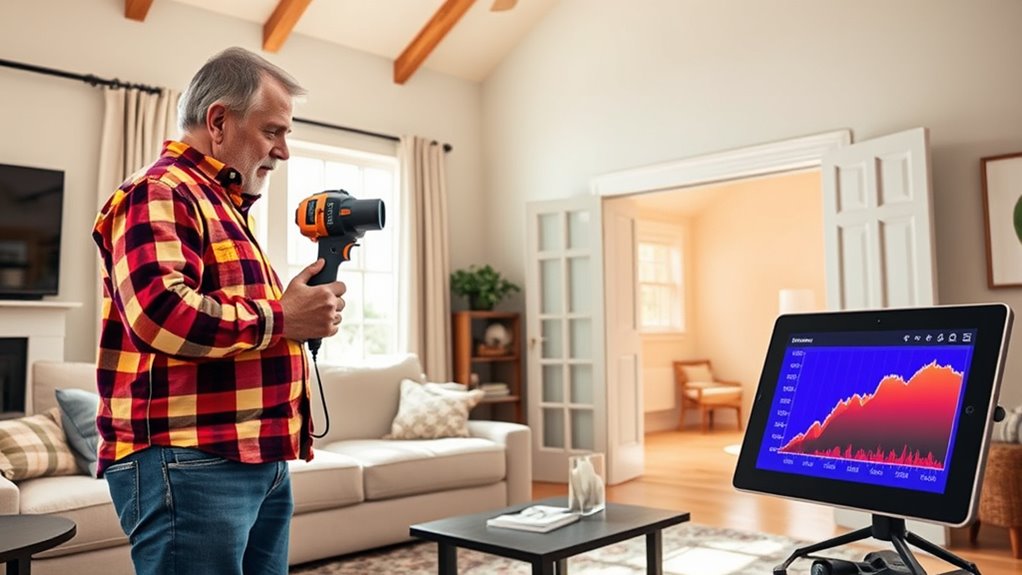
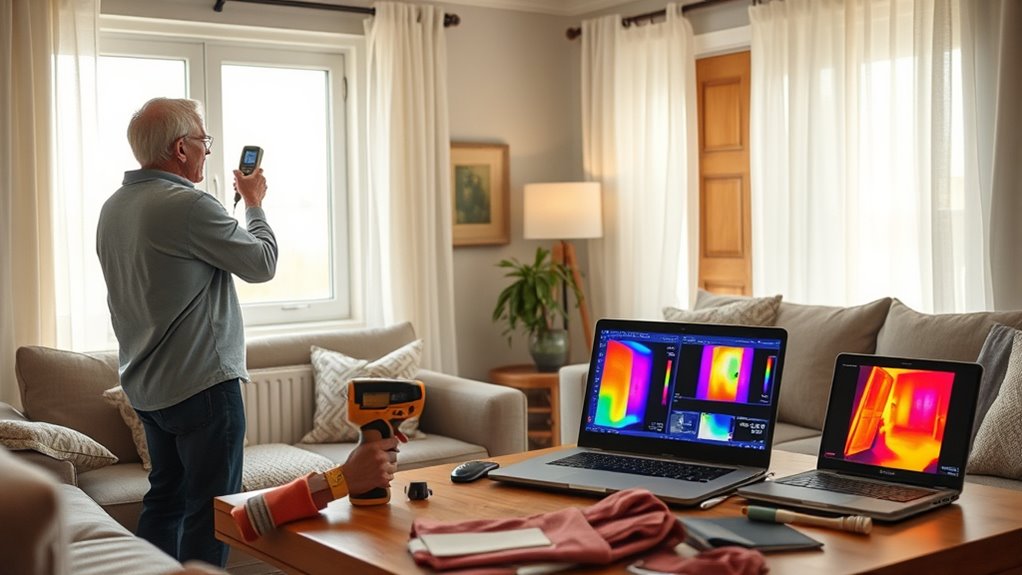
Ready to uncover hidden energy leaks? You’ll need a thermal camera to spot heat loss and a blower door to assess your home’s air tightness. These tools reveal problems you can’t see with your eyes, making your DIY audit more accurate. With these essentials, you can identify issues, save energy, and cut costs. Don’t overlook these key instruments—they’re your secret weapons for a thorough home energy check.
How Long Does a Home Energy Audit Typically Take?
A home energy audit typically takes about 2 to 4 hours, depending on your home’s size and complexity. You should plan for the full audit duration, including walkthroughs and testing. If your house is larger or has many features to evaluate, it might take closer to 4 hours. Keep in mind that a thorough audit can save you money in the long run by identifying energy-saving opportunities efficiently.
Are There Government Incentives for Improving Home Energy Efficiency?
Did you know that over 30% of energy costs can be cut with efficiency upgrades? You’re likely eligible for government rebates and tax credits when improving your home’s energy efficiency. These incentives make upgrades more affordable, helping you save money long-term. Check with local programs or federal initiatives to find out what rebates or credits you qualify for, so you can make cost-effective improvements and reduce your environmental impact.
Conclusion
By conducting a home energy audit, you can identify areas where energy escapes and save money in the long run. Imagine noticing chilly drafts around your windows and sealing them, instantly making your home warmer and reducing your bills. Just like Sarah, who found leaks in her attic and improved insulation, you’ll be surprised at how small changes can make a big difference. Take action today, and enjoy a cozier home while lowering your energy costs.