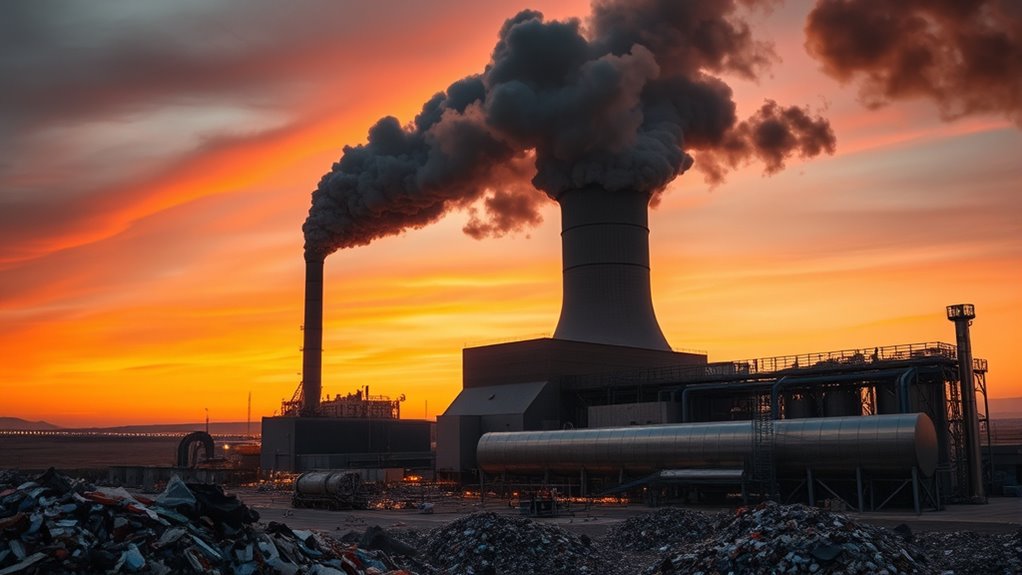

Burning trash for power can be a practical waste disposal method that reduces landfill volume and generates energy, but its sustainability depends on technology and waste management practices. Modern waste-to-energy plants with advanced filters emit fewer pollutants and improve resource recovery, making them more environmentally friendly. However, concerns remain about emissions and discouraging recycling efforts. To understand whether this approach truly benefits long-term environmental health, exploring the latest innovations and challenges is essential.
Key Takeaways
- Modern WTE facilities with advanced filters significantly reduce harmful emissions, improving environmental sustainability.
- Waste-to-energy reduces landfill volume and generates renewable energy, supporting waste management efficiency.
- Controversies exist due to pollutant emissions and potential discouragement of recycling efforts.
- Improved waste sorting enhances resource recovery and minimizes environmental impact of WTE processes.
- Ongoing technological innovations aim to make waste-to-energy cleaner, more efficient, and more sustainable overall.
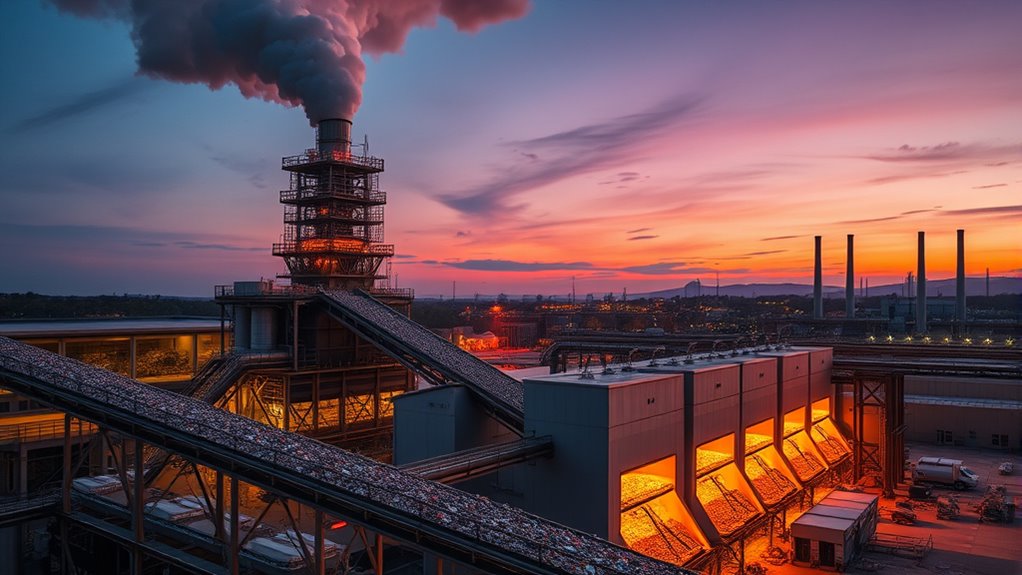
Have you ever wondered what happens to the waste you toss out every day? Most of it ends up in landfills, where it can take years to decompose and often causes environmental issues like leachate contamination and methane emissions. But some waste doesn’t sit quietly; instead, it’s burned in waste-to-energy (WTE) facilities to generate electricity or heat. While this process offers a way to reduce landfill volume and produce energy, it also raises questions about its sustainability and environmental impact. Technological advancements in WTE plants have made the process cleaner and more efficient over time. Modern incinerators now incorporate sophisticated filters and scrubbers that considerably cut down on harmful emissions, like dioxins and particulate matter. These innovations improve the environmental footprint of waste-to-energy plants, making them a more attractive alternative to traditional landfilling. However, burning waste is not without controversy. Critics argue that WTE still releases pollutants, and the process can sometimes discourage recycling efforts because it creates a demand for waste as fuel. Despite these concerns, proponents claim that WTE provides a reliable source of renewable energy, especially in regions with limited space for landfills. They point out that technological advancements continue to enhance the sustainability of these facilities. For example, newer plants are better at capturing and converting energy from waste, turning what was once considered garbage into a valuable resource. They also explore ways to better sort waste, separating recyclable and compostable materials from trash destined for incineration, which reduces environmental harm and maximizes resource recovery. Still, the environmental impact of burning waste depends heavily on the technology used and how waste management strategies are implemented. While WTE can reduce greenhouse gases compared to landfilling, it’s not entirely emission-free. It’s essential to weigh the benefits of waste volume reduction and energy recovery against the potential pollutants released. Advances in waste sorting systems are crucial for improving the sustainability of WTE facilities by ensuring that recyclables and compostables are diverted from incineration. As technology advances, the hope is that waste-to-energy will become more sustainable, integrating cleaner emissions controls and smarter waste sorting systems. In the end, whether burning trash for power is a sustainable solution depends on continuous innovation and a balanced approach that prioritizes environmental health, resource conservation, and energy needs. You can play a part by supporting improved waste management practices and advocating for technologies that minimize environmental impact, helping shape a future where waste is viewed not just as a problem, but as a resource that can be harnessed responsibly.

ChangBERT Induction Cooktop NSF Certified Professional Chef Edition Stove, 1800W Commericial Induction Burner with Schott Glass, Large Heating Coil Electric Hot Plate for Restaurant Hotel Food Station
HIGH EFFICIENCY AND NO HOT KITCHEN. Induction technology delivers energy directly to the cookware—with 83% energy efficiency rating,...
As an affiliate, we earn on qualifying purchases.
Frequently Asked Questions
What Are the Long-Term Environmental Impacts of Waste-To-Energy Plants?
You should know that waste-to-energy plants can cause long-term environmental impacts like air pollution, releasing pollutants that harm air quality and human health. They may also contribute to habitat disruption nearby, affecting local ecosystems and wildlife. While they generate energy from trash, it’s essential to weigh these impacts against their benefits, considering sustainable waste management practices that minimize air pollution and protect habitats for the future.
How Does Waste-To-Energy Compare Economically to Recycling Programs?
You’ll find that waste-to-energy (WTE) plants cost about 30-50% more to operate than traditional recycling programs, impacting their economic viability. While WTE can generate electricity and reduce landfill volume, an all-encompassing cost analysis often shows recycling is more cost-effective long-term. Recycling programs tend to save money, conserve resources, and generate less pollution, making them a smarter economic choice overall for sustainable waste management.
Are There Health Risks Associated With Emissions From Waste Incineration?
Yes, there are health risks from emissions from waste incineration. You should be aware that air pollution from incinerators can release dioxin emissions, which are highly toxic and linked to serious health problems. Breathing in these pollutants may increase your risk of respiratory issues, cancer, and other health concerns. Proper regulation and modern pollution controls are essential to minimize these risks and protect public health.
Can Waste-To-Energy Technology Handle All Types of Municipal Waste?
You might be surprised to learn that waste-to-energy plants typically handle about 70-80% of municipal waste, but they can’t process all types compatibly. Proper waste segregation is vital to maximize efficiency and prevent damage to equipment. Certain materials, like plastics or hazardous waste, aren’t suitable for incineration. So, while technology has advanced, it still requires careful sorting to guarantee safe and sustainable energy production from diverse municipal waste streams.
What Policies Support or Hinder the Adoption of Waste-To-Energy Solutions?
Policy incentives like tax credits and grants support waste-to-energy adoption, making projects more financially viable. However, regulatory barriers such as strict emissions standards and permitting delays can hinder progress. You need to stay informed about these policies, advocate for supportive measures, and work with regulators to address challenges. This proactive approach helps guarantee waste-to-energy solutions are sustainable and effectively integrated into your community’s waste management and energy plans.

AQUASTRONG Swimming Pool Heat Pump,Electric Pool Heater for Above Ground and Inground Pool,Heating and Cooling Pool Heater Pools Up to, 5000 Gallons
All-Season Pool Comfort: Featuring innovative dual-mode temperature control, this heat pump precisely heats water between 59–104°F or within...
As an affiliate, we earn on qualifying purchases.
Conclusion
Like Prometheus stealing fire, burning trash for energy offers both illumination and risk. While it can power cities and reduce landfills, it also releases pollutants and questions sustainability. You must weigh whether this modern Promethean act truly benefits the Earth or merely sparks a fleeting flame. Ultimately, it’s a balancing act—embracing innovation without igniting irreversible harm. The choice is yours: harness the energy, or heed the lessons of history and seek cleaner solutions.

Rinnai REHP50 Electric Heat Pump Water Heater – 50 Gallon, 240V, 30A, Energy Star Certified, 3.75 UEF, 73 Gallon First Hour Delivery for Residential Use
Energy-efficient performance: Energy Star Certified. Extracts heat from ambient air to deliver consistent hot water with zero emissions...
As an affiliate, we earn on qualifying purchases.

AQUASTRONG Inverter Swimming Pool Heat Pump,Pool Heater for Above Ground and Inground Pool Heating and Cooling Pool Heater, Smart WiFi Control Pools Up to, 9000 Gallons
Extend Your Swim Season: The pool heat pump features a dual-mode heating and cooling system that maintains optimal...
As an affiliate, we earn on qualifying purchases.