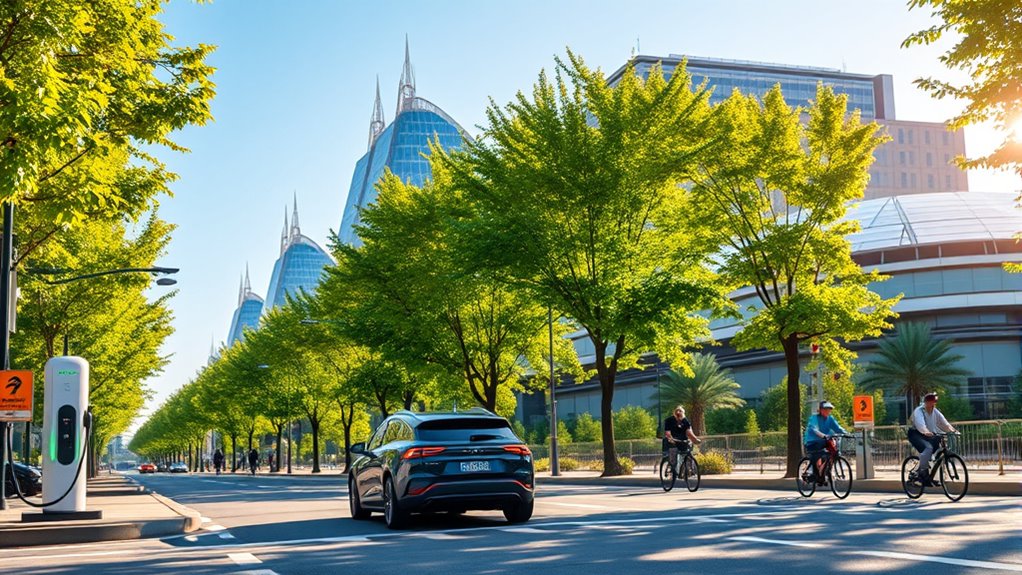

Electric cars are just the start of a green transport revolution because they’re part of a larger shift toward sustainable mobility powered by renewable energy and smart infrastructure. As you adopt EVs, you’re also supporting the development of renewable sources like wind and solar, which help keep charging clean. Innovations like smart grids and vehicle-to-grid tech mean the entire system becomes more efficient and resilient. Stay tuned to see how this transformation continues beyond just electric cars.

Prime made for students and young adults
- Fast, free delivery for dorm and study essentials
- Prime Video and Amazon Music included
- Member-only deals
Key Takeaways
- Transitioning to EVs requires a shift to renewable energy sources to maximize environmental benefits.
- Developing smart grids enables efficient energy management and ensures clean, sustainable charging infrastructure.
- Future charging stations will be powered entirely by renewable energy, reducing the carbon footprint of transportation.
- Vehicle-to-grid technology allows EVs to support grid stability and renewable energy integration.
- A comprehensive green transport revolution involves innovations in infrastructure, technology, and sustainable mobility solutions beyond just EVs.

The shift toward electric cars is accelerating, driving a green transport revolution that’s reshaping how we think about mobility. But this isn’t just about swapping gasoline engines for batteries; it’s about transforming the entire infrastructure that supports transportation. To truly harness the environmental benefits of electric vehicles, we need a robust, renewable infrastructure that can sustain increased energy demands. This means investing in renewable energy sources like wind and solar, which reduce reliance on fossil fuels and make EV charging cleaner and more sustainable. Without a reliable supply of renewable energy, the push toward electric cars risks simply shifting emissions rather than eliminating them.
Equally important is the development of a smart grid, an advanced electricity network that can efficiently manage energy distribution, storage, and usage. A smart grid allows for real-time data exchange between energy producers, consumers, and utilities, enabling more precise control and balancing of electricity loads. As you charge your electric vehicle, the smart grid ensures that the power comes from the most sustainable sources available at that moment, optimizing renewable energy use and reducing waste. This integration not only supports cleaner transportation but also enhances grid stability, making the entire system more resilient to fluctuations in renewable energy generation.
Imagine a future where your car isn’t just a means of travel but a vital part of a smarter, greener energy ecosystem. With a renewable infrastructure in place, charging stations could be powered entirely by wind or solar, dramatically lowering the carbon footprint of each charge. The smart grid would coordinate this energy flow, ensuring that excess renewable energy generated during peak sunlight or wind hours is stored or redistributed efficiently. You’d benefit from reduced charging costs, faster access to clean energy, and a transportation system that aligns seamlessly with environmental goals.
This interconnected system also opens doors for innovations like vehicle-to-grid technology, where your electric car can feed excess energy back into the grid during peak demand, further supporting grid stability and renewable energy integration. As you become part of this evolving landscape, you’ll find that the transition to electric cars is just the beginning. It’s a stepping stone toward a broader transformation—an integrated, sustainable transport network powered by renewable infrastructure and managed by intelligent, adaptive systems. Developing interoperable energy systems and innovative technologies will be essential to fully realize this vision. The future of mobility isn’t just electric; it’s smarter, cleaner, and more resilient, helping you reduce your carbon footprint while enjoying a more efficient and reliable transportation experience.
Popular right now

Hisense 85 U6 Pro Series Mini-LED ULED 4K UHD HDR Gaming AI Smart Fire TV (85U6SF Pro)

TCL 85-Inch QM6K Series QLED Mini LED 4K HDR Smart Google TV

Vitamix Propel Series 510 Professional-Grade Blender, 3 Programs, Black
As an affiliate, we earn on qualifying purchases.
Frequently Asked Questions
How Will Charging Infrastructure Evolve With Increased Electric Vehicle Adoption?
As electric vehicle adoption grows, charging infrastructure will evolve rapidly. You’ll see expanded charging networks, including fast chargers along highways and in urban areas, making charging more convenient. Advances in battery technology will lead to longer-lasting, quicker-charging batteries, reducing wait times. This evolution guarantees you can charge your EV efficiently, supporting widespread adoption and helping to build a seamless, sustainable transportation system for everyone.
What Role Do Alternative Fuels Play Alongside Electric Cars?
You’ll find alternative fuels like biofuels integration and hydrogen prospects playing a crucial role alongside electric cars. These options help diversify the green transport landscape, reducing reliance on a single technology. By adopting biofuels, you support sustainable energy sources, while hydrogen prospects offer promising zero-emission solutions for heavy-duty transport. Together, these fuels complement electric vehicles, accelerating the shift toward a cleaner, more resilient transportation system.
How Will Public Transportation Adapt to Support the Green Revolution?
You’ll see public transportation adapt by becoming more fuel-efficient and alleviating urban congestion. For instance, cities are investing in electric buses and trams, reducing emissions by up to 50%. This shift encourages more people to use public transit, easing traffic jams. As a result, your commute becomes faster, cleaner, and more sustainable, supporting the broader green revolution. Public transport is transforming to meet the demand for smarter, greener urban mobility.
Are Electric Cars Truly Sustainable in the Long Term?
You might wonder if electric cars are truly sustainable long-term. The answer depends on advances in battery recycling, which can reduce waste and recover valuable materials like rare earths. As technology improves, you’ll see more efficient recycling processes that lessen reliance on mining. While challenges remain, these innovations suggest electric cars can become more eco-friendly, supporting a sustainable future without exhausting our planet’s resources.
What Policies Are Governments Implementing to Promote Green Transportation?
Governments are actively promoting green transportation by implementing policies like carbon pricing, which encourages cleaner vehicle choices, and urban planning that prioritizes public transit, cycling, and walking. You’ll see investments in infrastructure for electric vehicles, expanded bike lanes, and improved public transit systems. These strategies aim to reduce emissions, ease congestion, and create healthier cities, making sustainable transport options more accessible and appealing for everyone.
Conclusion
As you stand on the brink of this green transport revolution, remember that electric cars are just the start—it’s like the dawn of the jet age, but for sustainable transit. With innovations accelerating faster than a DeLorean hitting 88 mph, you’ll soon see buses, bikes, and even flying taxis embracing cleaner energy. So, gear up for a future where every journey could be as eco-friendly as a Victorian lantern-lit street, only way cooler and way greener.