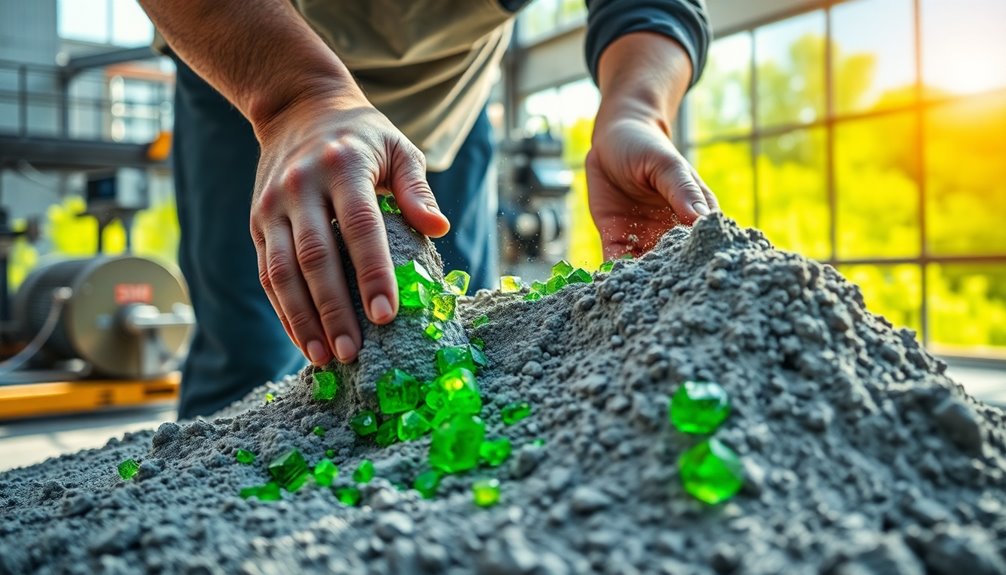

Sustainable concrete and cement are seeing major advancements through new carbon-negative technologies. Innovations like Limestone Calcined Clay Cement and Geopolymer concrete can reduce emissions significantly, some by up to 90%. Startups are also developing methods to utilize electrochemical processes and green hydrogen, contributing to a cleaner production cycle. With ongoing research and collaboration, the construction industry is rapidly moving towards more eco-friendly solutions. Stay tuned to discover how these technologies are shaping the future of construction.

Prime made for students and young adults
- Fast, free delivery for dorm and study essentials
- Prime Video and Amazon Music included
- Member-only deals
Key Takeaways
- New technologies like electrochemical processes can reduce cement emissions by up to 90%, enhancing sustainability in concrete production.
- Innovations such as Limestone Calcined Clay Cement (LC3) can cut CO2 emissions by approximately 40%.
- Geopolymer concrete utilizes industrial by-products, achieving up to 90% emissions reduction compared to traditional methods.
- The adoption of carbon capture and storage (CCS) technologies is crucial for achieving net-zero emissions in cement production.
- Research collaborations, like those at the University of Technology Sydney, drive advancements in sustainable concrete mixes and practices.

As the world grapples with climate change, the construction industry is turning to sustainable concrete and cement to reduce its environmental impact. You mightn't realize that traditional Portland cement generates a significant carbon footprint, while sustainable alternatives can cut emissions dramatically. By utilizing recycled industrial waste, particularly from the coal industry, sustainable concrete offers a robust solution that's both environmentally friendly and highly durable.
The innovations in sustainable cement production are remarkable. For instance, technologies like Limestone Calcined Clay Cement (LC3) can lower CO2 emissions by roughly 40%. Switching to clean electricity and adopting carbon capture techniques can further reduce emissions by 36%. Startups like Sublime Systems are pushing the envelope with electrochemical processes that promise a staggering 90% reduction in emissions. Incorporating green hydrogen as a low-carbon alternative is another step forward in mitigating the fossil fuel dependency. To achieve net-zero goals, the industry must also embrace breakthrough technologies like carbon capture and storage (CCS).
Innovative technologies like LC3 and electrochemical processes are poised to drastically reduce cement emissions and transform the construction industry.
Understanding that clinker production contributes to 90% of cement emissions is crucial for you. By focusing on clinker reduction and exploring alternatives like biomass and plastic waste, the industry can significantly lessen its carbon footprint. Companies are even developing electric kilns to replace traditional fossil fuel-based systems, showcasing a commitment to innovation.
Diverse sustainable concrete innovations are redefining what's possible. Geopolymer concrete, which utilizes by-products like fly ash, can reduce emissions by up to 90%. Self-healing concrete repairs its own cracks, extending the lifespan of structures. Translucent concrete, embedded with optical fibers, allows energy-efficient lighting, making buildings smarter.
Collaboration and investment in research from institutions like the University of Technology Sydney are driving advancements in optimizing concrete mixes. With ambitious carbon neutrality goals set for 2050, the construction sector is prioritizing sustainable practices.
As an affiliate, we earn on qualifying purchases.
Frequently Asked Questions
How Does Carbon-Negative Technology Affect Concrete's Strength and Durability?
Carbon-negative technology enhances concrete's strength and durability by incorporating innovative materials and processes.
When you use carbonated water solutions and biochar, you're boosting compressive strength significantly while capturing CO2. This means that not only does your concrete rival traditional formulations, but it also contributes to reducing emissions.
As you adopt these methods, you're ensuring your structures stand strong and last longer, all while supporting a more sustainable future.
What Are the Cost Implications of Using Sustainable Concrete?
Imagine building a skyscraper with clouds instead of bricks!
While sustainable concrete might seem like a costly dream, it generally adds just a pinch to your overall project expenses.
Even with a 25% to 75% premium, the impact on total costs is barely a blip—about 1% for buildings.
Plus, using engineered sand can strengthen your mix, keeping costs manageable while you create something truly eco-friendly and innovative.
Can Carbon-Negative Concrete Be Recycled?
Yes, you can recycle carbon-negative concrete. The technologies being developed allow for recycling methods that improve the strength and durability of the material.
By utilizing processes like thermoactivation, you not only reduce waste but also repurpose carbon-negative concrete into new construction materials.
This recycling helps minimize landfill use while continuing to lower emissions, making it a sustainable option for future projects.
How Widely Available Is Carbon-Negative Concrete Technology?
Carbon-negative concrete technology's availability is growing, with companies like C-Crete and CarbonCure making strides.
You'll find some options ready for market, while others face scalability hurdles. If you're looking for sustainable building solutions, consider that government funding is boosting innovation, and collaborative efforts across industries are paving the way.
However, you should stay informed about regulatory changes and cost factors that could impact the adoption of these promising technologies.
What Are the Environmental Benefits Beyond Carbon Reduction?
When you consider environmental benefits beyond carbon reduction, you'll see that sustainable concrete significantly conserves resources by using recycled materials, minimizing waste, and requiring less water.
It enhances durability, reducing maintenance and repair needs, which also lowers costs in the long run.
Additionally, it improves air quality by lowering emissions during production and supports local economies through the use of regionally sourced materials, benefiting both communities and the environment.
As an affiliate, we earn on qualifying purchases.
Conclusion
As you embrace these innovative carbon-negative technologies, you're not just laying the foundation for sustainable concrete and cement; you're building a greener future. By harnessing these advancements, you can transform the construction industry, reducing its carbon footprint and nurturing the planet. Remember, every structure you create is like a seed planted in the earth—each one has the potential to grow into something remarkable, contributing to a healthier environment for generations to come.
As an affiliate, we earn on qualifying purchases.
As an affiliate, we earn on qualifying purchases.
Halloween Picks
halloween
As an affiliate, we earn on qualifying purchases.