
TL;DR

Prime made for students and young adults
- Fast, free delivery for dorm and study essentials
- Prime Video and Amazon Music included
- Member-only deals
Peter Sahlins’ book Neanderthals Among Us examines how scientific research and popular culture have reshaped ideas about Neanderthals since their remains were identified in 1856. A History Today review describes the book as a history of both scientific study and cultural portrayals, while noting that new genetic findings complicate older images of Neanderthals as fundamentally different from modern humans.
Peter Sahlins’ Neanderthals Among Us traces how scientific research and popular culture have shaped ideas about Neanderthals, from their identification in 1856 to recent genetic findings. In a review for History Today, the book is presented as a study of both the history of Neanderthal science and a wide range of cultural portrayals, including fiction, film, advertising and games.
The review says Sahlins follows research from early racial science and craniology through ancient DNA analysis. He sets that history alongside depictions in novels, poetry, films, cartoons, advertisements and computer games. The book’s central concern is how the figure called “Neanderthal Man” has changed over time, reflecting assumptions about human difference as much as scientific evidence.
After Neanderthal 1 was found in Germany’s Neander Valley in 1856, researchers placed Neanderthals at the bottom of racialised hierarchies that ranked Europeans above Indigenous peoples and Neanderthals. Popular portrayals often cast them as brutish, sexually violent or intellectually backward. The review points to the 1911 novel Quest for Fire and its 1981 film adaptation, as well as the Clan of the Cave Bear novels, as examples of stories that reinforced such images.
Later archaeological and genetic findings challenged that caricature. The review describes evidence of Neanderthals who survived serious injuries with care from others and of a burial associated with flowers. It also notes that the mapping of the Neanderthal genome in 2010 showed that Neanderthals interbred with modern humans. The review says Sahlins discusses a 2026 finding that interbreeding was predominantly between Neanderthal males and human females; the supplied account does not provide further study details.
How Neanderthal Images Changed
The book’s subject matters because Neanderthals have often served as a shorthand for ideas about who counts as fully human. As the review recounts, the label was used in popular culture and political rhetoric to suggest that people, movements or practices were violent, unintelligent or backward. Sahlins’ account links those depictions to the scientific frameworks and cultural assumptions of their time.
Genetic evidence adds a further dimension: Neanderthals are not only figures from the distant past, but also part of the ancestry of many living people. The review says Sahlins warns that genetic data can be used to project ideas about ancestry and identity. Reading the scientific record alongside cultural portrayals helps show why interpretations of Neanderthal remains and DNA can carry meaning beyond the evidence itself.
Popular right now

Vitamix Propel Series 750 Professional-Grade Blender, 4 Programs, Black

Dyson Ball Animal 2 Plus Corded Vacuum

KitchenAid Artisan 5-Quart Tilt-Head Stand Mixer, Almond Cream
As an affiliate, we earn on qualifying purchases.
From Valley Fossils to DNA
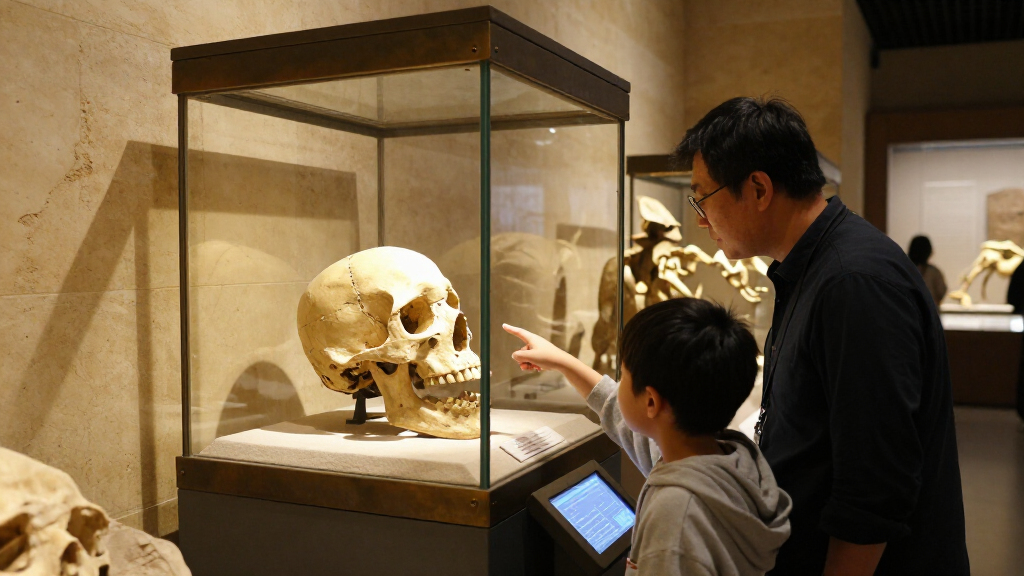
Quarrymen found bones in a cave in the Neander Valley in western Germany in 1856. Local schoolteacher Johann Carl Fuhlrott collected them and took them to the University of Bonn, where they were recognised as ancient human remains. Neanderthal 1 became the first ancient hominin identified as belonging to another species, Homo neanderthalensis.
The review says more than 350 Neanderthal individuals have been recovered from fossil-bearing archaeological sites in Europe and West Asia, alongside hundreds of sites with Mousterian stone tools, which were predominantly made by Neanderthals. Scientific understanding has changed over time: evidence of care and burial challenged popular caricatures, while ancient DNA research established interbreeding with modern humans. Sahlins uses that shifting record to examine how evidence and imagination have interacted.
“The Neanderthal genome remains ‘something of a Rorschach test onto which people project ideas and assumptions about ancestry and what it means to be human – or differently human’.”
— Peter Sahlins, quoted in the History Today review
Questions Around Genetic Evidence
The supplied review account does not give the methods, sample size or publication details for the 2026 finding about the sex of Neanderthal and human partners. It also cuts off before completing its description of that finding, so its scope and implications cannot be established from the material provided.
The review mentions that 23andMe offered Neanderthal ancestry reports to customers before going bankrupt in 2025, and that Sahlins’ own reported inheritance was 2.1 per cent. Those details do not establish how a consumer ancestry estimate should be interpreted for any individual. The review’s account of genetic inheritance also does not specify the variation among populations or explain the evidence behind each estimate.
Further Research and Review
The supplied material reports no forthcoming event or scheduled follow-up. Readers seeking more detail on the 2026 interbreeding finding will need the underlying study or a fuller account of it. Further ancient DNA research may add evidence about Neanderthal relationships with modern humans, while Sahlins’ book, as described by History Today, examines how such discoveries enter wider debates about ancestry and human identity.
Key Questions
What is Neanderthals Among Us about?
According to the History Today review, Peter Sahlins’ book examines the history of Neanderthal research alongside their portrayals in literature, film, visual media and popular culture.
When were Neanderthals first identified?
Neanderthal 1 was found in the Neander Valley in western Germany in 1856. The remains were recognised as belonging to an ancient human group later named Homo neanderthalensis.
What does the review say about Neanderthal ancestry?
It says that mapping the Neanderthal genome in 2010 showed interbreeding between Neanderthals and modern humans. The review also discusses a reported 2026 finding about the sex of the partners, but the supplied account does not include the study’s details.
Why does Sahlins examine popular culture?
The review says the book explores how Neanderthals were repeatedly portrayed as brutish or backward, and how the figure has been used to express changing assumptions about human difference.
Source: hn