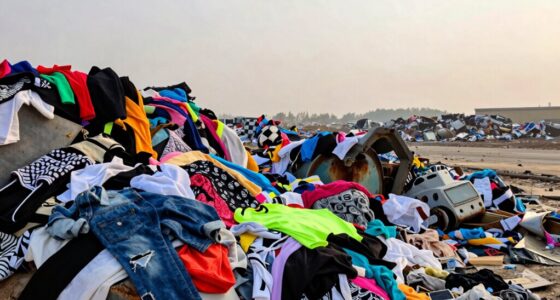

Rampant online shopping in Europe is fueling a significant spike in textile waste. Consumers are frequently buying trendy items from fast fashion brands without considering the environmental impact. As a result, high return rates and impulsive purchases amplify waste, with around 85% of discarded clothes not being reused or recycled. This waste crisis mirrors other environmental challenges. If you're curious about how this issue affects sustainability and what measures are being taken, you'll find more information ahead.

Prime made for students and young adults
- Fast, free delivery for dorm and study essentials
- Prime Video and Amazon Music included
- Member-only deals
Key Takeaways
- Online shopping has surged, now accounting for 11% of textile sales, driving increased impulsive purchases and textile waste.
- Europeans generate 12.6 million tonnes of textile waste annually, with clothing and footwear contributing 5.2 million tonnes.
- High return rates from online purchases exacerbate textile waste, with 85% of discarded clothes not being reused or recycled.
- The environmental impact of textile waste rivals major industries, highlighting the need for sustainable practices and consumer awareness.
- EU regulations, including Extended Producer Responsibility (EPR), aim to hold brands accountable for waste and encourage sustainable product design.
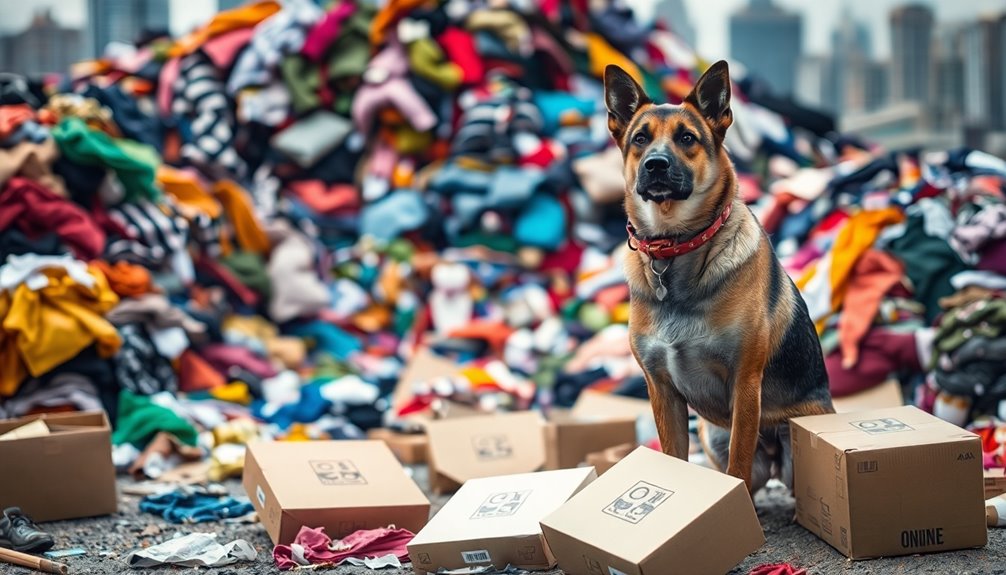
As online shopping continues to surge, it's becoming increasingly clear that this convenience comes with a hefty environmental cost—specifically, a spike in textile waste. You mightn't realize it, but Europeans generate an estimated 12.6 million tonnes of textile waste each year, with fast fashion playing a massive role in this issue. The ease of purchasing cheap, trendy clothing online has drastically increased overconsumption, leading to even more waste.
Since 2009, online shopping has doubled, now making up 11% of textile sales. This growth directly contributes to a culture of overconsumption, as you can easily buy items without considering their long-term value. Moreover, when you order online, the return rates are much higher, which adds to the mountain of unsold products that often end up in landfills. Platforms like SHEIN and ASOS fuel this fast fashion trend, making it all too tempting to indulge in fleeting styles.
The surge in online shopping fuels overconsumption and high return rates, exacerbating textile waste and fast fashion's environmental impact.
On average, EU citizens purchase about 19 kilograms of new textiles annually, which has increased from 17 kilograms in 2019. Out of this, clothing and footwear alone account for 5.2 million tonnes of waste each year. Each individual generates around 15 to 16 kilograms of textile waste, contributing to an alarming environmental footprint that rivals other major industries. Approximately 85% of discarded clothes are not reused or recycled, which worsens the textile waste crisis.
Textile production and disposal lead to greenhouse gas emissions and water pollution, further harming our planet. Recognizing this issue, the European Environment Agency emphasizes the need for sustainable textile management. The EU is stepping up by implementing new regulations to hold brands accountable for their waste, encouraging practices that promote recycling and durability.
Extended Producer Responsibility (EPR) will shift management costs to producers, urging them to design longer-lasting products. Investments in recycling infrastructure and innovative technologies are crucial to improving textile recycling rates.
As you engage with the online shopping world, consider the broader impact of your choices and how you can contribute to a more sustainable future.
As an affiliate, we earn on qualifying purchases.
Frequently Asked Questions
How Can Consumers Reduce Their Textile Waste While Shopping Online?
You can reduce textile waste while shopping online by auditing your wardrobe to identify needs before making purchases.
Opt for quality over quantity, choosing timeless styles that last longer.
Limit returns by checking size charts and reviews carefully.
Consider secondhand options on platforms like Vinted or Depop, and support brands that prioritize sustainability.
Lastly, think about renting clothing for special occasions to minimize waste and keep your wardrobe fresh without accumulating more items.
What Are the Environmental Impacts of Textile Waste?
Textile waste harms our environment in multiple ways: it fills landfills, pollutes water, and emits greenhouse gases.
You contribute to landfill overload when you discard clothing, often leading to fires and toxic leachates.
Your laundry releases microplastics, contaminating water sources and harming aquatic life.
As textiles decompose, they emit methane, a potent greenhouse gas.
Which Countries in Europe Are Most Affected by Textile Waste?
When you consider textile waste in Europe, Italy, Belgium, and the UK stand out as significant contributors.
Italy generates around 465,925 tonnes annually, while Belgium has the highest per capita waste at 14.8 kg.
The UK, with its large clothing industry, also adds to the problem.
Countries like Germany and the Netherlands play a role as exporters of used textiles, affecting overall waste dynamics across the continent.
Are There Any Regulations Addressing Textile Waste in Online Shopping?
Picture a bustling marketplace, overflowing with colorful fabrics—now imagine the waste!
You'll be glad to know there are regulations tackling textile waste, especially linked to online shopping. The EU's new rules require producers to manage their waste through Extended Producer Responsibility (EPR) schemes.
They must also set up separate collection systems by 2025, enhancing recycling efforts. These measures aim to hold producers accountable and promote sustainable practices in the textile industry.
How Can Companies Improve Their Sustainability Practices in Online Retail?
To improve sustainability practices in online retail, you can start by adopting eco-friendly packaging and reducing waste through recyclable materials.
Implementing bundled deliveries minimizes carbon emissions.
Consider using low-emission vehicles for transportation and engage customers with eco-labels to promote sustainable choices.
Transparency in your supply chain helps consumers understand product origins, while encouraging recycling and take-back programs supports a circular economy.
These actions can significantly enhance your company's environmental impact.
As an affiliate, we earn on qualifying purchases.
Conclusion
As you scroll through endless online shops, envision the mountains of discarded clothes piling up, whispering stories of their brief existence. Each impulse buy adds to a growing sea of textile waste, drowning our planet in forgotten fashion. It's time to pause and reflect on the true cost of convenience. By choosing wisely, you can turn the tide, transforming fleeting trends into sustainable choices that honor both your wardrobe and the world around you.
As an affiliate, we earn on qualifying purchases.
As an affiliate, we earn on qualifying purchases.
Columbus Day / Indigenous Peoples' Day Picks
long weekend sales
As an affiliate, we earn on qualifying purchases.