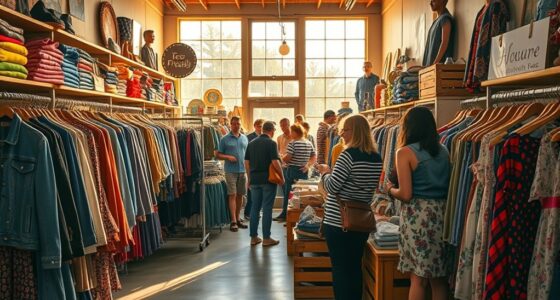
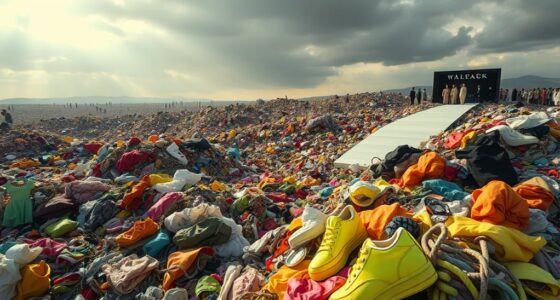
Upcycling fashion turns your old clothes into stylish, eco-friendly trends by reusing fabrics like vintage denim and worn-out T-shirts. It helps you reduce waste and supports sustainable living while giving your wardrobe a fresh, unique look. By collaborating with designers and using innovative ideas, upcycled pieces showcase creativity and environmental consciousness. Keep exploring to discover how this movement is shaping a more fashionable, sustainable future you can be part of.
Key Takeaways
- Upcycling transforms old clothing into trendy, one-of-a-kind fashion pieces, promoting sustainability and reducing waste.
- Creative design techniques repurpose vintage textiles, giving garments a modern, stylish appeal.
- Collaborations between designers and upcycling brands make eco-friendly fashion more accessible and fashionable.
- Utilizing sustainable materials like leftover textiles minimizes environmental impact and enhances garment uniqueness.
- Upcycled fashion encourages thoughtful consumption, fostering a cultural shift towards valuing quality and sustainability.
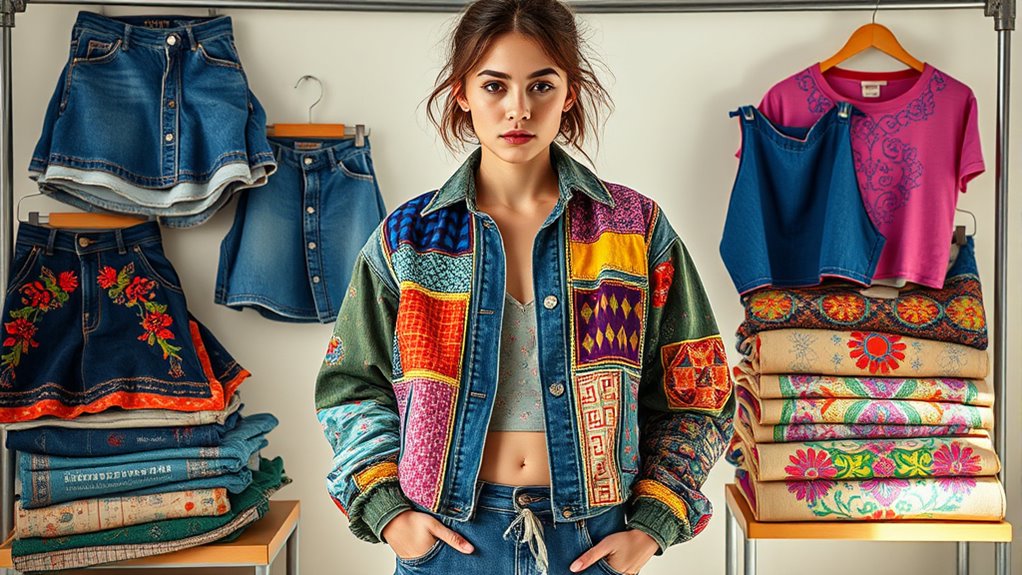
Upcycling fashion is transforming how we think about sustainability in the clothing industry. Instead of buying new, you’re encouraged to breathe new life into old clothes, reducing waste and minimizing environmental impact. This shift isn’t just about being eco-friendly; it’s about redefining style through creativity and innovation. When you embrace upcycling, you’re actively participating in a movement that values quality over quantity, emphasizing the importance of sustainable materials and thoughtful design. Many brands now collaborate with designers to create unique pieces by repurposing existing garments, making upcycled fashion more accessible and appealing. These designer collaborations bring fresh perspectives and elevate upcycling from a niche to a mainstream trend, inspiring you to think differently about what you wear.
One of the most exciting aspects of upcycling is the use of sustainable materials. Instead of relying on new fabrics, you work with what’s already available—be it vintage denim, worn-out T-shirts, or leftover textiles from factories. This approach reduces the demand for resource-intensive materials and cuts down on pollution caused by conventional textile production. When designers incorporate sustainable materials into their upcycled collections, they showcase how eco-conscious choices can also be stylish and innovative. Imagine transforming an old pair of jeans into a trendy jacket or turning a faded shirt into a statement piece. Using sustainable materials not only helps the planet but also allows you to stand out by sporting one-of-a-kind creations that tell a story. Additionally, incorporating upcycled fabrics can enhance the durability and uniqueness of your garments, making each piece truly special.
Collaborations between designers and upcycling brands are vital in making this sustainable approach more mainstream. These partnerships often lead to innovative designs that blend high fashion with eco-conscious practices. You get to wear pieces that are both stylish and environmentally responsible, breaking the stereotype that sustainable fashion is dull or limited. Designer collaborations help bring attention to the importance of upcycling, encouraging you to see clothes not just as something to replace but as something to reinvent. They also foster a sense of community among fashion enthusiasts who value creativity and sustainability.
Frequently Asked Questions
What Are the Best Fabrics for Upcycling Projects?
You should choose sustainable fabric options like organic cotton, linen, hemp, or bamboo for upcycling projects. These natural fibers offer benefits like durability, breathability, and eco-friendliness, making your upcycled pieces both stylish and sustainable. Natural fiber benefits include biodegradability and less chemical processing, which help reduce environmental impact. Using these fabrics guarantees your upcycling efforts are eco-conscious while creating unique, high-quality garments that stand the test of time.
How Can Beginners Start With Upcycling Fashion?
Imagine your wardrobe as a treasure chest waiting to be opened. To start upcycling, pick simple DIY accessories like pillowcases or T-shirts, then practice sustainable sewing techniques such as hand-stitching or hemming. Focus on small projects to build confidence, and don’t be afraid to experiment. Every stitch you sew brings new life to old clothes, transforming them into stylish, eco-friendly pieces that reflect your creativity.
What Tools Are Essential for Upcycling Clothes?
You’ll need basic tools like fabric scissors, a sewing needle, and a sewing machine for sustainable sewing. Pins and chalk are essential for marking and holding fabric in place during your creative embellishments. A seam ripper helps fix mistakes, while a hot glue gun can add quick decorative touches. These tools make upcycling easier, allowing you to transform old clothes into stylish, eco-friendly pieces with creativity and precision.
How Do I Choose Which Clothes to Upcycle?
You should start by doing a wardrobe assessment to identify clothes that no longer suit your style or fit well. Look for items made from durable fabrics that can be easily transformed. Focus on sustainable fashion principles by choosing pieces with potential for upcycling rather than discarding. Avoid damaged or overly worn clothes, and pick versatile items that can be creatively revamped into new, trendy pieces.
Are There Eco-Friendly Dyes for Upcycling Fabrics?
Yes, you can find eco-friendly dyes for upcycling fabrics. Natural dyes, made from plants, fruits, and minerals, are a fantastic choice—think of colors as vibrant as a rainbow after a storm. They’re safer for the environment and often require less energy. Synthetic alternatives labeled as eco-friendly also exist, but natural dyes tend to be the top pick for truly sustainable upcycling projects, giving your old clothes a beautiful, eco-conscious makeover.
Conclusion
Think of upcycling as your wardrobe’s phoenix, rising from the ashes of old clothes to create fresh, stylish pieces. By choosing to upcycle, you’re not just recycling fabric—you’re igniting your creativity and making a positive impact on the planet. Every stitch you sew is like planting a seed for a more sustainable future. So, embrace this trend and let your fashion choices transform your closet into a garden of endless possibilities.