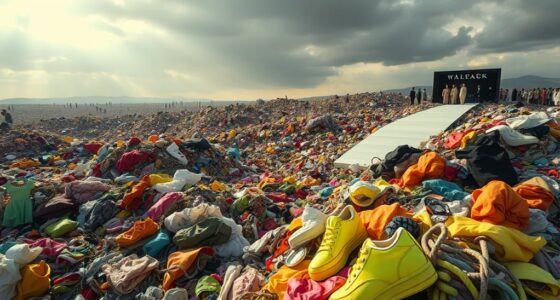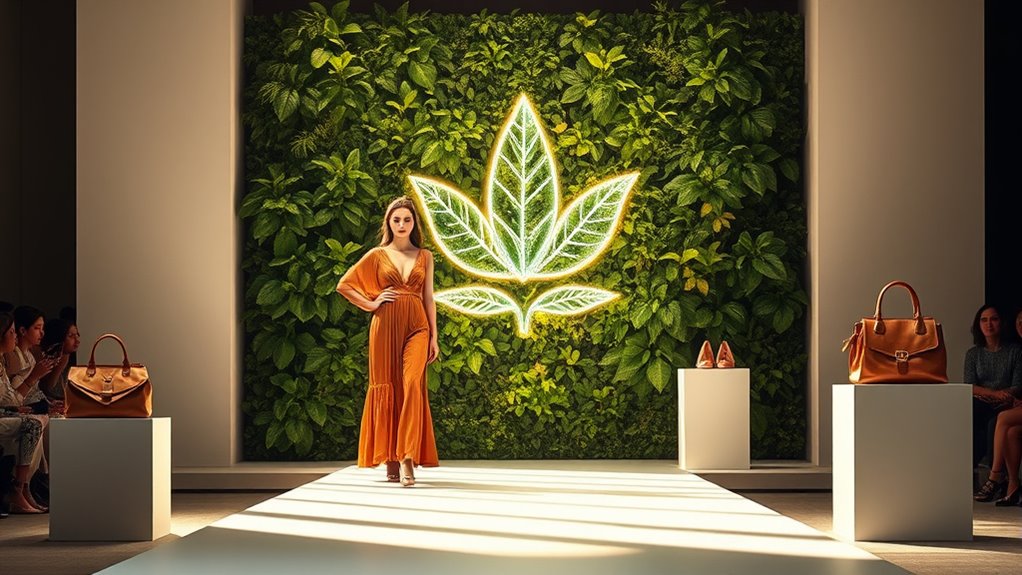

Luxury brands are embracing sustainability by adopting ethical sourcing, eco-friendly materials, and circular economy practices. They’re designing products for longevity, offering repair and upcycling options, and ensuring transparency throughout their supply chains. This shift appeals to conscious consumers like you, who value responsible high fashion that minimizes environmental impact. If you want to discover how these changes are transforming the industry and what it means for your luxury choices, there’s more to explore ahead.
Key Takeaways
- Luxury brands are adopting ethical sourcing and transparent supply chain practices to promote responsible raw material procurement.
- Circular economy initiatives, like product reuse, repair, and take-back programs, are reducing waste and extending product lifespan.
- Many high-end fashion houses are investing in eco-friendly materials and sustainable production methods to lower environmental impact.
- Consumer trust and loyalty are increasing as brands emphasize transparency and align with ethical and social responsibility values.
- The industry is moving towards innovation and accountability, integrating sustainability into brand identity and future growth strategies.
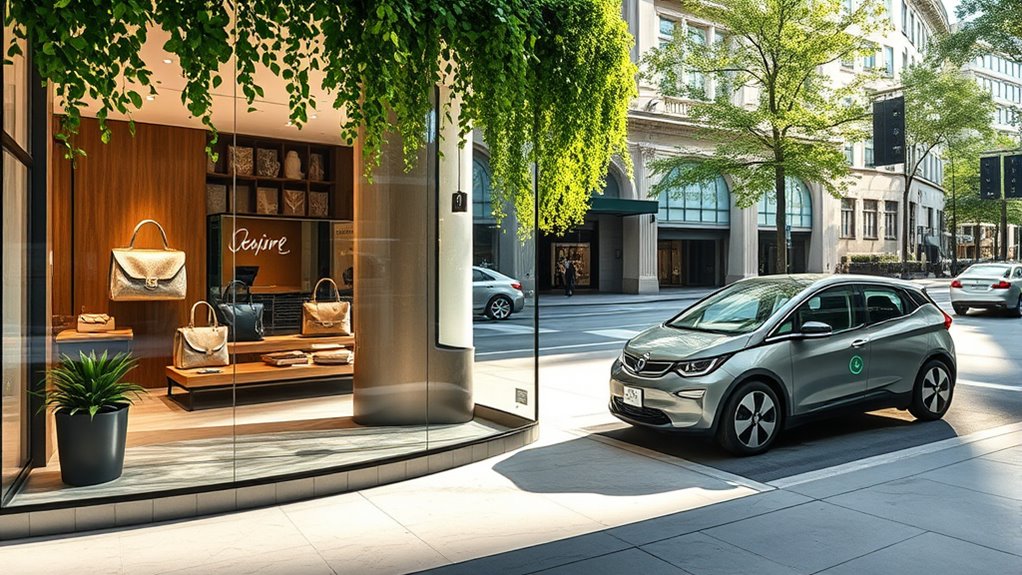
Have you noticed luxury brands shifting towards sustainability? It’s a noticeable change sweeping through high fashion, where brands are increasingly prioritizing ethical sourcing and adopting circular economy principles. This shift isn’t just about reducing environmental impact; it’s about rethinking how luxury works in a world demanding responsibility and transparency. As a consumer, you’re now more aware of where your products come from and how they’re made, influencing brands to adopt more sustainable practices.
Ethical sourcing has become a cornerstone of this movement. Luxury brands are scrutinizing their supply chains to ensure that raw materials are obtained responsibly, without exploiting workers or damaging ecosystems. You’ll find brands investing in fair labor practices, supporting local communities, and choosing suppliers committed to environmental standards. This commitment means that the materials used—whether leather, silk, or gemstones—are sourced with care, minimizing harm and promoting sustainability. It’s about making sure that every step, from extraction to production, aligns with ethical values, giving you peace of mind that your luxury purchase isn’t contributing to unethical practices.
Luxury brands prioritize responsible sourcing, supporting fair labor, local communities, and eco-friendly materials for ethical and sustainable fashion.
Alongside ethical sourcing, the circular economy is transforming how these brands operate. Instead of following a traditional linear model—where products are made, used, and discarded—luxury brands are designing for longevity and reuse. You might see more brands offering repair services, upcycling programs, or take-back schemes that allow you to return products at the end of their lifecycle. This approach reduces waste and encourages you to view luxury items as investments rather than disposable commodities. By embracing the circular economy, brands are creating a closed-loop system where materials are reused, recycled, and repurposed, considerably cutting down on their carbon footprint. Additionally, many brands are now adopting sustainable sourcing practices to ensure their materials are environmentally friendly and ethically obtained.
This dual focus on ethical sourcing and circular economy principles shows that luxury brands are no longer just about exclusivity and craftsmanship—they’re also about responsibility and sustainability. For you, it means that buying a luxury item now carries a different weight; it’s about supporting brands that align with your values. It’s a shift toward transparency and accountability, where your choices can have a positive impact on the environment and society. As these brands continue to innovate and integrate sustainable practices, the future of high fashion looks more responsible and progressive, ensuring that luxury remains desirable while respecting the planet and its people.

Cnoles Women Genuine Leather Designer Tote Bags Purses And Handbags For Women Fashion Ladies Top Handle Shoulder Satchel Bag Green
Genuine Leather
As an affiliate, we earn on qualifying purchases.
As an affiliate, we earn on qualifying purchases.
Frequently Asked Questions
How Do Luxury Brands Source Eco-Friendly Materials?
You can see how luxury brands source eco-friendly materials through their focus on ethical sourcing and recycled fabrics. They partner with suppliers committed to sustainable practices, ensuring raw materials are responsibly harvested or recycled. These brands prioritize transparency, often tracing their supply chains to verify eco-friendly origins. By choosing recycled fabrics and working with ethical sources, they aim to reduce environmental impact while maintaining high-quality craftsmanship.
What Certifications Verify Their Sustainability Claims?
Like a knight of old, you’ll want to seek out certifications that verify sustainability claims, such as GOTS, FSC, and B Corporation. These verify eco-friendly practices, including carbon offsetting and circular economy initiatives. By choosing brands with these labels, you guarantee they genuinely commit to reducing environmental impact, making your fashion choices both stylish and responsible. Don’t be fooled by imitation; trust certified authenticity to make a real difference.
How Do Green Initiatives Affect Product Pricing?
Green initiatives often increase product pricing because of the cost implications involved in sourcing sustainable materials and adopting eco-friendly practices. You might notice higher prices, but consumers generally perceive these as valuable investments in environmental responsibility. By supporting brands with sustainable moves, you’re contributing to positive change, even if it means paying a little more. Ultimately, your purchase reflects your commitment to eco-conscious fashion and helps promote broader industry shifts.
Are There Any Negative Impacts of Sustainable Practices?
Sure, embracing eco-conscious consumerism sounds noble, but beware the pitfalls. You might fall for greenwashing risks where brands falsely claim sustainability, leading to disillusionment. Sustainable practices can sometimes backfire, causing higher costs, limited options, or even environmental harm if not properly managed. While going green is admirable, it’s essential to scrutinize brands’ claims—otherwise, you risk supporting superficial efforts instead of genuine change.
How Do Brands Ensure Transparency in Their Eco Efforts?
You can guarantee transparency in eco efforts by brands openly sharing their carbon footprint data and sustainability reports. They often undergo third-party audits and use clear, verifiable certifications to build consumer trust. When brands communicate their eco initiatives honestly and regularly update their progress, you feel more confident that they’re genuinely committed to reducing environmental impact. This transparency helps you make informed choices and supports brands dedicated to sustainable practices.

Julunar Silk Like Head Scarf for Women – Satin Large Hair Scarves – 35" Square Silk Hair Wrap for Sleeping with Gift Packed
SIZE – 35" x 35" ( 90cm x 90cm). You can wear the scarf on your hair or…
As an affiliate, we earn on qualifying purchases.
As an affiliate, we earn on qualifying purchases.
Conclusion
You might be surprised to learn that over 70% of luxury brands have committed to sustainable practices in the past year alone. By choosing eco-friendly materials and reducing waste, these brands are proving that high fashion and environmental responsibility can go hand in hand. As a conscious consumer, your support can drive even more brands to follow this green trend. Together, we can make luxury fashion more sustainable and stylish for the future.
![NOVICA Artisan Handmade Wood Torsade Necklace Brown Beaded Jewelry Upcycled Thailand Eco Friendly Nature [18 in min L x 19.75 in max L x 0.8 in W] ' Sukhothai Belle'](https://m.media-amazon.com/images/I/41GaAytvhzL._SL500_.jpg)
NOVICA Artisan Handmade Wood Torsade Necklace Brown Beaded Jewelry Upcycled Thailand Eco Friendly Nature [18 in min L x 19.75 in max L x 0.8 in W] ' Sukhothai Belle'
A Novica artisan handcrafted product.
As an affiliate, we earn on qualifying purchases.
As an affiliate, we earn on qualifying purchases.

Citizen Ladies Eco-Drive Sport Luxury Sport Watch, Silver-Tone Stainless Steel Bracelet, Light Blue Dial, 3 Hand, Date (Model: EW2700-54L)
When sporty style meets luxury, you get this latest stunner from Citizen
As an affiliate, we earn on qualifying purchases.
As an affiliate, we earn on qualifying purchases.