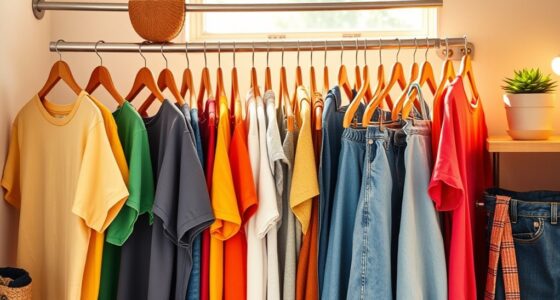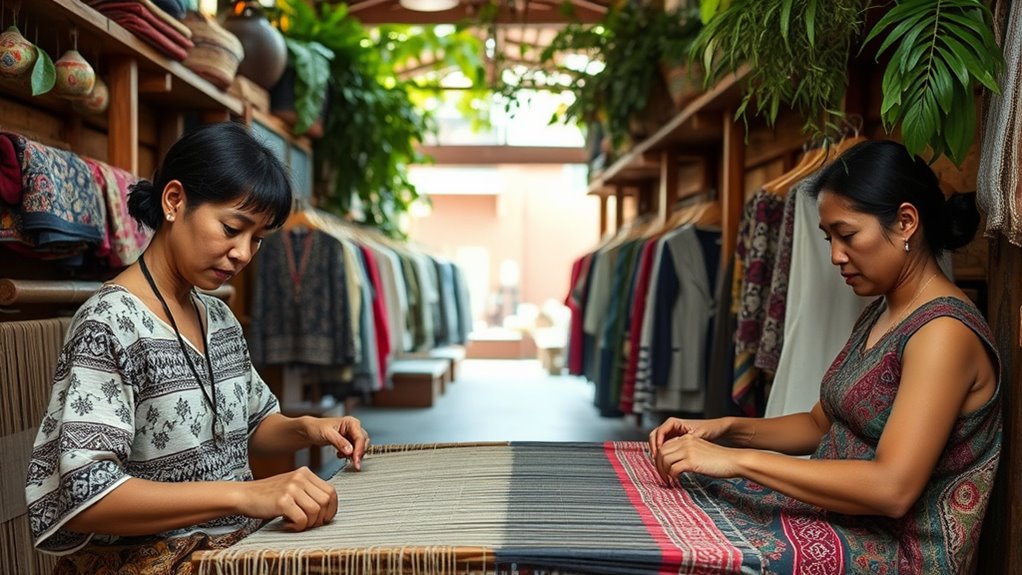

In 2025, cultural heritage is shaping sustainable fashion by reviving traditional crafts like hand-weaving, embroidery, and natural dyeing. This approach supports artisans, preserves cultural stories, and promotes ethical sourcing with fair wages and eco-friendly practices. By choosing garments crafted with these methods, you contribute to environmental sustainability and cultural diversity. If you stay curious, you’ll discover how this craft revival is transforming fashion into a meaningful celebration of history and ecology.
Key Takeaways
- Revival of traditional handcraft techniques like embroidery and dyeing promotes cultural heritage preservation in sustainable fashion.
- Ethical sourcing and fair trade practices ensure artisans’ livelihoods and safeguard cultural craftsmanship.
- Natural dyes and organic materials reduce environmental impact, aligning cultural authenticity with eco-friendly values.
- Fashion movements in 2025 emphasize respecting cultural identities through responsible, story-rich garments.
- Supporting craft revival fosters sustainability, diversity, and cultural pride within the modern fashion industry.
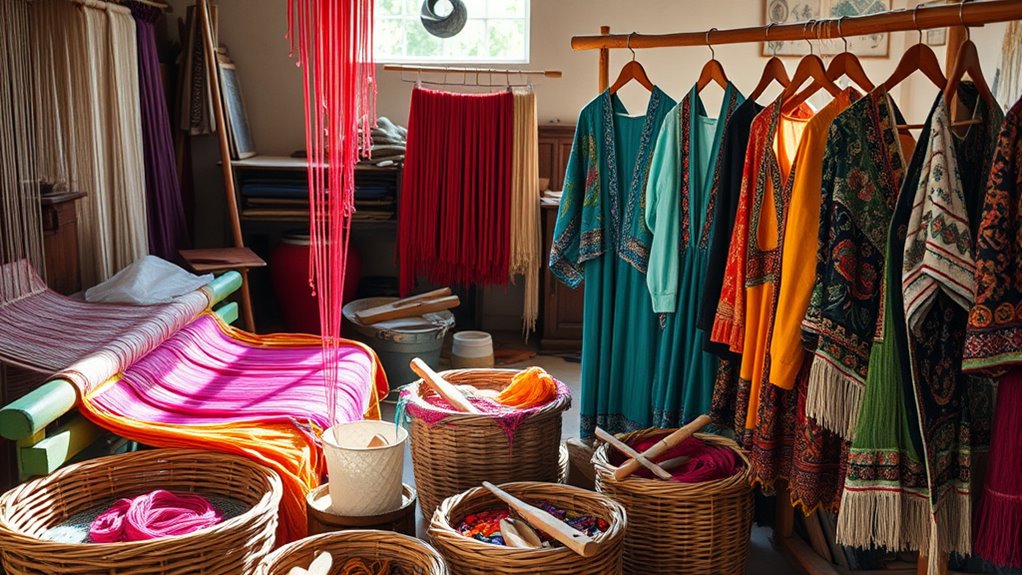
Have you ever wondered how fashion can honor the traditions and stories of different cultures? It’s no longer just about looking stylish; it’s about respecting the roots and preserving the authenticity of those who’ve crafted the garments for generations. In 2025, many designers are turning to traditional techniques to create pieces that celebrate cultural heritage while embracing sustainability. These techniques—like hand-weaving, embroidery, and dyeing—are more than just methods; they’re stories woven into fabric, passed down through centuries. When you choose garments made with traditional techniques, you’re supporting artisans who’ve dedicated their lives to preserving these skills, ensuring they don’t fade away with time.
Supporting artisans and preserving cultural stories through traditional techniques for a sustainable fashion future.
But it’s not just about the craft. Ethical sourcing plays a vital role in this movement, ensuring that every step of the production process respects both people and the environment. You might not realize it, but many fast-fashion brands often neglect these principles, leading to exploitation and environmental harm. In contrast, sustainable fashion brands prioritize transparency, working directly with local communities and artisans to source materials responsibly. That means fair wages, safe working conditions, and environmentally friendly practices. When you buy from these brands, you’re not just getting a unique, culturally rich piece—you’re actively supporting a fairer, more ethical global supply chain.
Imagine purchasing a beautifully embroidered blouse crafted by artisans who’ve used natural dyes and traditional stitching methods. You’re not only wearing something that honors cultural heritage but also contributing to its preservation. These garments often require more time and skill, making them more meaningful and durable than mass-produced options. By investing in such pieces, you help sustain the livelihoods of artisans and keep traditional techniques alive for future generations. Additionally, incorporating traditional techniques such as hand-weaving and natural dyeing can significantly reduce environmental impact compared to industrial manufacturing processes.
Furthermore, sustainable fashion emphasizes transparency, so you know where your clothes come from and how they’re made. This commitment to ethical sourcing means supporting brands that are dedicated to reducing their environmental footprint—using organic fibers, recycling materials, and minimizing waste. It’s about making conscious choices that align with your values, ensuring that your fashion statement doesn’t come at the expense of others or the planet.
In 2025, embracing cultural heritage through sustainable fashion isn’t just a trend; it’s a movement toward respect, authenticity, and responsibility. By choosing garments rooted in traditional techniques and sourced ethically, you become a part of a larger story—one that values craftsmanship, cultural identity, and environmental care. Your wardrobe can be a powerful tool for change, celebrating the beauty of diversity while fostering a more sustainable future.
handwoven embroidered blouse
As an affiliate, we earn on qualifying purchases.
As an affiliate, we earn on qualifying purchases.
Frequently Asked Questions
How Are Local Artisans Compensated Fairly in Craft Revival Initiatives?
You can guarantee local artisans are fairly compensated by supporting fair trade initiatives that prioritize transparent pricing and ethical practices. By choosing brands that promote artisan empowerment, you help guarantee artisans receive wages that reflect their skill and effort. Additionally, advocate for policies and partnerships that recognize craftsmanship’s value, ensuring artisans are respected and rewarded fairly, safeguarding their livelihoods while preserving cultural heritage.
What Specific Traditional Techniques Are Gaining Popularity in Sustainable Fashion?
You’ll notice traditional textile dyeing methods like natural dyeing gaining popularity, as they’re eco-friendly and vibrant. Embroidery techniques, such as hand-stitched motifs and intricate patterns, are also making a comeback in sustainable fashion collections. These techniques not only preserve cultural heritage but also appeal to eco-conscious consumers seeking authentic, handcrafted pieces. By incorporating these methods, you help support artisans and promote environmentally responsible fashion choices.
How Does Technology Enhance the Preservation of Cultural Crafts?
Your technology revolutionizes preservation, making it feel like you’re saving history at the speed of light. Digital documentation captures intricate details of cultural crafts with stunning accuracy, ensuring these traditions aren’t lost. Virtual heritage projects let you explore and interact with ancient techniques from anywhere, creating a virtual treasure trove. By embracing these tools, you safeguard cultural crafts for future generations, turning fleeting skills into everlasting legacies.
Are There Government Policies Supporting Craft-Based Sustainable Fashion?
Yes, government policies actively support craft-based sustainable fashion through incentives and policy frameworks. You’ll find grants and subsidies designed to encourage artisans and fashion brands to prioritize traditional crafts and eco-friendly practices. These policies aim to preserve cultural heritage while promoting sustainable economic growth. By leveraging government incentives, you can access resources and support that help integrate craft revival into modern fashion, ensuring its long-term viability and cultural significance.
How Can Consumers Identify Genuinely Eco-Friendly, Culturally-Inspired Fashion Items?
You can identify genuinely eco-friendly, culturally-inspired fashion items by checking for ethical certifications like Fair Trade or Organic labels, which verify sustainable practices. Also, research the brand’s commitment to cultural authenticity—do they collaborate with local artisans and respect traditional techniques? These indicators ensure you’re supporting truly eco-conscious and culturally respectful fashion. Always ask about the story behind the piece to see if it aligns with genuine sustainability and heritage.
natural dye organic cotton dress
As an affiliate, we earn on qualifying purchases.
As an affiliate, we earn on qualifying purchases.
Conclusion
As you embrace sustainable fashion, you protect traditions, preserve craftsmanship, and support communities. You choose authenticity over trends, heritage over haste, and craftsmanship over convenience. By doing so, you not only wear a piece of history but also help guarantee its future. You become part of a movement that values the past, champions the present, and shapes the future. In every conscious choice, you revive culture, inspire change, and craft a more sustainable world.
ethical artisan crafted accessories
As an affiliate, we earn on qualifying purchases.
As an affiliate, we earn on qualifying purchases.
sustainable fashion brands with fair trade
As an affiliate, we earn on qualifying purchases.
As an affiliate, we earn on qualifying purchases.