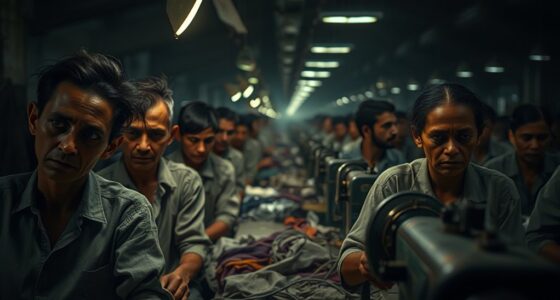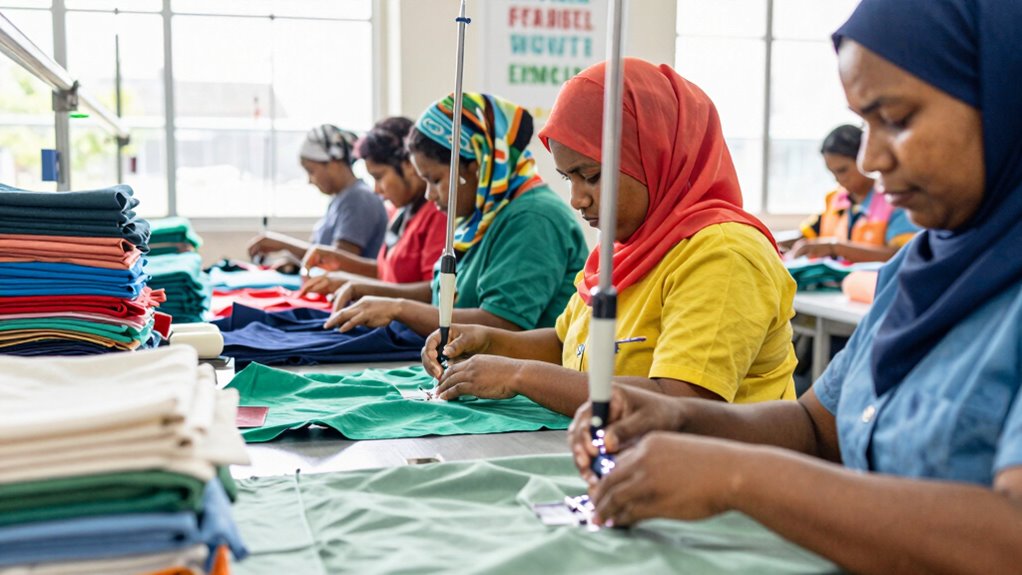

Your understanding of fashion’s sustainability isn’t complete without recognizing the importance of labor rights. When workers receive fair wages, safe conditions, and fair treatment, the garments they produce are higher quality and last longer. Ethical sourcing supports eco-friendly practices like recycling and reducing waste. By choosing brands that prioritize workers’ well-being, you help promote a more responsible industry. If you explore further, you’ll discover how consumer choices can truly transform fashion for the better.

Get school and study supplies delivered free — and shop member deals
- Fast, free delivery on millions of items
- Access to Prime Big Deal Days deals on October 6–7
- Prime Video, Amazon Music and more included
Key Takeaways
- Fair wages and safe working conditions enhance garment quality and durability, supporting sustainable consumption.
- Ethical sourcing ensures environmentally responsible raw material extraction and processing, linking labor rights to ecological sustainability.
- Promoting transparency in supply chains helps verify compliance with both labor standards and sustainability practices.
- Circular economy initiatives reduce waste and environmental impact while ensuring fair treatment of workers in recycling and upcycling processes.
- Consumer demand for ethical and sustainable brands drives industry shifts toward responsible sourcing and improved labor rights.
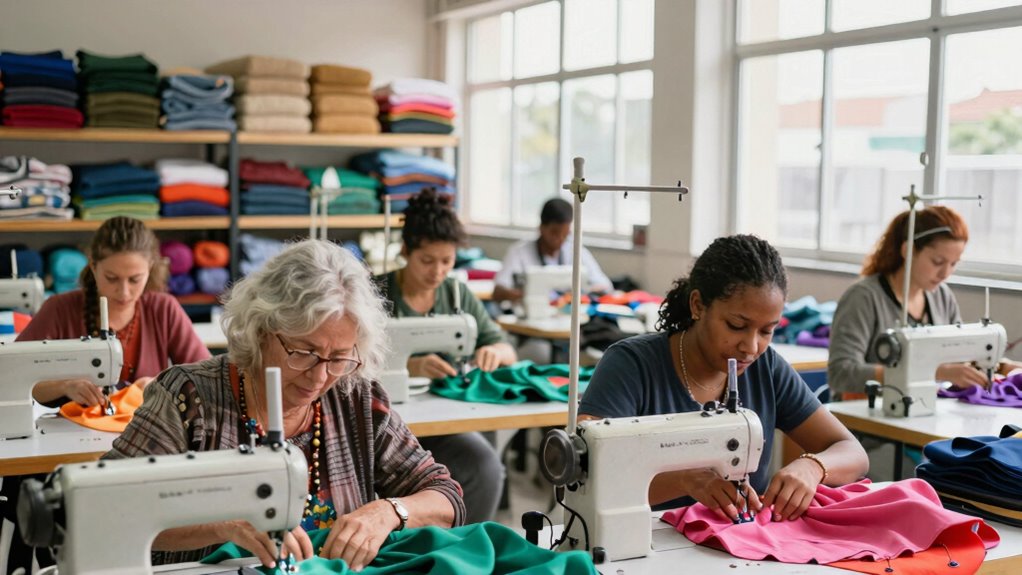
As the fashion industry continues to grow, addressing labor rights and sustainability becomes more urgent than ever. You might not realize it, but every garment you wear is part of a complex supply chain that impacts workers’ lives and the environment. The connection between labor rights and sustainability is clear: ethical sourcing ensures that the workers producing your clothes are treated fairly, paid living wages, and work in safe conditions. Meanwhile, embracing sustainable practices like the circular economy helps reduce waste and lessen environmental damage, making the entire process more responsible.
When brands prioritize ethical sourcing, they commit to transparent supply chains and fair labor practices. You can support companies that verify their factories comply with strict labor standards, avoiding exploitation or unsafe environments. This focus on fairness benefits workers directly, but it also reinforces sustainability. Workers paid fairly and working under safe conditions are more likely to produce quality garments that last longer, reducing the need for frequent replacements. This aligns with the principles of a circular economy, which aims to keep products in use for as long as possible and minimize waste. By choosing clothes made through ethical sourcing, you’re actively participating in a system that values longevity and resourcefulness.
The circular economy in fashion promotes recycling, upcycling, and designing for disassembly. When you buy from brands that adopt this model, you’re supporting a shift away from fast fashion, which often relies on cheap labor and disposable products. Instead, you’re encouraging practices that extend a garment’s life, reduce textile waste, and lessen environmental pollution. These sustainable approaches often go hand-in-hand with fair labor practices. For example, a company committed to recycling fabrics not only reduces environmental impact but also ensures that workers involved in these processes are paid fairly and work in safe environments. Additionally, integrating ethical sourcing into the supply chain can help ensure that sustainability efforts are genuine and impactful. Recognizing the importance of biodiversity in the sourcing process can also promote the preservation of ecosystems affected by textile production. Incorporating carbon footprint reduction strategies further strengthens the link between environmental and social responsibility. Moreover, understanding labor standards can help consumers identify truly responsible brands committed to fair treatment of workers.
Your choices as a consumer can influence how the industry evolves. By demanding transparency and supporting brands that prioritize both labor rights and sustainability, you help create a market where ethical sourcing and circular economy principles are the norm. This interconnected approach ensures that workers aren’t just seen as a means to produce cheap fashion, but as vital partners in a sustainable future. Ultimately, when you understand how labor rights and sustainability connect, your purchasing decisions become a powerful tool for positive change—driving the industry toward more ethical and environmentally friendly practices.
As an affiliate, we earn on qualifying purchases.
Frequently Asked Questions
How Do Labor Rights Influence Sustainable Fashion Practices?
Labor rights directly influence sustainable fashion practices by ensuring worker safety and fair wages, which foster ethical production. When brands prioritize these rights, they support healthier workplaces and better living standards for workers. This commitment reduces exploitation and environmental harm, making fashion more sustainable. By valuing labor rights, you promote a transparent supply chain and encourage eco-friendly practices, ultimately creating a more responsible and resilient fashion industry.
What Certifications Verify Both Fair Labor and Environmental Standards?
You can verify both fair labor and environmental standards through certifications like Fair Trade, GOTS (Global Organic Textile Standard), and B Corp. These certifications guarantee brands uphold fair wages, safe working conditions, and eco-friendly practices like using dyes that are less harmful to the environment. By choosing products with these labels, you support companies committed to respecting workers’ rights and reducing their ecological footprint simultaneously.
How Can Consumers Support Ethical Labor and Sustainability Simultaneously?
You can support ethical labor and sustainability by practicing consumer awareness and choosing ethical shopping options. Look for brands that are transparent about their supply chains and hold certifications like Fair Trade or B Corp. Research companies’ labor practices and environmental commitments before purchasing. By prioritizing these factors, you actively contribute to fair working conditions and environmental preservation, encouraging the fashion industry to adopt more responsible, sustainable practices.
What Are the Biggest Challenges in Aligning Labor Rights With Sustainability Goals?
You might find that one major challenge is balancing worker empowerment with ethical sourcing costs, which can be high. About 60% of consumers want brands to prioritize fair labor practices, yet many companies struggle to maintain sustainable supply chains without increasing prices. Aligning labor rights with sustainability goals requires transparent practices and fair wages, but often, cost pressures and complex global supply chains hinder progress toward true ethical sourcing and worker empowerment.
How Do Supply Chain Transparency Efforts Impact Labor Rights in Fashion?
Supply chain transparency efforts improve labor rights in fashion by revealing practices that impact fair wages and worker safety. When you push for transparency, you hold brands accountable for ensuring safe working conditions and fair pay. This openness encourages manufacturers to improve labor standards, ultimately supporting sustainable practices. By demanding clear information, you help create a more ethical industry where workers are protected, and sustainability goals align with respecting workers’ rights.
fair trade organic cotton t-shirts
As an affiliate, we earn on qualifying purchases.
As an affiliate, we earn on qualifying purchases.
Conclusion
As you consider the threads of your wardrobe, remember that every fabric tells a story—one woven with the hopes of fair labor and a sustainable future. Like a tapestry unfolding in the sunlight, your choices ripple through the industry, shaping a world where dignity and nature thrive side by side. By choosing consciously, you become part of this vibrant mosaic, ensuring that the beauty of fashion reflects a commitment to both people and the planet.
recycled fabric eco-friendly jeans
As an affiliate, we earn on qualifying purchases.
As an affiliate, we earn on qualifying purchases.
As an affiliate, we earn on qualifying purchases.
Fall Picks
fall essentials
As an affiliate, we earn on qualifying purchases.