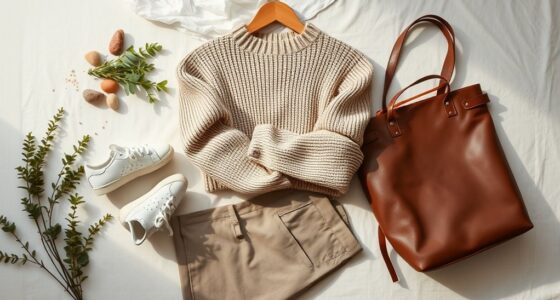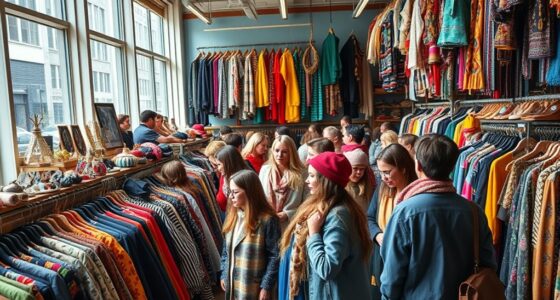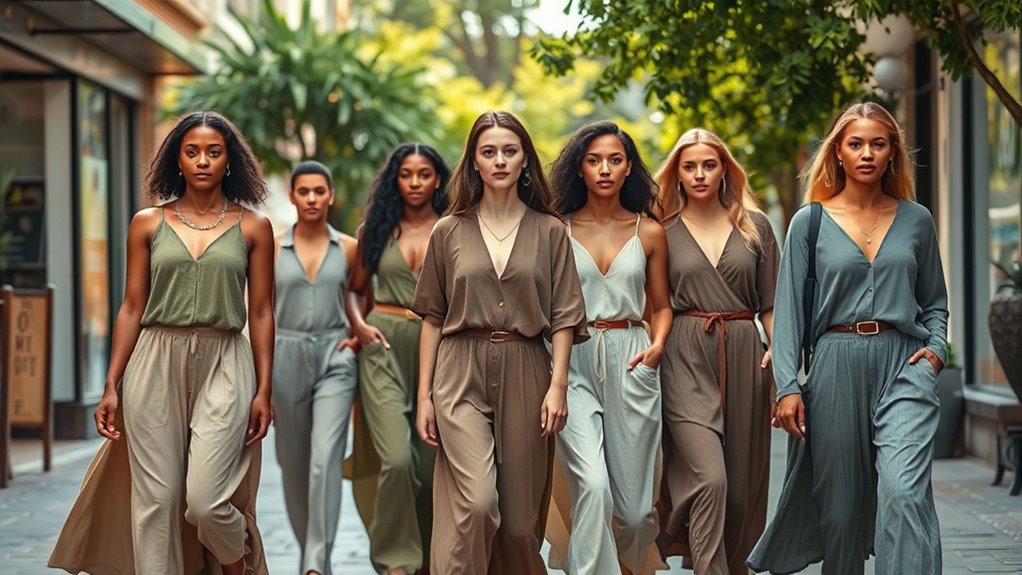

Gender-neutral and inclusive fashion focus on sustainable design by using versatile fabrics like organic cotton and recycled polyester that suit all genders and promote eco-friendly practices. Brands are expanding size ranges and creating timeless, durable pieces that reduce waste and challenge traditional beauty standards. By choosing these styles, you support both environmental sustainability and social equality. If you keep exploring, you’ll discover more about how fashion is evolving to be more inclusive and responsible.
Key Takeaways
- Emphasizes unisex fabrics like organic cotton and recycled materials to promote sustainability and inclusivity in fashion.
- Incorporates inclusive sizing and body-positive designs to accommodate diverse body types and reduce waste.
- Focuses on durable, timeless pieces that can be worn across genders, minimizing environmental impact.
- Supports ethical practices and eco-friendly production methods aligned with sustainable fashion principles.
- Breaks down traditional gender norms, fostering a more inclusive and environmentally conscious fashion industry.
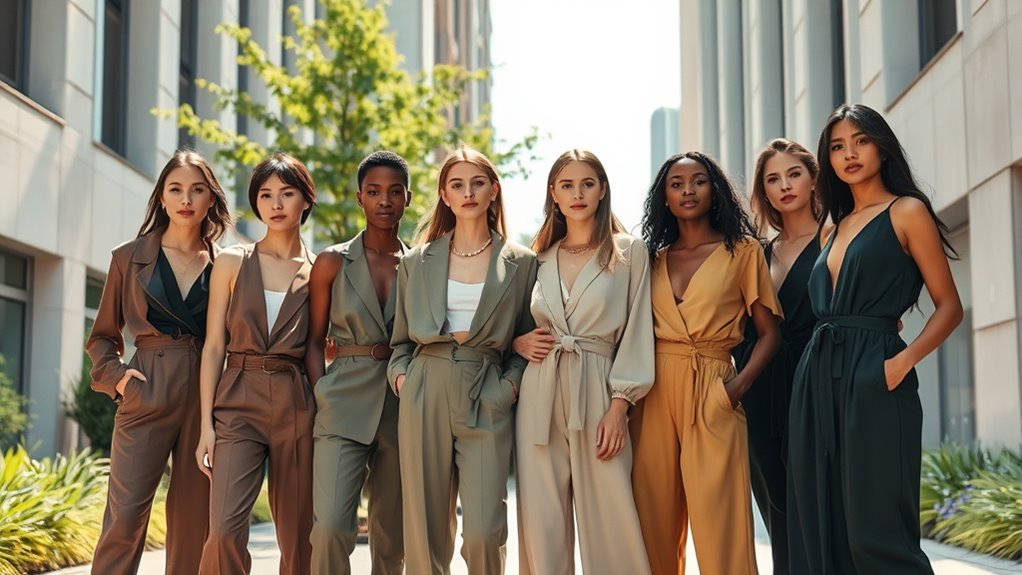
Have you ever wondered why clothing is often divided into men’s and women’s categories? It’s a question that highlights how traditional gender norms shape fashion, even when those distinctions don’t always serve everyone’s needs. One way designers are challenging these norms is through gender-neutral fashion, which emphasizes unisex fabrics and inclusive sizing. By focusing on fabrics that work for all genders, brands can create versatile, sustainable pieces that break down barriers and reduce waste. Unisex fabrics—think organic cotton, recycled polyester, or modal—are chosen for their durability and comfort, making them suitable for anyone regardless of gender. These fabrics are often produced with less water and chemical use, aligning with sustainable principles that aim to lessen environmental impact.
Inclusive sizing is another essential aspect of gender-neutral fashion. Traditional sizing often caters to a narrow range, leaving many people feeling excluded or uncomfortable. By expanding size ranges and designing with a gender-neutral approach, brands make clothing accessible to a broader audience. This not only promotes body positivity but also reduces overproduction, as garments are made to fit a wider variety of body types from the start. When you shop for clothing with inclusive sizing, you’re supporting a movement that values diversity and aims to eliminate the notion that certain sizes or shapes are less valid. It’s about creating a space where everyone can find well-fitting, stylish clothing without feeling confined to gendered expectations.
Sustainable design and gender-neutral fashion go hand in hand because they both prioritize longevity and adaptability. When you choose pieces made from unisex fabrics and designed with inclusive sizing, you’re investing in clothing that can adapt to different styles and functions over time. These pieces tend to be more timeless, reducing the need for constant replacement and minimizing waste. Plus, they often come from brands committed to ethical practices, such as using eco-friendly materials and fair labor standards.
Frequently Asked Questions
How Does Inclusive Fashion Impact Traditional Clothing Industry Standards?
Inclusive fashion challenges traditional clothing industry standards by promoting cultural representation and fashion diversity. You see, it encourages brands to design for all genders, sizes, and backgrounds, breaking down stereotypes. This shift pushes the industry to become more adaptable, innovative, and respectful of different identities. As a result, you’re likely to experience wider choices, more authentic representation, and a move toward a more equitable and diverse fashion landscape.
What Are the Challenges in Designing Gender-Neutral Sustainable Fabrics?
You might think designing gender-neutral sustainable fabrics is straightforward, but challenges abound. Fabric dyeing can be tricky because eco-friendly dyes often struggle to achieve vibrant, lasting colors, while pattern designing requires flexibility to suit diverse body shapes and styles. Balancing sustainability with durability and aesthetic appeal demands innovative solutions. Overcoming these hurdles is vital for creating inclusive fashion that’s environmentally responsible and truly wearable for everyone.
How Do Consumer Perceptions Influence Gender-Neutral Fashion Adoption?
Your perception shifts greatly influence how you adopt gender-neutral fashion. As consumer attitudes evolve towards inclusivity and sustainability, you become more open to gender-neutral designs. Positive perception shifts foster acceptance, encouraging you to explore diverse styles without gender constraints. When brands promote sustainable, inclusive fashion, you’re more likely to view it favorably, shifting your perception and increasing adoption. Ultimately, your evolving perceptions help shape the growing trend toward gender-neutral, eco-friendly fashion choices.
Are There Specific Brands Leading in Inclusive Sustainable Fashion?
You’ll find brands like Patagonia and Telfar leading in inclusive sustainable fashion. They actively engage in brand collaborations that emphasize sustainability and expand sizing inclusivity, making their collections accessible to a broader audience. These brands prioritize eco-friendly materials and practices while ensuring that everyone feels represented and comfortable. By focusing on inclusivity and sustainability, they set a strong example for others to follow in the evolving fashion landscape.
How Can Smaller Designers Promote Gender-Neutral and Eco-Friendly Options?
You can promote gender-neutral and eco-friendly options by leveraging sustainable fabric innovations like organic cotton or recycled materials. Highlight these choices in your marketing inclusive apparel campaigns to reach a broader audience. Did you know that 65% of consumers prefer brands with inclusive, sustainable practices? By focusing on eco-conscious fabrics and transparent messaging, you’ll attract conscious shoppers and stand out in the growing sustainable fashion movement.
Conclusion
By embracing gender-neutral and inclusive fashion, you’re not just changing wardrobes—you’re breaking down walls and rewriting what style truly means. Think of fashion as a canvas, waiting for your unique expression, free from labels and stereotypes. When you choose sustainability alongside inclusivity, you’re painting a future where everyone belongs. So, why settle for the old palette? Dare to wear your authenticity boldly, and let your style be the revolution everyone can see.