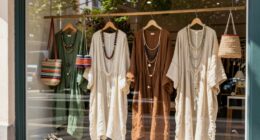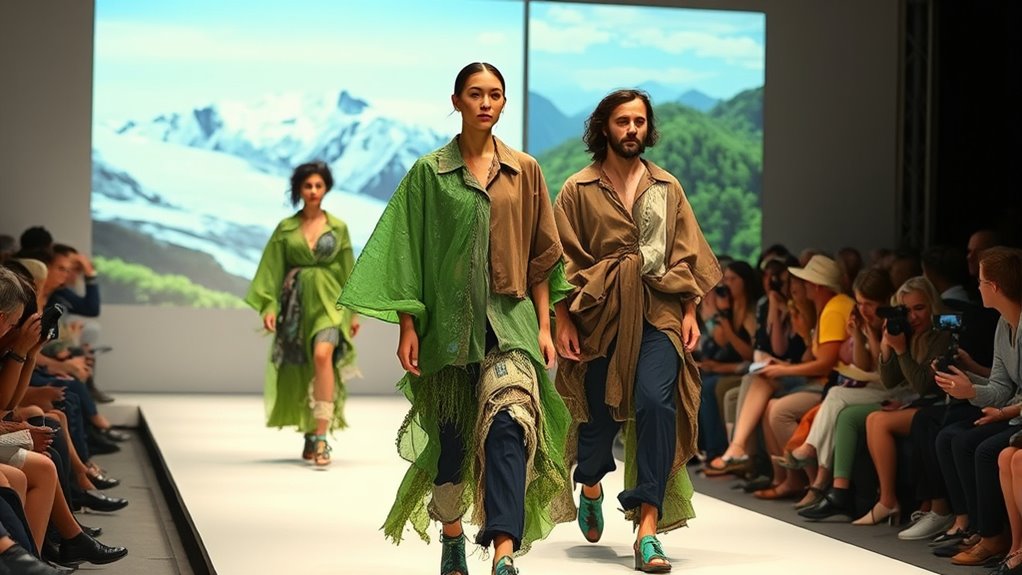

On the runway, designers are turning fashion into a powerful voice for climate activism by showcasing eco-conscious designs and sustainable materials. You’ll see garments made from organic fabrics, natural dyes, and recycled fibers that highlight environmental responsibility. Models and runway shows promote awareness, encouraging consumers to support eco-friendly brands and rethink fast fashion choices. If you’re curious how fashion’s runway can influence environmental change, there’s more to discover about these inspiring eco-messages.
Key Takeaways
- Designers use runway shows as platforms to promote sustainability and raise awareness about climate issues.
- Eco-friendly fabrics and natural dyes are showcased to emphasize sustainable material choices.
- Runway collections often feature statements advocating for environmental responsibility and climate activism.
- Fashion brands highlight transparent sourcing and eco-conscious production to influence consumer behavior.
- Industry innovations in sustainable practices demonstrate fashion’s potential to support a healthier planet.
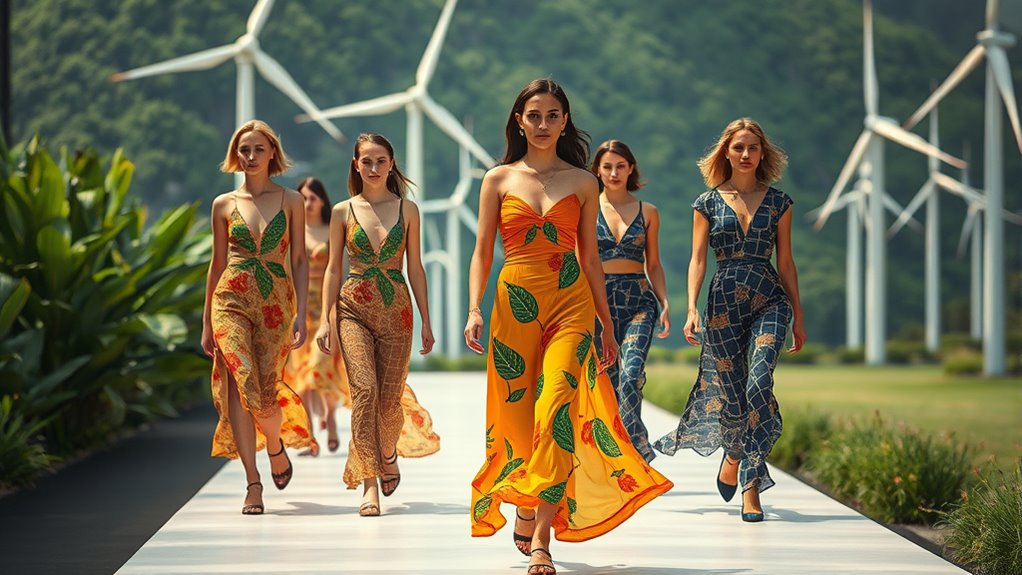
Fashion shows are increasingly becoming platforms for climate activism, where designers and models use their influence to raise awareness about environmental issues. As you watch these runway events, you realize that the garments themselves are making a statement—highlighting the importance of sustainability and eco-conscious choices. Many designers are now prioritizing sustainable fabric, opting for materials that are produced with minimal environmental impact. Instead of traditional textiles that often rely on harmful chemicals or excessive water use, they choose organic cotton, hemp, or recycled fibers. These fabrics not only reduce the fashion industry’s carbon footprint but also demonstrate how style and sustainability can go hand in hand.
In addition to sustainable fabric, eco friendly dyes play a *vital* role in these runway presentations. You notice that designers are increasingly using natural dyes derived from plants, minerals, and other renewable sources, steering clear of toxic chemical dyes that pollute waterways and harm ecosystems. The vibrant colors on the runway often come from these natural sources, proving that you don’t have to sacrifice aesthetics for environmental responsibility. By showcasing garments dyed with eco friendly dyes, designers send a powerful message: the fashion industry can be both beautiful and sustainable.
Natural dyes from plants and minerals show that beauty and sustainability go hand in hand.
When you see these environmentally conscious choices on the runway, it’s clear that the message extends beyond just clothing. It’s about encouraging consumers and industry insiders to rethink their habits and prioritize eco-friendly options. You might even find yourself questioning the fast fashion cycle, realizing that purchasing fewer, higher-quality pieces made from sustainable fabric and dyed with eco friendly dyes can make a real difference. This shift in mindset is exactly what many designers aim for—they want you to see fashion as a form of activism, a way to advocate for the planet.
Moreover, the use of sustainable fabric and eco friendly dyes is often highlighted through storytelling during shows. Designers explain the journey of their materials, emphasizing organic farming practices, fair labor, and eco-conscious dyeing processes. This transparency helps build trust and encourages you to support brands that value environmental responsibility. Additionally, innovations in sustainable fabric and eco friendly dyes are driving the industry toward more eco-conscious practices, showcasing the potential for positive change. As you observe the runway, it becomes evident that fashion isn’t just about trends; it’s about creating a more sustainable future, one garment at a time.
Ultimately, these eco-friendly choices on the runway aren’t just buzzwords—they’re a movement. By choosing sustainable fabric and eco friendly dyes, designers are not only pushing the boundaries of creativity but also advocating for a healthier planet. As you witness this shift, it’s inspiring to think that your own fashion choices can contribute to this change. Every step toward sustainability in fashion adds up, making the runway a powerful platform for climate activism that you can be part of.

Amazon Smart Thermostat – Save money and energy - Works with Alexa and Ring - C-wire required
Smart upgrade - Amazon Smart Thermostat is an easy way to switch from a traditional thermostat and help...
As an affiliate, we earn on qualifying purchases.
Frequently Asked Questions
How Effective Are Eco-Themed Runway Shows in Influencing Consumer Behavior?
Eco-themed runway shows can considerably influence your consumer perception by highlighting sustainability messaging, making you more aware of eco-conscious choices. When designers effectively showcase sustainable practices, you’re more likely to feel inspired to support brands that prioritize environmental responsibility. These shows create a visual and emotional impact, encouraging you to align your fashion choices with eco-friendly values, ultimately fostering more sustainable consumer behavior over time.
Which Designers Are Leading the Most Impactful Climate-Focused Fashion Initiatives?
Think of designers leading the charge as trailblazers lighting the way through a forest of change. You’ll find Stella McCartney at the forefront, pioneering eco-conscious collaborations and sustainable material innovations that inspire industry shifts. Meanwhile, brands like Gucci and Prada push boundaries with innovative, eco-friendly designs. Their impactful climate-focused initiatives serve as beacons, encouraging consumers to embrace sustainability and fostering a global movement toward more responsible fashion.
How Do Sustainability Claims in Fashion Shows Ensure Genuine Environmental Impact?
You can guarantee sustainability claims are genuine by checking for credible sustainability certifications, which validate eco-friendly practices. Be cautious of greenwashing risks, where brands may exaggerate their environmental efforts. Look for transparent reporting, third-party audits, and verified labels, as these demonstrate real commitments. By staying informed and scrutinizing claims, you’ll better distinguish authentic sustainable fashion from superficial marketing tactics.
What Challenges Do Designers Face When Integrating Activism Into Runway Presentations?
You face challenges when integrating activism into runway presentations, often juggling sustainable sourcing and ethical labor. As you aim to raise awareness, you might find that sourcing eco-friendly materials complicates production, while ensuring fair labor practices adds logistical hurdles. Balancing powerful messages with design aesthetics can feel like walking a tightrope, but staying committed to transparency and authenticity helps you authentically promote change without sacrificing creativity or integrity.
How Can Audiences Participate in Climate Activism Through Fashion Events?
You can participate in climate activism at fashion events by engaging actively with the message. Share photos and stories on social media campaigns to raise awareness, encouraging others to join the cause. Attend shows that spotlight eco-friendly designs, ask questions, and express your support for sustainable practices. Your audience engagement amplifies the message, inspiring both designers and fellow attendees to prioritize environmental responsibility and make a tangible impact through fashion activism.

Honeywell Home RTH9585WF1004 Wi-Fi Smart Color Thermostat, 7 Day Programmable, Touch Screen, Energy Star, Alexa Ready, Gray
COMFORT COMES IN YOUR COLOR. Personalize your Wi-Fi Smart Color Programmable Thermostat to fit your décor.
As an affiliate, we earn on qualifying purchases.
Conclusion
As you watch designers incorporate eco messages into their collections, it’s clear that fashion is becoming a powerful platform for climate activism. Did you know that over 60% of consumers now prefer brands with sustainable practices? This shift shows your influence as a consumer and supporter. By embracing eco-conscious fashion, you help push the industry toward greener choices. Together, your choices can amplify the message and inspire real change on and off the runway.

Google Nest Thermostat - Smart Thermostat for Home - Programmable Wifi Thermostat - Snow
ENERGY STAR certified smart thermostat for home that helps you save energy and stay comfortable.Product note: You can...
As an affiliate, we earn on qualifying purchases.

meross Smart Thermostat for Home, WiFi Thermostat Works with Matter, Alexa, Apple Home, Google Assistant, App & Voice Control, 7x24h Scheduling, Energy Saving, C-Wire Required
Before You Buy: Meross smart thermostat for home is suitable for 95% of HVAC systems, including heat pump,...
As an affiliate, we earn on qualifying purchases.