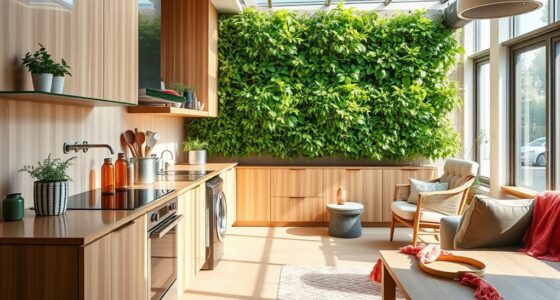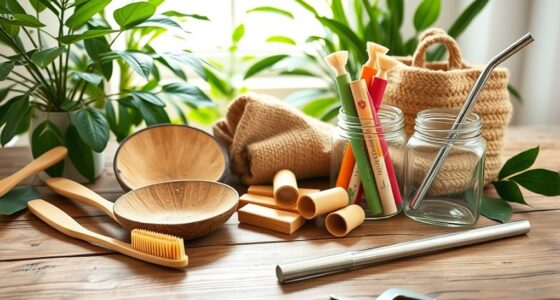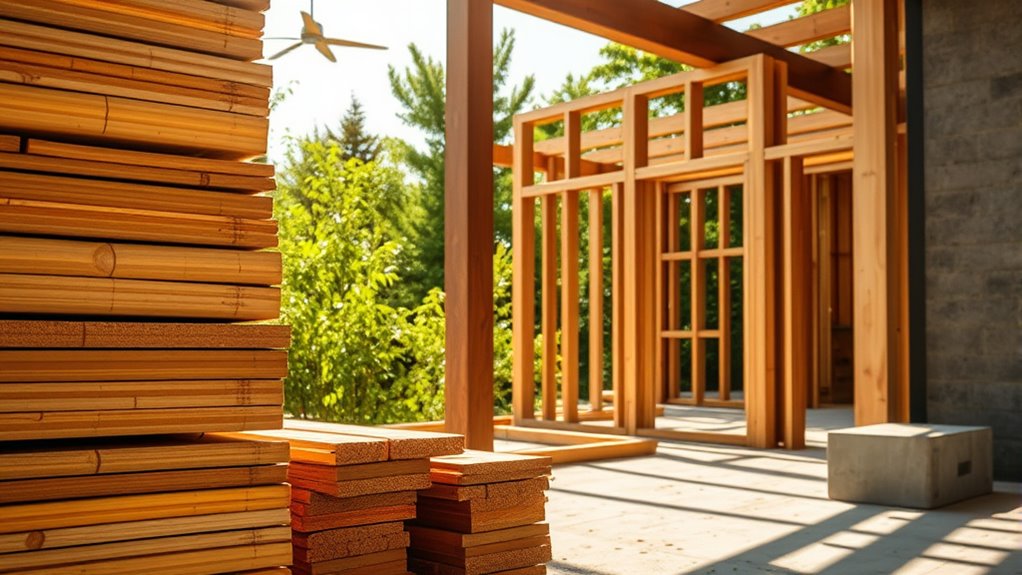

Choosing eco-friendly construction materials for your home renovation helps reduce environmental impact, improve indoor air quality, and support sustainable practices. Look for options like FSC-certified timber, recycled metal, glass, and plastic, which give new life to waste and minimize deforestation. These materials also often offer better insulation, lowering energy costs. By making responsible choices, you’ll create a healthier living space while contributing to environmental conservation. Keep exploring to discover more eco-friendly options for your project.
Key Takeaways
- Use sustainably sourced timber, like FSC-certified wood, to minimize deforestation and support responsible forest management.
- Incorporate recycled materials such as metal, glass, and plastics to reduce waste and lower environmental impact.
- Choose materials with recycled content to promote circular economy practices and conserve natural resources.
- Select eco-friendly building products free from harmful chemicals to enhance indoor air quality and home health.
- Prioritize durable, energy-efficient materials that contribute to long-term sustainability and lower renovation costs.
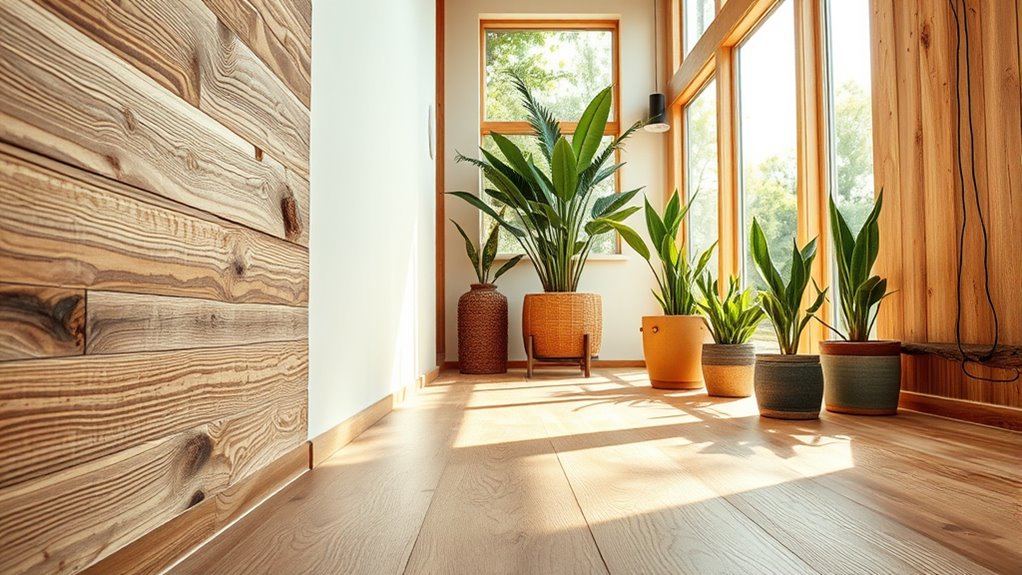
As the construction industry seeks sustainable solutions, eco-friendly materials are gaining popularity for their environmental benefits and durability. When you’re considering home renovations, choosing materials that prioritize sustainable sourcing can make a significant difference. Sustainable sourcing means selecting raw materials that are obtained in ways that minimize environmental impact, support local economies, and promote responsible harvesting. For example, opting for timber certified by organizations like FSC ensures that the wood comes from sustainably managed forests, reducing deforestation and habitat destruction. This approach not only helps protect natural resources but also guarantees that your renovation contributes to a healthier planet.
Recycled content is another key aspect of eco-friendly construction materials. Using materials with recycled content means you’re giving new life to materials that might otherwise end up in landfills or be wasted. For instance, recycled metal, glass, and plastic can be integrated into various building components, reducing the need for virgin resources. Recycled-content products often have comparable or even superior durability, making them practical choices for your renovation projects. They also help cut down on energy consumption associated with producing new materials, further decreasing your environmental footprint.
Using recycled materials reduces waste, conserves resources, and promotes durable, eco-friendly building options.
When you prioritize recycled content, you support a circular economy—where waste is repurposed instead of discarded. This not only conserves natural resources but also encourages manufacturers to develop innovative, sustainable products. For example, recycled content in flooring, insulation, or countertops can deliver high performance while being environmentally conscious. Additionally, many suppliers now clearly label products with recycled content percentages, making it easier for you to make informed, eco-friendly choices.
Incorporating sustainable sourcing and recycled content into your renovation plans isn’t just about environmental responsibility; it can also enhance your home’s overall health and efficiency. Eco-friendly materials are often free from harmful chemicals and toxins, improving indoor air quality. Plus, many sustainable materials have impressive insulation properties, which can help reduce energy costs over time. By making thoughtful choices, you’re not only contributing to a more sustainable future but also creating a healthier, more comfortable living space.
Ultimately, selecting materials based on sustainable sourcing and recycled content aligns your renovation efforts with broader environmental goals. It encourages responsible consumption, reduces waste, and promotes innovation in building materials. For example, understanding the role of attention in creative practice can inspire you to carefully consider each material choice and its impact. When you prioritize these aspects, you’re helping to pave the way for a more sustainable construction industry—one project at a time.

Novilla Queen Size Mattress, 12 inch Gel Memory Foam Mattress for a Cool Sleep & Pressure Relief, Medium Firm Feel with Motion Isolating, Bliss
General Note: Please allow 24 - 72 hours for your Mattress to regain its full shape. Any memory...
As an affiliate, we earn on qualifying purchases.
Frequently Asked Questions
Are Eco-Friendly Materials Cost-Effective Long-Term?
Yes, eco-friendly materials are cost-effective long-term because they often lead to significant cost savings through reduced energy bills and maintenance costs. By choosing sustainable options, you lower your environmental impact, which can also boost your home’s value. While initial costs might be higher, the long-term savings and positive environmental impact make eco-friendly materials a wise investment, benefiting both your wallet and the planet.
How Durable Are Sustainable Construction Materials?
Sustainable construction materials are like sturdy trees—built to last with proper care. They’re highly durable, especially when backed by trusted recycling methods and material certifications. These certifications guarantee quality and longevity, making the materials resilient against wear and tear. When you choose eco-friendly options, you’re investing in structures that stand the test of time, reducing the need for frequent repairs and replacements, ultimately supporting your long-term home sustainability.
Can Eco-Friendly Materials Improve Indoor Air Quality?
Yes, eco-friendly materials can improve your indoor air quality. They often have VOC reduction properties, meaning they emit fewer harmful chemicals, and can help prevent mold growth by controlling moisture. Using these materials in your home renovation reduces airborne pollutants and creates a healthier environment. You’ll breathe easier and enjoy a safer space, knowing that your choice supports sustainability while enhancing your indoor air quality.
Are These Materials Suitable for All Climates?
Yes, eco-friendly materials are suitable for all climates when you choose climate-specific options and consider regional availability. You should select materials designed to perform well in your area’s temperature, humidity, and weather conditions. For example, certain insulation or roofing materials work better in wet climates, while others excel in dry or cold environments. By researching regional availability, you guarantee your eco-friendly choices are effective, durable, and tailored to your home’s specific climate needs.
Where Can I Source Certified Eco-Friendly Building Supplies?
You can source certified eco-friendly building supplies through local recycling programs and sustainable material suppliers. Look for products that meet green certification standards like LEED or Green Seal, which guarantee environmentally responsible sourcing. Many suppliers now specialize in eco-friendly options, and online marketplaces often list certification details. Visiting local hardware stores or contacting regional green building organizations can also help you find trusted sources that prioritize sustainability.

Awara Natural Hybrid Full Mattress 10 Inch - Certified Organic Natural Latex - Sustainable New Zealand Wool - Fiberglass-Free - 365-Night Trial
365-NIGHT HOME TRIAL & LIFETIME WARRANTY - Our industry-leading trial period and warranty starts the day your Awara...
As an affiliate, we earn on qualifying purchases.
Conclusion
So, next time you’re tearing down the old and building anew, why not give eco-friendly materials a shot? After all, who wouldn’t want their home to be stylish, sustainable, and guilt-free? Plus, think of all the brownie points you’ll earn with Mother Earth—because nothing says “I care” like a green renovation. Go ahead, be a hero in disguise; your wallet (and the planet) will thank you.
Awara Natural Hybrid Queen Mattress 10 Inch - Certified Organic Natural Latex - Sustainable New Zealand Wool - Fiberglass-Free - 365-Night Trial
365-NIGHT HOME TRIAL & LIFETIME WARRANTY - Our industry-leading trial period and warranty starts the day your Awara...
As an affiliate, we earn on qualifying purchases.
![Zinus 12 Inch Queen Green Tea Memory Foam Mattress [New Version], Fiberglass Free, Medium Firm Feel, Zoned Pressure Relief, Certified Safe Foams & Fabric, Mattress in A Box](https://m.media-amazon.com/images/I/41r5AOFPG0L._SL500_.jpg)
Zinus 12 Inch Queen Green Tea Memory Foam Mattress [New Version], Fiberglass Free, Medium Firm Feel, Zoned Pressure Relief, Certified Safe Foams & Fabric, Mattress in A Box
ZINUS GREEN TEA MEMORY FOAM – Patented zoned pressure relief, medium firm feel, breathable knitted cover, and a...
As an affiliate, we earn on qualifying purchases.