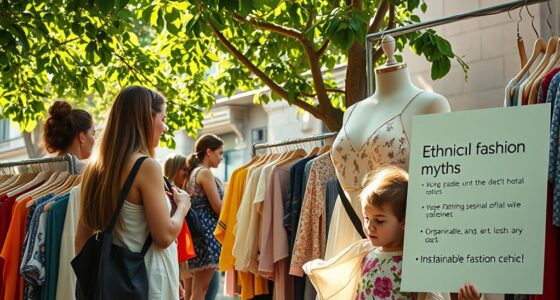
Fashion can become truly sustainable if industry practices focus on reducing water pollution, textile waste, and harmful chemicals. When brands prioritize ethical sourcing and adopt circular economy principles, they help protect ecosystems and promote responsible consumption. Your choices as a consumer influence brands to adopt greener practices. While achieving complete sustainability is complex, understanding the ongoing efforts and how you can contribute will show you ways to support a more eco-friendly fashion future.

Prime made for students and young adults
- Fast, free delivery for dorm and study essentials
- Prime Video and Amazon Music included
- Member-only deals
Key Takeaways
- Achieving complete sustainability in fashion requires systemic changes in sourcing, production, and consumer behavior.
- Incorporating circular economy principles can significantly reduce waste and resource depletion in fashion.
- Ethical sourcing and responsible practices are essential for minimizing environmental and social impacts.
- Consumer demand for transparency and sustainability encourages brands to adopt eco-friendly initiatives.
- A holistic approach that considers biodiversity and ecosystems is vital for truly sustainable fashion practices.
Have you ever wondered how your clothing choices impact the planet? Every garment you buy, wear, or discard plays a role in a complex system that affects ecosystems, communities, and future generations. The fashion industry has long been criticized for its environmental footprint, from water pollution to textile waste. But there’s hope that fashion can evolve into a more sustainable sector. Achieving true sustainability means embracing practices like ethical sourcing, which ensures that materials are produced responsibly, respecting both human rights and the environment. When brands prioritize ethical sourcing, they choose suppliers that pay fair wages, avoid harmful chemicals, and follow eco-friendly methods. This not only helps reduce the industry’s negative impact but also promotes social justice and transparency. Still, ethical sourcing alone isn’t enough. To truly transform the industry, you’ll want to support and advocate for a circular economy—an approach that minimizes waste and keeps resources in use for as long as possible. Instead of the traditional linear model of “take-make-dispose,” a circular economy emphasizes recycling, upcycling, and designing clothes with their end-of-life in mind. When you buy clothes made with this mindset, you’re encouraging brands to create products that can be repurposed or regenerated, reducing landfill overflow and conserving resources. Your choices matter because they influence market demand. When you opt for brands committed to ethical sourcing and circular principles, you send a message that sustainability is a priority. This can push more companies to rethink their supply chains and waste management strategies. It also means being mindful about your consumption habits—buying fewer items, choosing quality over quantity, and supporting brands with transparent sustainability policies. While no single approach can make fashion entirely sustainable overnight, combining ethical sourcing with a circular economy creates a powerful pathway forward. It’s about shifting the focus from fast fashion to thoughtful, responsible consumption. Your role in this transition is crucial; by making conscious choices, you can drive change from within the industry. Ultimately, sustainability in fashion isn’t just about the environment—it’s about respecting people, preserving resources, and fostering innovation that benefits everyone. While the goal of complete sustainability might seem daunting, every small step counts. When you understand the impact of your clothing choices and actively seek out brands committed to ethical sourcing and circular practices, you’re helping shape a future where fashion is more responsible, resilient, and respectful of our planet. Recognizing the importance of biodiversity in the supply chain can further encourage brands to adopt more sustainable practices, especially as it relates to environmental impact. Incorporating knowledge about ecosystems into supply chain decisions can help minimize adverse effects and promote more sustainable development. Additionally, understanding the role of ecosystem health in supply chains can lead to more holistic and sustainable practices across the industry. Furthermore, emphasizing ecosystem resilience can motivate companies to adopt more adaptive and sustainable strategies that bolster long-term environmental stability.
Popular right now

Shark Rocket Pet Plus Corded Stick Vacuum, Bordeaux, HV322

Samsung 42-Inch S90H OLED 4K Smart TV Bundle

Roborock RockNeo Q110H Wire-Free Robot Lawn Mower
As an affiliate, we earn on qualifying purchases.
Frequently Asked Questions
How Can Consumers Identify Genuinely Sustainable Fashion Brands?
You can identify genuinely sustainable fashion brands by checking if they use eco-friendly materials and prioritize ethical labor practices. Look for transparent labels and certifications like Fair Trade or GOTS, which guarantee responsible sourcing. Research the brand’s commitment to sustainability, including their supply chain and environmental impact. Supporting brands that openly share their practices helps you make mindful choices, guaranteeing your fashion choices contribute positively to the planet and workers’ well-being.
What Are the Biggest Challenges Brands Face in Becoming Sustainable?
Like steering through a maze, brands face major hurdles in becoming sustainable. Supply chain transparency remains a challenge, making it hard to verify ethical labor practices. They often struggle to balance eco-friendly materials with affordability and quality. Changing established production methods takes time and investment, and consumer demand for fast fashion adds pressure. Overcoming these obstacles requires transparency, commitment, and a willingness to prioritize long-term sustainability over short-term profits.
Does Sustainable Fashion Cost More Than Conventional Fashion?
Sustainable fashion often costs more than conventional fashion because of eco-friendly materials and fair labor practices. When you choose sustainable options, you’re supporting higher-quality, ethically produced clothing, which can be pricier. These investments guarantee better environmental impact and fair wages for workers. While the upfront cost is higher, you’re contributing to a more responsible industry that values sustainability, quality, and fairness over fast, cheap fashion.
Can Fast Fashion Ever Truly Become Sustainable?
Fast fashion can’t truly become sustainable overnight, but it can make strides by embracing eco-friendly materials and ensuring ethical labor practices. If you support brands that prioritize these elements, you help push the industry toward better standards. While complete sustainability is challenging, your choices matter. By demanding transparency and sustainability, you encourage fast fashion to adopt more responsible practices, making a difference one purchase at a time.
How Does Secondhand Shopping Impact Fashion Sustainability?
Secondhand shopping boosts fashion sustainability by promoting a circular economy, where clothes are reused instead of discarded. When you buy secondhand, you reduce demand for new, ethically sourced garments, lessening environmental impact. Your choices also support ethical sourcing practices, ensuring that clothes are made responsibly. By choosing secondhand, you actively contribute to a more sustainable fashion industry, helping reduce waste and encouraging brands to prioritize eco-friendly and fair labor standards.
Conclusion
So, can fashion ever be truly sustainable? It’s a tough question, but every small change you make — from choosing eco-friendly brands to recycling your wardrobe — moves us closer to that dream. Imagine a world where your style doesn’t drain the planet’s life force; it’s not just wishful thinking, it’s possible if we all act now. Remember, your choices have the power to shape a future so green, it’ll make the Earth itself sing with joy!