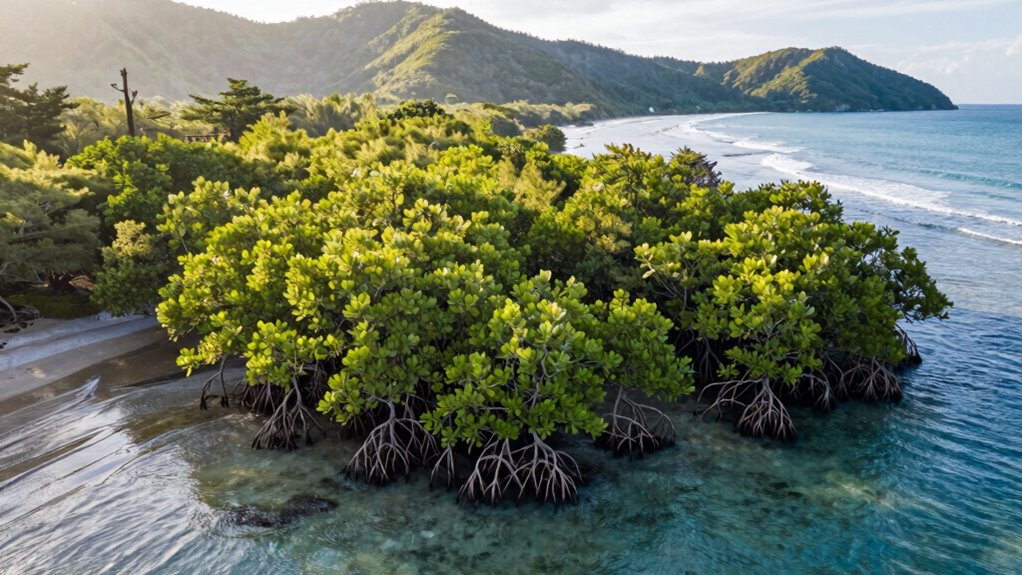

Mangrove restoration protects your coastlines and communities by creating natural barriers that trap sediments and slow water movement, reducing erosion. Their dense root systems absorb storm surges and high waves, shielding you from flooding and storm damage. Healthy mangroves also support biodiversity, improve fisheries, and boost ecotourism, offering economic benefits. By strengthening these ecosystems, you enhance safety and resilience for your community. To discover how this process works, keep exploring the key benefits of mangrove restoration.

Prime made for students and young adults
- Fast, free delivery for dorm and study essentials
- Prime Video and Amazon Music included
- Member-only deals
Key Takeaways
- Mangroves trap sediments and stabilize shorelines, reducing erosion and land loss.
- Their dense roots act as natural barriers, shielding communities from storm surges and high waves.
- Restored mangroves enhance ecosystem resilience, decreasing reliance on artificial coastal defenses.
- Healthy mangroves improve water quality and prevent flooding in adjacent communities.
- They support local economies through sustainable fishing and ecotourism, promoting community safety.
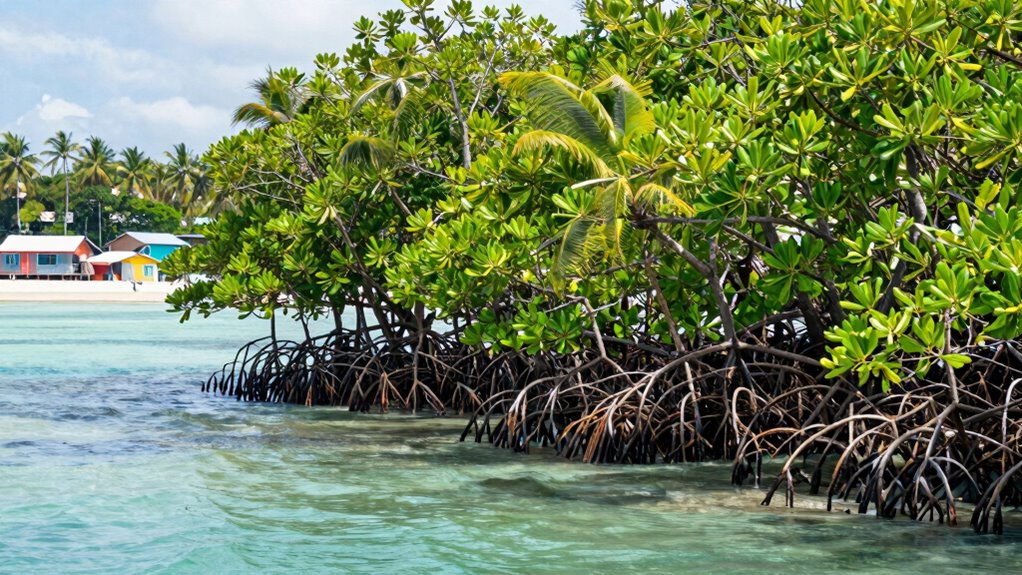
Mangrove restoration is proving to be a pivotal strategy for safeguarding coastlines and communities from the increasing threats of erosion and flooding. When you restore mangroves, you’re not just planting trees—you’re reviving an entire ecosystem that offers essential benefits. These ecosystems serve as rich wildlife habitats, supporting numerous species of fish, birds, and invertebrates. As you help re-establish mangroves, you create safe havens for wildlife that depend on these environments for breeding, feeding, and shelter. This biodiversity boost strengthens the overall health of coastal regions, making them more resilient to environmental stresses.
Restoring mangroves revitalizes ecosystems, supporting wildlife and strengthening coastal resilience against environmental threats.
One of the most significant advantages of mangrove restoration is its role in carbon sequestration. These trees are incredibly effective at absorbing carbon dioxide from the atmosphere, locking it away in their biomass and in the soil. When you restore mangroves, you’re actively reducing greenhouse gases that contribute to climate change. This process not only helps mitigate global warming but also stabilizes local climates, which can otherwise be disrupted by rising sea levels and increased storm activity. The carbon stored in mangrove soils remains secure for decades, making these ecosystems a natural and sustainable way to combat climate change. Additionally, understanding the carbon sequestration process highlights the importance of conserving natural ecosystems as part of a comprehensive climate strategy. Restoring mangroves also contributes to preserving the biodiversity, which is essential for a healthy planet. Recognizing how these ecosystems protect coastlines underscores their integral role in coastal resilience. Moreover, healthy mangroves can also contribute to local economies through sustainable fishing and ecotourism initiatives.
As you work on restoring mangroves, you’ll notice how they act as natural barriers against storm surges and high waves. Their dense root systems trap sediments and slow water movement, which helps prevent erosion along coastlines. This sediment trapping also encourages land accretion, gradually rebuilding degraded shorelines. By stabilizing the coastline, mangroves protect coastal communities from flooding and storm damage, reducing the need for costly artificial defenses. The presence of healthy mangroves can also enhance coastal protection by reducing the impact of extreme weather events. Your efforts in restoring these ecosystems directly translate into safer, more resilient communities, especially in vulnerable regions.
As an affiliate, we earn on qualifying purchases.
Frequently Asked Questions
How Long Does It Take for Mangroves to Fully Restore?
Mangroves can take anywhere from 5 to 15 years to fully restore, depending on the species and conditions. You’ll see initial growth within a few years, but it takes longer for the mangroves to establish a mature, resilient ecosystem. Restoration timelines vary based on factors like soil quality and water salinity. By supporting the right mangrove species, you help speed up the process and guarantee healthy, long-lasting coastal protection.
What Are the Costs Involved in Mangrove Restoration Projects?
They say “you get what you pay for,” and that’s true for mangrove restoration costs. Your project’s expenses include financial funding for seedlings, labor, and equipment, alongside ecological assessment to guarantee success. Costs vary based on project size, location, and complexity. Investing in thorough planning and funding ensures healthy mangroves that safeguard coasts and communities, making the effort worthwhile in the long run.
Can Mangroves Be Restored in Heavily Degraded Areas?
Yes, you can restore mangroves in heavily degraded areas, though it’s more challenging. Restoration efforts boost ecosystem resilience and promote biodiversity enhancement, helping these areas recover over time. By implementing suitable techniques like planting native species and removing invasive plants, you support the natural regeneration process. While degraded zones may require extra care and resources, active restoration can ultimately revive mangrove ecosystems and strengthen coastal protection.
How Do Local Communities Participate in Restoration Efforts?
Ironically, communities often lead the charge in their own restoration, embracing traditional knowledge to revive mangroves. By participating in planting, monitoring, and protecting these ecosystems, local residents become stewards of their coastal future. Community engagement fosters a sense of ownership, ensuring sustained efforts. Your involvement not only restores mangroves but also preserves cultural practices, proving that local wisdom is invaluable in revitalizing degraded areas for resilient coastlines and safer communities.
Are There Any Negative Impacts of Mangrove Restoration?
You should be aware that mangrove restoration can sometimes lead to ecological risks, like disrupting local habitats or encouraging invasive species. These invasive plants might outcompete native mangroves, harming biodiversity. While restoration offers many benefits, it is crucial to carefully plan and monitor projects to minimize negative impacts. Proper management ensures that restoration efforts support healthy ecosystems without unintentionally causing new environmental issues.
coastal erosion barrier products
As an affiliate, we earn on qualifying purchases.
As an affiliate, we earn on qualifying purchases.
Conclusion
By restoring mangroves, you’re not just planting trees—you’re safeguarding your coast and community’s future. These essential ecosystems hold secrets that could change everything, from combating climate change to protecting homes from relentless storms. But the real question is, will we act now before it’s too late? The power to make a difference is in your hands. The next chapter depends on your choices—are you ready to be part of the solution?
As an affiliate, we earn on qualifying purchases.
As an affiliate, we earn on qualifying purchases.
Fall Picks
fall essentials
As an affiliate, we earn on qualifying purchases.