
TL;DR

Prime made for students and young adults
- Fast, free delivery for dorm and study essentials
- Prime Video and Amazon Music included
- Member-only deals
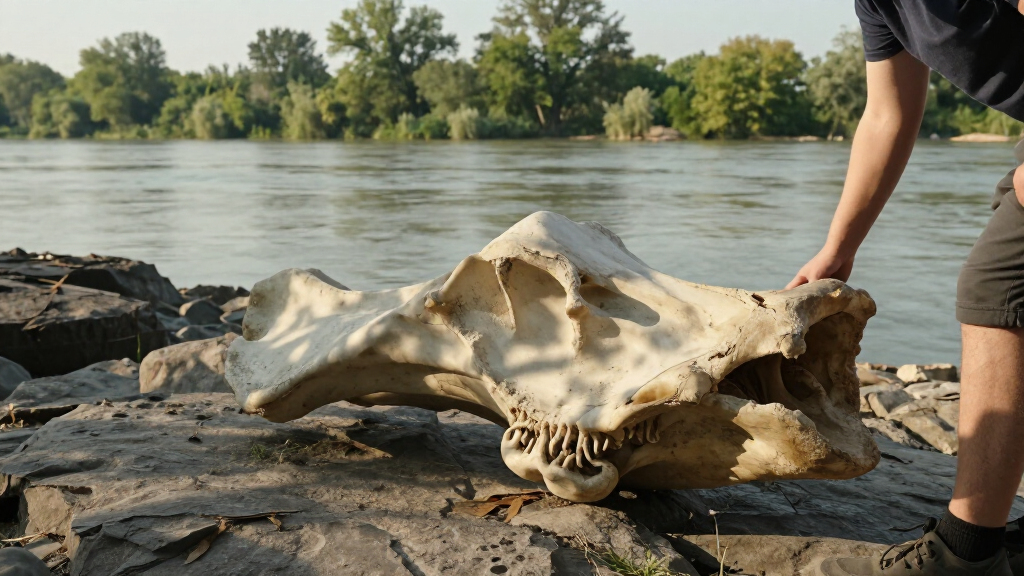
Archaeologists have confirmed the discovery of woolly mammoth bones in the Danube River. The find provides new insights into Ice Age megafauna in Europe. Further analysis is ongoing to determine the bones’ age and significance.
Archaeologists have confirmed the discovery of woolly mammoth bones in the Danube River, marking a significant paleontological find that offers new insights into Ice Age megafauna in Europe. The discovery was announced by researchers involved in the excavation, emphasizing its importance for understanding prehistoric ecosystems and species distribution.
The bones were recovered from a site along the Danube River in central Europe, with initial dating suggesting they are approximately 20,000 to 30,000 years old. Researchers from the University of Vienna and local paleontological institutes confirmed the bones’ authenticity after preliminary analysis, which included radiocarbon dating and morphological examination.
According to Dr. Maria Keller, a lead paleontologist involved in the excavation, “The bones appear to belong to a mature woolly mammoth, and their preservation indicates that they were deposited in the river environment during the late Pleistocene epoch.” The bones include parts of the skull, tusks, and limb bones, which are being studied further to understand the animal’s health and the circumstances of its death.
Implications for Understanding Ice Age Megafauna Distribution
This discovery is significant because it provides direct evidence of woolly mammoths in the Danube region, expanding current knowledge of their habitat range during the last Ice Age. It may also help scientists understand how these animals migrated and adapted to changing climates and environments in Europe. Additionally, the find could contribute to broader discussions about human-prehistoric animal interactions in the region, as similar sites have yielded tools and other evidence of early human activity.
As an affiliate, we earn on qualifying purchases.
Recent Discoveries and Historical Significance of Mammoth Finds in Europe
Woolly mammoth bones have been found in various parts of Europe over the past century, often associated with ice sheet margins and periglacial environments. Notable discoveries include bones in Siberia, the North Sea, and other parts of Eastern Europe. The Danube River, flowing through multiple countries, has previously yielded fossils, but this is among the most significant recent finds due to its well-preserved state and the context of the surrounding sediments.
The last Ice Age saw widespread mammoth populations across Eurasia, with their extinction roughly 4,000 years ago. The recent find adds to the growing evidence that these animals persisted in more southern and riverine environments than previously thought, offering new data for paleontologists studying extinction patterns and climate change effects.
“The bones appear to belong to a mature woolly mammoth, and their preservation indicates they were deposited during the late Pleistocene epoch.”
— Dr. Maria Keller
As an affiliate, we earn on qualifying purchases.
Details on the Exact Age and Cause of Death Still Unclear
While initial dating suggests the bones are around 20,000 to 30,000 years old, precise dating and contextual information about the cause of death remain under study. It is not yet confirmed whether the bones belong to a single individual or multiple animals, nor whether the animal died naturally or was part of a human hunting event.
As an affiliate, we earn on qualifying purchases.
Further Analysis and Excavation to Clarify the Find’s Significance
Researchers plan to conduct detailed radiocarbon dating, isotopic analysis, and DNA testing to confirm the age, diet, and health of the mammoth. Additional excavations are also planned along the Danube to uncover more bones or artifacts that could provide insights into prehistoric human activity and environmental conditions during the period.
dinosaur and prehistoric animal books
As an affiliate, we earn on qualifying purchases.
As an affiliate, we earn on qualifying purchases.
Key Questions
What is the significance of finding mammoth bones in the Danube?
The discovery expands knowledge of mammoth habitats and migration patterns during the Ice Age, offering new data on their distribution and the environment of prehistoric Europe.
How old are the bones, and how is their age determined?
Initial estimates suggest the bones are 20,000 to 30,000 years old, determined through radiocarbon dating of collagen samples. Further analysis is underway to refine this estimate.
Could these bones be related to early human activity?
It is currently unclear if humans interacted with these animals, as no tools or artifacts have been found at the site yet. Further excavations may provide more evidence.
Are there plans for more excavations along the Danube?
Yes, researchers intend to continue excavations along the river to find additional fossils or artifacts that could shed light on the region’s prehistoric past.
Source: google-trends
Halloween Picks
halloween
As an affiliate, we earn on qualifying purchases.