Biodegradable plastics seem like an eco-friendly solution, but their benefits depend heavily on proper disposal methods and specialized facilities often not available everywhere. If you throw them away in landfills or typical waste systems, they may take years to break down or not degrade at all. This can give a false impression of reducing pollution, so it’s important to understand their real limitations. Keep exploring to uncover how they truly impact the environment and what you can do.

Prime made for students and young adults
- Fast, free delivery for dorm and study essentials
- Prime Video and Amazon Music included
- Member-only deals
Key Takeaways
- Biodegradable plastics can reduce long-term pollution if properly disposed of in industrial composting facilities.
- Their degradation depends heavily on environmental conditions, often ineffective in landfills or typical waste systems.
- Many biodegradable plastics are difficult to recycle and may be mistaken for traditional plastics, complicating waste management.
- Without proper infrastructure and consumer awareness, they may provide a false sense of environmental security—potentially amounting to greenwashing.
- Overall environmental benefits are limited unless disposal methods and waste management systems are improved and widely accessible.
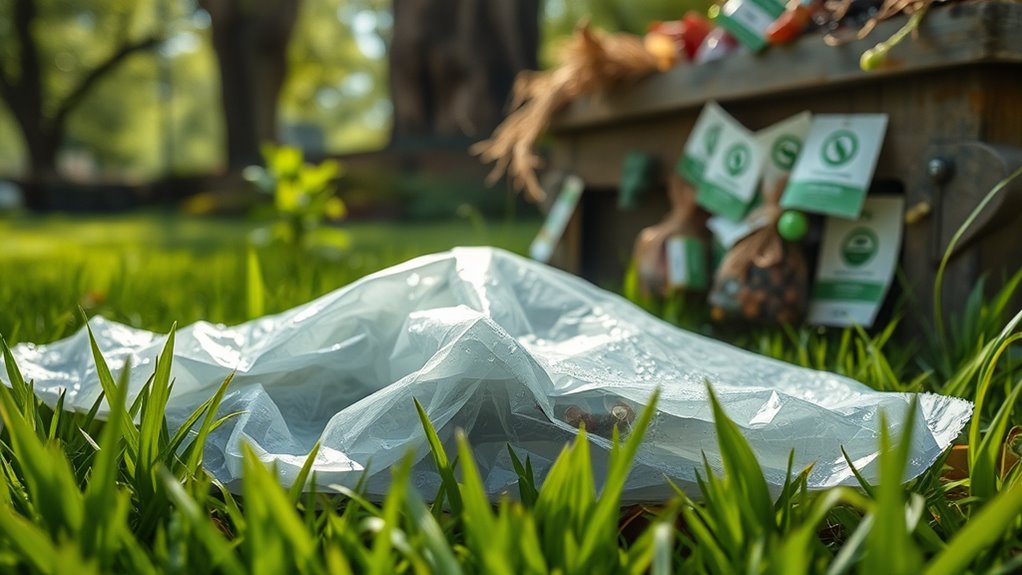
Have you ever wondered what happens to plastic waste after disposal? It’s a question that lingers in many minds, especially as our planet faces increasing pollution. Traditional plastics, made from fossil fuels, persist in the environment for hundreds of years, breaking down into microplastics that threaten wildlife and contaminate our water sources. This long-lasting presence raises serious concerns about their environmental impact. That’s why biodegradable plastics are often presented as an eco-friendly alternative. They promise to break down more quickly and reduce pollution. However, the reality isn’t as simple as it seems. While biodegradable plastics may seem like a green solution, they come with their own set of environmental impact considerations and recycling challenges.
Biodegradable plastics are designed to decompose under specific conditions, but those conditions aren’t always present in typical waste management systems. If you toss biodegradable plastics into regular trash, they might end up in landfills just like conventional plastics. In landfills, oxygen levels are low, and the temperature isn’t high enough for proper biodegradation. As a result, these plastics can take years to break down, if they degrade at all. This creates a false sense of security—people might think they’re doing the right thing by choosing biodegradable options, but in reality, these plastics can still contribute to long-term waste and pollution. furthermore, their environmental impact is affected by how they’re disposed of and whether the infrastructure exists to process them correctly. In some cases, biodegradable plastics require industrial composting facilities with specific temperature and humidity controls, which aren’t always accessible or widespread. Additionally, the recycling process for biodegradable plastics faces significant hurdles due to their similarity in appearance to traditional plastics, complicating waste sorting and processing.
As an affiliate, we earn on qualifying purchases.
Frequently Asked Questions
Are Biodegradable Plastics Truly Compostable at Home?
You might think biodegradable plastics are compostable at home, but they often aren’t without proper certification. Many products lack biodegradable certification for home composting, meaning they won’t break down properly in your backyard bin. As a consumer, you need to be aware of these distinctions and check labels carefully. Increased consumer awareness helps you choose truly compostable options and avoid greenwashing, ensuring your efforts contribute to genuine environmental solutions.
How Long Does It Take for Biodegradable Plastics to Degrade?
It can take anywhere from a few months to several years for biodegradable plastics to degrade, depending on environmental factors like temperature, humidity, and exposure to microorganisms. Under ideal conditions, such as industrial composting facilities, degradation can happen in just 3 to 6 months. However, in real-world environments, it might stretch out over years, making it essential to understand the degradation timeline and how environmental factors influence this process.
Do Biodegradable Plastics Release Harmful Microplastics?
Yes, biodegradable plastics can release harmful microplastics through microplastics formation, especially if they don’t fully break down in natural environments. These tiny particles can negatively impact the environment by contaminating soil and water, and harming wildlife. You should be aware that, despite their eco-friendly label, biodegradable plastics might still pose an environmental impact if they don’t degrade properly or leave microplastics behind.
Are All Biodegradable Plastics Environmentally Friendly?
You might think all biodegradable plastics are environmentally friendly, but that’s not always the case. Their environmental impact depends heavily on manufacturing processes and how they break down in real-world conditions. Some require specific environments to decompose properly, and if not met, they can cause more harm than good. Don’t judge a book by its cover—look into the manufacturing details and actual decomposition conditions before assuming all biodegradable plastics are eco-friendly.
Can Biodegradable Plastics Be Recycled Like Traditional Plastics?
You can’t always recycle biodegradable plastics like traditional plastics because of recycling challenges and market limitations. These plastics often require specialized facilities, which aren’t widely available, leading to contamination in recycling streams. As a result, biodegradable plastics frequently end up in landfills or the environment instead of being recycled properly. This limits their overall benefits and underscores why they’re not a straightforward solution and why managing their disposal is complex.
biodegradable plastic waste bins
As an affiliate, we earn on qualifying purchases.
As an affiliate, we earn on qualifying purchases.
Conclusion
So, as you ponder biodegradable plastics, remember they’re not a magic cure—like relying on a wizard from Middle-earth, they might not save the day alone. While they seem like a green knight, some may be just greenwashing cloaked in fairy dust. You hold the power to choose genuinely sustainable options, steering away from the siren song of false promises. Ultimately, it’s your decision to champion real change, not just a shiny, modern Pandora’s box.
As an affiliate, we earn on qualifying purchases.
biodegradable plastic recycling bins
As an affiliate, we earn on qualifying purchases.
As an affiliate, we earn on qualifying purchases.
Fall Picks
fall essentials
As an affiliate, we earn on qualifying purchases.