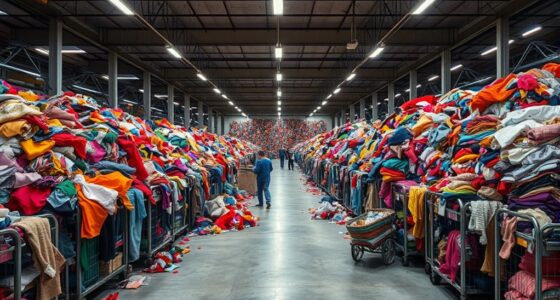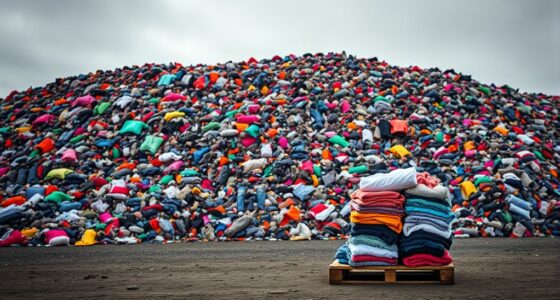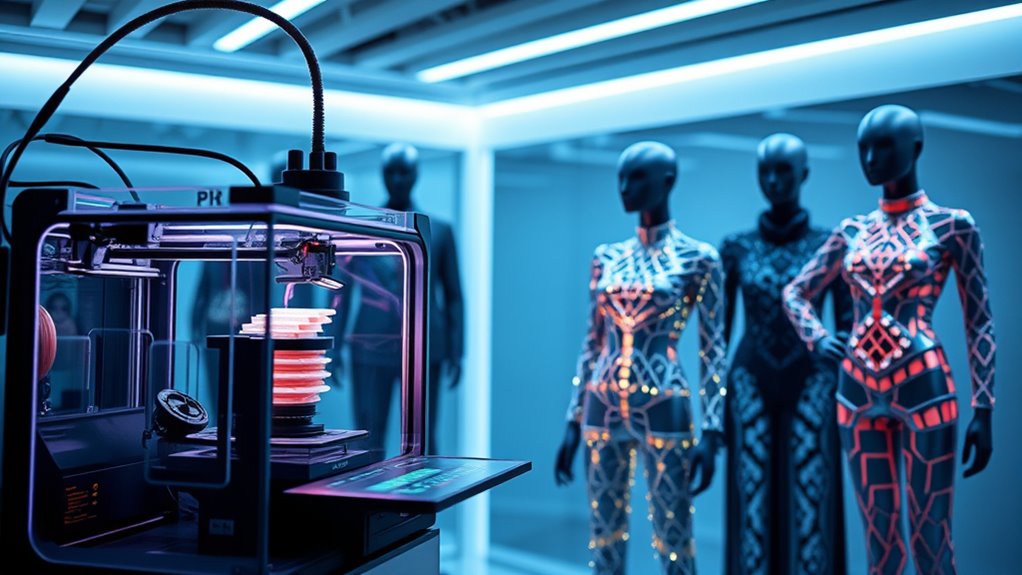

3D printing and on-demand manufacturing are revolutionizing fashion by letting you create customized garments with less waste. This technology produces complex designs directly from digital files, reducing overproduction and inventory waste. Instead of mass-producing, brands can now craft items only when needed, cutting down environmental impact. If you want to explore how these innovations contribute to sustainable and personalized fashion, there’s plenty more to discover ahead.
Key Takeaways
- 3D printing enables customized, complex garments with reduced material waste and faster production cycles.
- On-demand manufacturing produces clothing only when ordered, minimizing overproduction and excess inventory.
- Digital files allow precise, tailored designs, offering personalized fashion while reducing environmental impact.
- 3D printing supports sustainable practices by utilizing eco-friendly materials and decreasing resource consumption.
- Integration of these technologies promotes ethical, eco-conscious, and innovative fashion industry practices.

Have you ever wondered how technology is transforming the way we design, manufacture, and wear clothes? One major shift comes from the integration of digital innovations like virtual fitting rooms and sustainable materials. These advancements aren’t just making shopping more convenient—they’re also pushing fashion toward a more eco-friendly future. With virtual fitting rooms, you can try on clothes virtually before making a purchase, reducing the need for returns that often result in waste. These virtual experiences let you see how different styles, colors, and fits work for your body, saving you time and preventing the environmental footprint associated with traditional shopping. As a result, you’re empowered to make more informed, sustainable choices, minimizing the overproduction and excess waste that have long plagued the fashion industry.
Meanwhile, sustainable materials are revolutionizing the way garments are produced. Instead of relying on traditional, resource-heavy fabrics, designers now have access to eco-friendly alternatives like recycled fibers, organic cotton, and bio-based textiles. These materials help lower environmental impact by reducing water consumption, chemical use, and carbon emissions. When combined with innovations like 3D printing, the potential for sustainable manufacturing expands even further. You can imagine a future where your clothes are crafted on demand, using precisely the right amount of material, with minimal waste. 3D printing allows for the creation of complex, customized designs directly from digital files, eliminating excess fabric and reducing inventory waste. This on-demand manufacturing means clothes are made only when you order them, cutting down on overproduction and unsold stock.
The synergy between virtual fitting rooms and sustainable materials is creating a more responsible fashion landscape. When you use virtual try-ons, you’re less likely to purchase items impulsively that might end up unused or discarded. Additionally, the integration of digital manufacturing methods like 3D printing enables brands to produce garments with even greater precision and less waste. Simultaneously, brands are adopting sustainable fabrics and embracing 3D printing to produce garments that are both environmentally friendly and tailored to your preferences. This technological shift not only enhances your shopping experience but also aligns with a growing desire for ethical, eco-conscious fashion. As these innovations develop, you’ll find that fashion becomes more personalized, less wasteful, and more sustainable. The future of fashion isn’t just about style—it’s about smart, responsible choices enabled by cutting-edge technology.

Custom T Shirts, 3D Customized T Shirts with Photo&Text, Design Your Personalized Shirt for Men, Women, Kids Multicolor
- Personalized for Men and Women: Create unique custom T shirts with front and back prints
- All-over Printing Available: Full shirt customization with all-over print option
- High-Quality Printing: Durable, fade-resistant design and text printing
As an affiliate, we earn on qualifying purchases.
As an affiliate, we earn on qualifying purchases.
Frequently Asked Questions
How Does 3D Printing Impact Traditional Fashion Manufacturing Costs?
3D printing reduces traditional fashion manufacturing costs by enabling mass customization and rapid prototyping. You can produce unique designs on demand, minimizing waste and inventory expenses. This technology streamlines the process, cutting down lead times and labor costs. As a result, you save money while offering personalized products, making your supply chain more efficient and flexible, ultimately lowering overall production costs and meeting consumer demands faster.
What Sustainable Materials Are Used in 3D Printed Fashion Items?
Imagine weaving a future where fashion is gentle on the Earth. You can choose sustainable materials like biodegradable polymers that break down naturally, or recycled filaments spun from plastic waste, transforming trash into treasures. These eco-friendly options breathe new life into your creations, reducing waste and environmental impact. By embracing these materials, you become a part of the movement to make fashion more sustainable, stylish, and kind to our planet.
How Do Designers Customize On-Demand Fashion With 3D Printing?
You can customize on-demand fashion with 3D printing by designing pieces that offer a personalized fit and reflect your unique style. You choose innovative designs that suit your preferences, and the technology swiftly brings your vision to life with precise details. This process allows you to get one-of-a-kind items, reducing waste and embracing sustainability, all while enjoying the convenience of tailored, cutting-edge fashion.
What Are the Limitations of Current 3D Printing Technology in Fashion?
You might find that current 3D printing technology faces resolution constraints, making it hard to achieve fine details in fashion designs. Material limitations also restrict your options, as not all fabrics or flexible materials are printable yet. These issues can affect the durability, comfort, and aesthetic quality of your customized pieces. As technology advances, expect improvements, but for now, these limitations still challenge fully realizing innovative fashion ideas.
How Does On-Demand Manufacturing Affect Fashion Supply Chain Logistics?
On-demand manufacturing streamlines your fashion supply chain by reducing excess inventory and boosting supply chain agility. You can produce items only when needed, which minimizes storage costs and shortens lead times. This flexibility allows you to respond quickly to changing trends and customer preferences, improving efficiency and reducing waste. Overall, it transforms your inventory management, making your operations more responsive and sustainable.

SLDIYWOW Wall Mirror Full Length, 4Pcs Full Body Mirror for Bedroom, Safety Unbreakable Mirror Great for Baby Kids Toddler, Full Body Mirror Tiles for Bedroom, Home Gym, Living Room
- Mirror Size: 11.8'' x 11.8'' per tile
- Mirror Thickness: 2 mm safety acrylic
- Number of Mirrors: Set of 4 tiles
As an affiliate, we earn on qualifying purchases.
As an affiliate, we earn on qualifying purchases.
Conclusion
As you explore the world of tech in fashion, it’s clear that 3D printing and on-demand manufacturing are game-changers. They let you stay ahead of the curve, reduce waste, and customize designs like never before. Remember, in this fast-paced industry, you’ve got to stay flexible and adapt quickly—because the early bird catches the worm. Embracing these innovations puts you in the driver’s seat of the future, where creativity and technology go hand in hand.

FEBU PFAS Free Bamboo Fabric Bandages, 75 Count Strip
- Everyday flexible strip bandages: Provides secure, long-lasting protection
- Made from natural bamboo fiber: Flexible, breathable, and skin-friendly
- PFAS free and third-party tested: Ensures safe, chemical-free protection
As an affiliate, we earn on qualifying purchases.
As an affiliate, we earn on qualifying purchases.

No Money Startup: How To Build An Apparel Manufacturing Company
As an affiliate, we earn on qualifying purchases.
As an affiliate, we earn on qualifying purchases.