
In 2025, fighting greenwashing in fashion means you should look for brands that embrace full transparency, genuine sustainable sourcing, and third-party verification. Avoid superficial claims by checking if companies disclose supply chain details, environmental impact, and labor practices. Trust brands committed to real eco-friendly practices and open reporting. If you continue exploring, you’ll discover how industry standards are evolving to ensure better accountability and help you make more informed, eco-conscious choices.
Key Takeaways
- Implement stricter industry regulations requiring detailed disclosures and third-party verification of sustainability claims.
- Promote transparency initiatives that make supply chains and sourcing practices publicly accessible.
- Enforce standardized certifications to validate genuine sustainable sourcing and reduce greenwashing.
- Encourage brands to participate in independent audits and publish comprehensive sustainability reports.
- Educate consumers to critically evaluate eco-friendly claims and support brands committed to authentic transparency.
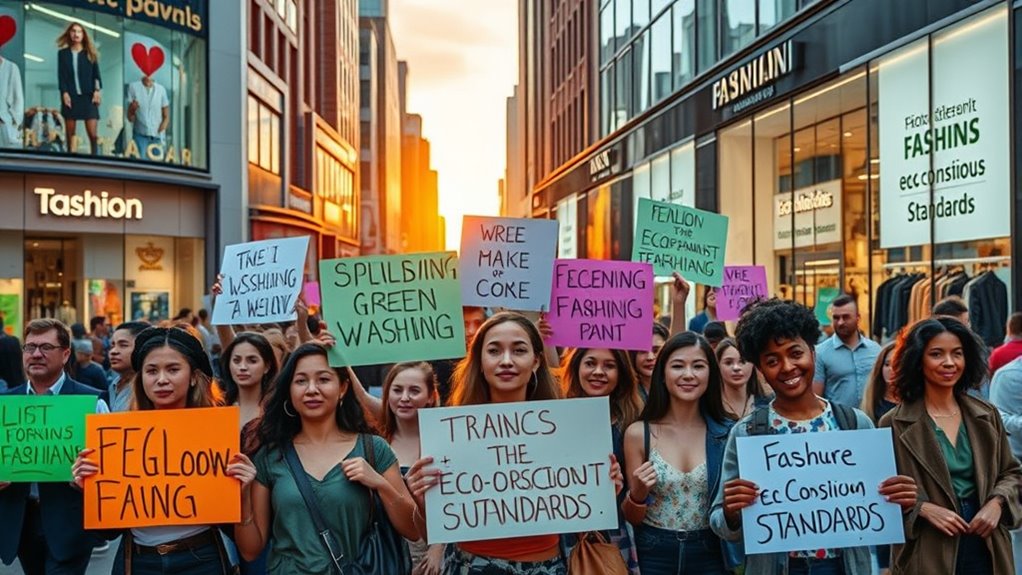
Have you ever wondered if those so-called eco-friendly fashion claims are truly genuine? It’s easy to get caught up in brands marketing themselves as sustainable when, in reality, they might be engaging in greenwashing. As a conscious consumer, you need to look beyond the buzzwords and examine what’s really behind a brand’s claims. One key area to consider is sustainable sourcing. This involves understanding where and how a brand sources its raw materials, ensuring they come from environmentally friendly and socially responsible sources. Brands committed to sustainability are now adopting stricter standards for sustainable sourcing, verifying that their materials aren’t just labeled ‘green’ but are genuinely sourced without exploiting ecosystems or communities. These companies often participate in transparency initiatives that aim to shed light on their supply chains, making their sourcing processes more open and accountable. Transparency initiatives are designed to give you, the consumer, clear insights into how products are made, from raw material extraction to final assembly. They promote honesty, discourage greenwashing, and build trust by providing verifiable data about a brand’s practices. When a brand participates in these initiatives, they might share detailed reports, third-party audits, or supply chain maps, allowing you to scrutinize their claims. Additionally, incorporating wall organization systems can help brands demonstrate transparency by visibly showcasing their sourcing efforts. By prioritizing brands that actively engage in transparency initiatives, you’re supporting those that are committed to authentic sustainability, not just superficial green marketing. It’s important to recognize that genuine sustainable sourcing isn’t just about choosing eco-friendly materials; it also involves fair labor practices, reducing carbon footprints, and ensuring long-term environmental health. Brands that are serious about fighting greenwashing will be transparent about all these aspects and openly share their progress and setbacks. As regulations tighten and consumer awareness grows, more companies are recognizing the importance of honesty and accountability. They’re increasingly providing detailed disclosures and participating in third-party verification programs to prove their commitment. So, as you navigate the fashion landscape in 2025, pay attention to how brands communicate their sustainability efforts. Look for those that prioritize sustainable sourcing and actively participate in transparency initiatives. These are the brands genuinely working to move beyond greenwashing, making sure their eco-friendly claims are backed by real, measurable actions. In doing so, you not only make more informed choices but also contribute to a broader shift within the industry—one that values integrity, accountability, and true sustainability over empty promises.
Frequently Asked Questions
How Can Consumers Verify Genuine Sustainability Claims?
You can verify genuine sustainability claims by checking for certification standards like GOTS or Fair Trade, which guarantee transparency and eco-friendly practices. Look for brands that participate in transparency initiatives, providing detailed info about their supply chains and environmental impact. Don’t just take labels at face value—do your research, visit company websites, and seek third-party audits to confirm their commitments are real and credible.
What Role Do Governments Play in Regulating Greenwashing?
Governments play a vital role in regulating greenwashing by enforcing policies that require transparency initiatives from brands. They set clear standards and monitor compliance, ensuring companies accurately represent their sustainability efforts. Your role is to stay informed about these regulations, supporting brands that adhere to them. Strong policy enforcement helps prevent false claims, making it easier for consumers like you to identify genuinely sustainable fashion choices and hold brands accountable.
Are There Penalties for Brands That False Advertise Sustainability?
Think of eco label authenticity like a sealed envelope—if brands falsely advertise sustainability, penalties are the stamps that seal their fate. Yes, there are penalties for false advertising, including fines and legal action. These measures push brands toward greater corporate transparency, ensuring they genuinely meet eco standards. When brands deceive, they risk losing consumer trust, much like a letter returned unopened—damaging their reputation irreparably.
How Does Greenwashing Impact Environmental Efforts in Fashion?
Greenwashing undermines your environmental efforts by eroding consumer trust and obscuring true sustainability. When brands lack corporate accountability and transparency initiatives, it becomes harder for you to identify genuinely eco-friendly options. This deception stalls progress in eco-conscious fashion, making it difficult for you to support responsible companies. Ultimately, greenwashing hampers collective efforts to reduce environmental impact and slows down meaningful progress toward sustainable fashion.
What Innovative Materials Are Emerging in Sustainable Fashion?
You’ll find innovative materials like biodegradable textiles that break down naturally, reducing waste, and plant-based dyes that offer vibrant colors without harmful chemicals. These advancements help you create sustainable fashion pieces that are eco-friendly and stylish. By choosing biodegradable textiles, you minimize environmental impact, while plant-based dyes ensure your designs stay vibrant without damaging ecosystems. Embracing these materials maintains your fashion line aligned with 2025’s new sustainability standards.
Conclusion
By 2025, new standards aim to combat greenwashing in fashion, making it easier for you to spot genuine sustainability efforts. Did you know that over 60% of consumers now say they’re more likely to buy from brands they trust to be eco-friendly? These changes mean you can confidently choose brands that truly prioritize the planet. Stay informed and hold fashion companies accountable—together, you can make a real difference in shaping a sustainable future.