TL;DR

Prime made for students and young adults
- Fast, free delivery for dorm and study essentials
- Prime Video and Amazon Music included
- Member-only deals
Four volunteers in NASA’s CHAPEA Mission 2 are scheduled to leave their simulated Mars habitat at Johnson Space Center on Oct. 31, after 378 days in isolation. NASA says data from the mission may inform preparations for future lunar and deep-space missions, including crew health, food systems and communications.
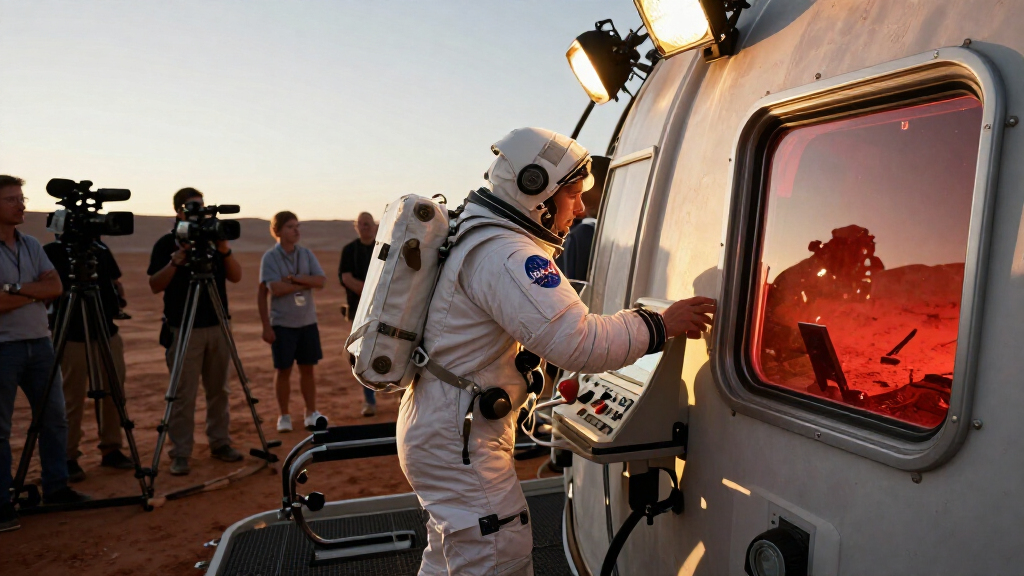
NASA says four volunteers in its second Crew Health and Performance Exploration Analog mission are scheduled to leave their habitat at Johnson Space Center in Houston on Saturday, Oct. 31, after 378 days in isolation. The agency is inviting media to watch the exit, which marks the planned end of a yearlong simulation designed to gather information relevant to future human missions beyond Earth.
The crew—Ross Elder, Ellen Ellis, James Spicer and Matthew Montgomery—lived and worked in a 1,700-square-foot, 3D-printed habitat built to simulate aspects of a Mars mission. NASA scheduled live coverage of their departure to begin at 3 p.m. EDT on Oct. 31, through NASA Johnson’s YouTube channel and social media accounts. The event was described as a scheduled ceremony, not confirmation that the crew had already exited.
During the mission, the volunteers carried out simulated spacewalks, exercised, maintained the habitat and grew plants. They also operated under conditions intended to resemble challenges of deep-space missions, including communication delays, limited resources and isolation. NASA says the crew’s activities and the data collected during the mission will support research into how people work and stay healthy in confined environments far from Earth.
Johnson Space Center Director Vanessa Wyche and NASA astronaut Jack Hathaway were scheduled to give remarks at the exit ceremony, alongside the crew members. Media attending in person were invited to view the ceremony on a screen outside the hangar housing the habitat and to speak with a subject matter expert afterward. NASA also offered media the opportunity to seek virtual interviews with crew members in the days after the mission, subject to contacting the Johnson newsroom by the stated deadline.
How CHAPEA Data Could Aid Missions
The simulation gives NASA a way to study human performance under prolonged isolation without sending a crew on a multiyear Mars journey. The agency says findings may help it refine medical care and behavioral support for astronauts, as well as practical systems needed to live and work in deep space. These questions matter as NASA plans lunar exploration and considers what sustained operations beyond Earth could require.
NASA specifically cites possible applications in food-system design, crew time management and communications, including the use of bandwidth on the Deep Space Network. The mission’s results are research inputs, not proof that a particular system or health practice will work on a flight. Their value will depend on how NASA evaluates the collected data and applies it to mission planning.
For readers, the exit is a visible milestone in a longer research effort: the volunteers are completing a controlled simulation, while NASA seeks evidence about the physical, psychological and operational demands of extended missions. The habitat does not reproduce every condition of Mars, but the isolation and resource constraints let researchers examine selected challenges in a terrestrial setting.
Popular right now

Apple AirPods Pro 3 Wireless Earbuds with Active Noise Cancellation

Ninja SP151 Flip Toaster Oven and Air Fryer, 8-in-1, Stainless Steel

Vitamix Propel Series 510 Professional-Grade Blender, 3 Programs, Black
As an affiliate, we earn on qualifying purchases.
Inside the Second CHAPEA Mission
CHAPEA stands for Crew Health and Performance Exploration Analog. NASA describes the facility at Johnson Space Center as a simulated Mars habitat, and the second mission began on Oct. 19, 2025. The four volunteers spent the mission inside the facility rather than traveling to space; its activities were designed to imitate selected mission operations and constraints.
The program’s stated purpose is to help NASA prepare for human spaceflight risks and future exploration, including Artemis and lunar-base missions. Although the setting is Mars-inspired, NASA says the findings may also inform lunar missions. The agency has identified health care, psychological support, food, time use and communications as areas where mission data could contribute to planning.
The scheduled public event focuses on the crew’s departure and remarks, not on a full release of research results. NASA’s announcement does not provide findings from the mission, detailed medical or performance measurements, or a timetable for publishing analyses. The completion ceremony should therefore be distinguished from later scientific or program assessments of the data.
Results Await Further Analysis
NASA’s announcement gives the planned exit date and mission activities, but does not report whether the crew completed every planned task or provide results from the data gathered. It is also unclear when NASA will publish analyses, what specific measures researchers collected, or which findings—if any—will lead to changes in flight procedures or equipment.
The habitat simulates selected pressures of a Mars mission, including isolation and constrained resources; it is not a journey to Mars and cannot reproduce every hazard of spaceflight or the Martian environment. NASA frames the data as potentially useful for future mission preparation. The size and practical effect of that contribution remain to be established through analysis.
The Oct. 31 departure was still a scheduled event in the source announcement. This account does not independently confirm that the ceremony took place or that the crew exited as planned.
Crew Exit and Research Follow-Up
NASA planned to livestream the crew’s departure beginning at 3 p.m. EDT on Oct. 31, with remarks from the four volunteers, Johnson Center Director Vanessa Wyche and astronaut Jack Hathaway. The agency said an expert would be available to answer questions for media attending at Johnson Space Center, and that reporters could request virtual interviews with crew members after the mission.
The next research milestone will be analysis of the health, performance and operational data gathered during the 378-day simulation. NASA’s announcement does not set a release date for findings. Any conclusions about how the mission may affect lunar or deep-space planning will depend on that later work.
Key Questions
What is NASA’s CHAPEA Mission 2?
It is a simulated Mars mission in which four volunteers lived and worked in an isolated habitat at Johnson Space Center. NASA says the simulation is intended to study human health and performance in conditions relevant to deep-space missions.
Who are the four crew members?
NASA identifies them as Ross Elder, Ellen Ellis, James Spicer and Matthew Montgomery.
How long did the crew stay in the habitat?
NASA scheduled the crew’s exit after 378 days of isolation. Its announcement said the departure was set for Oct. 31.
What will NASA do with the mission data?
NASA says the data may inform food systems, crew time use, communications, medical care and behavioral support for future lunar and deep-space missions. The announcement does not include research results or a timeline for their release.
Did the crew actually exit on Oct. 31?
The source announcement describes the exit as scheduled for Oct. 31; it does not confirm that the event later took place. The completion status cannot be established from that announcement alone.
Source: nasa.gov