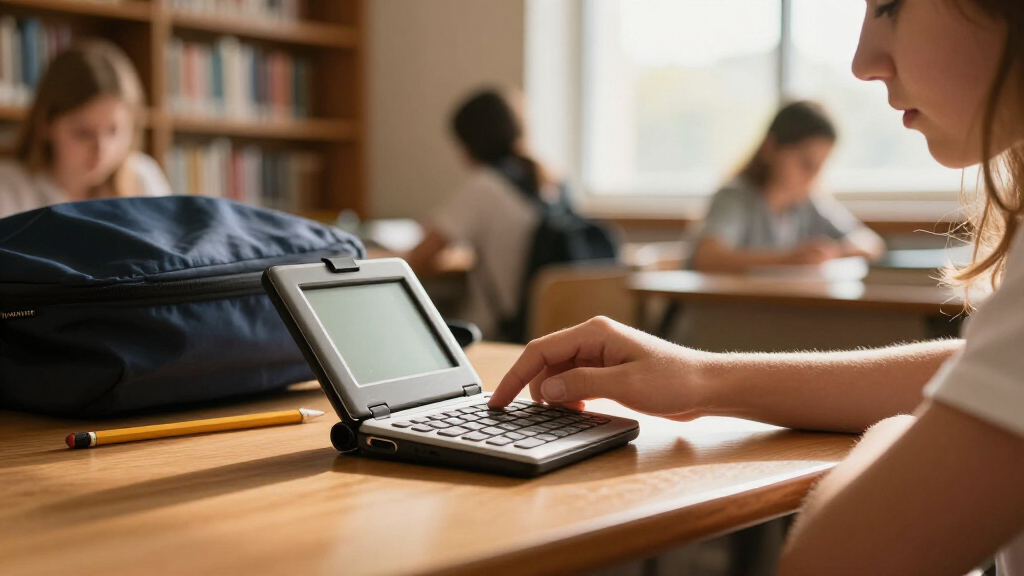

Electronic dictionaries for students range from simple spelling correctors under twenty dollars to full-color reference suites packed with thesauri, translators, and speech tools. After comparing 11 models, the Sharp Brain PW-SH2-A stands out as the best overall pick for serious students thanks to its color display and full reference library, while the Franklin BES-2170 is the smarter choice for Spanish-English learners who need spoken pronunciation, and the Franklin NCS-100 wins on pure value for younger students who mainly need spelling help. The main tradeoff in this category is between focused single-purpose devices that do one job well and multi-function reference suites that cost more and take longer to master. Screen size, battery type, and whether the device actually speaks words aloud also separate the cheap models from the ones students will still use in a year. Keep reading for the full breakdown of all 11 picks.

Prime made for students and young adults
- Fast, free delivery for dorm and study essentials
- Prime Video and Amazon Music included
- Member-only deals
Key Takeaways
- The Sharp Brain PW-SH2-A and Franklin SCG-1870 formed a clear top tier: both bundle multiple reference works on one device, while most other picks are single-dictionary tools.
- Five of the 11 models are Spanish-English or multilingual translators, so students studying a second language have far more options — and steeper price differences — than English-only buyers.
- Speaking capability was the biggest feature gap: models with text-to-speech (BES-2170, MES-2400, WorldPenScan) helped pronunciation, while silent models like the NCS-100 only fixed spelling.
- The Franklin NCS-100 and Lexibook D650EN proved that a low price can still cover core dictionary tasks, but both sacrifice screen quality and expandability.
- The WorldPenScan AI is the only pick that scans physical text directly, making it the go-to for students with reading difficulties rather than those who want a standalone lookup device.
| LEXiBOOK D650EN English Dictionary |  | Best for English Vocabulary Building | Brand: LEXiBOOK | Model: D650EN | Word entries: 380,000 | VIEW LATEST PRICE | See Our Full Breakdown |
| Franklin BES-2170 Speaking Spanish-English Dictionary |  | Best for Spanish Pronunciation Practice | Model: BES-2170 | Translations: Over 5 million | Spoken content: 4,800 words and phrases | VIEW LATEST PRICE | See Our Full Breakdown |
| Franklin DBE-1200 Spanish-English Electronic Dictionary and Translator |  | Best for Offline Bilingual Study | Model: DBE-1200 | Languages: English and Spanish | Translations: 1,000,000+ | VIEW LATEST PRICE | See Our Full Breakdown |
| Franklin SCG-1870 Ultimate Portable Reference Suite with Speaking Dictionary and Expansion Cards |  | Best for History and Reference Coursework | Dictionary: Merriam-Webster’s Collegiate Dictionary | Word count: Over 200,000 | Synonyms: 500,000 | VIEW LATEST PRICE | See Our Full Breakdown |
| Franklin Collins English Digital Dictionary Express Edition |  | Best for Portable English Word Practice | Brand: Franklin | Model: DMQ-221 | Weight: 180 g | VIEW LATEST PRICE | See Our Full Breakdown |
| WorldPenScan AI Reading Pen with Dictionary, Text-to-Speech, Translation, and Reading Support |  | Best for Reading Support | Languages: English, Spanish, Chinese | Offline features: Text-to-speech, translation, built-in dictionary | Connected features: AI explanations, AI Reading Buddy, quizzes, enhanced dictionaries | VIEW LATEST PRICE | See Our Full Breakdown |
| Lexibook Collins English Dictionary, 13th Edition Electronic Dictionary, Blue/White (D850EN) |  | Best Deep-Reference Dictionary | Dictionary edition: Collins English Dictionary, 13th Edition | Words, meanings, phrases: 725,000 | Verbs: 8,000 dictionary verbs; conjugation for 7,000+ | VIEW LATEST PRICE | See Our Full Breakdown |
| Franklin MDE-1200 Electronic Dictionary and Thesaurus |  | Best Test-Prep Companion | Headwords: 80,000 | Definitions: 250,000 | Synonyms: 15,000 | VIEW LATEST PRICE | See Our Full Breakdown |
| Franklin Webster’s Spelling Corrector NCS-100 with Phonetic Spell Correction |  | Best Budget Spelling Helper | Model: NCS-100 | Word database: 80,000+ words from Merriam-Webster | Spell correction: Phonetic spell correction | VIEW LATEST PRICE | See Our Full Breakdown |
| SHARP Brain High School Model Color Electronic Dictionary (Blue, PW-SH2-A) |  | Best Premium Study Device (Japan Market) | Model: PW-SH2-A | Color: Blue | Display: Color screen | VIEW LATEST PRICE | See Our Full Breakdown |
| Franklin MES-2400 Digital Talking Dictionary and Multilingual Translator |  | Best Multilingual Companion | Languages: English, Spanish, Italian, German, French | Translation: Offline | Speech: Native human voice pronunciation of words and phrases | VIEW LATEST PRICE | See Our Full Breakdown |
| electronic dictionaries for student | Model |
|---|---|
| LEXiBOOK D650EN English Dictio | D650EN |
| Franklin BES-2170 Speaking Spa | BES-2170 |
| Franklin DBE-1200 Spanish-Engl | DBE-1200 |
| Franklin SCG-1870 Ultimate Por | — |
| Franklin Collins English Digit | DMQ-221 |
| WorldPenScan AI Reading Pen wi | — |
| Lexibook Collins English Dicti | D850EN |
| Franklin MDE-1200 Electronic D | MDE1200 |
| Franklin Webster’s Spelling Co | NCS-100 |
| SHARP Brain High School Model | PW-SH2-A |
| Franklin MES-2400 Digital Talk | MES-2400 |
More Details on Our Top Picks
LEXiBOOK D650EN English Dictionary
The LEXiBOOK D650EN is the strongest fit here for students building English vocabulary: its 380,000 word entries, multiple definitions, and 78,000 synonyms give learners several ways to understand and reuse a word. Spelling and grammar tools, verb conjugations, and a thesaurus support written assignments, while the crossword solver and word games add practice. Compared with the bilingual Franklin DBE-1200, this model puts its content toward English study rather than English-Spanish translation. The tradeoff is its three-line display, which can make longer definitions harder to scan without repeated scrolling. Large buttons and magnification help with access, but students who need spoken pronunciation or a larger text view should look elsewhere.
Pros:- 380,000 word entries and up to six definitions per word support broad vocabulary study
- Thesaurus, spellchecker, grammar tools, and verb conjugations help with writing
- Crossword solver and word games provide additional word practice
- Large buttons and magnification function support easier use
Cons:- Three-line display limits how much definition text is visible at once
- English-only content does not serve students seeking bilingual translation
Best for: Students focused on English vocabulary, spelling, and writing practice who want reference and word-game tools in one handheld device
Not ideal for: Students learning Spanish or relying on spoken pronunciation, since this model is English-focused and no speech feature is listed
- Brand:LEXiBOOK
- Model:D650EN
- Word entries:380,000
- Synonyms:78,000
- Verb conjugations:More than 8,000 verbs across four tenses
- Display:Three-line screen
- Study tools:Thesaurus, spellchecker, grammar tools, crossword solver, Hangman, Jumble, and anagram solver
- Additional functions:Calculator, memo list, currency and metric conversion, clock, and date
- Age range and color:3+; blue/grey
Our verdict“Choose the D650EN for extensive English vocabulary and writing tools if its small display and lack of listed speech are acceptable.”
Franklin BES-2170 Speaking Spanish-English Dictionary
For students who need to hear as well as read Spanish and English, the Franklin BES-2170 earns a distinct place through its 4,800 spoken words and phrases and more than five million translations. Audio can help learners check pronunciation while study lists, quizzes, grammar guides, and verb conjugations support practice beyond looking up a single word. The English reference is Merriam-Webster’s Advanced Learner’s Dictionary. Compared with the English-focused LEXiBOOK D650EN, the BES-2170 is far more useful for bilingual coursework, but it gives up that model’s larger English word-entry count. It also runs on two AA batteries, and the supplied data gives no battery-life estimate. Its backlight and adjustable font sizes are helpful for handheld study, though students should weigh that power requirement against their routine.
Pros:- More than five million translations cover extensive English-Spanish lookup needs
- Spoken words and phrases support pronunciation practice
- Study lists, quizzes, grammar guides, and verb conjugation add learning tools
- Backlight and adjustable font sizes support varied reading conditions
Cons:- Requires two AA batteries
- Battery life information is not provided
- Its bilingual focus may be less suitable than an English-only dictionary for broad English vocabulary study
Best for: English- or Spanish-language students who want audio pronunciation, bilingual translation, and built-in quizzes for independent practice
Not ideal for: Students who need a large English-only vocabulary database or prefer a rechargeable device with specified battery life
- Model:BES-2170
- Translations:Over 5 million
- Spoken content:4,800 words and phrases
- English dictionary:Merriam-Webster’s Advanced Learner’s Dictionary
- Additional study features:Thesaurus, grammar guides, verb conjugation, quizzes, and spell correction
- Other features:Calculator, converters, databank, clock, and backlight
- Dimensions:4.3 x 0.75 x 5.5 inches
- Weight:6.7 ounces
- Power:2 AA batteries required
Our verdict“Pick the BES-2170 for bilingual students who value spoken pronunciation and quizzes, provided they are comfortable replacing AA batteries.”
Franklin DBE-1200 Spanish-English Electronic Dictionary and Translator
The Franklin DBE-1200 suits students who need an English-Spanish reference without depending on a network: it works offline and includes more than one million translations, 250,000 definitions, and a 7,000-entry phrasebook. Spell checking, grammar tools, test-prep vocabulary, and word games make it broader than a translation-only device. Compared with the Franklin BES-2170, it offers a clearly specified phrasebook and offline use, while the BES-2170 lists spoken words and phrases for pronunciation practice. That difference matters for language learners: this DBE-1200 description does not list audio. The 3-inch zoomable LCD keeps the unit compact, but gives less room for reading than a larger screen, and the English-Spanish language pair limits its usefulness for other studies.
Pros:- Offline operation supports lookup without Wi-Fi
- More than one million translations and 250,000 definitions provide broad reference coverage
- Phrasebook, grammar tools, and test-prep vocabulary support structured study
- Spell checker, games, and solvers add practice beyond translation
Cons:- Limited to English and Spanish
- The 3-inch display gives limited space for longer entries
- No spoken pronunciation feature is listed
Best for: Students studying English and Spanish who need translation, phrasebook, and test-prep reference away from Wi-Fi
Not ideal for: Multilingual students outside the English-Spanish pair or learners who need spoken pronunciation and a larger reading screen
- Model:DBE-1200
- Languages:English and Spanish
- Translations:1,000,000+
- Words:150,000+
- Definitions:250,000
- Phrasebook:7,000-entry English-Spanish
- Display:3-inch zoomable LCD
- Connectivity:Offline; no Wi-Fi required
- Tools:Spell checker, grammar tools, thesaurus, word games, and solvers
Our verdict“Choose the DBE-1200 for offline English-Spanish coursework and phrase lookup if audio and a larger screen are not priorities.”
Franklin SCG-1870 Ultimate Portable Reference Suite with Speaking Dictionary and Expansion Cards
The Franklin SCG-1870 is the most coursework-oriented reference bundle in this group for students who move between vocabulary and history research. Its Merriam-Webster’s Collegiate Dictionary offers over 200,000 words and 500,000 synonyms, with spoken pronunciations that can help students check unfamiliar words. The included Concise Columbia Encyclopedia and Great Documents of American History cards add material the vocabulary-focused LEXiBOOK D650EN does not list. That makes this suite a better match for broad reference assignments, while the LEXiBOOK includes spelling, grammar, and word-game tools more directly aimed at practice. The tradeoff is that the supplied product data does not specify screen details, power, or how the expansion cards are accessed, so students have less information for judging day-to-day convenience.
Pros:- Merriam-Webster’s Collegiate Dictionary provides over 200,000 words
- 500,000 synonyms support vocabulary exploration and writing
- Spoken pronunciations help with unfamiliar word pronunciation
- Includes encyclopedia and American history expansion cards
Cons:- No translation feature is listed for language coursework
- Product data does not specify display or power details
- The listed bundle emphasizes reference content rather than spelling, grammar, or practice tools
Best for: Students whose English and American history coursework would benefit from a dictionary, encyclopedia, and historical document reference in one suite
Not ideal for: Students looking mainly for bilingual translation, explicit spelling and grammar practice tools, or clearly documented screen and power details
- Dictionary:Merriam-Webster’s Collegiate Dictionary
- Word count:Over 200,000
- Synonyms:500,000
- Pronunciation:Spoken pronunciations
- Included expansion card:ENC-4047 Concise Columbia Encyclopedia
- Included expansion card:GDS-2026 Great Documents of American History
Our verdict“Choose the SCG-1870 if your studies span English vocabulary and American history and you want the included reference cards.”
Franklin Collins English Digital Dictionary Express Edition
The Franklin Collins English Digital Dictionary Express Edition combines a sizable English reference with tools for repeated word practice. Its 118,000-plus words, definitions, and phrases are paired with a thesaurus listing 500,000 synonyms and antonyms, while custom lists and six games let students revisit vocabulary in short sessions. Compared with the LEXiBOOK D650EN, it lists fewer dictionary entries but offers a clearly specified set of six games with four difficulty levels and custom word lists. That may suit students who want structured practice; the LEXiBOOK’s grammar tools and verb conjugations make it a stronger stated fit for writing support. The Express Edition also includes a calculator, converters, and world clock. Its listed weight is 180 g, and the product data gives no display size or power details, leaving some portability questions unanswered.
Pros:- Over 118,000 words, definitions, and phrases support general English lookup
- Thesaurus includes 500,000 synonyms and antonyms
- Six games with four difficulty levels and custom word lists support repeat practice
- Calculator, converters, and world clock add practical functions
Cons:- Fewer listed dictionary entries than the LEXiBOOK D650EN
- No bilingual translation feature is listed
- Display and power details are not provided
Best for: Students who want an English dictionary with custom vocabulary lists and varied word games for regular practice
Not ideal for: Students needing bilingual translation, detailed grammar and verb-conjugation tools, or known screen and battery specifications
- Brand:Franklin
- Model:DMQ-221
- Weight:180 g
- Dictionary entries:Over 118,000 words, definitions, and phrases
- Thesaurus entries:500,000 synonyms and antonyms
- Word games:6 games with 4 difficulty levels
- Practice feature:Custom word lists
- Utilities:Calculator, converters, and world clock
Our verdict“Pick the Collins Express Edition for English vocabulary practice with custom lists and games, if you do not need bilingual lookup or specified screen details.”
WorldPenScan AI Reading Pen with Dictionary, Text-to-Speech, Translation, and Reading Support
Most devices in this roundup make you type a word and look it up — the WorldPenScan AI flips that model entirely. Instead of keypad entry, this scanning pen reads text directly off the page and delivers age-appropriate explanations for words, sentences, and even whole ideas. For a struggling reader or an ESL student, that difference is enormous: no spelling barrier, no guessing at keyboard entry. Offline it behaves like a competent traditional unit — dictionary, translation, and text-to-speech all work without a connection, putting it ahead of the Lexibook D850EN, which has no audio at all. The tradeoff is real, though: the AI features require connectivity, so the flagship reading support, quizzes, and enhanced dictionaries go dark when Wi-Fi does. Compared with the Franklin BES-2170, it covers more ground but leans on a companion app ecosystem that some schools won’t allow.
Pros:- Scans words, sentences, and full passages for instant, age-appropriate explanations
- Offline dictionary, translation, and text-to-speech keep working without Wi-Fi
- AI Reading Buddy and quizzes turn lookups into guided learning
- Supports English, Spanish, and Chinese in one device
Cons:- AI explanations, enhanced dictionaries, and quizzes require an internet connection
- Requires practice to scan smoothly, which can frustrate younger children at first
Best for: Elementary and middle school readers, ESL learners, and students with reading difficulties who need scan-and-explain help on physical books
Not ideal for: Students who mainly need a self-contained exam-ready reference — its best learning tools depend on an internet connection
- Languages:English, Spanish, Chinese
- Offline features:Text-to-speech, translation, built-in dictionary
- Connected features:AI explanations, AI Reading Buddy, quizzes, enhanced dictionaries
- Scan capability:Words, sentences, and passages
- Intended users:Growing readers, ESL learners, students needing reading support
Our verdict“This is the pick for a student whose real problem is comprehension rather than quick definitions — just accept that the smartest features need a connection.”
Lexibook Collins English Dictionary, 13th Edition Electronic Dictionary, Blue/White (D850EN)
If raw reference power is the goal, the Lexibook D850EN is hard to argue against. With 725,000 words, meanings, and phrases from the Collins 13th Edition, its database dwarfs the 80,000 headwords in the Franklin MDE-1200, and it layers on a thesaurus, phonetic spell correction, a crossword solver, and conjugation for over 7,000 verbs. For essay writing and literature coursework, that depth matters more than gadget features. Where it falls behind is presentation: the four-line screen feels cramped next to the Franklin MDE-1200’s 3-inch zoomable LCD, and long definitions mean a lot of scrolling. It also has no audio pronunciation, unlike the Franklin MES-2400. The built-in calculator, currency converter, and three word games round it into a genuine all-purpose study tool rather than a bare dictionary.
Pros:- 725,000 words and phrases from a reputable Collins 13th Edition source
- Combines dictionary, thesaurus, spellchecker, crossword solver, and verb conjugation in one device
- Phonetic spell correction helps students who can’t spell the word they’re looking up
- Handy extras: calculator, currency and unit converters, three word games
Cons:- Four-line display makes reading long entries tedious
- No audio pronunciation or text-to-speech
Best for: High school and college students who need maximum dictionary depth for essays, literature, and vocabulary-heavy coursework
Not ideal for: Students who want audio pronunciation or a comfortable larger screen — this is a scrolling-heavy, text-only experience
- Dictionary edition:Collins English Dictionary, 13th Edition
- Words, meanings, phrases:725,000
- Verbs:8,000 dictionary verbs; conjugation for 7,000+
- Conjugation tenses:Simple present, simple past, present participle, past participle
- Word games:Hangman, Word Jumble, Anagram
- Display:Four-line screen with magnification
- Additional functions:Calculator, currency converter, unit converter, user list
- Model:D850EN
Our verdict“Choose this when vocabulary depth is the priority and you’re willing to trade screen comfort and audio to get it.”
Franklin MDE-1200 Electronic Dictionary and Thesaurus
The Franklin MDE-1200 earns its place through focus: alongside the expected dictionary and thesaurus, it ships with vocabulary banks for TOEFL, SAT, GRE, GMAT, and TOEIC — something no other device in this lineup offers. For a student actively preparing for standardized exams, that curated practice material beats the Lexibook D850EN’s larger but untargeted database. Its 3-inch zoomable LCD is also the most readable screen among the non-pen options here, comfortably beating the Franklin NCS-100’s tiny display. At 5 ounces it slips into any backpack pocket, and grammar and word-solver tools round out the study kit. The main tradeoff is power: it runs on two AA batteries rather than a rechargeable cell, so budget for replacements or carry spares. Reference depth is moderate — 80,000 headwords is a fraction of the Lexibook’s coverage.
Pros:- Built-in vocabulary banks for five major standardized exams
- Dictionary, thesaurus, spell checker, and grammar tools in one device
- 3-inch zoomable LCD is more readable than smaller rival screens
- Light 5-ounce body travels easily
Cons:- Runs on two AA batteries instead of rechargeable power
- Smaller word database than the Lexibook D850EN
Best for: High school and college students preparing for the SAT, TOEFL, GRE, GMAT, or TOEIC who want targeted vocab practice in a pocket device
Not ideal for: Students who need exhaustive definitions for literary analysis — 80,000 headwords won’t match the deeper Collins-based options
- Headwords:80,000
- Definitions:250,000
- Synonyms:15,000
- Antonyms:12,000
- Screen:3-inch zoomable LCD
- Weight:5 ounces
- Batteries:2 AA batteries required
- Model:MDE1200
Our verdict“The smart choice when standardized test prep is the driver of the purchase, rather than raw dictionary size.”
Franklin Webster’s Spelling Corrector NCS-100 with Phonetic Spell Correction
The NCS-100 does one job and does it well: fixing spelling. Its phonetic spell correction from an 80,000-word Merriam-Webster database suggests words as you type them by how they sound, which is exactly what a student who writes ‘definately’ or ‘neccessary’ needs. The confusable-word function adds another layer the bigger devices skip — it flags commonly misused pairs like affect/effect, making it a quiet writing tutor, not just a corrector. Compared with the Franklin MDE-1200, it gives up definitions depth, grammar tools, and the large screen; compared with the Lexibook D850EN, it trades crossword-solving breadth for sheer simplicity. Six games keep it from feeling like pure utility. The honest weakness: for many students a phone app can replicate this function, so this device makes sense mainly where phones aren’t allowed, and the small screen strains longer sessions.
Pros:- Phonetic spell correction finds words by how they sound, not how they’re spelled
- 80,000+ word Merriam-Webster database
- Confusable-word function catches affect/effect-style mistakes
- Six built-in games and a crossword solver add study value
Cons:- Single-purpose device largely redundant with smartphone apps
- Small screen limits readability for extended use
Best for: Elementary and middle school students, and classroom settings where phones are banned but spelling help is needed daily
Not ideal for: Students who already carry a smartphone — a free app duplicates most of what this does, and the tiny screen is limiting
- Model:NCS-100
- Word database:80,000+ words from Merriam-Webster
- Spell correction:Phonetic spell correction
- Games:Anagrams, Hangman, Jumble, User Anagrams, User Hangman, Word Builder
- Special features:Confusable word function, crossword puzzle solver
- Intended users:Students, professionals, word enthusiasts
Our verdict“Buy it for phone-free classrooms and young spellers; skip it if a smartphone is already in the backpack.”
SHARP Brain High School Model Color Electronic Dictionary (Blue, PW-SH2-A)
The SHARP Brain PW-SH2-A sits at the top of this lineup in ambition: a full color-screen study device built specifically around Japanese high school curricula, where it functions less like a dictionary and more like a pocket study workstation. Its color display makes dense reference content far easier on the eyes than any monochrome unit here, including the Lexibook D850EN, and its 10.6-ounce frame stays backpack-friendly. Standard AA batteries keep it running anywhere. But there’s a catch buyers must confront honestly: this is a Japanese-market product with Japanese menus and content, and availability outside Japan is spotty. Compared with the Franklin MDE-1200, it offers a richer hardware experience but far less accessibility for English-only students. For learners of Japanese, or students in Japanese schools, it’s a different story entirely — this pick makes the most sense for bilingual study contexts.
Pros:- Color display is easier to read than any monochrome rival in this roundup
- Content tailored specifically to high school coursework
- Standard AA batteries are easy to replace anywhere
- Compact 3.8 x 6 inch body designed for daily school carry
Cons:- Japanese-market product with Japanese-only menus and content
- Limited availability outside Japan makes support and returns difficult
Best for: Students of Japanese, bilingual households, and anyone in a Japanese school system who wants curriculum-matched reference content
Not ideal for: English-only students — the Japanese menus and content make it effectively unusable without the language
- Model:PW-SH2-A
- Color:Blue
- Display:Color screen
- Dimensions:3.8 x 6 x 0.72 inches
- Weight:10.6 ounces
- Batteries:2 AA batteries required
- Release date:March 2015
Our verdict“A genuinely strong study device — but only for students who can read Japanese; everyone else should pick the Franklin or Lexibook options.”
Franklin MES-2400 Digital Talking Dictionary and Multilingual Translator
Most dictionaries in this roundup double down on a single language pair — the Franklin BES-2170 and DBE-1200 are strictly Spanish-English tools — but the MES-2400 takes a different approach by covering five European languages in one pocketable device. For a student juggling French and German electives alongside Spanish, that breadth beats carrying multiple single-purpose units. The native human voice pronunciation is the standout here: compared with the text-only Lexibook D650EN, hearing words spoken aloud in the target language is far more useful for building accent and listening skills. Offline translation means it works anywhere, including exams and travel, with no connectivity required.
The tradeoff is depth. Five languages means none get the deep definitions, thesaurus entries, or reference content of a monolingual heavyweight like the Franklin SCG-1870. The tactile keypad keeps things distraction-free, but students wanting touchscreens or encyclopedia-style extras will find it basic.
Pros:- Covers five languages in one device instead of requiring separate units
- Native human voice pronunciation builds correct accent and listening comprehension
- Fully offline translation works anywhere, including travel and classrooms without Wi-Fi
- Phonetic spell correction finds words even when the spelling entered is wrong
Cons:- Limited to five European languages — no support for Asian or other language families
- Shallower content per language than dedicated single-pair dictionaries in this lineup
- Tactile keypad and monochrome design feel dated next to touchscreen alternatives
Best for: Language students studying multiple European languages who need spoken pronunciation and offline translation in one portable device
Not ideal for: Students focused on a single language in depth — a dedicated dictionary like the Franklin BES-2170 offers richer content for Spanish-English work
- Languages:English, Spanish, Italian, German, French
- Translation:Offline
- Speech:Native human voice pronunciation of words and phrases
- Spelling tools:Phonetic and typographical spell correction
- Extra features:Phrase book
- Package dimensions:6.61 x 6.38 x 1.14 inches
- Weight:10.5 ounces
- Model:MES-2400
Our verdict“Pick the MES-2400 if your coursework spans several European languages and you value spoken pronunciation over deep single-language content.”

How We Picked
I evaluated each device against what students actually do during a study session: quick word lookups, spelling checks, pronunciation practice, and — for language learners — translation on the fly. That meant scoring lookup speed and interface clarity first, since a dictionary that takes ten keystrokes to find a word gets abandoned quickly. I then weighed reference depth (how many dictionaries, thesauri, and conjugation tools are bundled), speech and pronunciation support, screen readability, and build quality for backpack life. Battery logistics mattered too — models running on standard replaceable batteries scored better for exam settings than anything requiring a charge cable.
The ranking logic favors versatility without usability penalties. That is why the Sharp Brain and Franklin SCG-1870 sit near the top despite higher complexity, while the single-purpose Franklin NCS-100 earns its spot as a value pick rather than a best-overall contender. Language-specific devices like the Franklin Spanish-English models were judged against the needs of language students specifically, not against English-only reference suites, because they solve a different problem. Every product below earned a defined role, and each entry explains who should buy it and who should skip it.
Factors to Consider When Choosing Electronic Dictionaries For Students
Before picking a specific model, it helps to understand what actually separates a useful study tool from a gadget that ends up in a drawer. These are the factors that shaped my rankings and the ones I would weigh before spending money.Match the Dictionary to the Subject, Not the Spec Sheet
The most common mistake buyers make is purchasing a general English dictionary when the student’s real need is language study. A student taking Spanish needs conjugation tables, gender markers, and spoken pronunciation — features an English-only device like the Franklin MDE-1200 simply cannot provide. Conversely, a student preparing for English vocabulary exams gets more value from a deep thesaurus and spelling correction than from a multilingual translator with shallow entries. I recommend writing down the three tasks the student repeats most often — lookups, translations, or spelling help — and choosing a device built around those. A focused device that nails one task beats a jack-of-all-trades that does several tasks poorly.
Speech Output: The Feature Students Underestimate
Text-to-speech divides this category sharply, and it matters more than most buyers expect. Hearing a word pronounced correctly reinforces vocabulary retention far better than silent reading, and it prevents the classic problem of knowing a word on paper but mispronouncing it in class. Devices like the Franklin BES-2170 and MES-2400 include recorded or synthesized speech, while budget spelling correctors remain silent. The tradeoff is battery drain and price — speaking models typically cost more and consume power faster. If the student is learning a foreign language or has any reading difficulty, I would treat speech as non-negotiable; if it is purely for silent vocabulary study, it becomes a nice-to-have.
Screen Quality and Typing Comfort for Long Study Sessions
Entry-level devices often ship with small monochrome screens and rubbery keys that work fine for a five-second lookup but become tiring during revision marathons. Color models like the Sharp Brain PW-SH2-A display multiple reference panels at once, which reduces back-and-forth searching. Physical keyboard layout matters too: devices designed for language study usually include accent-key shortcuts, while English-only models do not. Students with smaller hands or younger learners may struggle with cramped QWERTY layouts, so it is worth checking key spacing before buying. A readable screen and comfortable keys are the difference between a device used daily and one used twice.
Battery Type and Exam-Room Practicality
Many schools permit electronic dictionaries in exams but prohibit devices with wireless connectivity or smartphone-like features. Dedicated dictionary devices with replaceable AAA batteries are usually the safest option here, since they cannot connect to anything and never die mid-exam without a spare set. Rechargeable models like the WorldPenScan pen offer more power but require planning ahead and may face stricter rules depending on the institution. Buyers should check their school’s policy before purchasing anything beyond a basic dictionary device. I would also avoid assuming a phone app is an equal substitute — most exam boards treat app-based dictionaries very differently from standalone units.
Expandability Versus Simplicity
Some higher-end Franklin models accept expansion cards that add new dictionaries and reference works, which extends the device’s useful life as a student progresses through grade levels. That sounds appealing, but expansion cards can be hard to find years later, and the base device is only worth expanding if its core interface is pleasant to use. A simpler device with one excellent dictionary often serves a student better than a complex suite they never fully explore. My advice: buy expandability only if the student is committed to several years of language study. For a single school year, a fixed-content device does the same job for less money.
Age-Appropriate Design and Durability
A device that survives a backpack is worth more than one with marginally better content. Rugged casings, clamshell lids that protect the keyboard, and sturdy hinges matter for middle-schoolers especially. Younger students also benefit from phonetic spell correction — the Franklin NCS-100’s ability to find words from approximate spellings is genuinely useful when the student does not yet know how a word starts. Older students will care more about entry depth and speed than durability. Matching the device’s toughness and interface complexity to the student’s age prevents both breakage and frustration.
Frequently Asked Questions
Is a dedicated electronic dictionary better than a dictionary app on a phone?
For focused study and exams, a dedicated device usually wins. Phones bring notifications, social media, and constant temptation — a standalone dictionary removes that distraction entirely. Many schools and exam boards also permit dedicated dictionary devices while banning phones, which makes a unit like the Franklin MDE-1200 or Lexibook D650EN the only legal option in the room. On the other hand, a phone app costs nothing and updates constantly, so it is reasonable for casual home use. The students who benefit most from dedicated hardware are those who study in distraction-prone environments or need an approved device for tests.
Which of these devices is best for a student learning Spanish?
The Franklin BES-2170 is my top pick for Spanish learners because it speaks words aloud in both languages, which directly supports pronunciation practice. The Franklin DBE-1200 covers similar translation ground at a simpler level, making it better for beginners in their first year of study. Students who need multiple languages beyond Spanish should look at the Franklin MES-2400, which adds multilingual content in one device. The key question is depth: a first-year student needs clear translations and verb basics, while an advanced student needs idiomatic entries and full conjugation tables. Buying more dictionary than the current level requires usually means paying for features that go unused.
Do electronic dictionaries work without an internet connection?
Every device in this roundup works fully offline because all of their dictionaries are stored in onboard memory. That is one of their biggest advantages over phone apps, many of which require downloads or subscriptions to access full content offline. It also means the dictionary content is fixed — the 13th edition Collins content in the Lexibook D850EN stays at that edition forever, with no updates. For students, this is rarely a problem since core vocabulary changes slowly. Buyers should simply be aware they are buying a snapshot of a reference work, not a living resource.
Are these devices allowed in exams and standardized tests?
Rules vary widely by school, district, and test provider, so the honest answer is that buyers must check before relying on any device in an exam. Generally, basic dictionary devices without wireless features — such as the Franklin spelling correctors and Lexibook models — face fewer restrictions than anything rechargeable or pen-shaped. Speaking functions are sometimes banned even when the device itself is permitted, since audio could disturb other test-takers. Models like the WorldPenScan, which scan and process text, sit in a gray area at many institutions. My recommendation is to email the exam coordinator with the exact model number before purchasing.
What is the WorldPenScan pen actually for, and who should skip it?
The WorldPenScan is designed for students who read physical books and printed worksheets and need instant help with unfamiliar words — it scans a line of text and reads or translates it on the spot. This makes it a standout tool for students with dyslexia or other reading difficulties, and for language learners working through printed texts. It is not a replacement for a keyboard-based dictionary: typing in a word you heard in class is clunky with a pen, and there is no QWERTY lookup experience at all. Students who mainly need spelling correction or thesaurus work should choose a keyboard device like the Franklin MDE-1200 instead. The pen earns its place for a specific reading workflow, not general vocabulary study.
Conclusion
The right pick depends less on price and more on what the student actually studies. For best overall, the Sharp Brain PW-SH2-A delivers the deepest reference library and the best screen in this lineup, making it the strongest long-term companion for serious students — though it costs more and takes time to learn. The Franklin SCG-1870 is my best premium alternative for students who want expandable content in a more traditional package. For best value, the Franklin NCS-100 covers spelling correction and basic lookups for minimal money, and the Lexibook D650EN adds a proper Collins dictionary at a student-friendly price. Beginners — especially first-year Spanish students — are best served by the Franklin DBE-1200, while the Franklin BES-2170 is the better specific pick for spoken Spanish-English practice. Students with reading difficulties, or anyone working through printed texts, should choose the WorldPenScan AI, and multilingual travelers-in-training get the most from the Franklin MES-2400. Whatever the choice, matching the device to the student’s subject and study habits matters more than any single feature on the box.
Fall Picks
fall essentials
As an affiliate, we earn on qualifying purchases.