

For students who need one broad starting point, Science: The Definitive Visual Guide is my best overall pick for its wide-ranging, image-led coverage. Everything You Need to Ace Science in One Big Fat Notebook is a more approachable choice for middle school review, while The Usborne Science Encyclopedia suits younger readers drawn to visual explanations. The key tradeoff is breadth versus course fit: an encyclopedia can spark curiosity, but a focused biology, anatomy, or Earth science guide may help more with a specific class. Format matters too, since laminated sheets support quick checks while books offer more room for explanation. Read on for how I’d match each of these 13 science reference books for students to an age, subject, and study style.

Prime made for students and young adults
- Fast, free delivery for dorm and study essentials
- Prime Video and Amazon Music included
- Member-only deals
Key Takeaways
- Science: The Definitive Visual Guide stands out as the broadest all-around reference, while focused titles are better when a student needs support in one subject.
- Everything You Need to Ace Science in One Big Fat Notebook is geared toward middle school study and review, whereas A Student’s Guide to Natural Science offers a broader general science approach.
- The QuickStudy titles trade extended explanations for compact, laminated reference pages; they make the most sense for fast recall and topic-specific review.
- The Usborne Science Encyclopedia and International Primary Science Student’s Book: Stage 4 serve younger learners, but their different formats suit different goals: exploration versus structured coursework.
- The anatomy and health science options range from a pocket atlas to a 10-guide set, so the right choice depends on whether the student needs visual orientation, course review, or repeated topic-by-topic lookup.




| science reference books for student | Format | Subject |
|---|---|---|
| The Pocket Atlas of Human Anat | Pocket atlas | Human anatomy |
| International Primary Science | — | Primary science |
| Science: The Definitive Visual | Visual guide | Science |
| Science Fundamentals 1 | Laminated reference and study guide | Life science |
| Anatomy 2 | Laminated reference guide | Human anatomy |
| High School Earth Science Work | Workbook | Earth science |
| Materials Science: A QuickStud | Laminated reference guide | Materials science |
| A Student’s Guide to Natural S | Book | Natural science |
| Microbiology: A QuickStudy Lam | Laminated reference guide | Microbiology |
| Everything You Need to Ace Sci | Study guide notebook | Science |
| TribeRN Anatomy & Physiology S | Laminated printed study guides | — |
| The Usborne Science Encycloped | Science encyclopedia | — |
| Biology: A QuickStudy Laminate | Laminated reference guide | Biology |
More Details on Our Top Picks
The Pocket Atlas of Human Anatomy, Revised Edition
Portability and labeled anatomical illustrations make this atlas a practical companion for students who need to review the body’s structures away from a desk. Its concise descriptions help orient the reader without turning each topic into a long lesson. Compared with Anatomy 2 – Reference Guide (8.5 x 11), this pick is positioned for carrying and quick visual checks, while Anatomy 2 lists more than 1,500 labeled parts and is better suited to dense detail at a desk. The tradeoff is that this atlas offers limited textual explanation, so it works best alongside class notes or a fuller textbook. Its coverage may also miss anatomical variations, making it a less complete reference for clinical work than its student-friendly format might suggest.
Pros:- Compact format is suited to carrying between classes or practice settings
- Clear, detailed illustrations support visual study
- Concise descriptions make quick review easier
- Relevant to students across medicine, physical therapy, sports, and bodywork
Cons:- Limited textual explanations leave deeper teaching to other resources
- May not cover all anatomical variations
- Its anatomy focus does not serve students seeking broad science coverage
Best for: Anatomy students in physical therapy, sports, medicine, or bodywork who want a portable visual refresher
Not ideal for: Learners who need detailed explanations, extensive coverage of anatomical variation, or a standalone textbook
- Subject:Human anatomy
- Edition:Revised edition
- Format:Pocket atlas
- Illustrations:Labeled anatomical diagrams
- Text:Concise descriptions
- Intended fields:Physical therapy, medicine, sports, and bodywork
Our verdict“Choose this atlas for portable visual anatomy review, and pair it with a textbook when you need fuller explanations.”
International Primary Science Student’s Book: Stage 4
Stage-specific classroom content gives this student book a clearer teaching role than the general survey in Science: The Definitive Visual Guide. It is designed for primary students and combines explanations, illustrations, and activities to support learning scientific concepts in sequence. That makes it a stronger fit for a learner following an international primary science curriculum than a broad reference designed for students and enthusiasts at different levels. The tradeoff is its narrower audience: older students seeking deeper or more advanced coverage may outgrow it. The product information also does not identify digital resources or supplementary materials, so buyers looking for online exercises or a larger companion package should check what their school provides.
Pros:- Content is designed for primary science at Stage 4
- Engaging activities give students ways to work with concepts
- Illustrations support explanations for younger learners
- Aligned with an international primary science curriculum
Cons:- No digital resources are specified
- Supplementary materials are not described
- Stage-specific content may not suit older or more advanced students
Best for: Primary students at Stage 4 and families supporting science study aligned with an international primary curriculum
Not ideal for: Secondary students or independent learners who need advanced science explanations, digital practice, or broad reference coverage
- Subject:Primary science
- Stage:Stage 4
- Book type:Student’s book
- Curriculum:International primary science
- Learning features:Explanations, illustrations, and activities
- Intended audience:Primary science students
Our verdict“Pick this book for structured Stage 4 primary science study, especially when its curriculum alignment matches the classroom.”
Science: The Definitive Visual Guide
Wide-ranging visual coverage is the main reason to choose this guide: it brings scientific concepts, discoveries, and history together for students who want connections across fields. Compared with the more focused International Primary Science Student’s Book: Stage 4, it is described as a broad overview rather than a curriculum-sequenced coursebook, so it suits browsing and topic exploration better than following a specific class program. Its detailed illustrations and explanations can help readers approach unfamiliar subjects, while its breadth means it may not provide the depth or exercises required for mastering one course. Product details also omit a specific edition and publication information, leaving buyers with less certainty about the exact version they will receive.
Pros:- Covers a wide range of scientific concepts
- Includes scientific discoveries and history
- Detailed illustrations help explain ideas visually
- Suitable for students and general science enthusiasts
Cons:- Broad overview may lack the depth needed for a focused course
- No specific edition or publication details are provided
- No structured activities or curriculum alignment are specified
Best for: Students and science enthusiasts who want an illustrated overview spanning multiple scientific topics and discoveries
Not ideal for: Students who need a level-specific textbook, structured exercises, or detailed instruction in one subject
- Subject:Science
- Format:Visual guide
- Coverage:Scientific concepts, discoveries, and history
- Illustrations:Detailed visual explanations
- Intended audience:Students and science enthusiasts
- Edition details:Not specified in the product information
Our verdict“Choose this guide for visual exploration across science, and use a course-specific book when you need sequenced instruction.”
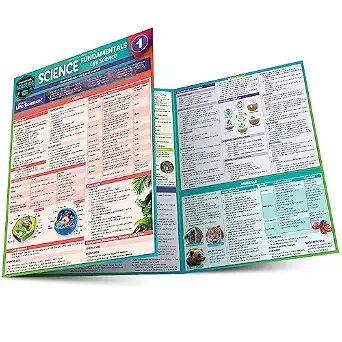
Science Fundamentals 1 – Life Science – Cells, Plants & Animals: for Middle School – a QuickStudy Laminated Reference & Study Guide
Fast access to core life science topics gives this laminated guide a distinct role among the books here. It condenses cells, plants, and animals for middle school review, whereas Everything You Need to Ace Science in One Big Fat Notebook is a broader middle school study guide. This narrower scope can make it easier to find a key concept quickly, and the laminated format is suited to repeated reference. The tradeoff is equally clear: it covers only basic life science, and the product information says it lacks detailed explanations and diagrams. That makes it a study aid, not a substitute for a lesson or textbook. Students who need deeper biological reasoning or visual explanations should choose a fuller resource.
Pros:- Focused coverage makes core life science topics easy to locate
- Concise format supports quick review
- Laminated construction is suited to repeated handling
- Designed for middle school students
Cons:- Limited to basic life science topics
- Does not provide detailed explanations or diagrams
- Does not cover advanced concepts
Best for: Middle school students who want a durable, concise refresher on cells, plants, and animals
Not ideal for: Students seeking broad science coverage, detailed explanations, diagrams, or advanced biology content
- Subject:Life science
- Topics:Cells, plants, and animals
- Level:Middle school
- Series:Science Fundamentals 1
- Format:Laminated reference and study guide
- Use:Quick science review
Our verdict“Use this as a durable middle school life science refresher, not as the main source for learning biology in depth.”
Anatomy 2 – Reference Guide (8.5 x 11): A QuickStudy Laminated Reference Guide
More than 1,500 labeled parts make this the lineup’s densest anatomy quick reference, aimed at students who need to locate structures across deep body systems. Its 8.5 x 11 inch format gives the illustrations room to carry detail, while the six laminated pages favor fast lookup and repeated handling. Compared with The Pocket Atlas of Human Anatomy, Revised Edition, this guide emphasizes labeled breadth and desk-side reference; the pocket atlas is the more portable choice for carrying between settings. The tradeoff is that a laminated sheet set cannot provide the explanations or progression of a textbook. Its density may also overwhelm casual readers or beginners who first need a guided introduction.
Pros:- More than 1,500 labeled parts support detailed structure lookup
- Covers deep body systems
- Laminated pages are durable for repeated reference
- 8.5 x 11 inch dimensions provide a substantial reference surface
Cons:- Six-page laminated format is not a comprehensive textbook
- High detail may be too much for casual users
- Less suited to portable study than a pocket atlas
Best for: Medical, anatomy, and health-profession students who need a detailed labeled reference for desk-side study
Not ideal for: Casual learners, beginners seeking step-by-step teaching, or readers who want a portable narrative textbook
- Subject:Human anatomy
- Format:Laminated reference guide
- Pages:6
- Dimensions:8.5 x 11 inches
- Illustrator:Vincent Perez
- Content:Deep body systems with labeled illustrations
- Labeled parts:Over 1,500
Our verdict“Choose this guide for dense, labeled anatomy lookup at a desk, and add a textbook for explanations and lessons.”
High School Earth Science Workbook Grades 9-10: Geology, Earth Systems, Weather, Climate, Oceanography, and Space Science
For grades 9–10, this workbook brings geology, Earth systems, weather, climate, oceanography, and space science into one course-focused resource. Its lesson notes and answer key give students a way to review concepts and check their work, making it more practice-oriented than A Student’s Guide to Natural Science, which offers a broader introductory overview. That focus is also its limit: students looking for a visual, general-purpose science reference may prefer Science: The Definitive Visual Guide, while this workbook is aimed at working through Earth science material. The description does not specify the number or format of activities, so buyers cannot gauge workload in advance. It may also suit students with some prior science familiarity better than those starting from scratch.
Pros:- Covers geology, Earth systems, weather, climate, oceanography, and space science
- Includes lesson notes alongside activities
- Answer key supports independent checking
- Targets a specific high school grade range
Cons:- Earth science focus leaves other science disciplines out
- May be challenging without prior science knowledge
- Activity count and format are not specified
Best for: Grades 9–10 students studying Earth science who want lesson notes, activities, and an answer key in one workbook
Not ideal for: Younger beginners or students seeking broad coverage across life, physical, and Earth sciences rather than an Earth science course resource
- Format:Workbook
- Intended grades:9–10
- Subject:Earth science
- Topics:Geology, Earth systems, weather, climate, oceanography, and space science
- Learning material:Lesson notes and activities
- Answer key:Included
Our verdict“Choose this workbook for structured Earth science study in grades 9–10, especially when an answer key matters.”
Materials Science: A QuickStudy Laminated Reference Guide
Materials science at a glance is the point of this laminated guide: it offers a compact overview for quick review rather than the step-by-step teaching a full textbook provides. Compared with Microbiology: A QuickStudy Laminated Reference Guide, it serves students focused on materials and their properties instead of microorganisms and related concepts. The laminated format is suited to repeated handling and brief study sessions, but a condensed reference has limited room to explain why concepts work or to show detailed examples. That makes it a useful companion when a course has already introduced the ideas, not a stand-alone path into the subject. Students who need worked problems or extensive explanations will get more from a textbook or course notes.
Pros:- Concise format supports quick review
- Laminated guide is designed for durability
- Focused on materials science fundamentals
- Portable alternative to a full textbook
Cons:- Limited space for in-depth explanations
- Does not provide detailed examples
- Basic overview may not support advanced coursework on its own
Best for: Students in an introductory materials science course who want a durable, portable aid for reviewing key concepts
Not ideal for: Learners new to the subject who need detailed explanations, examples, or a primary textbook
- Format:Laminated reference guide
- Subject:Materials science
- Content level:Fundamental concepts
- Intended use:Quick study and review
- Portability:Compact
- Covering:Laminated
Our verdict“Pick this guide as a portable refresher for materials science, not as your main teaching resource.”
A Student’s Guide to Natural Science
Broad introductory coverage makes this a natural starting point for students who want an accessible orientation to science rather than a workbook for one course. It aims to explain fundamental concepts across natural science disciplines, giving it wider scope than the Earth-focused High School Earth Science Workbook Grades 9-10. That breadth comes with a tradeoff: students seeking targeted practice and an answer key may find the Earth science workbook more useful for classwork, while this guide is described as an introduction rather than an advanced reference. The accessible language suits learners building familiarity with basic ideas, but the available product details do not identify its specific disciplines, format, or depth by topic. Students needing course-specific coverage should check that its treatment matches their syllabus.
Pros:- Introduces fundamental natural science concepts
- Designed for beginners and introductory study
- Accessible language supports early learning
- Broader scope than a single-topic science guide
Cons:- Introductory coverage may not meet advanced course needs
- Specific disciplines and topic coverage are not detailed
- No practice questions or answer key are specified
Best for: Beginning science students who want accessible explanations across natural science before specializing in a subject
Not ideal for: Advanced students or learners who need detailed, syllabus-specific explanations and practice materials
- Format:Book
- Subject:Natural science
- Content level:Introductory
- Audience:Students and beginners
- Coverage:Fundamental concepts and disciplines
- Explanation style:Accessible language
Our verdict“Choose this guide for an accessible first overview of natural science, then add a subject-specific resource for deeper study.”
Microbiology: A QuickStudy Laminated Reference Guide
Quick microbiology review is the role of this laminated guide. Its compact overview is aimed at students or professionals who need essential information close at hand, rather than a complete course text. The format parallels Materials Science: A QuickStudy Laminated Reference Guide, but the subject focus makes this the more relevant pick for learners reviewing microbiology concepts. Compared with Everything You Need to Ace Science in One Big Fat Notebook, it trades broad middle school science coverage and practice questions for a narrower, faster reference. That is useful when a student already knows the material and needs a reminder; limited detail and note-taking space make it less suitable for learning concepts from the beginning or building a full set of class notes.
Pros:- Focused overview of microbiology concepts
- Laminated format suits frequent handling
- Compact design supports quick reference
- Useful for review alongside course materials
Cons:- Not detailed enough to serve as a primary textbook
- Limited space for notes
- Concise format restricts deeper explanations
Best for: Students in a microbiology course who want a portable guide for brief concept review
Not ideal for: Students seeking a primary textbook, extensive explanations, or room to annotate their study material
- Format:Laminated reference guide
- Subject:Microbiology
- Content:Key concepts and essential information
- Intended use:Quick study and reference
- Portability:Compact
- Note space:Limited
Our verdict“Use this guide for portable microbiology refreshers when your course materials provide the fuller explanations.”
Everything You Need to Ace Science in One Big Fat Notebook: The Complete Middle School Study Guide
Middle school breadth with practice sets this study guide apart from the subject-specific references in this group. Its accessible explanations and practice questions cover essential middle school science, giving students a way to review several topics in one place. Compared with A Student’s Guide to Natural Science, this pick is more explicitly built as a study guide with exercises; compared with Materials Science: A QuickStudy Laminated Reference Guide, it covers a wider school-level range rather than offering a compact subject refresher. Its broad, approachable scope is useful for class review, but advanced students may find the level too basic. The description does not specify exact topics or the number of questions, so students should check alignment with their course before relying on it as their sole reference.
Pros:- Covers essential middle school science topics
- Accessible explanations suit school-age learners
- Practice questions support active review
- Broader school science coverage than a single-subject guide
Cons:- May be too basic for advanced students
- Specific topics and question count are not listed
- Broad coverage may offer less depth in individual disciplines
Best for: Middle school students who want approachable explanations and practice questions for reviewing core science coursework
Not ideal for: Advanced students or learners seeking detailed study of a single science discipline
- Format:Study guide notebook
- Audience:Middle school students
- Subject:Science
- Coverage:Essential middle school science topics
- Explanations:Accessible
- Practice:Practice questions included
Our verdict“Choose this guide for middle school science review and practice, but match its topic coverage to the student’s course.”
TribeRN Anatomy & Physiology Study Guides – Set of 10 Human Anatomy Guides for Nursing Students, School, College, Medical Professions
For students who need to review anatomy and physiology in short bursts, this set offers 10 laminated visual guides with terminology, charts, and built-in quizzes. The quiz prompts support active recall, while the wipe-resistant format suits repeated handling at a desk or during study sessions. Compared with The Pocket Atlas of Human Anatomy, Revised Edition, this set is aimed more at quick topic review than at exploring anatomical detail through an atlas. Its focus on nursing and medical study gives it a clearer clinical-study role than the broader Science: The Definitive Visual Guide. The tradeoff is scope: the listing says it covers 12 topics, so it may leave gaps in a full course, and it has no digital materials. Advanced learners may also find the summaries too basic to replace a textbook or detailed reference.
Pros:- Laminated pages are water-resistant and suited to repeated handling.
- Color-coded charts and diagrams make key information easier to scan.
- Built-in quizzes support active recall during short review sessions.
- Set of 10 guides offers portable topic-by-topic reference.
Cons:- Coverage is limited to 12 topics and may not match a full course syllabus.
- Printed guides lack digital content or searchable explanations.
- The summaries may be too basic for advanced coursework.
Best for: Nursing students who want durable visual summaries and short self-quizzes for anatomy and physiology revision.
Not ideal for: Advanced anatomy students or learners who need full-course coverage, detailed explanations, or searchable digital content.
- Guide count:10
- Topics covered:12
- Format:Laminated printed study guides
- Dimensions:25.59 x 11.42 x 0.2 inches
- Item weight:2.5 pounds
- Learning features:Color-coded charts, reference diagrams, and built-in quizzes
- ASIN:B0CB8XS3PP
Our verdict“Choose this set for portable, quiz-based anatomy review in nursing studies, and pair it with a deeper reference for comprehensive coverage.”
The Usborne Science Encyclopedia: An In-depth Guide for Young Scientists Exploring Gravity, Flight, Genes, DNA and More
This encyclopedia suits young learners who want a broad introduction to science with ways to keep exploring after a reading session. Its coverage ranges from gravity and flight to genes and DNA, while more than 180 video clips and 1,000 websites add paths into topics that a print page can only introduce. Compared with Everything You Need to Ace Science in One Big Fat Notebook, which is positioned as a middle-school study guide, this book’s linked media and wide-ranging subjects favor curiosity-led exploration over a tightly defined revision format. That breadth is its main strength and its limitation: students looking for focused practice in one subject may prefer a dedicated biology or anatomy guide, such as Biology: A QuickStudy Laminated Reference Guide. The supplied details do not give dimensions, age range, or curriculum alignment, so buyers seeking a course-matched reference may need more information.
Pros:- Covers a broad range of science subjects, including physics and genetics.
- More than 180 video clips provide visual explanations beyond the printed text.
- More than 1,000 websites offer routes to additional exploration.
- Designed to make science accessible to young learners.
Cons:- Broad coverage may provide less depth than a subject-specific textbook.
- The supplied product information does not specify dimensions or age range.
- Online resources may be less useful when students need a self-contained print reference.
Best for: Young science learners who enjoy moving between an accessible overview and online videos or websites for further exploration.
Not ideal for: Students seeking a focused exam revision guide, a single-subject reference, or confirmed alignment with a specific curriculum.
- Format:Science encyclopedia
- Audience:Young learners and students
- Topics named:Gravity, flight, genes, and DNA
- Video resources:More than 180 video clips
- Website resources:1,000 websites
- ASIN:1805079018
Our verdict“Pick this encyclopedia for a young learner who wants broad science topics linked to videos and websites, rather than focused exam practice.”
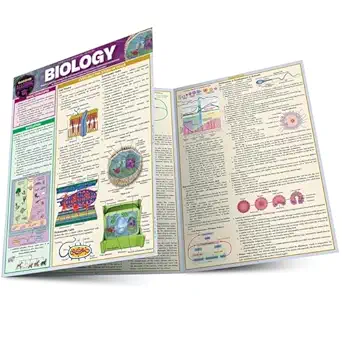
Biology: A QuickStudy Laminated Reference Guide
This guide is a compact option for students who need a quick reminder of biology concepts while studying, teaching, or reviewing notes. Its laminated format is suited to frequent handling, and the concise presentation makes it easier to scan than a broad science encyclopedia such as The Usborne Science Encyclopedia. That focus also means it cannot match the encyclopedia’s range of subjects or linked media. Compared with the Science Fundamentals 1 – Life Science – Cells, Plants & Animals guide in this roundup, this title is framed as a general biology reference rather than a middle-school life-science study guide. The tradeoff is depth: the supplied description promises an overview, not detailed explanations, so learners building foundational understanding may need a textbook alongside it. Product dimensions and specific topics are not provided in the listing details.
Pros:- Laminated construction is durable for repeated reference.
- Concise format supports quick checks while studying.
- Portable design is convenient for class or a study desk.
Cons:- Limited depth makes it unsuitable as a replacement for a biology textbook.
- The supplied details do not identify specific concepts or topics covered.
- Dimensions and weight are not provided.
Best for: Biology students and educators who want a durable, concise reminder of core concepts alongside fuller course materials.
Not ideal for: Learners who need step-by-step explanations, extensive topic coverage, or a stand-alone resource for advanced biology.
- Subject:Biology
- Format:Laminated reference guide
- Presentation:Concise overview of key concepts
- Intended users:Students and educators
- ASIN:1423219538
- Dimensions:Not provided
Our verdict“Choose this guide for fast, portable biology reminders, and use a fuller text when you need explanations or deeper coverage.”

How We Picked
I compared these books by the kind of student task they appear best equipped to support: building broad science literacy, following a grade-specific course, reviewing one subject, or checking a fact quickly. I gave more weight to age and curriculum fit, clarity of format, and the balance between explanation and lookup than to topic count alone. A wide-ranging reference can serve as a flexible starting point, but it may be less useful for a student preparing for a particular unit than a focused guide.
The order reflects those differences. Broad, accessible references rank ahead for students without a narrowly defined need; specialized guides follow for learners who already know their subject or course. Laminated QuickStudy references earn a place for portability and quick review, but their condensed format limits how much teaching they can provide. I also considered whether a title’s audience and format are clear enough to help families avoid choosing a book that is too advanced, too general, or too brief for the task.
Factors to Consider When Choosing Science Reference Books For Students
I’d start with the student’s next real science task, then choose the book format that supports it. A reference for browsing should not have to do the job of a class textbook, and a quick lookup sheet cannot replace explanations when a concept is new.
Match the book to the next learning task
Before choosing, name what the student will do with the book over the next few months: explore, complete class assignments, review for a test, or look up terminology. These tasks call for different levels of explanation and organization. A broad science reference can connect topics and encourage browsing, but it may not follow a teacher’s sequence or vocabulary. A subject-specific guide can make revision more direct, though it may leave other class topics uncovered. One common mistake is buying the broadest title and assuming it will align with a particular syllabus. Check the course topics and grade expectations against the book’s stated scope first.
Check age, reading level, and independence
A book labeled for young scientists, primary students, middle school, or high school signals a likely audience, but the student’s reading confidence matters just as much. A learner who enjoys diagrams may handle advanced concepts when visuals carry part of the explanation; another may need simpler language and short sections. Think about whether the student will use the book alone or with an adult or teacher. Support at home can make a challenging reference more useful, but it cannot turn a dense book into a self-guided one. Look for sample pages or a contents list when available, and check both the vocabulary and the amount of explanation per topic. Choosing only by age label can leave a student with a book that feels either thin or inaccessible.
Choose between reading and quick lookup
Long-form books give concepts room to build from one idea to the next, which helps when a student is learning a subject for the first time. Compact guides and laminated sheets can make facts easier to scan during homework or review, but they usually rely on prior understanding. A useful test is to ask whether the student needs to answer “what does this term mean?” or “why does this process happen?” The first may suit a concise reference; the second usually calls for fuller teaching. Combining formats can work when the roles are clear: one book teaches, another acts as a reminder. Buying several quick guides as a substitute for a coherent course resource can leave gaps in understanding.
Treat visuals as a learning tool
Illustrations, diagrams, and labeled images can make structures and processes easier to grasp, especially in anatomy, biology, and Earth science. But a visually rich page is not automatically a complete explanation. Check whether captions explain relationships and whether diagrams show sequences or only labels. For students who learn by comparing parts, a reference with clear visual organization may be easier to revisit than prose-heavy chapters. For students who need to explain a concept in writing, text depth and definitions matter too. A common buying mistake is judging a science book by cover art or image count without checking how visuals connect to the actual lesson.
Decide when a specialized book is worth adding
A focused guide makes sense when a student repeatedly returns to one subject, such as anatomy, microbiology, materials science, or Earth science. It can narrow the search for relevant facts and provide subject vocabulary in one place. The tradeoff is that the book may see little use once the class or interest changes. Before adding a specialized title, compare its scope with the student’s course and ask whether a library copy or class handout already fills the need. A general reference is often the better first purchase for a student whose interests are still shifting. Specialization pays off when it supports ongoing study, a demanding class, or a sustained personal interest.
Think about how the book will be used day to day
A reference that stays at a desk can support longer reading, while a portable or wipeable format may suit quick checks between classes or study sessions. Durability matters most when the book will be handled frequently, carried in a bag, or shared among students. Page size also affects use: large diagrams can aid close study but are less convenient to carry. Consider where the student will read and whether they need to flip between topics quickly. A compact reference is easier to keep nearby, but smaller or denser pages can be harder to read. Pick for the actual study routine rather than assuming every reference will live on a bookshelf.
Frequently Asked Questions
Should I buy a broad science encyclopedia or a book for one subject?
I’d choose a broad reference when the student is exploring several areas or needs a general source for school questions. A subject-specific book makes more sense when a course or sustained interest centers on one field and requires repeated consultation. Broad coverage offers flexibility, but it may not explain every topic in enough depth for a class assignment. A specialized title narrows that gap while covering less outside its subject. If the student has a current syllabus, compare its units with the book’s contents before deciding.
Can a laminated QuickStudy guide replace a textbook?
A laminated guide is better treated as a quick reference or review aid than as a complete teaching resource. Its compact layout can help a student find terms, diagrams, or reminders without reading a full chapter. That same compression leaves less room for examples, context, and step-by-step explanations. For unfamiliar material, a textbook or explanatory reference is usually a stronger starting point. Pair a concise guide with class notes or a fuller book if the student needs both quick recall and concept teaching.
Which kind of science reference is a good first choice for a middle school student?
Start with the student’s reading level and the reason they need a reference. A middle school study guide can be a sensible fit for class review, while an illustrated general reference may suit a curious reader who prefers browsing. Neither format guarantees a match with a specific course, so check the topics and terminology against current schoolwork. If the student gets frustrated by dense pages, look for short sections and clear visual explanations. The best first choice is one they can use independently and return to when a question comes up.
Is an anatomy reference useful for a student who is not studying nursing or medicine?
It can be useful for biology coursework, health sciences, or a strong interest in the human body, even outside professional training. The main question is whether the book’s level and focus match the student’s purpose. A pocket atlas emphasizes visual orientation, while a set of study guides may offer more segmented review across topics. A beginner who only needs basic body systems may find a specialized professional-style set excessive. Check sample material or the contents before choosing a resource aimed at advanced learners.
How can I tell whether a science book will support a school course?
Compare the course outline with the book’s contents, grade range, and terminology. Look for the same major units and check whether the resource explains ideas at the depth the assignments require. A general encyclopedia can provide useful context, but it may organize material differently from a teacher’s sequence. A workbook or student book may follow a more structured progression, though it can still differ from local curriculum expectations. When the match is uncertain, use the book as a supplement and keep class materials as the guide for what will be taught and assessed.
Conclusion
Best overall: I’d start with Science: The Definitive Visual Guide for a student who wants a wide-ranging, visual reference. Best value for middle school review: Everything You Need to Ace Science in One Big Fat Notebook suits learners who need organized study support. Best for beginners: The Usborne Science Encyclopedia offers a more inviting route into science topics for younger readers. For a more structured primary course, I’d look at International Primary Science Student’s Book: Stage 4. Best for specific needs: choose the relevant QuickStudy subject guide for concise lookup, the Earth Science Workbook for geology and related units, or the anatomy references for human-body study. The right pick depends on whether the student needs breadth, teaching, or fast recall.
Fall Picks
fall essentials
As an affiliate, we earn on qualifying purchases.