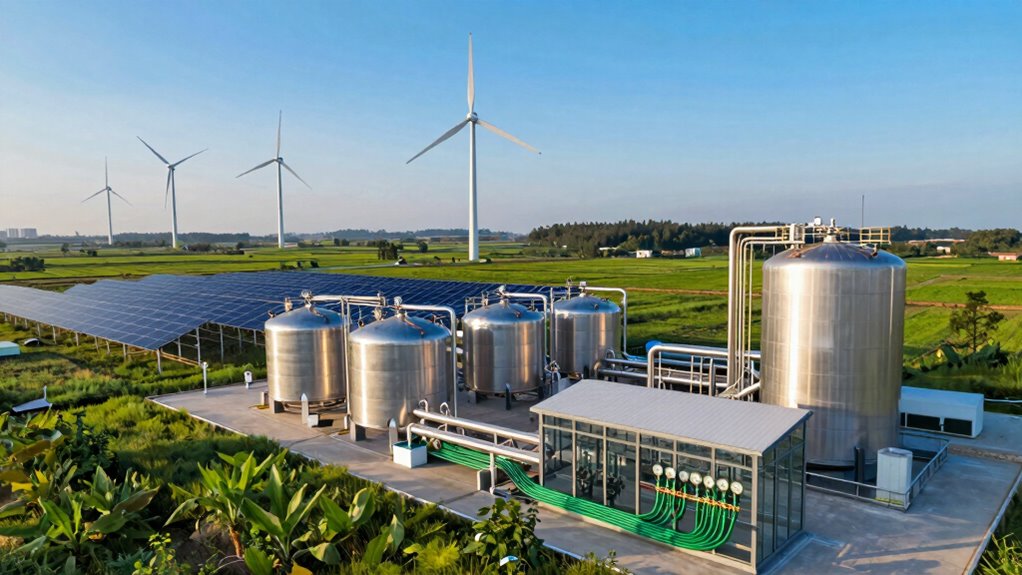
Green hydrogen plays a key role in the broader energy landscape by storing excess renewable energy, helping stabilize the grid, and reducing reliance on fossil fuels. It supports decarbonizing industries, fuels transportation, and enhances local energy systems. As technology improves and infrastructure expands, green hydrogen will become more affordable and widespread. If you want to see how it connects with other energy solutions and future innovations, keep exploring its potential.
Key Takeaways
- Green hydrogen acts as a renewable energy storage solution, balancing supply fluctuations from wind and solar.
- It enables decarbonization across industries like steel, cement, and chemicals, reducing reliance on fossil fuels.
- Green hydrogen supports grid stability and resilience by providing backup power and smoothing renewable energy output.
- It facilitates transportation decarbonization, powering ships, trains, and trucks where batteries are impractical.
- Infrastructure and technological advancements are expanding green hydrogen’s role in integrating renewable energy into the broader energy system.

Green hydrogen is emerging as a game-changing energy source that could revolutionize how we power our world. Its potential to serve as renewable storage makes it especially attractive in balancing intermittent renewable energy sources like wind and solar. When the sun isn’t shining or the wind isn’t blowing, you can store excess electricity by converting it into green hydrogen through electrolysis. This stored hydrogen can then be used later to generate electricity or fuel vehicles, providing a reliable backup and smoothing out fluctuations in renewable energy production. This capability positions green hydrogen as a crucial piece of the larger renewable energy puzzle, helping to ensure a stable, resilient grid while reducing dependence on fossil fuels. Additionally, green hydrogen can facilitate energy sector decarbonization by replacing fossil fuels in various applications. In the industrial sector, green hydrogen offers promising applications that could markedly cut emissions and improve sustainability. You might see it replacing conventional fossil fuels in processes such as steelmaking, cement production, and chemical manufacturing. These industrial applications currently contribute heavily to global carbon emissions, but green hydrogen can serve as a clean alternative, enabling industries to decarbonize without sacrificing productivity. Its versatility means it can be injected into existing pipelines or used in specialized industrial processes, creating pathways toward a greener economy without overhauling entire infrastructures. As part of the bigger energy picture, green hydrogen also acts as a bridge to a future where energy is more decentralized and flexible. You can think of it as a way to connect various renewable sources with end-use sectors, creating an extensive energy ecosystem. It also offers grid balancing capabilities that help manage energy supply and demand more effectively. As renewable energy infrastructure expands and becomes more interconnected, green hydrogen could also support the development of local energy communities, fostering energy independence at the community level. It’s not just about replacing oil or natural gas but about integrating renewable energy more seamlessly into everyday life. This integration could foster local energy communities, where excess renewable energy is transformed into hydrogen and shared or stored locally, reducing transmission losses and enhancing energy independence. Furthermore, green hydrogen’s role extends beyond electricity and industry. It can be used in transportation sectors—fueling ships, trains, and long-haul trucks—where batteries might not be practical due to weight or range limitations. This aligns with global efforts to decarbonize transportation and reduce reliance on imported fossil fuels. As policies and investments continue to grow, green hydrogen’s ability to serve multiple sectors makes it a cornerstone of a cleaner, more sustainable energy future. The development of renewable energy infrastructure is key to maximizing green hydrogen’s potential and integrating it effectively into our energy systems. Additionally, advancements in electrolysis technology are making green hydrogen production more efficient and cost-effective, which is vital for its widespread adoption.
As an affiliate, we earn on qualifying purchases.
Frequently Asked Questions
What Are the Main Challenges in Scaling Green Hydrogen Production?
You face challenges in scaling green hydrogen production mainly due to the high costs of renewable sources and the need for efficient storage solutions. Securing abundant, affordable renewable energy is essential, but infrastructure investments are significant. Additionally, developing reliable storage solutions is vital to manage supply fluctuations, making large-scale production feasible. Overcoming these hurdles requires technological advances and policy support, but doing so will enable sustainable, clean energy for the future.
How Cost-Effective Is Green Hydrogen Compared to Fossil Fuels?
Green hydrogen generally costs more than fossil fuels right now, primarily because renewable sources like wind and solar remain pricey and market integration is still developing. You’ll find that the economic edge of green hydrogen improves as renewable costs plummet and infrastructure advances. While it’s currently less cost-effective, ongoing innovations and policy support promise a potent, sustainable, and eventually competitive clean energy alternative for your future energy needs.
What Infrastructure Is Needed to Distribute Green Hydrogen Widely?
To distribute green hydrogen widely, you need robust pipeline integration and effective storage solutions. You’ll require specialized pipelines that can handle hydrogen’s unique properties, preventing leaks and ensuring safety. Additionally, storage solutions like compressed gas tanks or underground caverns are essential for balancing supply and demand. Investing in these infrastructure components allows you to transport and store green hydrogen efficiently, making it more accessible for various sectors.
How Does Green Hydrogen Impact Global Carbon Reduction Goals?
Green hydrogen substantially boosts your global carbon reduction goals by enabling renewable integration into various sectors like transportation and industry. It offers a clean alternative to fossil fuels, reducing emissions. Policy incentives encourage investments and development, making green hydrogen more accessible and affordable. Your support for these initiatives accelerates the shift to a low-carbon future, helping meet international climate commitments and creating a sustainable energy landscape for future generations.
Are There Any Safety Concerns With Storing and Transporting Green Hydrogen?
Imagine you’re in a sci-fi movie, but in reality, hydrogen safety is vital. Storing and transporting green hydrogen require strict storage protocols because it’s highly flammable and leaks can be dangerous. Proper handling, using advanced materials and safety measures, minimizes risks. While there are safety concerns, following established procedures guarantees safe storage and transportation, making green hydrogen a viable clean energy option without compromising safety.
As an affiliate, we earn on qualifying purchases.
Conclusion
As you see, green hydrogen isn’t just a drop in the ocean—it’s the game-changer that can revolutionize our entire energy landscape. By embracing this clean, renewable fuel, you’re helping to ignite a global movement toward sustainability that’s bigger than any single technology. The future of energy depends on bold steps like this, and with green hydrogen, you’re at the forefront of a transformation so powerful, it could reshape our world for generations to come.
industrial hydrogen storage tank
As an affiliate, we earn on qualifying purchases.
As an affiliate, we earn on qualifying purchases.
As an affiliate, we earn on qualifying purchases.