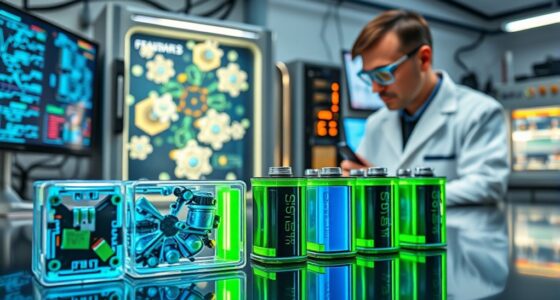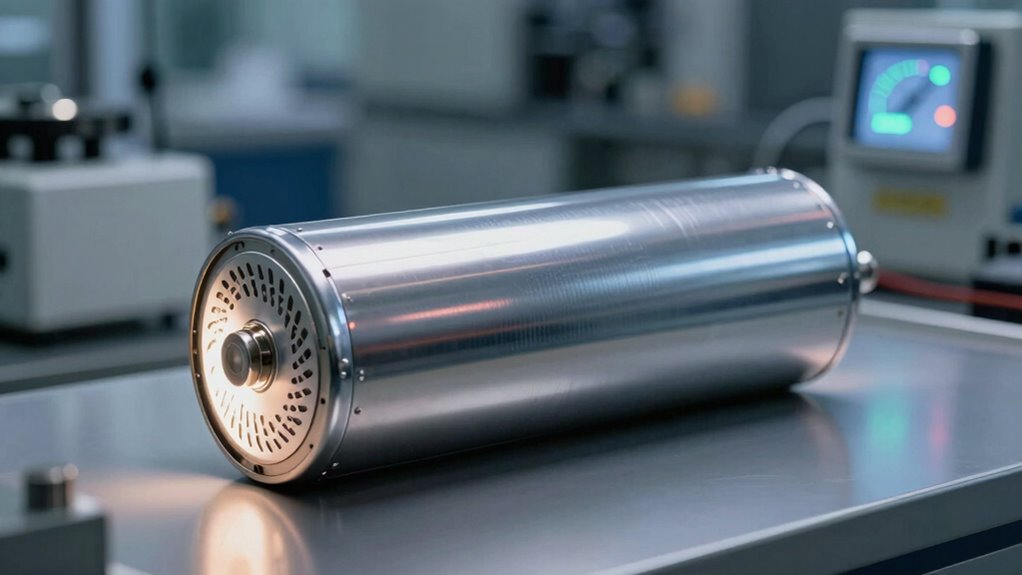

Thermal batteries are specialized energy storage devices designed for extreme conditions, providing instant power when needed. You activate them by sending a small electrical signal, which heats internal components and makes the electrolyte conductive. They’re essential in military and aerospace applications, ensuring systems like missile guidance and aircraft electronics work reliably even in harsh environments. If you want to discover how these batteries operate and their increasing importance, keep exploring further.
Key Takeaways
- Thermal batteries are specialized energy storage devices designed for extreme conditions and rapid power delivery.
- They remain inert until activated by heat, ensuring long shelf life and reliability.
- Their robust construction allows operation in harsh environments with shocks, vibrations, and temperature extremes.
- They provide high bursts of power instantly, critical for military and aerospace applications.
- Their dependable performance supports mission-critical systems, making them essential for national security and technological advancement.
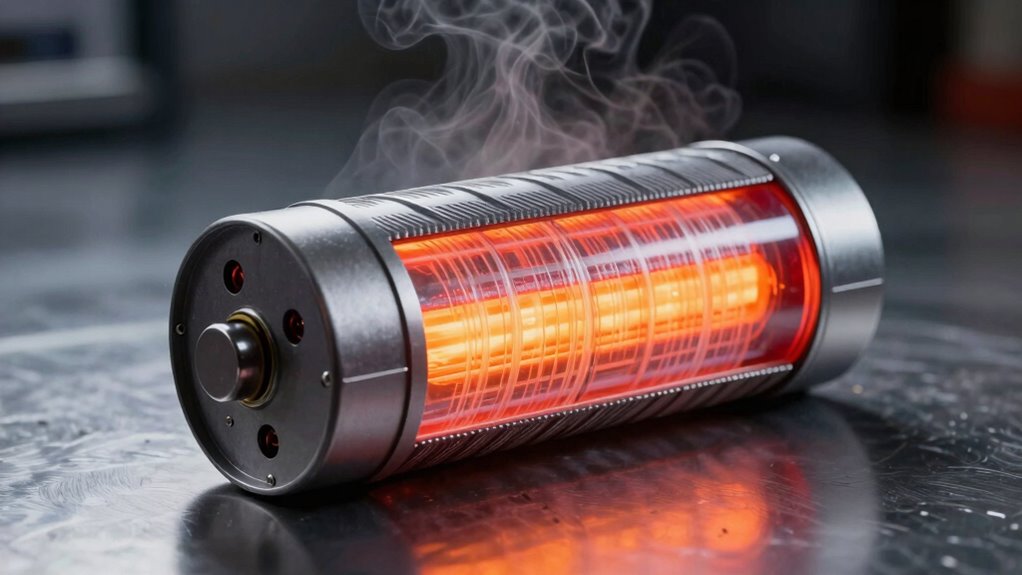
Have you ever wondered how certain military and aerospace systems operate reliably in extreme conditions? The answer lies in specialized energy storage solutions known as thermal batteries. Unlike traditional batteries, thermal batteries are designed to activate only when needed, providing a dependable power source in environments where standard batteries would fail. Their unique construction allows them to store energy in a dormant state for long periods, ready to deliver high bursts of power instantly when activated. This makes them invaluable in military applications, where reliability and rapid response are critical. Whether powering missile guidance systems, aircraft avionics, or underwater equipment, thermal batteries ensure these systems function flawlessly under extreme heat, cold, or vibration.
The core of a thermal battery’s operation revolves around its ability to stay inert until activation. When the system needs power, a small electrical signal heats the battery’s internal components to a specific temperature. This heat activates the electrolyte, turning it into a conductive medium that allows the stored energy to flow freely. Because the battery remains dormant at normal temperatures, it can be stored for years without degradation, making it ideal for military applications that require long shelf lives and instant readiness. Once activated, the battery delivers a high-energy pulse, supporting mission-critical operations that demand immediate and reliable power sources. The reliability of thermal batteries stems from their robust construction and ability to operate under extreme environmental conditions. Additionally, advances in thermal battery design are enhancing their efficiency and safety, further supporting their critical role in defense technology.
Energy storage in thermal batteries is different from traditional rechargeable batteries, as they are primarily single-use. After activation, they supply power until depleted and then are discarded. This one-time use design ensures maximum reliability and safety, especially in hostile environments where maintenance may be impossible. The construction involves a sealed vessel containing the electrolyte and electrodes, with a heat source embedded to trigger activation. This design allows thermal batteries to withstand extreme temperatures, shocks, and vibrations, which are common in military and aerospace settings. Their robustness ensures that they provide consistent performance in scenarios where other energy storage devices might falter. Understanding the long shelf life of these batteries highlights their importance in military logistics and strategic planning.
In essence, thermal batteries are a cornerstone of modern military technology, providing a reliable, high-performance energy storage solution that operates seamlessly in the harshest conditions. Their ability to remain dormant for years and activate instantly makes them indispensable for mission success. As military systems continue to evolve, the importance of dependable energy storage that can withstand extreme environments will only grow, cementing thermal batteries’ role as a crucial component in national security and aerospace advancements.
thermal batteries for military applications
As an affiliate, we earn on qualifying purchases.
As an affiliate, we earn on qualifying purchases.
Frequently Asked Questions
How Long Do Thermal Batteries Typically Last in Operation?
Thermal batteries typically last several hours to a few days in operation, depending on their design and usage. Battery longevity depends on factors like temperature, load, and how often you activate them. You can extend their lifespan by managing these conditions carefully. Keep in mind that high temperatures or frequent use may shorten their lifespan, so monitoring these factors helps guarantee reliable performance when you need it most.
Are Thermal Batteries Environmentally Friendly?
Thermal batteries have a mixed environmental impact. While they don’t emit greenhouse gases during operation, recycling challenges exist due to their complex materials. You should be aware that disposal can be problematic because valuable components like lithium and other metals are difficult to separate and recycle efficiently. Overall, they’re not entirely eco-friendly, but advancements in recycling methods could improve their environmental footprint in the future.
Can Thermal Batteries Be Recharged or Reused?
Think of thermal batteries as a one-time firework, bursting brightly but not meant for a repeat show. You can’t recharge them like a phone or a car battery; they’re designed for a single-use, high-energy burst. Their recharge cycles are practically nonexistent, limiting their reusability potential. Once discharged, they’re discarded, making them less sustainable but ideal for critical missions where reliability outweighs reusability.
What Industries Primarily Use Thermal Batteries?
You’ll find thermal batteries mainly in the defense, aerospace, and military industries, where their unique battery chemistry provides high energy density and reliable power. These batteries are essential for missile systems, spacecraft, and emergency equipment because they deliver instant power without recharging. Their ability to operate in extreme temperatures makes them ideal for applications demanding rapid activation and long shelf life, ensuring performance when it’s most critical.
How Do Thermal Batteries Compare in Cost to Other Power Sources?
You might think thermal batteries are expensive, but a careful cost comparison reveals they’re quite affordable for specific uses. Their battery affordability shines in high-temperature, long-duration applications, offering reliable power without frequent replacements. While initial costs can be higher than traditional batteries, their unique energy density and longevity often lower overall expenses. So, in certain industries, thermal batteries provide a cost-effective, durable power source worth considering.
high temperature thermal batteries
As an affiliate, we earn on qualifying purchases.
As an affiliate, we earn on qualifying purchases.
Conclusion
In principle, thermal batteries quietly work behind the scenes, ensuring your devices and systems keep running smoothly without a fuss. Their subtle yet crucial role helps avoid the occasional hiccup and keeps everything flowing seamlessly. So, next time you rely on reliable power, remember these unsung heroes that lend a gentle hand, making sure you stay connected and prepared—without ever calling attention to themselves. They’re truly the silent guardians of your energy needs.
As an affiliate, we earn on qualifying purchases.
As an affiliate, we earn on qualifying purchases.