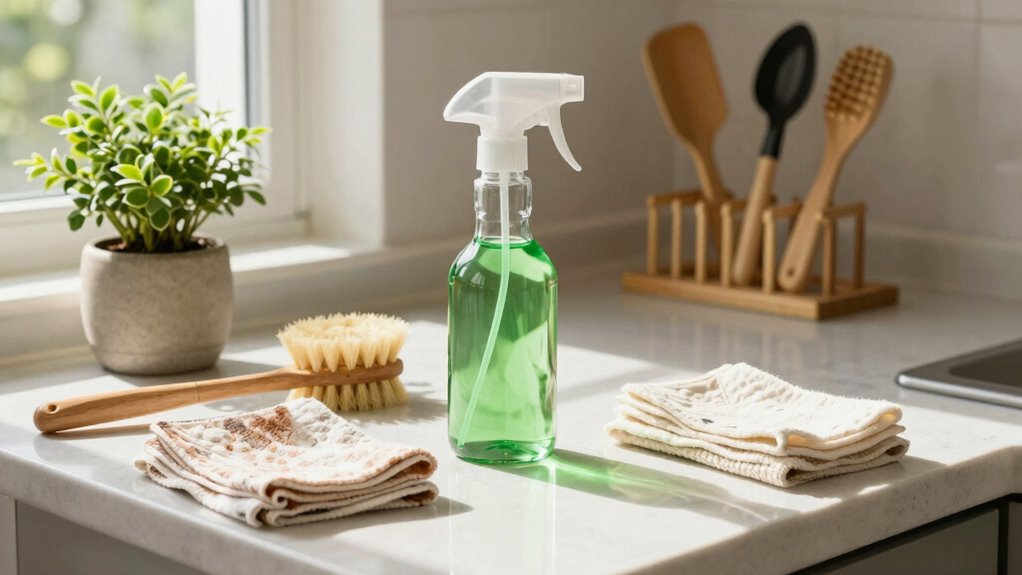

To make sustainable cleaning habits stick, focus on using eco-friendly ingredients like vinegar, baking soda, and lemon juice, which are affordable and effective. Keep reusable cloths and refillable bottles handy, and set reminders to maintain your routines. Practice mindfulness about waste—dispose responsibly and compost scraps. Small, consistent changes build long-term habits, helping you create a healthier home and environment. If you stay committed, you’ll discover even more practical tips to boost your eco-friendly cleaning practices.
Key Takeaways
- Incorporate reusable cleaning tools and refillable bottles to reduce waste and promote consistent habits.
- Use natural, eco-friendly ingredients like vinegar and lemon juice for effective, sustainable cleaning.
- Establish routines and reminders to maintain and reinforce sustainable cleaning practices over time.
- Practice mindful disposal and compost biodegradable waste to minimize landfill contributions.
- Choose products with sustainable packaging and labels to support responsible manufacturing and eco-conscious decisions.
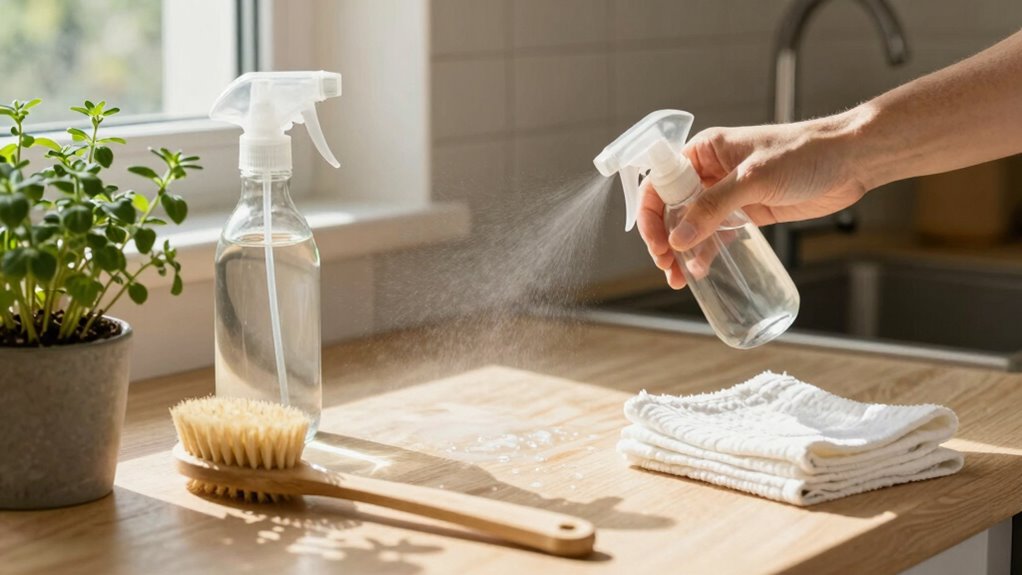
Adopting sustainable cleaning habits is an essential step toward reducing your environmental impact and creating a healthier living space. When you choose to incorporate eco friendly ingredients into your cleaning routine, you not only avoid harsh chemicals but also support environmentally responsible practices. Many natural ingredients, like vinegar, baking soda, and lemon juice, deliver powerful cleaning results without harming the planet. These ingredients are readily available, affordable, and versatile, making it easier for you to switch to greener options. Using eco friendly ingredients also means you’re less likely to contribute to indoor air pollution, which can be caused by synthetic fumes from conventional cleaners. Over time, this helps create a safer, healthier environment for you and your family. Incorporating sustainable cleaning practices into your routine can also motivate others around you to adopt similar habits. Waste reduction tips are equally important when establishing sustainable cleaning habits. Start by using refillable bottles for your cleaning solutions, which cut down on single-use plastic waste. Consider making your own cleaning products in bulk; this not only reduces packaging waste but also saves you money in the long run. When you’re finished with cleaning cloths or sponges, opt for washable, reusable options instead of disposable ones. This simple switch notably cuts down on landfill waste and reduces the need for frequent replacements. Additionally, be mindful of how you dispose of used cleaning products—avoid pouring chemicals down the drain and look for environmentally friendly disposal methods. Composting biodegradable waste like food scraps and paper towels can further reduce your overall waste footprint. Incorporating waste reduction methods can also enhance your overall sustainability efforts and reduce your environmental impact. To make sustainable choices easier, consider researching eco friendly product labels that clearly indicate environmentally responsible manufacturing practices. Sticking to sustainable cleaning habits requires consistency and mindfulness, but it’s worth the effort. Make a habit of checking labels for eco friendly ingredients and seek out products that prioritize sustainable packaging. Incorporating behavioral changes such as setting reminders to refill bottles or replace old cloths with durable, washable ones can help solidify these habits. Over time, these small changes become second nature, and you’ll start noticing the benefits—less clutter, fewer chemicals in your home, and a lighter impact on the planet. Remember, every small step counts, and your choices can inspire others to follow suit. By prioritizing eco friendly ingredients and waste reduction tips, you’re actively contributing to a healthier environment while maintaining a clean, comfortable home. Sustainable cleaning isn’t about perfection; it’s about making smarter, more conscious decisions that align with your values and promote a greener future.

Augine Swedish Dishcloths for Kitchen, Swedish Dish Cloths 5 Pack, Super Absorbent Reusable Paper Towels Washable, Biodegradable, Quick Drying, Dishwasher Safe
- Eco-friendly Materials: Made from cotton and cellulose, biodegradable
- Large Surface Area: Measures 7.68 x 6.8 inches for efficient cleaning
- High Absorbency: Absorbs up to 20 times its weight
As an affiliate, we earn on qualifying purchases.
As an affiliate, we earn on qualifying purchases.
Frequently Asked Questions
How Can I Track My Progress With Sustainable Cleaning?
You can track your progress with sustainable cleaning by keeping a journal or using a digital app to log your cleaning routine consistency. Note down eco-friendly product recommendations you try and how easily they fit into your routine. Regularly review your logs to see improvements and identify areas for adjustment. This way, you stay motivated, monitor your eco impact, and make sure your sustainable cleaning habits become a lasting part of your lifestyle.
Are There Eco-Friendly Cleaning Habits Suitable for Small Spaces?
Imagine your small space sparkling with minimal effort. You can use eco-friendly sprays that smell fresh and natural, making cleaning feel like a breath of fresh inspiration. Pair them with reusable cloths that glide smoothly over surfaces, reducing waste. These habits fit perfectly into tight spaces, saving you time and clutter while keeping your environment green. Embrace these simple, sustainable practices to make your home both clean and eco-conscious.
How Do I Involve Family Members in Sustainable Cleaning Practices?
You involve family members in sustainable cleaning by encouraging shared responsibilities. Assign specific tasks to each person, making it clear how their efforts contribute to eco-friendly practices. Use natural cleaning supplies everyone understands, and set a routine that suits everyone’s schedule. By fostering family involvement, you create a team effort that makes sustainable habits easier to maintain and more enjoyable, ensuring everyone feels responsible and motivated to stick with eco-friendly cleaning.
What Are Common Mistakes to Avoid With Eco-Friendly Cleaning?
Don’t let your efforts go down the drain by ignoring common mistakes. Avoid using harsh chemicals that leave residues and harm your family’s health. Be mindful of plastic waste—opt for reusable or biodegradable cleaning supplies instead of single-use plastics. Also, don’t forget to read labels carefully, as some products claim eco-friendliness but still contain harmful residues. Staying informed and consistent keeps your cleaning routine truly green and effective.
Can Sustainable Cleaning Habits Save Money Long-Term?
Yes, adopting sustainable cleaning habits can save you money long-term. By using eco-conscious products and embracing green cleaning techniques, you reduce the need for harsh chemicals and frequent replacements. Investing in reusable cleaning tools and natural solutions might seem costly initially, but they last longer and reduce ongoing expenses. Over time, you’ll notice lower utility bills and fewer product purchases, making your cleaning routine more budget-friendly and environmentally friendly.

ZEP Professional Sprayer Bottle, 32 oz, Pack of 3, HDPRO1
- Heavy-Duty Professional Design: Powerful spray with 30-foot reach
- Ergonomic Trigger System: Reduces fatigue with easy three-finger spray
- Adjustable Nozzle Options: Multiple spray modes for versatility
As an affiliate, we earn on qualifying purchases.
As an affiliate, we earn on qualifying purchases.
Conclusion
Now that you know these sustainable cleaning habits, you’re all set to make a real difference. But here’s the twist: the true challenge isn’t just starting—it’s sticking with them when life gets busy. Will you let old habits slip back in, or will you stay committed to a cleaner, greener home? The choice is yours, and the future of your space—and the planet—depends on what you decide next. Are you ready to see it through?

MRS. MEYER'S CLEAN DAY Baking Soda Cream Cleaner, Lemon Verbena, 16 fl oz
- Removes soap scum and grease: Removes soap scum and grease build-up
- Effective for tough grime: Scrubs away cooked-on grease and grime
- Fresh lemon verbena scent: Light, refreshing citrus fragrance
As an affiliate, we earn on qualifying purchases.
As an affiliate, we earn on qualifying purchases.

SUPERBIO 1.6 Gallon Handle Tie Compostable Food Scrap Bags For Counter Top Compost Bin, Small Compost Bags, 50 Count, 6 Liter, BPI & OK compost INDUSTRIAL Certified
- Capacity: 1.6 gallons (6L)
- Dimensions: 16.1 x 19.3 inches
- Material Thickness: 0.63 mil
As an affiliate, we earn on qualifying purchases.
As an affiliate, we earn on qualifying purchases.