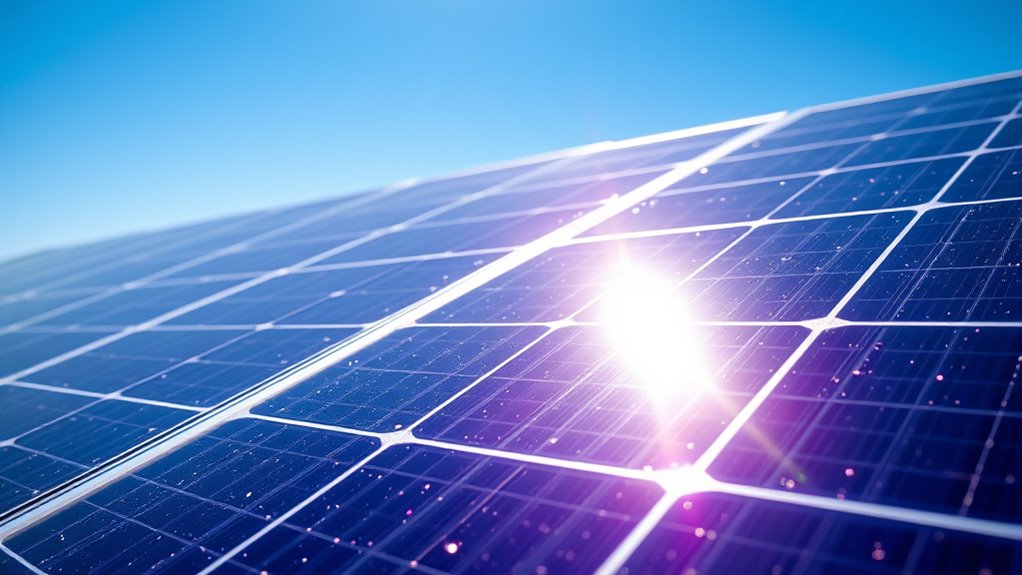

Perovskite solar panels are poised to be the next big step in solar technology. They offer higher efficiency, meaning you can get more power from less space, and their production is quicker and less energy-intensive than traditional cells. However, challenges like stability, toxicity, and scalable manufacturing still need solutions. If you keep exploring, you’ll discover how ongoing research aims to overcome these hurdles and make perovskite panels a practical, affordable option for everyone.

Prime made for students and young adults
- Fast, free delivery for dorm and study essentials
- Prime Video and Amazon Music included
- Member-only deals
Key Takeaways
- Perovskite solar panels offer higher efficiency and broader sunlight absorption than traditional silicon panels.
- They can be manufactured more quickly and with less energy, reducing production costs.
- Ongoing research aims to improve stability and address environmental degradation issues.
- Lead-free perovskite alternatives are being developed to reduce toxicity concerns.
- Advancements in scalability and durability are critical for commercial adoption of next-generation perovskite solar tech.
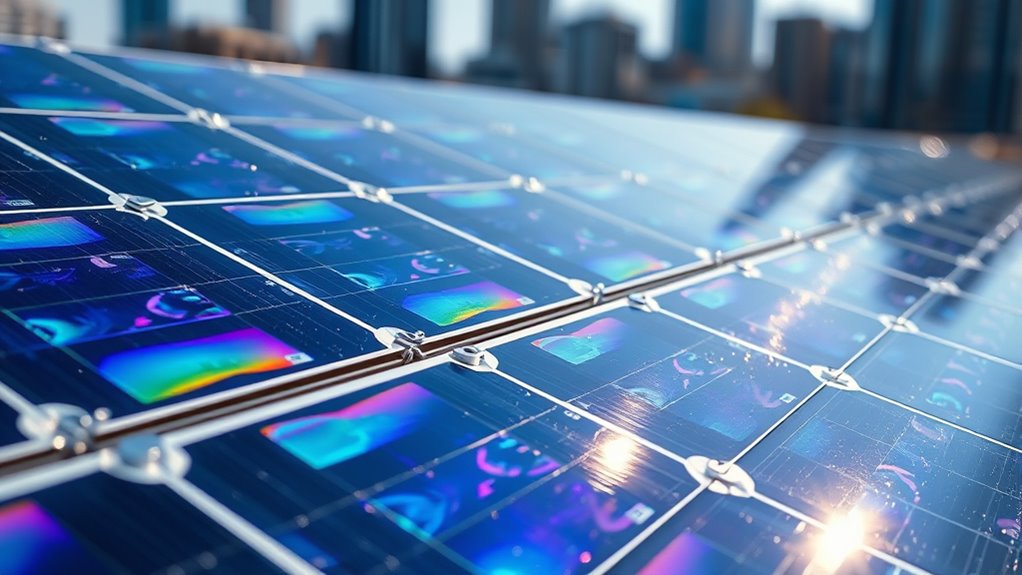
Are perovskite solar panels the future of renewable energy? The answer is increasingly leaning towards yes, thanks to their remarkable potential to revolutionize the solar industry. These panels are known for their impressive efficiency improvements, which could allow you to generate more power with less space and at lower costs. Unlike traditional silicon-based solar cells, perovskites can be manufactured quickly and with less energy, making them a promising alternative. Their ability to absorb sunlight across a broad spectrum means that they can convert more sunlight into electricity, boosting overall efficiency. As researchers continue to refine the materials and design, you can expect these improvements to translate into panels that are not only more efficient but also more affordable over time. Additionally, advancements in battery technologies could further enhance the integration of perovskite solar panels into portable energy solutions.
However, you shouldn’t overlook the manufacturing challenges that come with adopting this technology. Producing high-quality perovskite panels at scale remains a complex process. One of the biggest hurdles is assuring consistent quality and stability. Perovskite materials are sensitive to environmental factors like moisture, heat, and light, which can cause them to degrade quickly. This means that manufacturing processes need to be carefully controlled and refined to prevent defects and ensure durability. The challenge lies in scaling up laboratory success to industrial production without losing the performance gains, which can be both technically and financially demanding. If manufacturers can overcome these hurdles, the transition to mass production will become more feasible, paving the way for widespread adoption.
Another obstacle is the potential toxicity of some perovskite compositions, which often contain lead. While lead improves efficiency, it also raises environmental and health concerns. Developing lead-free alternatives is an active area of research, but these tend to have lower efficiencies or stability issues. As a result, you might see a period where the industry balances performance with environmental safety, pushing manufacturers to innovate safer materials without sacrificing too much on efficiency.
As an affiliate, we earn on qualifying purchases.
Frequently Asked Questions
What Is the Cost Comparison Between Perovskite and Traditional Solar Panels?
You’ll find that perovskite solar panels currently have lower manufacturing costs compared to traditional silicon panels, which helps reduce overall prices. Market pricing for perovskite panels is still developing but generally tends to be more affordable, making them an attractive option for budget-conscious consumers. As production scales up and technology improves, expect the cost gap to narrow further, offering you more economical solar energy solutions.
How Long Do Perovskite Solar Panels Typically Last?
Perovskite solar panels typically last about 5 to 10 years, but durability concerns and material degradation can affect their lifespan. You might notice efficiency drops over time due to environmental exposure. Researchers are working on improving stability, but currently, they don’t match the longevity of traditional silicon panels. To maximize your investment, keep an eye on advancements and consider the panel’s durability when planning your solar setup.
Are Perovskite Panels Environmentally Safe to Produce and Dispose Of?
Think of it like an early smartphone; perovskite panels are promising but still face environmental concerns. You should know that their production involves toxic materials, creating recycling challenges. While researchers work on eco-friendlier solutions, it is crucial to handle disposal carefully to avoid environmental harm. Currently, they aren’t fully eco-safe, but ongoing innovations aim to minimize their ecological footprint, making them safer for future use.
Can Perovskite Solar Technology Be Integrated Into Existing Solar Systems?
Yes, you can integrate perovskite solar technology into existing solar systems. It offers retrofit compatibility, making upgrades straightforward. You can create hybrid systems by combining perovskite panels with traditional silicon panels, boosting efficiency. Just confirm your current setup supports the new panels and consult with a professional to optimize integration. This approach allows you to enhance your system’s performance without a complete overhaul.
What Are the Main Challenges in Commercializing Perovskite Solar Panels?
Like a house built on shifting sands, commercializing perovskite panels faces scalability hurdles and material stability issues. You’ll need to overcome these challenges to guarantee durability and consistent performance at scale. Addressing environmental sensitivity and long-term degradation is vital. Until these hurdles are cleared, widespread adoption remains a distant horizon, but with focused research, you could turn today’s obstacles into tomorrow’s breakthroughs, paving the way for solar’s bright future.
As an affiliate, we earn on qualifying purchases.
Conclusion
Imagine harnessing the power of the sun with perovskite solar panels, capturing sunlight with unmatched efficiency, flexibility, and affordability. Feel the promise of a cleaner future, a brighter tomorrow, and a sustainable world. Embrace the potential of this next-generation technology, transforming rooftops into energy hubs, cities into eco-friendly spaces, and your daily life into a monument to innovation. With perovskite panels, you’re not just observing progress—you’re empowering it.
As an affiliate, we earn on qualifying purchases.
As an affiliate, we earn on qualifying purchases.
Halloween Picks
halloween
As an affiliate, we earn on qualifying purchases.