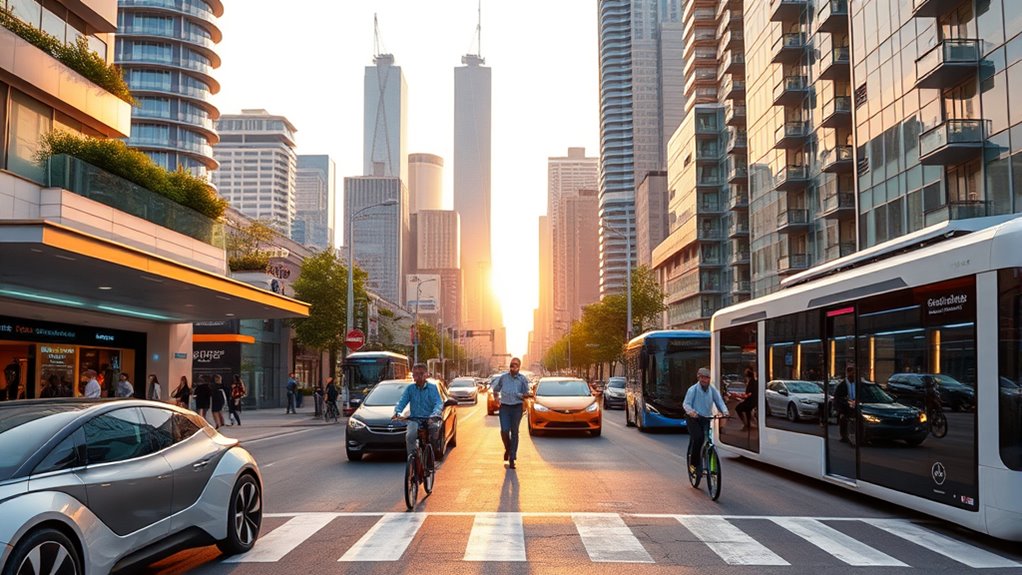

By 2025, you’ll find electric vehicles everywhere—from city streets to highways—thanks to widespread, fast-charging stations and improved home chargers. Advances in battery tech mean longer ranges and quicker top-ups, making EVs more practical and affordable. Sustainable energy sources and innovative fuels also enhance their reliability. As infrastructure and technology keep evolving, driving an electric vehicle will become more convenient and seamless. Keep exploring to see how living with EVs becomes easier every day.
Key Takeaways
- EVs will be widely adopted, with extensive charging infrastructure including fast chargers and home options.
- Charging stations will be more accessible, integrated into city grids and conveniently located near urban amenities.
- Advances in battery technology will enable longer ranges, faster charging, and reduced costs, making EV ownership more practical.
- Sustainable manufacturing and improving battery longevity will lower maintenance costs and environmental impact.
- Alternative energy sources like hydrogen fuel cells will complement EVs, offering diverse and reliable clean transportation options.
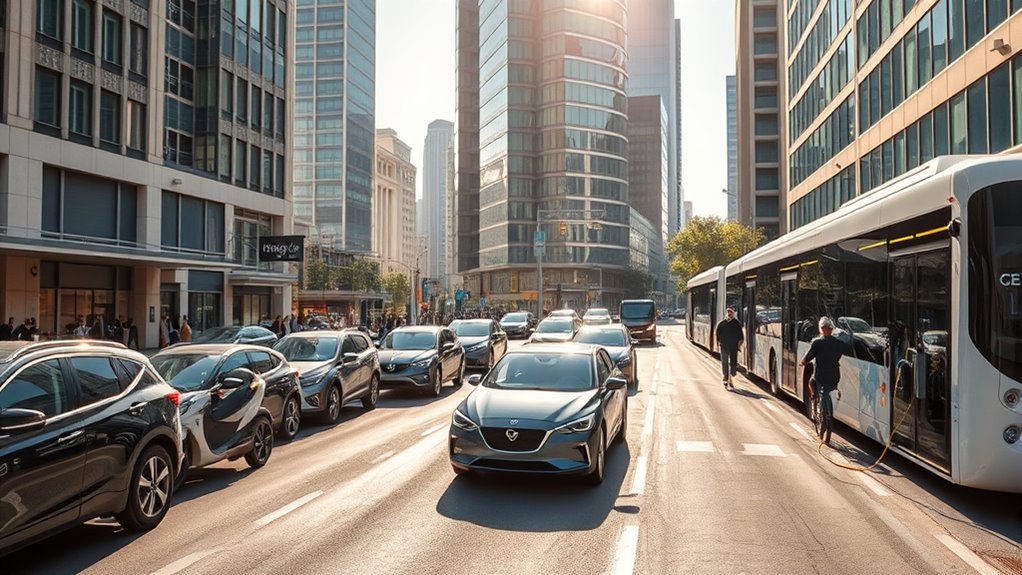
By 2025, electric vehicles (EVs) are set to become a mainstream choice for drivers worldwide. This shift isn’t just about more cars on the road; it’s about how easily you can charge those vehicles and how reliable their batteries are. As EV adoption accelerates, the development of robust charging infrastructure and battery innovation plays a *crucial* role in making electric driving practical and appealing for everyone.
Charging infrastructure is expanding rapidly, transforming the way you refuel your EV. No longer will you need to plan lengthy detours just to find a charging station. Public charging networks are becoming more widespread, with fast chargers popping up along highways, in shopping centers, and even within city neighborhoods. These stations can deliver significant charge in just 15 to 30 minutes, reducing the wait time and making long trips feasible. Home charging options are also improving, with more households installing dedicated chargers that allow you to start each day with a full battery. Smart charging networks are being integrated into city grids, enabling you to charge during off-peak hours, saving money and reducing stress on the electrical grid. The convenience and accessibility of charging stations are *essential* in convincing more drivers to switch from gasoline to electric, and ongoing investments are ensuring that charging infrastructure keeps pace with the growing number of EVs.
Battery innovation is equally *fundamental* in shaping the EV experience. Advances in battery technology are enabling longer driving ranges, so you don’t have to worry about running out of juice on a road trip. Lithium-ion batteries are improving in energy density, meaning they store more power without adding extra weight, which also enhances vehicle performance. Researchers are exploring solid-state batteries, which promise even greater safety, faster charging times, and longer lifespans. These innovations mean your EV can stay on the road longer between charges and last for years without significant degradation. Additionally, sustainable battery manufacturing practices are gaining traction, making EVs more environmentally friendly throughout their lifecycle. As battery costs decrease, EVs become more affordable, encouraging more people to make the switch. Moreover, hydrogen fuel cells are also being researched as an alternative clean energy source for vehicles, offering higher efficiency and shorter refueling times. Overall, battery innovation not only extends your driving range but also makes owning and maintaining an EV more practical and cost-effective.

EVIQO Level 2 EV Charger, 40 Amp 240V, J1772 for Non-Tesla EVs, 25ft Cable, WiFi (2.4GHz) Smart App, Weatherproof Indoor/Outdoor (IP66, NEMA 4), UL & ETL Certified, NEMA 14-50 Plug-in, 9.6kW
PLUG-IN, NO ELECTRICIAN: EVIQO Level 2 EV charger with a max output of 40A / 9.6 kW fully…
As an affiliate, we earn on qualifying purchases.
As an affiliate, we earn on qualifying purchases.
Frequently Asked Questions
How Will EVS Impact Global Oil Demand by 2025?
By 2025, EV adoption will markedly reduce global oil demand, leading to an oil decline as more people switch to electric vehicles. You’ll notice a faster energy shift, with less reliance on fossil fuels for transportation. This change encourages cleaner energy sources, cuts emissions, and pushes oil markets to adjust. Overall, EVs will play a key role in reshaping energy consumption and accelerating the move toward sustainable alternatives.
What Are the Most Common Challenges in EV Battery Recycling?
Imagine your EV battery as a treasure chest, but opening its full value is tricky. The biggest challenges in battery recycling are effectively separating materials and preventing environmental harm. You face hurdles in battery reuse and need recycling innovations to streamline processes. Developing better methods guarantees valuable minerals can be reclaimed, reducing waste and environmental impact. This way, you turn potential e-waste into a sustainable resource, keeping the cycle of clean energy alive.
How Will EVS Influence Urban Infrastructure Development?
You’ll see urban planning evolve to accommodate EVs, with cities expanding charging networks to meet growing demand. This means designing more accessible charging stations, integrating them into parking structures, and prioritizing sustainable infrastructure. As a result, your city becomes more convenient for EV owners, reducing range anxiety and encouraging eco-friendly transportation. Expect smarter, more connected urban spaces that support widespread EV adoption and promote cleaner, greener neighborhoods.
What New Policies Are Expected to Promote EV Adoption?
Like Icarus reaching for the sun, you’ll see governments soaring higher with new policies that promote EV adoption. Expect incentives such as tax credits and rebates, making EVs more affordable. Additionally, expanding charging infrastructure will be prioritized to ease range anxiety. These policies aim to accelerate your progression to electric, ensuring a smoother, more accessible experience as you embrace cleaner, greener transportation options.
How Will EV Technology EVolve in the Next Five Years?
In the next five years, you’ll see EV technology evolve considerably with advancements in autonomous driving, making your trips safer and more convenient. Battery innovation will lead to longer ranges, faster charging, and lower costs, transforming how you use your vehicle daily. These improvements will make EVs more accessible and practical, encouraging widespread adoption and changing your driving experience for the better.
![2026 Upgraded Tesla Supercharger to CCS1 Charger Adapter, [Max 500A 1000V] Fast Charge Electric Vehicle Charging Adapter, NACS to CCS Electric Vehicle Adapter Fit for All Ford EVs, GM, Rivian](https://m.media-amazon.com/images/I/41gT2iFovnL._SL500_.jpg)
2026 Upgraded Tesla Supercharger to CCS1 Charger Adapter, [Max 500A 1000V] Fast Charge Electric Vehicle Charging Adapter, NACS to CCS Electric Vehicle Adapter Fit for All Ford EVs, GM, Rivian
【High-Powered Fast Charging】: NACS to CCS1 adapter support up Max 500A 1000V 250KW, allowing a car to charge…
As an affiliate, we earn on qualifying purchases.
As an affiliate, we earn on qualifying purchases.
Conclusion
By 2025, you’ll find yourself sailing smoothly through a world where electric vehicles are the guiding stars of transportation. Think of the road as a vast, open sea, and EVs as your trusty ships gliding effortlessly, powered by clean winds. As you navigate this new horizon, remember that each turn toward sustainability is a voyage toward a brighter, greener future. Embrace the journey—your role is the captain steering us into this exciting new era.

SANLMYIF 8pcs EVE MB31 314ah 3.2V Lifepo4 Battery 11000 Cycles Cell Battery Lifepo4 Solar Lithium Ion for Commercial and Industrial ess
★【8pcs 3.2V 314Ah 】These 3.2V 314Ah Battery cells are produced by EVE, benefit from advanced equipment and strict…
As an affiliate, we earn on qualifying purchases.
As an affiliate, we earn on qualifying purchases.

Hydrogen Fuel Cell Electric Car Hydrogen and Oxygen Power Generation Clean Energy Vehicle Model High-Tech Teaching Instruments
The Hydrogen fuel trolley uses zinc particles and food grade citric acid to synthesize hydrogen, and then uses…
As an affiliate, we earn on qualifying purchases.
As an affiliate, we earn on qualifying purchases.