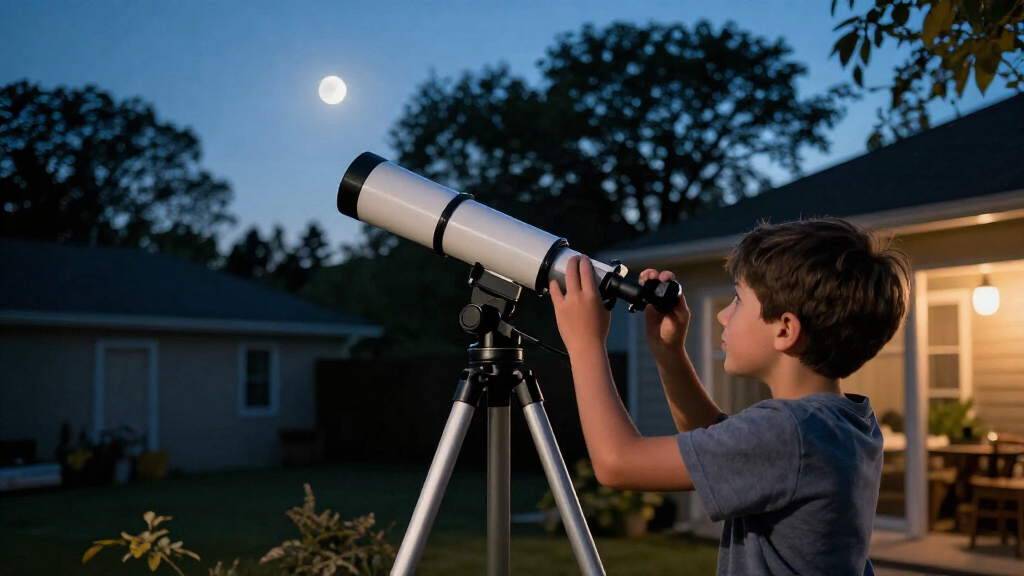
For most beginners, the National Geographic NT114CF 114mm Reflector is the strongest all-around choice in this lineup because its larger aperture can reveal more than the small refractors while keeping a beginner-friendly format. The 90mm Refractor stands out for buyers who want a brighter view without maintaining a reflector, while the Gskyer 70mm Refractor offers a simpler, lighter starting point. The main tradeoffs are aperture versus portability, and added features versus a mount that is easy to aim steadily. Read on for the full breakdown of which beginner astronomy telescopes fit different ages, observing goals, and budgets.

Prime made for students and young adults
- Fast, free delivery for dorm and study essentials
- Prime Video and Amazon Music included
- Member-only deals
Key Takeaways
- The 114mm reflectors offer the biggest aperture advantage: the National Geographic NT114CF and Barska Starwatcher gather more light than the 50–90mm refractors, but their mount and setup may ask more of a first-time user.
- A 70mm refractor is the simpler first step: models such as the Gskyer, Vilupvie, and ToyerBee keep setup straightforward, though their smaller aperture limits detail on faint objects.
- The 90mm refractor sits between portability and light gathering: it offers more aperture than the common 70mm options without moving to a reflector, but its tripod still needs to hold steady at higher magnification.
- Phone adapters are a bonus, not a reason to buy: they can help capture the Moon, but alignment and camera handling can complicate viewing, so optical quality and mount stability should come first.
- Kid-focused scopes prioritize approachability: the Nancy B’s MoonScope and NASA Lunar Telescope are geared toward guided lunar exploration, while adult beginners seeking broader observing range may prefer a larger-aperture model.


| beginner astronomy telescope | Eyepieces | Focal length | Mount | Finderscope |
|---|---|---|---|---|
| Educational Insights Nancy B’s | 4 mm and 20 mm all-glass | 396 mm | Altazimuth | Reflex, glow-in-the-dark |
| Koolpte Kids Telescope with 50 | Two: high-power and low-power | — | Altazimuth | Reflex |
| Hawkko Portable Refractor Tele | 25 mm and 10 mm | 500 mm | — | — |
| Gskyer 70mm Refractor Telescop | 25 mm (16×) and 10 mm (40×) | 400 mm (f/5.7) | — | 5×24 with crosshair lines |
| Vilupvie 70mm Aperture | 6 mm, K12 mm, K20 mm | 500 mm | — | 5×24 |
| Barska Starwatcher 114mm Refle | — | 900 mm | Equatorial | — |
| 70mm Refractor Telescope with | 6 mm and 20 mm | 300 mm | Altazimuth | 5×24 |
| NASA Lunar Telescope for Kids | Low-power and high-power | — | Equatorial | — |
| Carson Red Planet 35–78x 76mm | K20mm and K9mm | 700 mm | Altazimuth U-mount with slow-motion controls | — |
| ToyerBee 70mm Refractor Telesc | 20 mm and 6 mm | 300 mm | — | 5×24 |
| 90mm Refractor Telescope with | 25mm and 10mm | — | Altazimuth | 3×24 |
| National Geographic NT114CF 11 | 26mm and 9.7mm Plössl | 500mm | Manual alt-azimuth | Reflex red-dot finder |
| 70mm Refractor Telescope for B | 6mm, 12mm, and 20mm | 500mm | Altazimuth | — |
| Dianfan 80mm 500mm Portable Re | Two Kellner eyepieces | 500mm | Altazimuth | — |
| UncleHu 80mm FMC Refractor Tel | 25mm and 10mm Kellner | 400mm | Altazimuth | — |
More Details on Our Top Picks
Educational Insights Nancy B’s Science Club MoonScope Telescope
The activity journal is the MoonScope’s main advantage: it gives a child something structured to do beyond looking through the eyepiece. Its two magnifications, 18x and 90x, suit basic lunar viewing and introductory looks at planets, while the included moon filter can make bright lunar views more comfortable. Compared with the Koolpte Kids Telescope, this model offers a more specific astronomy activity package and a built-in red LED on the tripod; Koolpte instead lists a 50 mm aperture and a lighter 1.9-pound build. The MoonScope’s manual focus means an adult may need to help a young observer get a sharp image, and its two AA batteries add a small setup requirement. I’d choose it for a child who benefits from guided activities, not for a family seeking a telescope with extensive adjustment or portability details.
Pros:- Two stated magnifications provide a simple way to compare broad and closer views.
- The 22-page astronomy journal gives children structured activities beyond observing.
- Moon filter is included for lunar viewing.
- Built-in tripod red LED and glow-in-the-dark finder support basic nighttime aiming.
Cons:- Manual focusing may require adult help for younger children.
- The red LED requires two AA batteries.
- The 1.5-degree field of view is narrow, which can make finding and tracking objects harder for a beginner.
Best for: Families introducing school-age children to the Moon through hands-on activities and guided journal prompts.
Not ideal for: Buyers seeking a highly adjustable telescope or a clearly lightweight travel setup; focusing is manual, and the product data does not specify its weight.
- Magnification:18x and 90x
- Eyepieces:4 mm and 20 mm all-glass
- Focal length:396 mm
- Field of view:1.5 degrees
- Mount:Altazimuth
- Focus:Manual
- Finderscope:Reflex, glow-in-the-dark
- Included accessories:Moon filter, tripod with built-in red LED, 22-page activity journal
- Batteries:2 AA batteries required
Our verdict“Choose the MoonScope for a child who will benefit from guided lunar activities, but pick a more adjustable model if hands-on focusing is a priority.”
Koolpte Kids Telescope with 50 mm Aperture, Tripod, Finder Scope, and Two Eyepieces
Age guidance and a light 1.9-pound build make the Koolpte a straightforward first telescope for families with very young children. Its altazimuth mount moves up, down, and side to side, while the finder scope helps a beginner aim before looking through an eyepiece. The learning guide adds Moon and space topics, though the supplied description does not give exact magnification figures for its two eyepieces. Compared with the Nancy B’s Science Club MoonScope, Koolpte is described for ages three and up and has a stated 50 mm objective; Nancy B’s package has more specific astronomy activities, a moon filter, and stated 18x and 90x magnifications. The tradeoff here is fixed focus, which limits adjustment if the view is not sharp. Adult supervision is also recommended, so this is best treated as a shared starter rather than a fully independent instrument.
Pros:- At 1.9 pounds, it is easier for a child or adult to carry than many larger beginner setups.
- A 50 mm objective and two eyepieces provide a basic starting point for observing.
- Altazimuth movement supports intuitive up-down and left-right aiming.
- Learning guide introduces lunar phases, eclipses, and space exploration.
Cons:- Fixed focus limits the user’s ability to sharpen the view for different targets.
- Adult supervision is recommended during setup and use.
- The supplied product details do not state the eyepiece magnifications.
Best for: Parents seeking a lightweight, simple first telescope for a child age three or older, with an adult nearby to assist.
Not ideal for: Older beginners who want to adjust focus precisely or compare known magnification levels; the focus is fixed and eyepiece powers are unspecified.
- Recommended age:3 years and up
- Objective lens diameter:50 mm
- Mount:Altazimuth
- Focus type:Fixed focus
- Finderscope:Reflex
- Eyepieces:Two: high-power and low-power
- Tripod material:Aluminum
- Dimensions:17.2 × 4 × 8.1 in (D × W × H)
- Weight:1.9 lbs
Our verdict“Pick Koolpte for a very young child’s supervised introduction, but choose the MoonScope if you want specified magnifications and more structured activities.”
Hawkko Portable Refractor Telescope for Kids and Beginners, 80mm Aperture, 500mm Focal Length
An 80 mm objective gives Hawkko the largest stated aperture among these five options, a useful distinction for beginners choosing a compact refractor for lunar viewing and daytime landscapes. Its 500 mm focal length, two eyepieces, and included 3× Barlow offer more combinations than the simpler Koolpte, whose fixed-focus design puts less emphasis on adjustment. Hawkko also includes a smartphone adapter and backpack, making it the better fit for a family that wants to carry and share the setup. The stated 20×–150× range describes flexibility, not a promise that the highest power will remain useful in every viewing condition. Manual focusing takes practice, and the straight-through finder requires lining up by sight. Compared with the Gskyer 70mm Refractor, Hawkko has the larger aperture, while Gskyer supplies a specified 5×24 crosshair finder and a wireless camera remote.
Pros:- 80 mm objective is the largest stated aperture among these five products.
- Two eyepieces and a 3× Barlow provide several magnification combinations.
- Smartphone adapter supports capturing and sharing observations.
- Backpack and four-stage adjustable aluminum tripod suit portable use.
Cons:- Manual focusing requires practice, especially for a first-time user.
- The straight-through finderscope must be aligned by sight.
- The stated maximum magnification may not provide useful detail in all viewing conditions.
Best for: Families or new observers who want a portable refractor with a larger stated aperture, multiple eyepiece options, and phone-photo accessories.
Not ideal for: Beginners who want easy aiming without sight alignment or a focus-free setup; its straight-through finder and manual focus take practice.
- Telescope type:Refractor
- Objective lens diameter:80 mm
- Focal length:500 mm
- Magnification range:20×–150×
- Eyepieces:25 mm and 10 mm
- Barlow lens:3×
- Mount type:Altazimuth
- Focus type:Manual
- Included accessories:Smartphone adapter, backpack, decorative stickers
Our verdict“Choose Hawkko if the larger aperture and portable accessory kit matter more than the easier aiming and camera remote listed with the Gskyer.”
Gskyer 70mm Refractor Telescope, 400mm Focal Length, with Tripod and Travel Accessories
The wireless camera remote is Gskyer’s clearest beginner-friendly differentiator: it can help reduce movement from touching a phone while taking a picture through the included adapter. Its 70 mm objective, two eyepieces, and 3× Barlow also give new observers a defined set of viewing options, while the erecting prism supports daytime terrestrial views. Compared with the Hawkko 80mm Refractor, Gskyer has a smaller stated aperture but lists a crosshair finder and wireless remote; Hawkko instead offers an 80 mm objective and a backpack. The Gskyer’s 400 mm focal length makes this a compact, short-tube choice, but manual focusing still demands patience, and the 120× maximum should not be treated as a guarantee of clear detail. The manufacturer also warns against pointing it at or near the Sun, a safety instruction beginners must follow.
Pros:- 70 mm fully coated objective and two eyepieces provide a useful introductory observing range.
- Wireless camera remote and smartphone adapter support less shaky phone photography.
- 5×24 crosshair finder gives a defined aiming aid.
- Erecting BAK4 prism supports upright terrestrial viewing as well as astronomy.
Cons:- Manual focus requires hands-on adjustment.
- The 70 mm aperture is smaller than Hawkko’s stated 80 mm objective.
- Must not be aimed at or near the Sun.
Best for: Beginners who want a compact refractor for Moon and daytime views and plan to try phone photography with a remote.
Not ideal for: Buyers prioritizing the largest aperture in this group or a setup that avoids manual focusing; Hawkko lists an 80 mm objective, while Gskyer requires hand adjustment.
- Telescope type:Refractor
- Objective lens:70 mm
- Focal length:400 mm (f/5.7)
- Eyepieces:25 mm (16×) and 10 mm (40×)
- Barlow lens:3×
- Maximum magnification:120×
- Finderscope:5×24 with crosshair lines
- Prism:48° erecting BAK4
- Included accessories:Carry bag, smartphone adapter, wireless camera remote
Our verdict“Choose Gskyer for a portable starter setup with phone-photo controls and daytime viewing, but favor Hawkko if aperture is your main priority.”
Vilupvie 70mm Aperture, 500mm Refractor Telescope with Tripod and Accessories
Three eyepieces and a moon filter give Vilupvie the broadest supplied viewing kit among these five products. The 70 mm aperture and 500 mm focal length make it a versatile beginner refractor for lunar targets and landscapes, while its adjustable tripod can extend from 16 to 51 inches. Compared with the Gskyer 70mm Refractor, Vilupvie includes a third eyepiece and moon filter; Gskyer instead specifies the power of its eyepieces and adds a wireless camera remote. The listed 20×–200× range offers many combinations on paper, but high magnification depends on viewing conditions and should not be the reason to choose it. Manual focusing remains part of the learning curve, and a larger accessory set can mean more pieces to manage. Its backpack and tool-free assembly help offset that complexity for families who want a portable kit.
Pros:- Three eyepieces offer more included viewing choices than the two-eyepiece Gskyer.
- Moon filter is included for lunar observing.
- Tripod adjusts from 16 to 51 inches and allows broad horizontal and vertical movement.
- Backpack and tool-free assembly support transport and setup.
Cons:- Manual focusing requires adjustment and practice.
- The 200× stated maximum may not produce useful views under typical observing conditions.
- The product details do not specify the individual magnification for each eyepiece.
Best for: New observers who want a portable 70 mm refractor with several eyepieces, a moon filter, and an adjustable-height tripod.
Not ideal for: Buyers who prefer a simple, clearly specified eyepiece setup or want a wireless phone camera remote; Gskyer lists exact eyepiece powers and includes a remote.
- Telescope type:Refractor
- Aperture:70 mm
- Focal length:500 mm
- Eyepieces:6 mm, K12 mm, K20 mm
- Magnification range:20×–200×
- Barlow lens:3×
- Finderscope:5×24
- Tripod height:16–51 in (40–130 cm)
- Included accessories:Moon filter, smartphone adapter, travel backpack
Our verdict“Pick Vilupvie for its eyepiece variety, moon filter, and adjustable tripod, but choose Gskyer if exact eyepiece powers and a camera remote matter more.”
Barska Starwatcher 114mm Reflector Telescope with Equatorial Mount
The 114mm aperture gives this reflector a light-gathering advantage over the 70mm refractors in this batch, making it a stronger choice for exploring beyond the Moon and bright planets. Its equatorial mount and slow-motion controls can help keep an object centered as Earth turns, a useful skill-building feature that the altazimuth mounts on the Carson Red Planet and the 70mm refractors do not offer. That tracking setup also adds a learning curve: beginners must align the mount correctly, so it is less immediate than a simple up-and-down mount. The included Barlow, Moon filter, finder, and carrying case make the package well equipped, but the advertised 675x maximum is not a realistic expectation for clear views from a 114mm telescope. I’d choose it for hands-on learning, not the simplest first-night setup.
Pros:- 114mm aperture gathers more light than the 70mm beginner refractors in this batch.
- Equatorial mount with dual slow-motion controls supports deliberate tracking.
- Includes a Barlow lens, Moon filter, red-dot finder, and carrying case.
- Fully coated optics are intended to improve light transmission.
Cons:- Equatorial alignment and manual operation create a steeper learning curve than an altazimuth telescope.
- The 675x maximum magnification is beyond what the aperture can usefully deliver in typical viewing.
- The listed 16-ounce weight may make the setup more vulnerable to movement than a heavier tripod.
Best for: Beginners ready to learn equatorial alignment who want a larger aperture and manual tracking controls for night-sky observing.
Not ideal for: Young children or first-time users who want a quick, low-adjustment setup; aligning an equatorial mount can take practice.
- Telescope type:Reflector
- Aperture:114 mm
- Focal length:900 mm
- Mount:Equatorial
- Focus:Manual
- Maximum magnification:675x (listed)
- Field of view:1.17 degrees
- Optics:Fully coated
Our verdict“Choose the Barska if you want a comparatively large beginner reflector and are willing to learn equatorial tracking.”
70mm Refractor Telescope with Phone Adapter
This 70mm refractor pairs a short 300mm focal length with a straightforward altazimuth mount, making it better suited to quick looks at the Moon, bright planets, and daytime scenery than to high-power planetary detail. Its phone adapter and wireless remote give beginners a way to try telescope photography without adding separate camera gear; the remote can also reduce shake when taking a phone image. Compared with the ToyerBee 70mm, the optical format and accessory set are very similar, so the choice may come down to the supplied setup and fit rather than a major observing advantage. Both are more approachable than the Barska Starwatcher’s equatorial mount, but neither offers its 114mm aperture. Manual focusing remains part of the process, and the finder’s inverted view may take adjustment for newcomers.
Pros:- 70mm refractor design suits beginner viewing of the Moon, bright planets, and terrestrial subjects.
- Fully multi-coated optics are designed to reduce reflections and improve light transmission.
- Phone adapter and wireless remote support basic smartphone capture.
- Includes two eyepieces, a 3x Barlow lens, and an adjustable tripod.
Cons:- The 300mm focal length favors wide, lower-power views over fine planetary detail.
- Manual focusing requires users to adjust the image by hand.
- The straight-through finderscope presents an inverted image that may confuse new observers.
Best for: First-time observers who want a compact refractor for Moon and bright-object viewing, plus a phone adapter for casual imaging.
Not ideal for: Buyers seeking detailed views of faint deep-sky objects or a telescope that tracks targets automatically.
- Optical design:Refractor
- Objective aperture:70 mm
- Focal length:300 mm
- Listed magnification range:15x–150x
- Mount:Altazimuth
- Finderscope:5×24
- Eyepieces:6 mm and 20 mm
- Tripod height:Adjustable up to 45 in
Our verdict“Pick this refractor for approachable Moon viewing and phone snapshots, rather than for faint-object reach or high-power detail.”
NASA Lunar Telescope for Kids with Tripod and Finder Scope
This is the most narrowly aimed option here: a children’s Moon-viewing telescope with a tabletop tripod, finder, and two eyepieces for basic locating and observation. The small 25mm objective is far below the Barska Starwatcher’s 114mm aperture and the Carson Red Planet’s 76mm aperture, so I would not choose it for broad astronomy ambitions or faint targets. Its appeal is a compact, child-oriented package and a stated age range of eight and up, rather than optical reach. The smooth mount can help a young observer scan across the lunar surface, while the low-power eyepiece offers a more forgiving starting view than jumping straight to high power. The listed 90x maximum should not be mistaken for a promise of sharp detail, and the unusually short listed tube length makes the specifications hard to interpret.
Pros:- Designed around accessible lunar observing for children and families.
- Tabletop tripod and smooth mount support compact setup and scanning.
- Includes a finder scope, two eyepieces, and a learning guide.
- Fully coated optics are specified.
Cons:- The 25mm objective is much smaller than the apertures on the other reflectors and refractors in this batch.
- A listed 90x maximum does not change the limited light-gathering capacity.
- The stated one-inch optical tube length is difficult to reconcile with the listed product dimensions.
Best for: Families introducing children aged eight and up to basic Moon observation with a small tabletop setup.
Not ideal for: Adults or older beginners seeking versatile night-sky viewing, brighter deep-sky targets, or a telescope with a larger aperture.
- Brand:Blue Marble
- Objective diameter:25 mm
- Listed maximum magnification:Up to 90x
- Mount:Equatorial
- Focus:Manual
- Eyepieces:Low-power and high-power
- Field of view:0.85 degrees
- Age range:8 years and up
Our verdict“Choose this as a child-focused introduction to the Moon, not as a general-purpose beginner astronomy telescope.”
Carson Red Planet 35–78x 76mm Newtonian Reflector Telescope with Smartphone Adapter
The Carson Red Planet occupies a useful middle ground: its 76mm Newtonian aperture is larger than the 70mm refractors here, while its 700mm focal length and 35x–78x range keep the stated magnification more restrained than the Barska Starwatcher’s 675x claim. The slow-motion altazimuth U-mount gives beginners fine manual adjustments without requiring the polar alignment associated with Barska’s equatorial mount. That makes it a more approachable tracking lesson, though it still takes hand control to keep an object in view. Two eyepieces and a finder support basic observing, and the phone adapter adds a casual imaging option. Its 8-pound listed weight is less convenient for carrying than the lighter refractor kits, and its 0.48-degree field of view is comparatively narrow for finding targets.
Pros:- 76mm reflector aperture exceeds the 70mm refractor apertures in this batch.
- Slow-motion altazimuth controls allow finer hand tracking without equatorial alignment.
- Includes two eyepieces, a finder scope, and a smartphone adapter.
- Listed 35x–78x range is more restrained than the Barska’s very high stated maximum.
Cons:- At 8 pounds, it is heavier than the 70mm refractor kits described here.
- The 0.48-degree field of view can make locating targets less forgiving.
- Manual focusing and tracking still require active adjustment.
Best for: Beginners who want a small reflector with fine manual controls and an included phone adapter for lunar or planetary snapshots.
Not ideal for: Users prioritizing a lightweight travel setup, a wide field for finding targets, or automatic tracking.
- Telescope type:Newtonian reflector
- Aperture:76 mm
- Focal length:700 mm
- Magnification:35x–78x
- Mount:Altazimuth U-mount with slow-motion controls
- Eyepieces:K20mm and K9mm
- Field of view:0.48 degrees
- Weight:8.0 lbs
Our verdict“Choose the Carson if you want manual tracking controls without an equatorial mount and can accept a heavier, narrower-view setup.”
ToyerBee 70mm Refractor Telescope with Phone Adapter and Tripod
The ToyerBee’s main draw is its ready-to-start accessory bundle: two eyepieces, a 3x Barlow, finderscope, phone adapter, wireless remote, and star chart accompany a 70mm refractor. That combination supports a first session without requiring a separate target guide or phone holder. Its 300mm focal length is short, though, so the telescope is better suited to wide views of the Moon, bright planets, and daytime subjects than detailed high-power observing. The listed 150x ceiling is more ambitious than the practical viewing conditions implied by a 70mm aperture. Compared with the other 70mm phone-adapter refractor in this batch, the ToyerBee adds a star chart and gives a listed 3.5-pound weight, but the core optical specifications are similar. Manual focus and a basic tripod keep the user involved in setup and aiming.
Pros:- 70mm aperture and multi-coated optics support basic viewing of bright night-sky and daytime subjects.
- Includes two eyepieces and a 3x Barlow for changing magnification.
- Phone adapter and wireless remote support casual image capture.
- Star chart and tool-free setup make the bundle approachable for a first session.
Cons:- The 300mm focal length and 70mm aperture limit useful detail at high magnification.
- The advertised 150x maximum may produce dim or soft views rather than added detail.
- Manual focus and a basic tripod require hands-on adjustments while observing.
Best for: New observers who want a bundled starter kit for casual daytime and night-sky viewing, with a chart and phone-capture accessories included.
Not ideal for: Buyers seeking crisp high-magnification planetary views, automatic focusing, or a telescope for faint deep-sky targets.
- Optical design:Refractor
- Aperture:70 mm
- Focal length:300 mm
- Listed magnification range:15x–150x
- Eyepieces:20 mm and 6 mm
- Barlow lens:3x
- Finderscope:5×24
- Weight:3.5 lbs
Our verdict“Pick the ToyerBee for a bundled first telescope with a star chart and phone accessories, not for high-power astronomy.”
90mm Refractor Telescope with Adjustable Tripod and Phone Adapter
I’d put this refractor near the top for beginners who want a useful mix of aperture, straightforward setup, and observing flexibility. Its 90mm objective gathers more light than the 70mm beginner refractors in this roundup, which can help lunar features and brighter targets stand out. Two eyepieces and a 3× Barlow provide several magnification options, though the advertised 180× is not a promise of sharp views in every condition. The adjustable tripod and carrying case make it easier to set up at different heights and take along; the smartphone adapter adds a simple way to try basic images. Compared with the National Geographic NT114CF, this refractor offers a more beginner-friendly lens design but less aperture and wide-field reach. Manual focusing and tracking still take practice.
Pros:- 90mm aperture gives it more light-gathering capacity than the 70mm refractors in this batch.
- Two eyepieces and a 3× Barlow offer a broad range of magnification choices.
- Adjustable tripod and carrying case support varied observing locations and easier transport.
- Smartphone adapter makes casual lunar photography accessible.
Cons:- Manual focusing and altazimuth positioning require hands-on adjustments.
- The 180× upper magnification may not produce useful detail under many viewing conditions.
Best for: First-time observers who want a larger-aperture refractor, adjustable standing height, and a phone adapter for casual lunar photos.
Not ideal for: Beginners seeking automated tracking or consistently detailed high-magnification views without learning manual focus and positioning.
- Aperture:90mm
- Magnification:24×–180×
- Eyepieces:25mm and 10mm
- Barlow lens:3×
- Mount:Altazimuth
- Finderscope:3×24
- Tripod height:29–49 inches
- Optical coating:Fully coated
Our verdict“Choose this refractor if you want a well-equipped first telescope with more aperture than a 70mm model and are willing to learn manual aiming.”
National Geographic NT114CF 114mm Carbon Fiber Reflector Telescope with Tripod
The NT114CF is the choice here for beginners who want to look beyond the Moon and planets toward star clusters and brighter nebulae. Its 114mm reflector aperture collects more light than the refractors in this batch, while its short 500mm focal length and f/4.4 optics favor broad views of the sky. That makes it a different proposition from the 90mm refractor: the reflector offers more light gathering and wide-field potential, but asks the owner to manage a manual mount and focus. The red-dot finder is a simple aid for pointing, and the included Plössl eyepieces, Barlow, and smartphone adapter give a beginner useful starting accessories. Its stated maximum magnification is 102×, so it is less geared toward pushing planetary magnification. Treat the phone accessory as a basic imaging aid, not a substitute for a dedicated astrophotography setup.
Pros:- 114mm aperture gathers more light than the refractors included in this batch.
- 500mm focal length and f/4.4 design suit broad views of star fields and clusters.
- Includes two Plössl eyepieces, a 2× Barlow, and a red-dot finder.
- Full-size alt-azimuth tripod and pan/tilt handle offer direct manual pointing.
Cons:- Manual focusing and tracking require the beginner to keep locating and following targets.
- The listed maximum magnification of 102× limits its appeal for users prioritizing close planetary views.
- Its visual-first design and included phone adapter are not a full astrophotography system.
Best for: Beginners who want to explore the Moon, star clusters, and brighter nebulae with a larger aperture and wide-field views.
Not ideal for: Observers whose main goal is high-magnification planetary viewing or who want automatic tracking and minimal manual positioning.
- Optical type:Reflector
- Aperture:114mm (4.5 inches)
- Focal length:500mm
- Focal ratio:f/4.4
- Eyepieces:26mm and 9.7mm Plössl
- Maximum magnification:Up to 102×
- Finderscope:Reflex red-dot finder
- Mount:Manual alt-azimuth
Our verdict“Pick the NT114CF if wide views and brighter deep-sky targets matter more to you than high magnification or automated tracking.”
70mm Refractor Telescope for Beginners, 500mm Focal Length
This 70mm refractor is aimed at families who want an activity-ready kit rather than a telescope alone. It includes a moon filter, smartphone adapter, travel backpack, and observation log, giving a beginner several ways to structure a first observing session. The three eyepieces and 3× Barlow provide options on paper, but the 70mm aperture sets a sensible ceiling: it is best suited to the Moon, bright planets, and daytime scenery, not faint deep-sky targets. Compared with the 90mm refractor in this roundup, it gives up light-gathering capacity in exchange for a more youth-oriented collection of extras and a portable backpack. Its tripod adjusts across a wide height range, though manual focusing and aiming remain part of the learning process. I would treat the listed 200× as a maximum claim, not a routine viewing target.
Pros:- Includes a moon filter and observation log that support focused lunar sessions.
- Three eyepieces and a 3× Barlow provide multiple magnification combinations.
- Adjustable tripod spans 16–51 inches for different observers and setups.
- Travel backpack and smartphone adapter add portability and basic photo options.
Cons:- 70mm aperture is more limited for dim targets than the 90mm refractor or 114mm reflector in this batch.
- Manual focus and aiming require practice, especially for younger users.
- The listed 200× maximum is unlikely to be useful for routine observing.
Best for: Families introducing children to lunar observing who value a backpack, activity materials, and a phone adapter as part of the kit.
Not ideal for: Beginners who want stronger light gathering for dimmer objects or expect the listed 200× magnification to deliver detailed views.
- Telescope type:Refractor
- Aperture:70mm
- Focal length:500mm
- Eyepieces:6mm, 12mm, and 20mm
- Magnification range:20×–200× listed
- Barlow lens:3×
- Mount:Altazimuth
- Included accessories:Moon filter, smartphone adapter, travel backpack, and Moon observation log
Our verdict“Choose this kit for family lunar sessions and hands-on activities, but choose a larger-aperture model if dimmer targets are a priority.”
Dianfan 80mm 500mm Portable Refractor Telescope, Purple
The Dianfan sits between the 70mm family kit and the 90mm refractor: its 80mm aperture offers a step up in light gathering from the smaller starter scope, while the 500mm focal length keeps the package suited to broad views and daytime use. It also bundles a water-resistant backpack and smartphone adapter, making it a practical pick for beginners who plan to move between a backyard, campsite, or daytime viewing spot. Compared with the UncleHu 80mm, the Dianfan has a longer 500mm focal length and a higher stated magnification ceiling, while the UncleHu’s shorter tabletop tripod is more compact for storage. This model still relies on manual focusing and aiming, and its stated 150× upper end should not be mistaken for reliably sharp views. It’s a portability-focused refractor, not an upgrade path to automated observing.
Pros:- 80mm aperture offers more light gathering than the 70mm refractor in this batch.
- 500mm focal length supports broad views and daytime observation.
- Water-resistant backpack and smartphone adapter are included for transport and casual imaging.
- Two eyepieces and a 3× Barlow provide a range of magnification options.
Cons:- Manual focus and altazimuth aiming require hands-on adjustments.
- The 150× maximum may be difficult to use effectively under ordinary viewing conditions.
- The included accessory list does not establish that the tripod will provide sturdy tracking at high magnification.
Best for: Beginners who want an 80mm refractor they can carry between home and travel spots, with a backpack and phone adapter included.
Not ideal for: Buyers who need a full-height, automated mount or expect consistently sharp views at the maximum listed magnification.
- Telescope type:Refractor
- Objective diameter:80mm
- Focal length:500mm
- Magnification:20×–150×
- Eyepieces:Two Kellner eyepieces
- Mount:Altazimuth
- Optical coating:Fully multi-coated
- Included accessories:Tripod, smartphone adapter, backpack, and 3× Barlow lens
Our verdict“Pick the Dianfan if portability and an 80mm aperture matter more than automated tracking or high-magnification performance.”
UncleHu 80mm FMC Refractor Telescope for Beginners
The UncleHu makes the most sense for someone who wants an 80mm refractor in a compact setup and has a sturdy table or other level surface ready. Its 400mm focal length and 16×–120× range suit introductory views of the Moon, landscapes, birds, and wildlife, while the 45° zenith mirror offers a more comfortable viewing angle for terrestrial targets than a straight-through arrangement. Compared with the Dianfan 80mm, this model trades a taller portable setup and 500mm focal length for a short tabletop tripod that is easier to store. That compact base is also its main limitation: it does not provide full-height positioning, and a suitable surface becomes part of the setup. The manual focus and included magnification options call for patience, so this is better for a beginner who enjoys learning than someone seeking push-button simplicity.
Pros:- 80mm aperture and fully multi-coated optics provide a capable entry-level refractor format.
- Compact tabletop tripod is easy to store and suits stable surfaces.
- 45° zenith mirror supports a more comfortable angle for daytime viewing.
- Eyepieces and 3× Barlow provide a range of magnification choices.
Cons:- The 39cm tabletop tripod requires a separate stable surface and does not offer full-height positioning.
- Manual focusing and aiming take practice for beginners.
- The 120× upper magnification may not deliver useful detail in all conditions.
Best for: Beginners with a stable tabletop who want a compact telescope for casual lunar and daytime viewing.
Not ideal for: Observers who need a standing-height tripod, plan to view away from stable surfaces, or want effortless tracking.
- Telescope type:Refractor
- Objective aperture:80mm
- Focal length:400mm
- Magnification:16×–120×
- Eyepieces:25mm and 10mm Kellner
- Mount:Altazimuth
- Tripod:39cm tabletop tripod
- Diagonal:45° zenith mirror
Our verdict“Choose the UncleHu if compact storage and tabletop use suit your routine; choose the Dianfan for a more travel-oriented 80mm setup.”
How We Picked
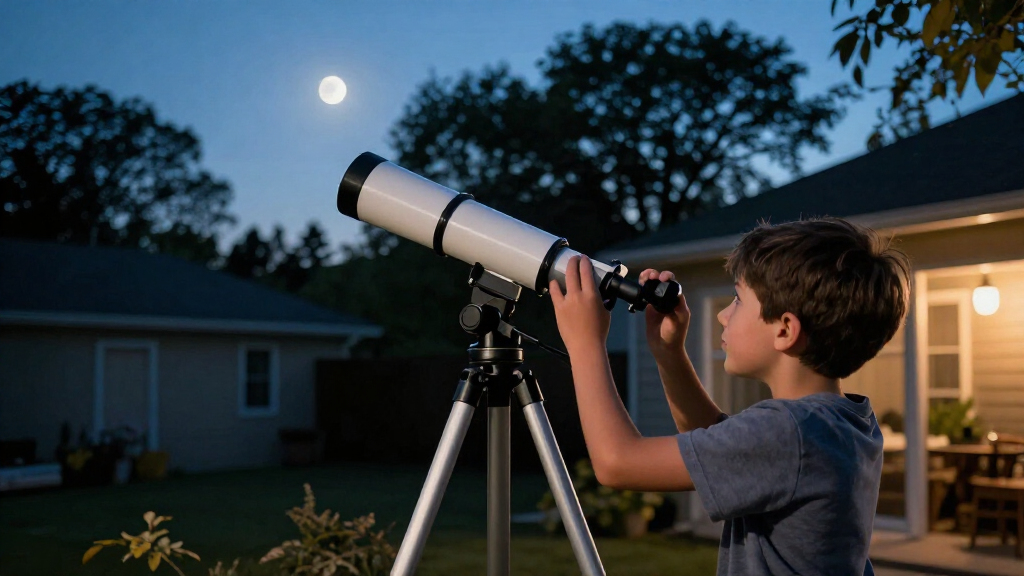
I compared these 15 beginner astronomy telescopes by the things that shape a first observing experience: aperture, optical design, mount stability, setup demands, portability, and the usefulness of included accessories. Aperture matters because it affects how much light a scope gathers, but it does not guarantee a satisfying view if the tripod wobbles or the controls are difficult to use. I also separated child-oriented lunar kits from more general-purpose scopes rather than treating their different goals as a flaw.
The ranking favors a useful balance of capability and approachability, not the longest accessory list or biggest magnification claim. Models with 114mm apertures rank highly for their light-gathering potential, while simpler refractors earn consideration for lower-maintenance setup and easier handling. Phone adapters and travel accessories count as useful extras, but they cannot compensate for shaky support, challenging alignment, or limited aperture.
| beginner astronomy telescope | Mount | Telescope type |
|---|---|---|
| Educational Insights Nancy B’s | Altazimuth | — |
| Koolpte Kids Telescope with 50 | Altazimuth | — |
| Hawkko Portable Refractor Tele | — | Refractor |
| Gskyer 70mm Refractor Telescop | — | Refractor |
| Vilupvie 70mm Aperture | — | Refractor |
| Barska Starwatcher 114mm Refle | Equatorial | Reflector |
| 70mm Refractor Telescope with | Altazimuth | — |
| NASA Lunar Telescope for Kids | Equatorial | — |
| Carson Red Planet 35–78x 76mm | Altazimuth U-mount with slow-motion controls | Newtonian reflector |
| ToyerBee 70mm Refractor Telesc | — | — |
| 90mm Refractor Telescope with | Altazimuth | — |
| National Geographic NT114CF 11 | Manual alt-azimuth | — |
| 70mm Refractor Telescope for B | Altazimuth | Refractor |
| Dianfan 80mm 500mm Portable Re | Altazimuth | Refractor |
| UncleHu 80mm FMC Refractor Tel | Altazimuth | Refractor |
Factors to Consider When Choosing Beginner Astronomy Telescopes
Choosing a first scope is less about chasing maximum magnification and more about matching the instrument to where and how you will use it. These broader questions can help narrow the field before you compare individual models.
Choose Aperture for the Objects You Want to See
Aperture controls light gathering, which shapes how much detail and how many dimmer objects a telescope can show. A 70mm refractor is a practical starting size for the Moon and bright targets, while a 90mm refractor or 114mm reflector gives more room to explore. A larger opening does not make every view sharp: optical quality, atmospheric conditions, and steady focusing matter too. Beginners often overvalue advertised magnification, even though pushing power too high can make an image dim and blurry. Decide whether lunar viewing is enough or whether you want to pursue planets and brighter deep-sky objects before paying for extra aperture. If you expect to carry the scope often, balance that added capability against its size and setup demands.
Match the Optical Design to Your Patience and Maintenance
Refractors are generally low-maintenance because their lenses stay aligned inside a closed tube, which can suit casual observing and family use. Reflectors can offer more aperture for their size, but their mirrors may need alignment, a process called collimation. That does not make a reflector a poor first telescope; it means the owner should be comfortable learning a basic setup task. Refractors can show color fringing around bright objects, while reflectors avoid that particular issue but may require more care. Do not choose based on design labels alone: ask whether you prefer simpler upkeep or greater aperture per compact tube. For a shared household scope, the person who will set it up most often should guide that choice.
Treat the Mount as Part of the Telescope
A stable mount can matter more than an extra eyepiece because vibration makes focusing and tracking frustrating. Lightweight tripods are easier to carry, but they can shake when touched or in a breeze. An equatorial mount can help follow an object across the sky once aligned, yet its axes and setup may feel less intuitive to a beginner than a simple up-down, left-right arrangement. Before choosing a scope, consider whether you will observe from a sheltered patio, a dark-sky site, or a cramped balcony. A scope that is quick to aim may get used more often than a more capable model that takes longer to set up. Keep magnification ambitions realistic, since higher power makes mount movement more visible.
Plan for Where You Will Observe
Portability determines whether a telescope fits your routine, not just whether its tube is technically compact. A short refractor can be easier to store and carry, while a tripod, accessories, and a larger reflector add bulk beyond the optical tube. City observers may see the Moon and planets clearly but have limited views of faint objects because of light pollution; extra aperture cannot remove that sky glow. If you will travel to darker locations, check how the entire kit packs and whether its parts are easy to carry safely. At home, a model that can stay assembled may be more convenient than one that must be packed away after every session. Think about storage space and the distance from the door to your observing spot before choosing a size.
Prioritize a Useful First Eyepiece Set Over Big Magnification Claims
Eyepieces determine magnification when used with the telescope’s focal length, but the largest claimed number is rarely the best starting point. Begin with lower power for finding and centering objects, then increase magnification when the view remains clear and steady. Cheap or poorly matched accessories can make an otherwise capable telescope harder to use, so check whether the included eyepieces provide practical viewing steps. A finder scope or red-dot finder can help locate targets, but it needs to be aligned with the main tube before observing. Phone adapters are mainly for casual images of bright targets and can be fiddly; they do not replace a camera setup designed for astrophotography. Buyers should favor easy target finding and comfortable viewing over a long accessory list.
Set Expectations for Targets and Learning Time
The Moon is the easiest rewarding first target, but a beginner scope can also show bright planets and selected star clusters under suitable conditions. Galaxies and nebulae usually look much fainter and less colorful through an eyepiece than in processed photographs. Learning to focus, align a finder, and track an object takes practice, so a child-focused lunar kit may be a better fit when the goal is a guided first look rather than broad exploration. For a curious adult or older child, a more capable general-purpose scope can support a longer learning path. Check whether the buyer wants quick, shared viewing or is willing to learn setup and sky finding. That distinction can matter more than a small difference in aperture.
Frequently Asked Questions
Is a 70mm telescope enough for a first astronomy telescope?
A 70mm telescope can be enough for a first scope if your main goals are the Moon, bright planets, and learning basic aiming and focusing. Its smaller aperture limits light gathering compared with the 90mm refractor and 114mm reflectors in this roundup. That difference matters more when you want to explore dimmer targets or see finer detail. A 70mm refractor can still be a sensible choice when easy handling and simple upkeep are higher priorities. Choose it for a manageable start, not because a high magnification claim promises views like professional images.
Should I choose a 114mm reflector or a 90mm refractor?
Choose the 114mm reflector for greater light-gathering potential and the 90mm refractor if you prefer a lens-based design with less routine alignment work. The reflector’s larger aperture can help with dimmer targets, but it may involve collimation and a more involved setup, especially on an equatorial mount. The refractor is a more direct fit for someone who values straightforward maintenance, though it gathers less light. Neither choice automatically guarantees a sharp view if the mount is unstable or the observing conditions are poor. Your tolerance for setup tasks and the objects you want to pursue should decide the tradeoff.
Can a beginner telescope take good pictures with a phone adapter?
A phone adapter can capture casual images of bright targets, especially the Moon, but it is not a shortcut to detailed astrophotography. Aligning the phone camera with the eyepiece can take patience, and small movements may spoil a shot. The Moon is a much more forgiving subject than faint galaxies or nebulae, which need longer exposures and more specialized equipment. For visual observing, a phone mount may add setup steps without improving what you see through the eyepiece. Treat it as an optional accessory rather than a deciding feature when comparing scopes.
Are child-focused Moon telescopes a good choice for an adult beginner?
A child-focused lunar telescope can suit an adult if the goal is simple Moon viewing and an approachable first activity. These models are generally less suited to buyers who want wider observing flexibility or a clear upgrade path to dimmer targets. Adult beginners interested in learning the sky may get more lasting use from a general-purpose 70–114mm telescope with a suitable finder and mount. Think about who will operate the scope and whether the observing goal is a quick shared activity or ongoing exploration. A child-friendly label does not by itself indicate poor optics, but it can signal a narrower intended use.
What should I upgrade first if my beginner telescope feels difficult to use?
Start by improving setup and stability before buying higher-magnification eyepieces. Check that the finder is aligned, the tripod is firm, and the telescope is focused on a bright, easy target such as the Moon. If vibration remains a problem, a steadier support or a sheltered observing spot may help more than additional optical accessories. If finding objects is the main difficulty, practice with a simple sky map and use the lowest-power eyepiece first. Upgrades should address the specific problem you face rather than add features that make setup more complicated.
Conclusion
For the best overall balance, choose the National Geographic NT114CF 114mm Reflector if you want larger aperture and are willing to learn its setup. The best value direction is a straightforward 70mm refractor such as the Gskyer when portability and a simple first experience matter more than maximum light gathering. For the easiest beginner experience, consider a low-maintenance refractor; families focused on guided Moon viewing may prefer the Nancy B’s MoonScope or NASA Lunar Telescope. The best premium-style capability in this lineup comes from the larger-aperture 114mm models, while the 90mm refractor suits buyers seeking a middle ground between compact 70mm scopes and reflectors. For phone snapshots, choose a model with an adapter only after confirming that its optics and mount fit your observing needs.