For most students, I recommend the Smartivity DIY Solar System Kit as the best overall pick because its gear-driven planets make orbital motion part of the lesson, not just decoration. The AstriFact True-Scale Solar System Model is a stronger fit for students who need to grasp relative distances, while the National Geographic Glow-in-the-Dark Solar System Model adds a memorable display feature. The main tradeoff is between hands-on craft kits that invite painting and customization, and moving or scale-focused models that teach a more specific concept. Age, adult help, workspace, and whether the finished model must travel to school all affect the right choice. Continue reading for a comparison of all 14 solar system model kits for students and guidance on matching one to a project.

Prime made for students and young adults
- Fast, free delivery for dorm and study essentials
- Prime Video and Amazon Music included
- Member-only deals
Key Takeaways
- The Smartivity gear-driven model leads for interactive learning: it demonstrates planetary movement, while most foam-ball kits prioritize building and display.
- AstriFact fills a different educational role: its stated 1:2,000,000,000 scale helps teach distance and proportion, but that scale-focused approach is less like a conventional painted classroom diorama.
- Foam-ball kits vary most by included craft supplies: the 48-piece option lists multiple ball sizes, paints, brushes, and flags, while other sets trade supply detail for a display box or decorative ornaments.
- Glow-in-the-dark models prioritize presentation: National Geographic and 4M offer a nighttime display angle, but that feature does not replace a moving mechanism or a lesson about orbital scale.
- The best kit depends on the assignment: choose a Sun-Earth-Moon model for nearby orbital relationships, a full-planet set for a broad solar-system display, and a projector or planetarium-style kit when presentation matters.
| Science Can Talking Solar System Model Kit and Planetarium Projector for Kids |  | Best for Younger Beginners | Brand: Science Can | Model number: 1204732021es0001 | Age range: 36 months to 12 years | VIEW LATEST PRICE | See Our Full Breakdown |
| 48PCS Solar System Model Foam Ball Kit with 10 Sizes Polystyrene Spheres, Bamboo Sticks, Toothpick Flags, 12 Color Pigments, Brushes, and Paint Tray Palette for School Science Projects |  | Best for Scale Comparisons | Foam balls: 12 polystyrene pieces | Foam ball size range: 1.4 inches to 4.4 inches | Foam rings: 2 polystyrene rings; 4-inch outer diameter and 2.8-inch inner diameter | VIEW LATEST PRICE | See Our Full Breakdown |
| 51-Piece Solar System Foam Model Craft Kit |  | Best for Older Student Presentations | Brand: PPXMEEUDC | Kit pieces: 51 | Foam balls: 22 in multiple sizes | VIEW LATEST PRICE | See Our Full Breakdown |
| 64-Piece Solar System Model Craft Kit for Kids |  | Best for Elementary Classroom Crafting | Brand: wookidel | Model: WK0017 | Set size: 64 pieces | VIEW LATEST PRICE | See Our Full Breakdown |
| DIY 3D Solar System Foam Model Kit |  | Best for Decorative Customization | Brand: PPXMEEUDC | Model number: PiPi | Foam balls: 14 in various sizes | VIEW LATEST PRICE | See Our Full Breakdown |
| AstriFact True-Scale Solar System Model, 1:2,000,000,000 Scale |  | Best for Scale and Planet Recognition | Brand: AstriFact | Scale: 1:2,000,000,000 | Included components: Sun, 8 planets, 2 Moons, Solar System manual, precision tweezers, gift card | VIEW LATEST PRICE | See Our Full Breakdown |
| Solar System Model Kit with Foam Balls, Paints, and Astronaut Ornaments |  | Best for Wall-Hanging School Projects | Brand: PPXMEEUDC | Piece count: 35 | Included components: Felt background plate, 14 foam balls, 4 foam stars, 2 paint brushes, 12 color pigments, palette, adhesive stick dot, label sticker, 4 self-adhesive hooks, instruction manual, 3 astronaut ornaments | VIEW LATEST PRICE | See Our Full Breakdown |
| Sun, Earth, and Moon Orbital Model Planetarium Kit | 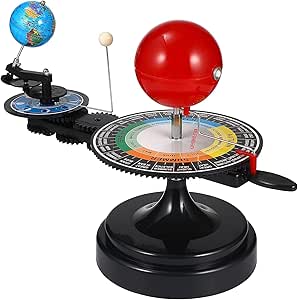 | Best for Demonstrating Orbits and Eclipses | Brand: HAOXIN | Material: Plastic | Dimensions: Approximately 38 × 20 × 28 cm (15.20 × 7.87 × 11.02 in) | VIEW LATEST PRICE | See Our Full Breakdown |
| Little Jupiter Nine Planets DIY Solar System Model Kit for Kids Ages 8–12 |  | Best for Multi-Activity Learning | Brand: Little Jupiter | Recommended age: 8–12 years | Included components: Wood model, puzzle, fact cards, paint, brushes, Styrofoam balls | VIEW LATEST PRICE | See Our Full Breakdown |
| Pllieay 3D Solar System Model Craft Kit with Display Box |  | Best for a Self-Contained Display Project | Brand: Pllieay | Model: T-044F | Recommended age: Over 8 years | VIEW LATEST PRICE | See Our Full Breakdown |
| Smartivity DIY Solar System Kit with Gear-Driven Planet Model |  | Best for Learning How Planetary Motion Works | Recommended age: 8–14 years | Educational focus: Astronomy, STEM | Material: Engineered wood (MDF) | VIEW LATEST PRICE | See Our Full Breakdown |
| National Geographic Glow-in-the-Dark Solar System Model for Kids (Ages 8-12) |  | Best for a Movable, Paintable Display | Age range: 8 years and up | Educational objectives: Construction skills, creative skills, hand-eye coordination, imagination development, problem-solving skills | Material: Plastic | VIEW LATEST PRICE | See Our Full Breakdown |
| Pllieay Solar System Model Kit for Kids |  | Best for a Wall-Mounted Classroom Project | Recommended age: 8–17 years | Number of pieces: 63 | Educational objective: STEM | VIEW LATEST PRICE | See Our Full Breakdown |
| 4M Solar System Planetarium DIY Glow-in-the-Dark Model Kit |  | Best for a Hanging Glow-in-the-Dark Project | Recommended age: 8 years and up | Educational focus: STEM, astronomy, earth science | Included components: Planets, stencils, glow paint pen, rods, string, wall chart, 10 sets of quiz questions, assembly instructions | VIEW LATEST PRICE | See Our Full Breakdown |
| solar system model kits for student | Recommended age | Brand | Included components | Dimensions |
|---|---|---|---|---|
| Science Can Talking Solar Syst | — | Science Can | Manual, 8 planet axes, planet stickers, projector, and 3 slides | — |
| 48PCS Solar System Model Foam | 0–8 years | — | — | — |
| 51-Piece Solar System Foam Mod | 16 years and up | PPXMEEUDC | — | — |
| 64-Piece Solar System Model Cr | 6–12 years | wookidel | Foam discs and balls, Sun, foam stars, bamboo sticks, flag toothpicks, paints, brushes, palette, and instructions | 10.24 x 8.66 x 3.62 inches |
| DIY 3D Solar System Foam Model | 16 years and up | PPXMEEUDC | — | — |
| AstriFact True-Scale Solar Sys | — | AstriFact | Sun, 8 planets, 2 Moons, Solar System manual, precision tweezers, gift card | 10.3 x 6.3 x 3.6 inches |
| Solar System Model Kit with Fo | 8–10 years | PPXMEEUDC | Felt background plate, 14 foam balls, 4 foam stars, 2 paint brushes, 12 color pigments, palette, adhesive stick dot, label sticker, 4 self-adhesive hooks, instruction manual, 3 astronaut ornaments | — |
| Sun | 6 years and up | HAOXIN | — | Approximately 38 × 20 × 28 cm (15.20 × 7.87 × 11.02 in) |
| Little Jupiter Nine Planets DI | 8–12 years | Little Jupiter | Wood model, puzzle, fact cards, paint, brushes, Styrofoam balls | 12.6 x 2.2 x 6.5 inches |
| Pllieay 3D Solar System Model | Over 8 years | Pllieay | — | 13.12 x 6.69 x 4.72 inches |
| Smartivity DIY Solar System Ki | 8–14 years | — | Solar system model parts, 9 planet fact cards, instructions, rubber bands, spinner | 12.91 x 11.61 x 1.97 inches |
| National Geographic Glow-in-th | — | — | Paint, brushes, decals, fact poster, model components | 7.09 x 2.36 x 12.01 inches |
| Pllieay Solar System Model Kit | 8–17 years | — | Felt background plate, 9 foam hemispheres, 4 foam stars, 4 self-adhesive hooks, adhesive stick dots, label sticker, 2 paintbrushes, 12 color pigments, palette, instruction manual | 12.99 x 8.46 x 3.34 inches |
| 4M Solar System Planetarium DI | 8 years and up | — | Planets, stencils, glow paint pen, rods, string, wall chart, 10 sets of quiz questions, assembly instructions | — |
More Details on Our Top Picks
Science Can Talking Solar System Model Kit and Planetarium Projector for Kids
I’d pick this for a younger student who is more likely to engage with a space activity that includes both a model and something to explore after assembly. The eight-planet kit is paired with a projector showing 24 space images, while bilingual facts give families and classrooms an English-and-Spanish learning option. That makes it a more guided introduction than the paint-and-assemble kits, such as the wookidel 64-Piece Solar System Model Craft Kit, which puts more emphasis on making a display by hand. The projector can also serve as a night light or flashlight, adding use beyond the lesson. The tradeoff is that it offers less open-ended craft work, and the projector needs three AA batteries that are not included. I’d choose it for engagement, not for a detailed scale model.
Pros:- Combines an eight-planet model with a projector, giving students more than one way to engage with the subject.
- Includes 24 color space images across three projection slides.
- Educational facts are provided in English and Spanish.
- Projector dome can also function as a night light or flashlight.
Cons:- Projector requires three AA batteries, which are not included.
- Offers less painting and customization than the foam-ball craft kits.
- Projection and planetarium features may be less useful for students seeking a physical display project.
Best for: Younger students and bilingual households seeking a guided astronomy activity with a projector as well as a planet model.
Not ideal for: Students who need a hands-on painting project or a scale-focused classroom display; batteries must also be supplied separately.
- Brand:Science Can
- Model number:1204732021es0001
- Age range:36 months to 12 years
- Planets:8
- Projection slides:3
- Images:24
- Languages:English and Spanish
- Power:3 AA batteries, not included
- Included components:Manual, 8 planet axes, planet stickers, projector, and 3 slides
Our verdict“Choose this for a younger learner who benefits from bilingual facts and projected space images more than extended model-making.”
48PCS Solar System Model Foam Ball Kit with 10 Sizes Polystyrene Spheres, Bamboo Sticks, Toothpick Flags, 12 Color Pigments, Brushes, and Paint Tray Palette for School Science Projects
Among these five picks, this kit gives students the clearest starting point for comparing the relative sizes of solar-system bodies: its 12 foam balls range from a 4.4-inch Sun to a 1.4-inch Pluto. The included paints and flags turn those size differences into a labeled classroom display, while the bamboo sticks assemble without glue. That makes it a more size-focused choice than the DIY 3D Solar System Foam Model Kit, whose supplied details emphasize decorating and display accessories rather than a stated size range. Still, the balls represent the Sun, planets, and Pluto rather than providing a true scale model of planetary distances, so students may need a separate explanation of spacing. Painting can also be messy, and the sticks call for adult supervision around younger children. I’d favor it for a guided school project over a low-mess activity.
Pros:- Foam balls span 1.4 to 4.4 inches, making relative body sizes visible in a display.
- Includes 12 paint colors, two brushes, a palette, and toothpick flags for customization and labeling.
- Bamboo-stick assembly does not require glue.
- Includes pieces for the Sun, planets, and Pluto.
Cons:- The size range does not make the assembled model a true scale representation of planetary distances.
- Painting can create a cleanup burden in classrooms or at home.
- Bamboo sticks are small and sharp enough to require adult supervision, especially for children under four.
Best for: Teachers or families helping elementary-age students build a labeled model that highlights differences in the sizes of the Sun, planets, and Pluto.
Not ideal for: Students who need a true distance-and-size scale model, or groups that cannot manage paint and adult supervision around bamboo sticks.
- Foam balls:12 polystyrene pieces
- Foam ball size range:1.4 inches to 4.4 inches
- Foam rings:2 polystyrene rings; 4-inch outer diameter and 2.8-inch inner diameter
- Bamboo sticks:15; 7.8 inches long
- Toothpick flags:15 paper flags on bamboo sticks
- Paint:12 colors, 5 ml each
- Brushes and palette:2 synthetic nylon brushes and 1 plastic palette
- Recommended age:0–8 years
- Total pieces:48
Our verdict“Choose this kit when visible size differences and a labeled painted display matter more than exact scale or a mess-free activity.”
51-Piece Solar System Foam Model Craft Kit
I’d reserve this kit for older students who want to build and present a customized project rather than follow a ready-made classroom activity. Its 22 foam balls, 50 bamboo sticks, five glitter powders, base plate, and display box give a maker room to decorate and arrange a substantial display. The included base and box make it better suited to presenting finished work than the 48PCS Solar System Model Foam Ball Kit, whose supplied components focus more on painting, flags, and size variation. That extra craft range comes with a practical cost: the listing recommends it for ages 16 and up, and the project requires painting and assembly. It is also not a ready-to-teach astronomy model by itself; students may need guidance to label bodies and explain their arrangement. I’d skip it for younger students or classes needing quick, low-prep construction.
Pros:- Includes 22 foam balls in multiple sizes for creating a varied display.
- Five glitter powders add decoration options beyond the standard paint-and-brush kit.
- Hard base plate and display box support presenting or storing the finished project.
- Supplies include 50 bamboo sticks and 30 toothpick flags for assembly and labeling.
Cons:- Recommended age of 16 years and up makes it a poor match for younger student groups.
- Painting, assembly, and decoration require substantial hands-on work.
- The supplied craft components do not by themselves provide a detailed astronomy lesson or scale guidance.
Best for: Older students, science-fair participants, or classroom makers who want a customizable solar-system display with a base and presentation box.
Not ideal for: Younger children or teachers seeking a quick, low-prep lesson; the recommended age is 16 years and up and the project requires hands-on crafting.
- Brand:PPXMEEUDC
- Kit pieces:51
- Foam balls:22 in multiple sizes
- Paint supplies:12 color pigments and 2 brushes
- Bamboo sticks:50
- Toothpick flags:30
- Glitter powders:5
- Display pieces:Hard base plate and display box
- Recommended age:16 years and up
Our verdict“Choose this for an older student who wants a presentation-ready craft project and can handle its assembly and decoration demands.”
64-Piece Solar System Model Craft Kit for Kids
For a classroom or family activity with elementary-age children, I’d give this kit the edge over the older-student-oriented 51-Piece Solar System Foam Model Craft Kit. The stated 6–12 age range, 12 acrylic paint colors, brushes, palette, and instructions make it a more age-targeted craft project, while foam discs, balls, a Sun, and stars offer several shapes to decorate. Those supplies can help students turn a basic planet lesson into a finished piece of work, but this is still a craft kit rather than a moving or scale-accurate model. Assembly and painting take time, and the product’s description includes conflicting age language, so I’d follow the listed 6–12 range rather than assume it suits preschoolers. Compared with the projector-based Science Can Talking Solar System Model Kit, it offers more making and less guided astronomy content.
Pros:- Includes paints, brushes, a palette, and instructions for a complete craft activity.
- Mix of foam discs, balls, a Sun, and stars gives students several shapes to decorate.
- Listed age range of 6–12 is a clearer fit for elementary students than the age-16-and-up craft kits.
- Compact package dimensions can help with classroom storage and distribution.
Cons:- Requires assembly and painting, so it is not a ready-to-use model.
- Age guidance is inconsistent in the product description; the listed range is 6–12 despite other text referring to ages 3–5.
- The supplied components do not establish a true scale or demonstrate planetary motion.
Best for: Elementary teachers and caregivers planning a supervised painting-and-assembly activity for students aged 6–12.
Not ideal for: Preschool groups, students seeking an interactive projector or moving model, and buyers who need a scale-accurate astronomy display.
- Brand:wookidel
- Model:WK0017
- Set size:64 pieces
- Material:Polystyrene foam
- Paint:12 acrylic colors
- Included components:Foam discs and balls, Sun, foam stars, bamboo sticks, flag toothpicks, paints, brushes, palette, and instructions
- Recommended age:6–12 years
- Dimensions:10.24 x 8.66 x 3.62 inches
- Educational objective:Hand-eye coordination
Our verdict“Choose this for an elementary-age group that wants an instructed painting project, not a moving or scale-accurate solar system model.”
DIY 3D Solar System Foam Model Kit
This kit suits students who want to personalize a solar-system display more than they want a structured lesson. Its 12 paint colors and five glitter powders give decorators plenty to work with, while labels, elastic string, adhesive dots, and a display box add ways to finish and present the project. Compared with the 64-Piece Solar System Model Craft Kit for Kids, the appeal here is the broader set of decorative extras, not a clearly stated classroom age range: this one is recommended for ages 16 and up. The available details list 14 foam balls but do not give their sizes or a specific model scale, so I would not choose it for teaching planetary proportions. It also requires hands-on painting and assembly. For younger students, the Science Can projector kit is the more guided option; this is better for older makers who value creative control.
Pros:- Includes 14 foam balls in various sizes for building a three-dimensional display.
- Five glitter powders and 12 pigments offer varied decoration options.
- Labels, elastic string, adhesive dots, and a display box support finishing and presentation.
- Can be used for home, classroom, or science-fair crafting.
Cons:- Recommended age is 16 years and up, limiting suitability for younger students.
- Painting and assembly require hands-on time and supervision.
- No specific ball dimensions or model scale are provided, limiting its value for teaching proportions.
Best for: Older students or adult-led project groups who want a customizable 3D display with decorative supplies and a presentation box.
Not ideal for: Younger children, students learning planetary scale, or anyone who wants a guided, ready-to-use astronomy model rather than a craft project.
- Brand:PPXMEEUDC
- Model number:PiPi
- Foam balls:14 in various sizes
- Paint supplies:12 color pigments and 2 brushes
- Glitter powders:5
- Other included items:1 palette, 1 adhesive stick dot, 2 label stickers, and elastic string
- Display:Display box included
- Recommended age:16 years and up
- Occasion:Party
Our verdict“Choose this for an older student who values decorative freedom and a display box more than a guided lesson or scale accuracy.”
AstriFact True-Scale Solar System Model, 1:2,000,000,000 Scale
I’d choose this set for students who need a compact model that makes planet size comparisons the focus. Its stated 1:2,000,000,000 scale gives the Sun and eight planets a consistent reference, while photo-inspired surface details support observation and discussion. The included manual and tweezers help with learning and handling the smaller pieces, and the two Moons add another useful object to compare. Unlike the HAOXIN orbital model, this is a display set rather than a moving demonstration: it won’t show seasons, eclipses, or lunar phases in action. Its small 10.3-inch footprint suits a desk or classroom shelf, but the miniature parts are less convenient for younger children or hands-on group activities. I’d pick it for visual study, not motion-based lessons.
Pros:- Represents the Sun and eight planets at a stated consistent scale.
- Photo-inspired colors and surface details support visual comparison.
- Includes a manual, two Moons, and tweezers for study and handling.
- Compact dimensions work well on a desk or shelf.
Cons:- Miniature planets may be difficult to handle without tweezers.
- Does not demonstrate planetary movement, seasons, or eclipses.
- Display-focused format offers less building activity than the Little Jupiter kit.
Best for: Students aged 10 and up who want a compact, consistently scaled planet display for observation and classroom discussion.
Not ideal for: Younger students or groups needing large, easy-to-handle parts or a model that demonstrates orbital motion.
- Brand:AstriFact
- Scale:1:2,000,000,000
- Included components:Sun, 8 planets, 2 Moons, Solar System manual, precision tweezers, gift card
- Age range:10 years and up
- Educational objectives:Observation skills, STEM, spatial awareness, spatial reasoning
- Dimensions:10.3 x 6.3 x 3.6 inches
- Manufacturer:StarPremium Tech
Our verdict“Choose the AstriFact set for compact, scale-focused planet study, but choose HAOXIN if a moving demonstration matters more.”
Solar System Model Kit with Foam Balls, Paints, and Astronaut Ornaments
For a student project that needs to become a display, this 35-piece kit combines painting and assembly with a wall-hanging format. The foam balls, pigments, brushes, felt plate, labels, and astronaut ornaments give children supplies to make a customized solar system rather than simply unpacking a finished model. Its illustrated instructions introduce planetary sizes and positions, which makes the activity more purposeful than decoration alone. Compared with the Pllieay 3D display-box kit, this one is designed to hang on a wall instead of sitting inside a freestanding scene; that can save shelf space, though the finished piece may be more exposed to bumps. The tradeoff is the hands-on work: students must paint and assemble it, and the foam construction calls for gentle handling. I’d favor it for a supervised home or classroom project.
Pros:- Includes foam balls, paints, brushes, and display materials for a complete craft activity.
- Instructions introduce planetary sizes and positions.
- Wall-hanging format uses less shelf space than a display-box model.
- Three astronaut ornaments allow added personalization.
Cons:- Painting and assembly take time and require supervision for some students.
- Foam parts and the finished wall display may be delicate.
- Does not demonstrate orbital motion or planetary processes.
Best for: Students aged 8–10 who need a guided, paint-and-build solar system project that can be displayed on a wall.
Not ideal for: Buyers seeking a ready-to-display model, a durable object for frequent handling, or a detailed orbital demonstration.
- Brand:PPXMEEUDC
- Piece count:35
- Included components:Felt background plate, 14 foam balls, 4 foam stars, 2 paint brushes, 12 color pigments, palette, adhesive stick dot, label sticker, 4 self-adhesive hooks, instruction manual, 3 astronaut ornaments
- Recommended age:8–10 years
- Minimum age:96 months
- Educational objective:Exploratory skills
- Display method:Wall hanging
Our verdict“Pick this kit for a guided wall-display craft project, and choose the Pllieay box kit if a protected tabletop scene is a better fit.”
Sun, Earth, and Moon Orbital Model Planetarium Kit
I’d rank this kit for lessons where students need to see how motions relate to familiar events. Its gear-driven Sun, Earth, and Moon model illustrates day and night, seasons, moon phases, and solar and lunar eclipses—ideas that a static set like the AstriFact True-Scale model can show only through discussion. The base adds months, seasons, and traditional Chinese solar terms, giving teachers another way to connect the model to calendars. It is also described for children aged six and up, making it accessible to younger learners than several paint-and-build options here. The tradeoff is scope: it focuses on three bodies and their relationships rather than displaying all eight planets. Assembly and careful gear alignment may also require adult help, and its plastic construction is less craft-oriented than the Little Jupiter kit.
Pros:- Mechanism demonstrates day and night, seasons, moon phases, and eclipses.
- Base includes months, seasons, and traditional Chinese solar terms.
- Designed for educational assembly by children aged six and up.
- Moving parts make orbital relationships more concrete than a static display.
Cons:- Covers the Sun, Earth, and Moon rather than all eight planets.
- Assembly and gear alignment may need adult assistance.
- Plastic construction offers less of a painting or model-making experience.
Best for: Teachers and families who want younger students to explore Earth–Moon–Sun motion, seasons, phases, and eclipses with a working model.
Not ideal for: Students whose assignment requires a display of all eight planets or a painting and crafting activity.
- Brand:HAOXIN
- Material:Plastic
- Dimensions:Approximately 38 × 20 × 28 cm (15.20 × 7.87 × 11.02 in)
- Recommended age:6 years and up
- Educational objective:Exploratory skills
- Subjects:Geography and education
- Model number:Solarball
- Included quantity:1 kit
Our verdict“Choose HAOXIN for motion-based lessons about Earth, the Moon, and the Sun; choose AstriFact for a compact display of the full planetary lineup.”
Little Jupiter Nine Planets DIY Solar System Model Kit for Kids Ages 8–12
This is the strongest choice here for students who learn well by switching between activities. The kit combines a wood model, painting, puzzle assembly, and fact cards, so a project can extend beyond putting planets in place. Its listed planets are Mercury through Neptune, alongside the Sun; despite the “Nine Planets” title, the product data identifies eight planets, so I’d treat it as a Sun-and-eight-planets kit. The stated assembly time of about one to two hours gives families a useful sense of the project commitment. Compared with the PPXMEEUDC wall-hanging kit, Little Jupiter adds a puzzle and fact cards, but it does not list the same wall-display format. Painting and assembly need time and hands-on attention, so it suits students ready for a project rather than someone looking for a quick visual aid.
Pros:- Combines model building, painting, and puzzle assembly in one kit.
- Fact cards support learning beyond the construction activity.
- Lists the Sun and all eight planets.
- Stated assembly time helps families plan the project.
Cons:- Painting and assembly require a sustained hands-on session.
- The title says “Nine Planets,” while the listed planets are the eight recognized planets plus the Sun.
- Does not provide a gear-driven motion demonstration like the HAOXIN kit.
Best for: Students aged 8–12 who want a longer science activity combining model building, painting, a puzzle, and planet facts.
Not ideal for: Buyers who need a ready-made model, a moving orbital demonstration, or a project with minimal setup and cleanup.
- Brand:Little Jupiter
- Recommended age:8–12 years
- Included components:Wood model, puzzle, fact cards, paint, brushes, Styrofoam balls
- Planets included:Mercury, Venus, Earth, Mars, Jupiter, Saturn, Uranus, Neptune
- Assembly time:Approximately 1–2 hours
- Dimensions:12.6 x 2.2 x 6.5 inches
- Weight:1.1 pounds
- Materials:Paper, wood
- Model number:LJ-036
Our verdict“Choose Little Jupiter for a varied, multi-step learning project, but pick HAOXIN if seeing orbital motion matters more than building and painting.”
Pllieay 3D Solar System Model Craft Kit with Display Box
The Pllieay kit makes the most sense when the finished school project needs its own presentation space. Students paint foam planets and arrange them in a starry-sky display box, creating a contained scene rather than the wall-hanging layout of the PPXMEEUDC kit. The listed supplies include pigments, brushes, labels, bamboo sticks, and plastic screws, giving the build a mix of painting and assembly steps. At 13.12 x 6.69 x 4.72 inches, the box offers a defined footprint for a desk or science-fair table. Compared with the Little Jupiter kit, this one emphasizes presentation in a box rather than adding a puzzle and fact cards. Its foam parts keep the project lightweight, but they may not withstand rough handling, and students still need to paint and assemble the model before it is ready to show.
Pros:- Starry-sky display box gives the finished model a defined presentation setting.
- Includes paints, brushes, and assembly supplies for a hands-on project.
- Lightweight foam parts are manageable for student crafting.
- Compact dimensions suit a desk or display table.
Cons:- Painting and assembly are required before display.
- Foam components may be less durable than solid materials.
- Does not include the puzzle and fact cards listed with the Little Jupiter kit.
Best for: Students over eight who need a paintable, freestanding solar system scene for a desk, classroom, or science-fair display.
Not ideal for: Buyers who want a durable model for frequent handling, a wall-mounted project, or a working demonstration of planetary motion.
- Brand:Pllieay
- Model:T-044F
- Recommended age:Over 8 years
- Material:Foam
- Theme:Space
- Dimensions:13.12 x 6.69 x 4.72 inches
- Components:1 display box, 13 foam balls, 4 foam stars, 2 adhesive stick dots, 2 label stickers, 2 paintbrushes, 12 color pigments, 1 palette, 1 string, 10 plastic screws, 3 bamboo sticks, 1 instruction manual
Our verdict“Choose Pllieay when a contained tabletop display is the priority, and choose the PPXMEEUDC kit for a wall-hanging project.”
Smartivity DIY Solar System Kit with Gear-Driven Planet Model
The Smartivity’s defining advantage is that students can turn a hand crank and watch all eight planets move around the Sun. That makes it a stronger pick for exploring motion and simple mechanics than the National Geographic Glow-in-the-Dark Solar System Model, whose movable arms let students arrange planets but don’t drive them together. Pre-colored wooden parts also avoid the painting step required by the National Geographic and 4M Planetarium kits, keeping the activity focused on assembly and operation. The included instructions connect the build with astronomy and mechanical STEM ideas, while fact cards and a spinner add activities beyond the model itself. The tradeoff is that students must assemble the gears, and the planets move only when someone turns the crank; it is not a powered demonstration.
Pros:- Hand-crank gear system moves all eight planets around the Sun.
- Instructions connect astronomy concepts with mechanical STEM learning.
- Pre-colored parts remove the need for painting.
- Fact cards and a spinner provide activities beyond assembly.
Cons:- Child-led assembly is required before the model can be used.
- Planet movement depends on someone turning the hand crank.
Best for: Students ages 8–14 who learn well by building and operating a mechanical model of planetary motion.
Not ideal for: Students who want a self-moving display or a paint-and-decorate craft project.
- Recommended age:8–14 years
- Educational focus:Astronomy, STEM
- Material:Engineered wood (MDF)
- Included components:Solar system model parts, 9 planet fact cards, instructions, rubber bands, spinner
- Dimensions:12.91 x 11.61 x 1.97 inches
- Weight:650 g
- Model number:SMRT1313
- Safety standards:ASTM F963-23 and CPSIA
Our verdict“Choose Smartivity if you want students to operate a gear-driven model and learn through motion rather than painting or decorating.”
National Geographic Glow-in-the-Dark Solar System Model for Kids (Ages 8-12)
This National Geographic kit suits students who want their project to become a customizable bedroom display. Its adjustable arms let them reposition the planets, and glow-in-the-dark paint adds a visual payoff after the build. Compared with the Smartivity DIY Solar System Kit, it offers more room for painting and arranging, but it does not use a crank to demonstrate all eight planets moving together. Paint, brushes, decals, and a fact poster are included, so students have supplies for both decorating and learning without sourcing extras. The compact model is easier to place than larger hanging projects such as the 4M Planetarium. Assembly and paintwork can call for adult help, though, and careful handling matters if students want to avoid a messy work surface.
Pros:- Glow-in-the-dark paint gives the finished model a low-light display feature.
- Adjustable arms allow students to rearrange planet positions.
- Paint, brushes, and decals are included for customizing the planets.
- A fact poster supports space learning alongside the craft activity.
Cons:- Assembly may require adult assistance for younger students.
- Painting can make the project messy without a prepared work area.
- The arms allow repositioning but do not demonstrate linked planetary motion.
Best for: Students ages 8–12 who want to paint and arrange a space-themed display as part of a school or home project.
Not ideal for: Students who need a gear-driven motion demonstration or prefer a project without paint and assembly.
- Age range:8 years and up
- Educational objectives:Construction skills, creative skills, hand-eye coordination, imagination development, problem-solving skills
- Material:Plastic
- Included components:Paint, brushes, decals, fact poster, model components
- Dimensions:7.09 x 2.36 x 12.01 inches
- Weight:0.3 kg
- Model number:NGSOLARSYS
- Sub-brand:National Geographic
Our verdict“Pick this kit for a paintable, rearrangeable display, but choose Smartivity instead if demonstrating connected planetary movement is the priority.”
Pllieay Solar System Model Kit for Kids
The Pllieay kit takes a different route from a freestanding planet model: students paint foam pieces and mount them against a felt backdrop that can hang on a wall. That format can suit a classroom or a student with limited desk space better than the assembled display from the National Geographic Glow-in-the-Dark Solar System Model. Its 63 pieces include paints, brushes, labels, and hooks, giving students materials to build and personalize the project. The tradeoff is that this is primarily a craft display, not a mechanism for showing planets orbiting; the Smartivity gear-driven model is a better match for hands-on demonstrations of motion. Painting and assembly also take time, and the foam-and-felt construction may not appeal to students looking for a sturdy, polished tabletop model.
Pros:- Felt background and hooks allow the completed project to hang on a wall.
- Paint, brushes, palette, stickers, and instructions are included.
- Hands-on painting and assembly support a student-led STEM craft project.
- Foam components keep the finished display light.
Cons:- Students must assemble and paint the model themselves.
- Foam and felt construction is less suited to buyers seeking a rigid, mechanical display.
- The wall-mounted format does not demonstrate planetary movement.
Best for: Students ages 8–17 making a painted solar system display for a classroom wall or a compact study area.
Not ideal for: Students who want moving planets, a freestanding model, or a build that avoids painting foam components.
- Recommended age:8–17 years
- Number of pieces:63
- Educational objective:STEM
- Materials:Foam, felt
- Included components:Felt background plate, 9 foam hemispheres, 4 foam stars, 4 self-adhesive hooks, adhesive stick dots, label sticker, 2 paintbrushes, 12 color pigments, palette, instruction manual
- Dimensions:12.99 x 8.46 x 3.34 inches
- Weight:0.4 kg
- Model:CR-001FO
Our verdict“Choose Pllieay for a paintable, space-saving wall project, not for a moving or freestanding solar system model.”
4M Solar System Planetarium DIY Glow-in-the-Dark Model Kit
The 4M Planetarium is the strongest fit here for students who want a hanging solar system display with learning materials built into the kit. It combines planets, rods, string, stencils, and glow paint, then adds a wall chart and quiz questions for follow-up study. Compared with the National Geographic Glow-in-the-Dark Solar System Model, this kit is designed as a mobile rather than a model with adjustable arms, so it suits overhead display better than frequent rearranging. It also asks students to paint and assemble the planets, unlike the ready-colored parts in the Smartivity gear-driven kit. The hands-on work can be rewarding for a craft-oriented student, but it involves more than simply positioning planets. Pluto is not included, and the hanging format may not suit every classroom setup.
Pros:- Glow paint and hanging components create a mobile-style display.
- Wall chart and quiz questions extend the activity beyond building.
- Stencils support planet painting and assembly.
- No batteries are required.
Cons:- Students must assemble and paint the planets.
- Pluto is not included.
- A hanging mobile is less convenient to rearrange than the National Geographic model’s adjustable arms.
Best for: Students ages 8 and up who want to paint a glow-in-the-dark solar system mobile and use a wall chart and quiz questions for study.
Not ideal for: Students who want Pluto included, adjustable planet positions, or a model that demonstrates orbiting through a crank or powered mechanism.
- Recommended age:8 years and up
- Educational focus:STEM, astronomy, earth science
- Included components:Planets, stencils, glow paint pen, rods, string, wall chart, 10 sets of quiz questions, assembly instructions
- Model size:16.5 x 16.5 inches
- Power:No batteries required
- Planets included:8; Pluto not included
- Model:3427
- Manufacturer warranty:1-year replacement
Our verdict“Choose the 4M kit for a glow-in-the-dark mobile with built-in study materials, but skip it if you need adjustable or mechanically moving planets.”
How We Picked
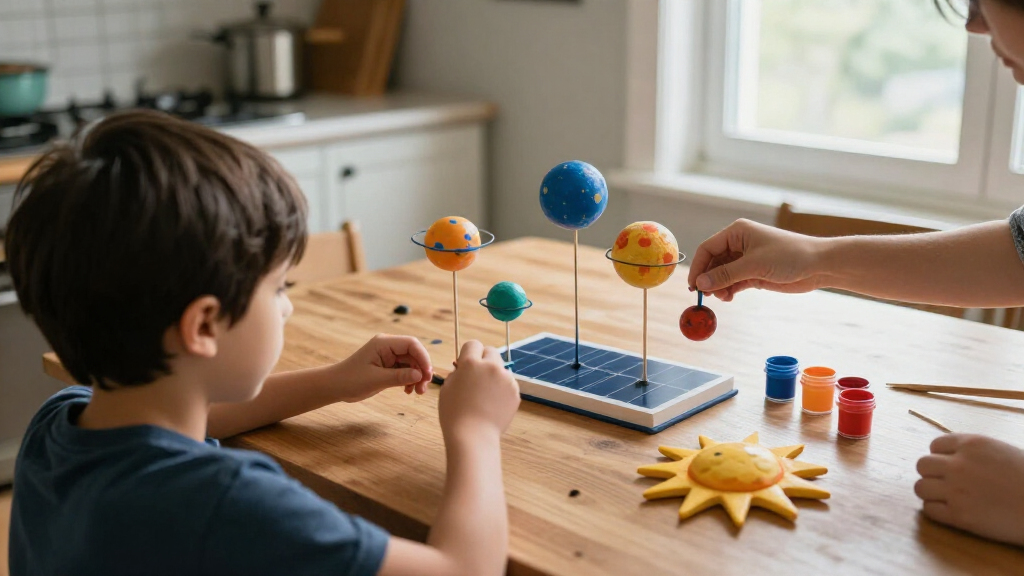
I ranked these kits by how well they serve a student’s actual school task: explaining a concept, assembling a model, presenting it clearly, or creating a display that can be kept afterward. I looked at the learning approach (moving parts, scale, projection, glow effects, or hands-on construction), the materials and tools named in each kit, the likely assembly demands, and how well the finished model suits classroom use. A feature earned more weight when it added a clear teaching purpose rather than decoration alone.
The ranking favors options with a distinct instructional advantage and a clear use case, which puts the gear-driven Smartivity model first and the scale-focused AstriFact model near the top. Craft sets rank according to the usefulness of their listed supplies and presentation format, not piece count alone. Kits aimed at one narrower concept or primarily at display remain useful picks, but I rank them below more versatile choices unless that specialty matches the assignment.
Factors to Consider When Choosing Solar System Model Kits For Students
Before choosing, I would start with the assignment rather than the product name. A student may need to show order, relative size, orbital motion, or the much larger distances between planets; one model format rarely teaches all four equally well.
Match the model to the learning objective
Ask what the student must explain aloud or show on a rubric. A static set of painted spheres makes planet order and appearance easy to present, but it may not show how objects move. A gear-driven model can illustrate motion, while a true-scale set addresses proportion and distance more directly. Sun-Earth-Moon models are useful for nearby orbital relationships, but they do not stand in for a full solar-system display. A common mistake is choosing the most elaborate kit before checking the assignment’s central concept.
Check the student’s age and building independence
Age labels can help, but the more useful question is which steps require steady hands, patience, or adult assistance. Painting, attaching small parts, and arranging planets may suit a student who enjoys a longer craft project; a younger child may need an adult to manage assembly and cleanup. Moving mechanisms add another layer of assembly and may need careful handling after completion. Check the listed age range and instructions when available, rather than assuming that a kit marked for children is fully independent. If the project has a fixed deadline, choose a build whose complexity fits the time available.
Look past piece count to usable supplies
A large piece count does not automatically mean a more complete classroom project. Check whether the kit names the materials needed to finish the model, such as paint, brushes, supports, flags, or a display base. If key supplies are not listed, the student may need extra materials from home or school. Also check whether the spheres are already colored or need painting, since that changes both work time and the chance of messy results. A well-matched set of tools can matter more than extra decorative components.
Plan for the finished model’s size and transport
Think about where the model will be built, stored, and presented. A wide hanging or orbit-style model may be easier to understand from multiple angles but harder to carry through school corridors. A display box can help keep a project together and reduce the risk of loose parts, while a free-standing craft model may need a stable base. Scale models can demand more room than their small planet spheres suggest if they represent distance accurately. Measure the intended display space and consider how the student will transport the model before choosing.
Treat special effects as a bonus, not the lesson
Glow features, planetarium projection, and talking elements can make a presentation more engaging, but they teach different things. A glow-in-the-dark finish helps a model stand out in a dim room; it does not explain orbital mechanics by itself. Projection can support a show-and-tell presentation, but it is a different experience from building a model with the student. If science learning is the priority, pair the effect with a clear explanation of what the model represents and what it simplifies. Pay extra attention to a special feature only when it serves the student’s assignment or keeps the student interested in the subject.
Know what a classroom model cannot show
Most student models simplify the solar system to make it buildable and easy to see. Planet sizes and distances are rarely represented together at a single practical scale, and a static arrangement can make orbits seem evenly spaced or fixed. This is not a flaw if the student can describe the simplification. Encourage them to label the planets and explain what the model leaves out, especially for projects about scale or motion. Choosing a kit with one clear teaching focus can make that explanation easier than expecting one craft model to cover every topic.
Frequently Asked Questions
Which type of kit is best when the assignment asks students to explain how planets move?
I would prioritize a model with a moving mechanism, such as a gear-driven design, rather than a static painted display. Movement gives the student something concrete to demonstrate while explaining that planets orbit the Sun. The student should still check whether the kit’s mechanism represents motion clearly and is manageable to assemble. For a project focused on the Moon’s orbit or Earth’s relationship to the Sun, a Sun-Earth-Moon model may be a better match than a full-planet craft set. A static kit can work if the student adds a diagram or explanation of motion.
Can a solar system model kit teach accurate planet distances?
Only a scale-focused model is designed to make distance a central part of the lesson, and even then the student should check what scale the kit represents. Many tabletop displays compress the gaps between planets so the model fits in a classroom or home. That makes them useful for showing order, but not for comparing real orbital distances. Ask the student to explain whether the model keeps size, distance, or both to scale. A model that states its scale can make that conversation more precise than an unlabeled craft display.
Should I choose a kit that needs painting or one that is ready to display?
Choose a painting kit when the student has time for a hands-on craft and the assignment values making or labeling the planets. Painting can help students personalize the project, but it adds setup, drying time, and the possibility of uneven finishes. A ready-to-display option reduces those steps and may suit a tight deadline or a student who wants to focus on presentation. Check whether paints and brushes are included before assuming a kit is ready to complete. The right choice depends more on the student’s available time and interest than on which format appears more elaborate.
Is a glow-in-the-dark kit a good choice for a science fair?
It can be a strong display choice if the student can also explain the science behind the arrangement. Glow effects help a project attract attention in a dim setting, but they do not show scale or orbital movement on their own. Confirm that the fair allows demonstrations in lower light and that the finished model can be displayed safely. If the judging criteria emphasize a scientific concept, a moving or scale-focused model may communicate more directly. A glow model works best when its visual feature supports, rather than replaces, the student’s explanation.
What should I choose for a student who has to carry the finished project to school?
I would favor a compact, stable build with a way to keep small parts together, rather than a model with wide extensions or delicate moving components. A display box can help protect a project, though the student should check its assembled dimensions and how securely the model sits inside. Foam-ball models may be light, but attached sticks and ornaments can catch or break during transport. A model that separates into manageable sections can also make the trip easier if the design allows it. Plan for the walk from the car or bus to the classroom, not just the model’s appearance on a desk.
Conclusion
My best overall pick is the Smartivity DIY Solar System Kit for students who benefit from demonstrating planetary motion. For a best value in hands-on crafting, I would compare the foam-ball sets by their included supplies and choose the one that matches what the student already has at home or school; the 48-piece kit stands out for its listed paints, brushes, and varied sphere sizes. The best premium-style learning choice is the AstriFact True-Scale Solar System Model for projects centered on distance and proportion. Beginners who want a familiar paint-and-build activity may prefer a straightforward foam craft kit, while younger students may need adult help with assembly. For specific needs, choose the Sun, Earth, and Moon Orbital Model for nearby orbital relationships, or a National Geographic or 4M glow-in-the-dark model for a display with a nighttime effect. Match the kit to the lesson and the student’s build time, and the tradeoffs become much easier to judge.