Among educational board games for kids, Outfoxed! is my best overall pick for combining cooperative reasoning with a mystery children can solve together. Zingo! is a standout for early reading, while Math Island gives addition and subtraction practice a clear game goal. The main tradeoff is between focused skill practice and broader play that builds strategy, geography, or teamwork. Age fit, reading demands, and whether children enjoy competing or cooperating can matter as much as the subject. Read on for the full comparison and guidance on choosing a game your child will want to play again.

Prime made for students and young adults
- Fast, free delivery for dorm and study essentials
- Prime Video and Amazon Music included
- Member-only deals
Key Takeaways
- Outfoxed! leads for shared reasoning: its cooperative mystery gives players a common goal rather than making one child the winner and another the loser.
- Zingo! is the clearest fit for early literacy, while Scrabble Junior suits children ready to connect spelling practice with a more structured word game.
- Math Island, Matheroni, and Number Hunter all put number skills at the center, so choose among them by age fit and the kind of math practice your child will tolerate.
- Race Across the USA is the most direct geography choice in this lineup; it trades broad skill coverage for a focused subject and older age guidance.
- Hi Ho! Cherry-O and Clue Junior offer accessible family play, but their learning value is less targeted than games built specifically around literacy, math, or geography.
| Learning Resources Math Island Addition & Subtraction Game | 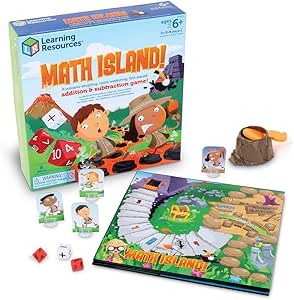 | Best for Hands-On Math Practice | Brand: Learning Resources | Age range: 6–10 years | Players: 2–4 | VIEW LATEST PRICE | See Our Full Breakdown |
| Outfoxed! Cooperative Mystery Board Game |  | Best for Cooperative Reasoning | Brand: Gamewright | Game type: Cooperative board game | Players: 4 | VIEW LATEST PRICE | See Our Full Breakdown |
| Scholastic Race Across the USA Geography Board Game for Kids, Ages 8+ |  | Best for U.S. Geography | Brand: University Games | Genre: Educational | Players: 2–4 | VIEW LATEST PRICE | See Our Full Breakdown |
| Hasbro Gaming Clue Junior: Case of the Broken Toy |  | Best for Young Mystery Solvers | Brand: Hasbro Gaming | Age range: Listed as 5 years and up; supplied description also gives 8+ | Players: 2–6 | VIEW LATEST PRICE | See Our Full Breakdown |
| Hasbro Gaming Scrabble Junior Board Game |  | Best for Growing Spellers | Brand: Hasbro Gaming | Players: 2–4 | Age range: 5 years and up | VIEW LATEST PRICE | See Our Full Breakdown |
| ThinkFun Zingo! Bingo Preschool Reading Game |  | Best for Early Reading | Brand: ThinkFun | Model: 97700 | Age range: 4–10 years | VIEW LATEST PRICE | See Our Full Breakdown |
| Hasbro Gaming Hi Ho! Cherry-O Board Game for 2 to 4 Players, Ages 3 and Up | 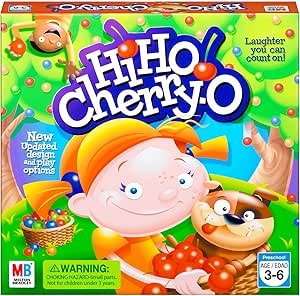 | Best for First Counting Games | Brand: Hasbro Gaming | Players: 2–4 | Recommended age: 3 and up | VIEW LATEST PRICE | See Our Full Breakdown |
| Sequence for Kids Strategy Game |  | Best for Early Strategy | Players: 2–4 | Recommended age: 3–6 | Game type: Strategy and card game | VIEW LATEST PRICE | See Our Full Breakdown |
| Matheroni Addition and Subtraction Math Board Game for Kids Ages 5–7 |  | Best for Focused Addition and Subtraction | Brand: Pidoko Kids | Age range: 5–7 years | Players: 1–4 | VIEW LATEST PRICE | See Our Full Breakdown |
| Number Hunter Math Board Game for Kids |  | Best for Varied Math Practice | Brand: Clever Fox Play | Players: 2 or more | Recommended age: 5 years and up | VIEW LATEST PRICE | See Our Full Breakdown |
| educational board games for kid | Players | Brand | Included components | Age range |
|---|---|---|---|---|
| Learning Resources Math Island | 2–4 | Learning Resources | Volcano, game board, game pieces, and dice | 6–10 years |
| Outfoxed! Cooperative Mystery | 4 | Gamewright | Board game | — |
| Scholastic Race Across the USA | 2–4 | University Games | Game board, cards, and airplane pawns | 8 years and up |
| Hasbro Gaming Clue Junior: Cas | 2–6 | Hasbro Gaming | Gameboard, 6 character pawns, 6 furniture tokens, 7 white bases, 7 yellow bases, detective notepad, die, label sheet, and game guide | Listed as 5 years and up; supplied description also gives 8+ |
| Hasbro Gaming Scrabble Junior | 2–4 | Hasbro Gaming | — | 5 years and up |
| ThinkFun Zingo! Bingo Preschoo | 2–6 | ThinkFun | 6 double-sided Zingo! cards, 72 double-sided tiles, Zinger with easy-cleanup unit, parent’s guide | 4–10 years |
| Hasbro Gaming Hi Ho! Cherry-O | 2–4 | Hasbro Gaming | Game board, spinner with arrow and base, 9-piece puzzle, 4 fruit baskets, 40 fruit pieces, instructions | — |
| Sequence for Kids Strategy Gam | 2–4 | — | Folding game board, 42 playing cards, 84 playing chips, instructions | — |
| Matheroni Addition and Subtrac | 1–4 | Pidoko Kids | 4 pizza slices, 1 spinner, 51 pepperonis, instructions | 5–7 years |
| Number Hunter Math Board Game | 2 or more | Clever Fox Play | Game board, 5 game pieces, 2 number dice, 1 operation die, 50 challenge cards, game rules | — |
More Details on Our Top Picks
Learning Resources Math Island Addition & Subtraction Game
Math Island makes arithmetic the main event, asking children to count and solve addition and subtraction problems up to 20 while trying to escape a hazard-filled island. The equation dice give the practice a clear learning focus, while the erupting volcano adds a physical game element that can help keep turns lively. Compared with Matheroni Addition and Subtraction Math Board Game, this pick is aimed at children ages 6 and up and includes a volcano popper as a standout gameplay feature. It also differs from Outfoxed!, which centers on cooperative deduction rather than arithmetic drills. The tradeoff is a narrow skill range: children who have mastered sums and differences up to 20 may want a broader challenge. It also requires at least two players, so it is not a solo practice option.
Pros:- Practices counting, addition, and subtraction through the same game.
- Equation dice connect turns directly to arithmetic practice.
- Volcano popper adds a tactile event to the board-game play.
- Supports family or classroom play with 2–4 players.
Cons:- Math content is limited to counting and operations up to 20.
- Cannot be played alone because it requires at least two players.
Best for: Families or teachers looking for a group game that gives children ages 6–10 repeated practice with counting and arithmetic up to 20.
Not ideal for: Children ready for multiplication, larger-number arithmetic, or solo learning activities; the game focuses on basic math and requires at least two players.
- Brand:Learning Resources
- Age range:6–10 years
- Players:2–4
- Math skills:Counting, addition, and subtraction up to 20
- Included components:Volcano, game board, game pieces, and dice
- Model number:LER5025
Our verdict“Choose Math Island for lively, group-based practice with early addition and subtraction, but skip it if your child needs advanced math or solo play.”
Outfoxed! Cooperative Mystery Board Game
Outfoxed! teaches by asking players to reason together: children collect clues, use an evidence scanner, and work out which fox took Mrs. Plumpert’s pot pie. That shared investigation makes it a strong choice for practicing deduction, memory, and communication without turning learning into a quiz. Compared with Clue Junior: Case of the Broken Toy, it puts the group on the same side rather than having players solve the mystery through individual turns. Its 15–20-minute playtime also makes it a shorter activity than a more involved geography or word-building session such as Race Across the USA. The tradeoff is that it offers less direct subject practice than Math Island or Scrabble Junior, and the listed player count is four. Families who need a wider player range should check that limit before choosing it.
Pros:- Cooperative play encourages children to share clues and explain their reasoning.
- Evidence scanner supports a clear deduction process.
- Short 15–20-minute games suit brief family or classroom activities.
- Simple rules make it approachable for young players.
Cons:- Listed specifications limit play to four players.
- Builds general reasoning rather than practicing a specific school subject.
- Age guidance varies across the supplied listing details.
Best for: Families with children age 5 and up who want a short, cooperative game for practicing clues, memory, and logical discussion.
Not ideal for: Groups needing a game for more than four players or children seeking direct practice in school subjects such as spelling, geography, or arithmetic.
- Brand:Gamewright
- Game type:Cooperative board game
- Players:4
- Recommended age:5 years and up
- Playing time:15–20 minutes
- Edition:Standard Edition
- Language:English
- Included components:Board game
- Model number:CSG-OUTF
Our verdict“Pick Outfoxed! for quick, cooperative logic practice; choose Clue Junior instead if you want a similar mystery format with a listed range of 2–6 players.”
Scholastic Race Across the USA Geography Board Game for Kids, Ages 8+
Race Across the USA puts geography into a route-planning race: players answer questions as they visit six states and return home. Its grade-level questions are the key distinction, giving children in different grades a way to play together without every question needing to match the same school level. Compared with Outfoxed!, which practices deduction through shared clues, this game focuses on U.S. states, capitals, and landmarks. It also gives older children more subject-specific learning than Scrabble Junior, but it will not help much with spelling or arithmetic. The listed playtime is about 20 minutes, making it a defined family or classroom activity. The tradeoff is a narrower topic: children uninterested in U.S. geography may find the question-and-race format less appealing, and the game is designed for only 2–4 players.
Pros:- Combines geography questions with a race to visit states and return home.
- Grade-level questions support play among children in different grades.
- Covers U.S. states, capitals, and landmarks.
- About 20 minutes of play suits a focused family or classroom session.
Cons:- Geography-focused content may not interest every child.
- Designed for groups of 2–4 players.
- Does not offer the cooperative mystery-solving of Outfoxed! or the word-building practice of Scrabble Junior.
Best for: Families or teachers with children ages 8 and up who want to reinforce U.S. states, capitals, and landmarks, including children at different grade levels.
Not ideal for: Children who prefer word games, math challenges, or broader subjects, and groups that regularly need games for more than four players.
- Brand:University Games
- Genre:Educational
- Players:2–4
- Age range:8 years and up
- Playing time:20 minutes
- Edition:Standard Edition
- Language:English
- Included components:Game board, cards, and airplane pawns
Our verdict“Choose Race Across the USA for grade-aware U.S. geography practice, but pick a different game if your child wants a wider subject mix.”
Hasbro Gaming Clue Junior: Case of the Broken Toy
Clue Junior introduces deduction through a child-friendly mystery: players work out who broke a toy, which toy it was, and when it happened. The detective notepad and clue-checking turns give children a concrete way to eliminate possibilities, linking play with critical thinking and reading comprehension. Compared with Outfoxed!, it offers a broader listed player range of 2–6 and centers on solving a case rather than cooperating to identify a fox. That makes it a better fit for larger family groups, while Outfoxed! may suit families who prefer everyone working together. The main drawback is the supplied age information, which conflicts between ages 5+ and 8+. Its mystery-solving practice is also less directly tied to a school subject than Race Across the USA or Scrabble Junior.
Pros:- Introduces deductive reasoning through a straightforward toy mystery.
- Detective notepad supports tracking and eliminating possibilities.
- Listed player range of 2–6 suits larger family groups.
- Includes character pawns and furniture tokens for checking clues.
Cons:- Supplied age guidance conflicts between ages 5+ and 8+.
- Focuses on general reasoning rather than a specific academic subject.
- Unlike Outfoxed!, it is not described as a cooperative mystery game.
Best for: Families with 2–6 players who want young children to practice eliminating possibilities, reading clues, and discussing a mystery.
Not ideal for: Buyers who need consistent age guidance or children looking for direct geography, spelling, or arithmetic instruction.
- Brand:Hasbro Gaming
- Age range:Listed as 5 years and up; supplied description also gives 8+
- Players:2–6
- Theme:Mystery
- Educational objective:Critical thinking, problem-solving, deductive reasoning, and reading comprehension
- Included components:Gameboard, 6 character pawns, 6 furniture tokens, 7 white bases, 7 yellow bases, detective notepad, die, label sheet, and game guide
- Color:Multicolor
- Model number:C1293953
Our verdict“Choose Clue Junior for a larger group learning deduction through a mystery, but verify the age guidance if the child is near the lower end of the range.”
Hasbro Gaming Scrabble Junior Board Game
Scrabble Junior has a built-in step from letter matching to independent word-building. On one side, children match letter tiles to words and pictures; on the other, they create their own words. That progression lets the game stay useful as early readers gain confidence, unlike Race Across the USA, which keeps its learning focus on geography. Compared with Learning Resources Math Island, it also develops a different core skill: spelling and vocabulary rather than arithmetic. The 105 tiles and four tokens support play for 2–4 people, and no batteries are required. Its main limitation is age fit: children who already want a demanding word game may outgrow the matching side quickly, while the supplied information does not specify how challenging the advanced side is.
Pros:- Double-sided board offers letter matching and a more advanced word-building mode.
- Supports spelling and vocabulary practice through play.
- Includes 105 letter tiles and four player tokens.
- Works for 2–4 players and requires no batteries.
Cons:- Children seeking a demanding word challenge may outgrow the early matching side.
- Focuses on language skills rather than math or geography.
- The supplied details do not specify the difficulty range of the advanced side.
Best for: Families with children ages 5 and up who are learning letters and spelling and would benefit from a game that shifts toward making words.
Not ideal for: Older children seeking a challenging word game, or families wanting direct practice in math, geography, or cooperative reasoning.
- Brand:Hasbro Gaming
- Players:2–4
- Age range:5 years and up
- Components:Double-sided gameboard, 4 tokens, 105 letter tiles, and game guide
- Language:English
- Game mechanics:Word-building and progression
- Educational objective:Spelling and vocabulary
- Battery requirement:No batteries required
- Dimensions:1.89 x 13.11 x 10.51 inches
Our verdict“Choose Scrabble Junior for a flexible early-literacy game that can progress from matching letters to making words, but look elsewhere for advanced word play.”
ThinkFun Zingo! Bingo Preschool Reading Game
Zingo! makes early literacy the main event: children match picture-and-word tiles to their cards, building recognition and language skills through quick rounds. The Zinger dispenser gives turns a hands-on rhythm, while its cleanup unit helps keep the many tiles together between games. Compared with Hasbro Gaming Hi Ho! Cherry-O, which focuses on counting and simple arithmetic, Zingo! better suits families who want playful exposure to words. Its double-sided cards offer two play levels, giving beginners a simpler start and early readers a step up. The tradeoff is a narrower learning focus than the broader number practice in Number Hunter. It also depends on matching tiles to cards, so older children may outgrow the challenge, and the listed age range tops out at 10.
Pros:- Builds language and early reading recognition through picture-and-word matching
- Two-sided cards provide two levels of play
- Simple rules make it approachable for young players
- Zinger includes an easy-cleanup unit for the tiles
Cons:- Reading and matching are the central focus, with little math or broader subject practice
- The tile dispenser and pieces are intended for indoor play
- Older children may find the matching challenge too basic
Best for: Families with preschoolers or early readers who want short, repeatable language and word-matching practice for two to six players
Not ideal for: Families seeking advanced reading instruction, outdoor play, or a game that will challenge older children beyond the listed 4–10 age range
- Brand:ThinkFun
- Model:97700
- Age range:4–10 years
- Players:2–6
- Theme:Reading
- Included components:6 double-sided Zingo! cards, 72 double-sided tiles, Zinger with easy-cleanup unit, parent’s guide
- Material:Plastic
- Language:English
Our verdict“Choose Zingo! for young children who are ready to connect words and pictures through fast, accessible rounds rather than focus on math or strategy.”
Hasbro Gaming Hi Ho! Cherry-O Board Game for 2 to 4 Players, Ages 3 and Up
For a child just beginning to count, Hi Ho! Cherry-O keeps the task concrete: spin, pick fruit, and fill a basket. Special spinner results that send fruit back can also prompt simple addition and subtraction, though they may frustrate children who dislike losing progress. Compared with Matheroni Addition and Subtraction, which asks players to solve math problems as part of play, Hi Ho! relies more on counting physical pieces and is easier to introduce to younger children. Its short, turn-based format suits a brief family game, with components for up to four players. The learning range is narrower than Number Hunter, which includes even-and-odd challenges and challenge cards. This is a straightforward first step in number practice, not a game for children ready for more involved arithmetic.
Pros:- Fruit pieces give young children concrete objects to count
- Spinner outcomes introduce basic addition and subtraction
- Simple turn-taking suits early board-game players
- Includes baskets and fruit pieces for up to four players
Cons:- Random spinner results can undo progress and frustrate some children
- Math practice remains at a basic counting and simple arithmetic level
- The listed play time is brief for families seeking a longer game
Best for: Families with preschoolers who are learning to count objects and can enjoy simple turns with up to three other players
Not ideal for: Families seeking sustained math challenges or children who become upset when a spinner sends collected fruit back
- Brand:Hasbro Gaming
- Players:2–4
- Recommended age:3 and up
- Playing time:15 minutes
- Language:English
- Included components:Game board, spinner with arrow and base, 9-piece puzzle, 4 fruit baskets, 40 fruit pieces, instructions
- Fruit pieces:10 cherries, 10 blueberries, 10 apples, 10 oranges
- Model number:44703
Our verdict“Pick Hi Ho! Cherry-O as an accessible first counting game, but choose Matheroni or Number Hunter for more direct arithmetic practice.”
Sequence for Kids Strategy Game
Sequence for Kids shifts the learning focus from drills to planning: players match animal cards to spaces and try to make a row of four chips. Because the game does not require reading, young children can join before they are comfortable with text, while still practicing visual matching and anticipating what a move might do. Compared with Zingo!, which centers on language recognition, this pick gives more attention to tactical choices; compared with Hi Ho! Cherry-O, it offers less direct counting practice. Unicorn and dragon cards add special moves, creating variety but also making play a little less predictable. Its age range is listed as 3–6, and the small chips present a choking hazard, so it is not a good choice around children who still mouth small objects.
Pros:- No reading is required to participate
- Four-in-a-row objective encourages planning and logical thinking
- Special cards add variation to the basic matching pattern
- Supports play for two to four people
Cons:- Small playing chips pose a choking hazard for young children
- Animal matching and strategy offer less direct academic practice than reading or math games
- The recommended age range is relatively narrow at 3–6
Best for: Families with children ages 3–6 who want a no-reading game that introduces matching, planning, and simple strategy
Not ideal for: Households with children who may put small chips in their mouths, or families looking for focused reading or arithmetic instruction
- Players:2–4
- Recommended age:3–6
- Game type:Strategy and card game
- Included components:Folding game board, 42 playing cards, 84 playing chips, instructions
- Battery requirement:No batteries required
- Dimensions:10.5 × 2 inches
- Weight:1.5 pounds
- Material:Plastic
Our verdict“Choose Sequence for Kids for young players ready to practice simple strategy without reading, provided small chips are safe in your household.”
Matheroni Addition and Subtraction Math Board Game for Kids Ages 5–7
Matheroni puts basic arithmetic at the center of every turn: players spin, solve an addition or subtraction problem, and collect pepperoni tokens for their pizza slices. That makes the math more explicit than in Hi Ho! Cherry-O, where counting fruit and occasional changes from the spinner carry the learning. The pizza theme and tangible tokens give children a clear goal, while special action spaces add a strategic element beyond answering problems. Compared with Number Hunter, Matheroni is more tightly focused on addition and subtraction rather than adding even-and-odd practice and challenge cards. This narrow scope can help families target early arithmetic, but it may feel repetitive once a child has mastered those operations. Since players must solve problems during the game, it may also be a poor fit when a child needs an adult to guide the math.
Pros:- Makes addition and subtraction a direct part of each turn
- Pepperoni tokens and pizza slices give math practice a tangible goal
- Special action spaces add choices beyond solving problems
- Designed for home or classroom use and supports one to four players
Cons:- Learning focus is limited mainly to basic addition and subtraction
- Players need to solve math problems during play, which may require adult help
- Cardboard components may be less suited to rough handling than sturdier materials
Best for: Families or teachers supporting children ages 5–7 who need hands-on practice with basic addition and subtraction
Not ideal for: Children who already find basic arithmetic easy, or solo players who need an independent game without math support
- Brand:Pidoko Kids
- Age range:5–7 years
- Players:1–4
- Educational objective:Teach and reinforce addition and subtraction
- Included components:4 pizza slices, 1 spinner, 51 pepperonis, instructions
- Material:Cardboard
- Weight:0.66 kg
- Recommended use:Indoor
Our verdict“Choose Matheroni when a child needs focused, hands-on practice with basic addition and subtraction rather than a broader mix of math skills.”
Number Hunter Math Board Game for Kids
Number Hunter covers more early-math ground than Matheroni: dice, movement, and 50 challenge cards bring addition, subtraction, and even-and-odd numbers into the same screen-free game. That wider mix suits families who want practice to change from turn to turn, rather than concentrate on the pizza-themed arithmetic problems in Matheroni. The stated 20-minute playing time gives a useful sense of its commitment, while multiple dice create different ways to pose math challenges. It is also pitched for family, classroom, or homeschool play. The tradeoff is that it requires at least two players, unlike Matheroni’s listed one-player option, so it cannot fill the same solo-play role. Its broader subject mix may also be less focused for a child who needs repetition on one specific operation.
Pros:- Practices addition, subtraction, and even-and-odd numbers
- Fifty challenge cards provide varied prompts
- Multiple dice make math practice interactive through movement and play
- Designed for family, classroom, and homeschool use
Cons:- Requires at least two players, so it does not support solo play
- Broader skill coverage may be less focused than Matheroni for a child working on one operation
- A stated 20-minute play time may be longer than some young children prefer
Best for: Families, homeschoolers, and teachers who want a multiplayer math game with practice across several early number skills
Not ideal for: Children who need solo math play or targeted repetition of addition and subtraction without even-and-odd challenges
- Brand:Clever Fox Play
- Players:2 or more
- Recommended age:5 years and up
- Skills:Addition, subtraction, even and odd numbers
- Playing time:20 minutes
- Language:English
- Included components:Game board, 5 game pieces, 2 number dice, 1 operation die, 50 challenge cards, game rules
- Materials:Non-toxic, child-safe materials
Our verdict“Choose Number Hunter for multiplayer math practice across several early skills, but pick Matheroni if you need solo play or a narrower arithmetic focus.”
How We Picked
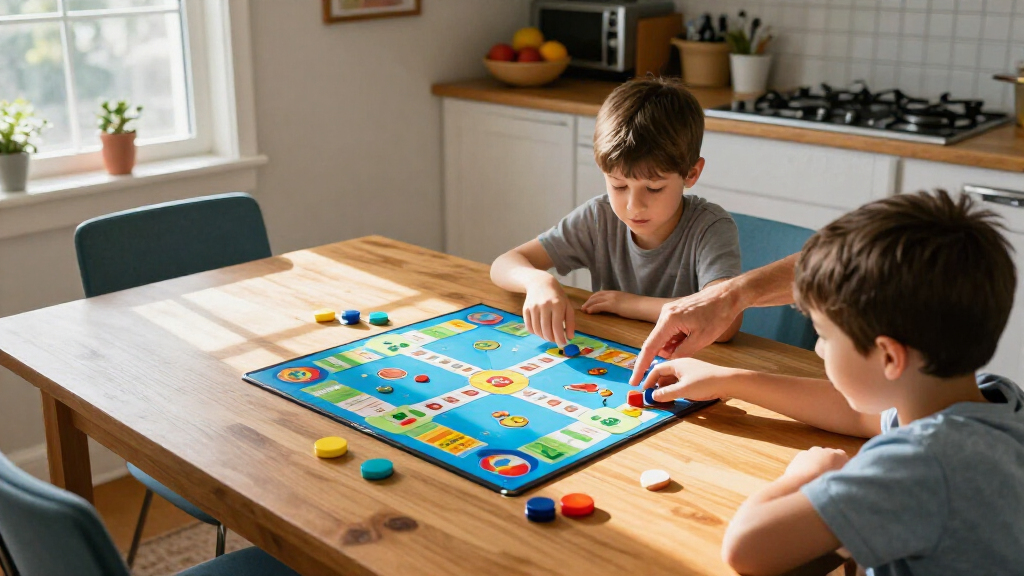
I ranked these games by how clearly their central play supports a useful learning goal, then weighed age fit, ease of understanding, and whether the format gives children a reason to keep practicing. A game that makes one skill central ranks higher for that learning use than a general family game, while cooperative play earns credit for encouraging shared discussion. I also considered how well each title suits different stages, from preschool matching and counting to word-building, geography, and deduction.
The order reflects overall usefulness for families seeking educational play, not a claim that every child will prefer the same style. Outfoxed! takes the top spot for pairing reasoning with a group goal; skill-specific games follow when their educational focus is narrower or their audience more particular. Familiar, accessible games remain valuable, but they rank lower when their learning outcome is less direct than the dedicated practice offered elsewhere in this lineup.
Factors to Consider When Choosing Educational Board Games For Kids
Choosing among educational board games is easier when you start with the child’s play habits, not just the subject printed on the box. These broader factors can help you avoid a game that teaches the right skill but rarely makes it to the table.
Match the Learning Goal to the Child’s Current Stage
A game should offer practice that feels reachable without making every turn effortless. A preschooler may enjoy matching or counting, while an older child may be ready for spelling choices, deduction, or geography questions. Check age guidance alongside the skills the child already has, since reading-heavy instructions can block participation even when the topic is appealing. Avoid buying only for a future ability; a game that is too advanced may need constant adult help. If siblings differ in age, look for a format where younger players can contribute meaningfully rather than merely watch.
Choose Practice That Feels Like Play
Repeated practice can help a skill stick, but children notice when a game feels like a worksheet with a board attached. Look for a clear game objective that makes the learning action useful to the player, such as solving a mystery or reaching a destination. A narrow skill focus can be a strength when a child wants help with one area, yet it may lose appeal after the novelty fades. Broader games can bring more variety but may offer less sustained practice of any single skill. Choose the balance based on whether your goal is reinforcement or a family game with an educational element.
Decide Whether Competition Helps or Hurts
Some children thrive on trying to beat a sibling, while others shut down when a game repeatedly highlights who is behind. Cooperative formats can let players discuss clues and share progress, which may work better for children still building confidence. Competitive play can add urgency and give older children a reason to refine their choices. A common mistake is assuming that one format is universally more educational; the better choice is the one that keeps this child engaged and willing to take another turn. For mixed-age groups, consider whether the rules let adults adjust support without changing the whole game.
Check Who Can Play Independently
Rule complexity, reading demands, turn length, and the number of players all affect how often a game gets used. A title that needs an adult to explain every move may still be worthwhile, but it is a different purchase from one children can set up and play with a sibling. Look at the listed age and player range, then think about your household’s usual group size. If a game is intended for several players but your child often plays with one adult, confirm that the format suits that routine. Also consider whether children can take turns without long waits, especially when attention spans vary.
Weigh Replayability Against a Specific Skill Need
A focused game can be the right choice when a child wants extra practice in math, reading, or geography, even if it serves fewer occasions. A flexible family game may see more table time, though its educational benefit can be less targeted. Before paying more for a feature-rich game, ask whether the child is likely to enjoy its central activity after several plays. A familiar theme alone does not guarantee replay value if turns feel repetitive or the challenge does not grow with the player. Prioritize a strong fit with the child’s interests over the broadest possible list of learning claims.
Look Beyond the Box for Practical Fit
Storage, setup, and the risk of losing small pieces affect whether a game survives regular family use. If the game will travel between homes or come out during short breaks, a compact setup and easy reset can matter more than extra components. For younger children, check whether pieces are manageable and whether adult supervision is needed. Think about where the game will be stored and who will put it away; a complicated cleanup routine can quietly reduce playtime. These practical details are easy to overlook when the learning theme is the main attraction.
Frequently Asked Questions
Which game in this lineup is the best choice for a child who dislikes losing?
Outfoxed! is the strongest starting point because its cooperative mystery gives players a shared objective instead of setting them against each other. That can make mistakes feel like part of solving the puzzle rather than a direct defeat. A child who enjoys taking turns but still prefers individual wins may respond better to a familiar family game such as Hi Ho! Cherry-O. Consider whether the child wants a team challenge or simply a short, low-pressure game. Playing together once before inviting siblings can help reveal which format feels comfortable.
Should I choose Zingo! or Scrabble Junior for early reading practice?
Choose Zingo! when the child benefits from a simple, visual matching format and is just beginning to connect spoken or printed words with recognition. Scrabble Junior is a better fit when the child is ready to engage with spelling and word construction. The two games do not offer the same kind of literacy practice, so age alone should not decide the choice. If a child becomes frustrated by letter work, start with the more accessible matching experience and revisit word-building later. If they already enjoy spelling, the added structure of Scrabble Junior may hold attention longer.
Are the three math games interchangeable, or do they suit different children?
Math Island, Matheroni, and Number Hunter all center number skills, but a shared subject does not make them identical choices. Compare their stated age guidance and the kinds of math actions children repeat during play before selecting one. A younger child may need a more approachable entry point, while a child seeking continued practice may prefer a challenge that keeps number work central. Avoid buying multiple math games simply because the box names addition or subtraction; check whether their play patterns would feel meaningfully different at home. The best match is the one that practices a current need without making the child feel tested.
Can one of these games work for siblings at different ages?
Outfoxed! may suit siblings who can discuss clues together, while the family games can provide a more casual shared activity. The biggest question is whether the younger child can make real decisions rather than relying on an older sibling to play for them. Differences in reading or number ability can also make a supposedly shared game feel uneven. Adults can help by reading prompts aloud or taking turns offering hints, but too much coaching may slow the game. If both children want independent challenge, separate age-appropriate games may create a better experience than forcing one title to serve everyone.
What should I prioritize if the game will be played mostly with adults?
Start with the child’s interest and the group’s usual patience for setup, rules, and turn length. Outfoxed! suits adults willing to reason through a shared mystery, while a skill-focused title makes sense if the adult wants to reinforce a particular subject during play. An adult can bridge reading or rule gaps, but that support should not turn every round into a lesson. Check the listed player range and whether the game remains engaging with the number of people who will actually play. A game that fits your family’s routine is more likely to be replayed than one chosen only for its educational label.
Conclusion
For the strongest all-around mix of learning and shared play, I recommend Outfoxed! as the best overall pick. For a focused early-reading choice, Zingo! is my best beginner option; for a clear math-practice goal, consider Math Island or compare it with Matheroni and Number Hunter by age fit. Hi Ho! Cherry-O is the best value-minded choice when you want accessible family play with counting woven in, while Race Across the USA is the best specific pick for children drawn to geography. The best premium choice depends on what your family values most: choose a richer cooperative challenge in Outfoxed! or a more targeted learning game rather than paying for features your child will not use. If you are still unsure, start with the child’s strongest interest and select the game whose main action they are already curious to try.