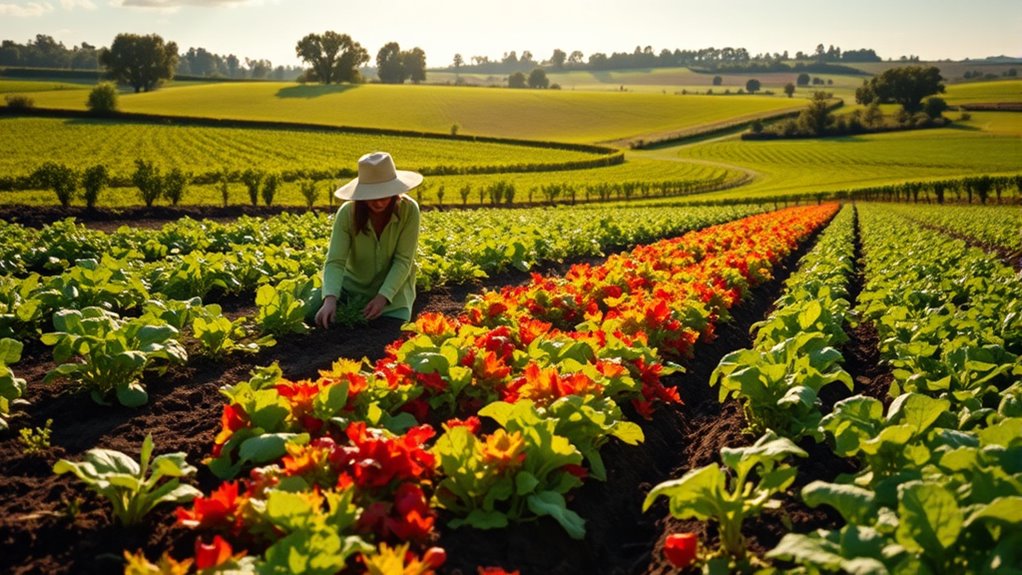

Regenerative agriculture involves farming practices that restore soil vitality and create healthier ecosystems, such as planting cover crops, using compost, and reducing tillage. By focusing on soil health and crop diversity, you can reduce reliance on chemicals, improve resilience against weather extremes, and increase carbon storage to fight climate change. These methods support sustainable, productive landscapes that benefit both the environment and your livelihood. Keep exploring to discover how these practices can truly heal the earth.
Key Takeaways
- Implements soil-focused practices like cover cropping, composting, and minimal tillage to naturally enhance soil health.
- Promotes crop diversity and rotation to support ecosystems, improve nutrient cycling, and prevent erosion.
- increases carbon sequestration, helping reduce greenhouse gases and combat climate change.
- Builds resilient ecosystems that withstand droughts, floods, and pests, ensuring long-term land productivity.
- Reduces reliance on chemical inputs, fostering sustainable farming that heals and maintains the earth.
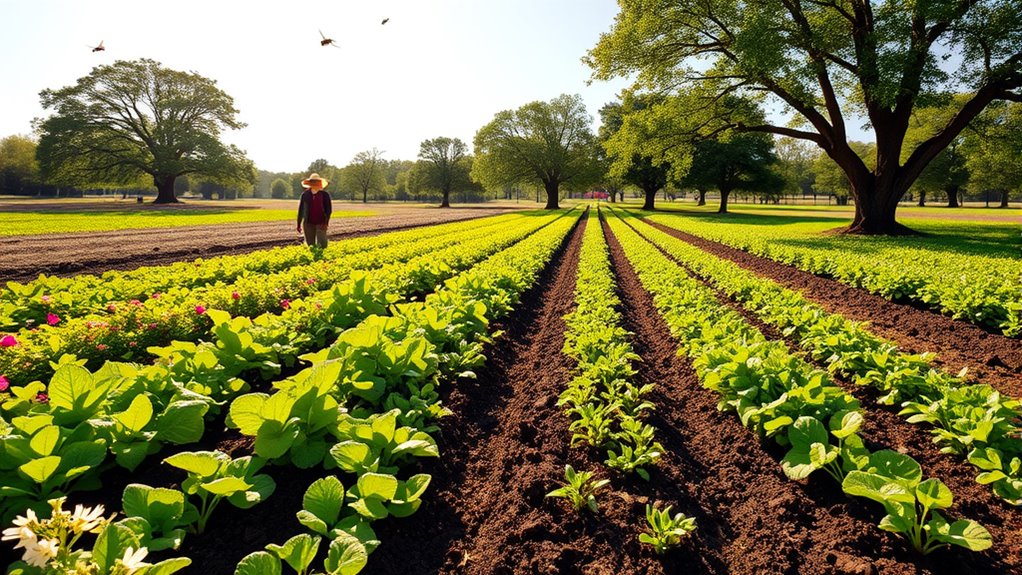
Have you ever wondered how farming can restore the health of the land instead of depleting it? The secret lies in regenerative agriculture, a set of practices designed to heal soils, boost biodiversity, and create resilient ecosystems. At the core of these methods is a focus on soil health. Instead of relying on chemical inputs that strip nutrients away, regenerative farmers work to improve the soil’s structure and fertility naturally. They plant cover crops, use compost, and minimize tillage, which keeps organic matter in the ground and promotes a thriving microbial community. This healthy soil becomes a living system that can better withstand droughts, floods, and pests, reducing the need for synthetic chemicals and fertilizers. soil health is the foundation of regenerative farming success.
Crop diversity plays a vital role in this process. Instead of planting monocultures—large fields of a single crop—regenerative farmers incorporate a variety of plants into their fields. This diversity supports a broader range of beneficial insects, pollinators, and soil organisms, which all work together to maintain ecosystem balance. When multiple crops grow together, they can improve soil structure, reduce pest outbreaks, and enhance nutrient cycling. For example, rotating legumes with grains naturally adds nitrogen to the soil, decreasing dependence on chemical fertilizers. Interplanting different species also prevents soil erosion and helps maintain moisture, creating a more stable environment for plants to grow.
By embracing crop diversity and nurturing soil health, you actively contribute to reversing land degradation. Instead of extracting resources from the earth, regenerative farmers work with nature’s processes, fostering a self-sustaining cycle of renewal. These practices also increase carbon sequestration, pulling greenhouse gases out of the atmosphere and storing them in the soil, which fights climate change. You might notice that farms practicing regenerative agriculture tend to be more resilient during weather extremes, providing a stable food supply even in challenging conditions. This approach not only benefits the environment but also offers economic gains for farmers—reduced input costs, healthier crops, and better yields over time.
In essence, regenerative agriculture empowers you to rethink traditional farming. By prioritizing soil health and crop diversity, you help heal the land rather than harm it. You become part of a movement that recognizes farming as a way to restore and sustain the earth’s natural systems. Through these practices, you can foster productive, resilient landscapes that support both people and the planet for generations to come.

Back to the Roots 25.7qt (1 Cubic ft) Organic Premium Compost
100% Organic & Peat-Free: Our compost mix is 100% organic & peat-free. Peat is one of Mother Nature’s…
As an affiliate, we earn on qualifying purchases.
As an affiliate, we earn on qualifying purchases.
Frequently Asked Questions
How Does Regenerative Agriculture Impact Local Biodiversity?
Regenerative agriculture boosts local biodiversity by improving soil health and creating habitats for native species. When you adopt these practices, you reduce chemical use and promote plant diversity, which supports insects and wildlife. This approach restores ecosystems, helping native species thrive. As your farming methods become more sustainable, you contribute to healthier, more resilient environments where diverse plants and animals can flourish naturally.
What Are the Economic Benefits for Farmers Adopting Regenerative Practices?
Like planting seeds for future growth, adopting regenerative practices boosts your profit increase and reduces risks. You’ll spend less on inputs like synthetic fertilizers and pesticides, saving money. Healthier soils lead to better yields, ensuring steady income. Over time, you’ll build resilience against climate impacts, making your farm more sustainable. These benefits help you thrive economically while contributing to environmental health—your investment in regenerative agriculture pays off in multiple ways.
Can Regenerative Agriculture Be Scaled to Large Industrial Farms?
Yes, regenerative agriculture can be scaled to large industrial farms, but it requires careful planning for industrial scalability and large farm adaptation. You need to integrate diverse practices like cover cropping, rotational grazing, and minimal tillage into existing systems. While challenges exist, such as initial costs and management complexity, with proper investment and innovation, large farms can adopt regenerative methods effectively, leading to long-term sustainability and improved productivity.
What Are Common Challenges Faced When Implementing Regenerative Techniques?
You face frequent friction from financial fears, unfamiliarity, and flawed farming routines. These challenges hinder your efforts to improve soil health and promote crop diversity. Moving to regenerative techniques demands dedication, education, and patience, which can seem intimidating amid doubts and disruptions. Overcoming these obstacles requires embracing experimentation, seeking support, and staying committed to sustainable practices that nourish your land and secure long-term success.
How Does Regenerative Agriculture Influence Climate Change Mitigation?
You can see regenerative agriculture help mitigate climate change by increasing soil health and promoting carbon sequestration. As you adopt practices like cover cropping and reduced tillage, you enhance the soil’s ability to store carbon, reducing greenhouse gases in the atmosphere. This not only curbs climate change but also improves farm resilience, making your land more productive and sustainable over time.

No-Till Garden Farm and Garden Cover Crop Mix Seeds – 5 Lbs – Blend of Gardening Cover Crop Seeds: Hairy Vetch, Daikon Radish, Forage Collards, Triticale, More
🌱 Diverse 9-Seed Cover Crop Mix – Non-GMO & Heirloom – Includes Austrian Field Pea, Hard Red Winter…
As an affiliate, we earn on qualifying purchases.
As an affiliate, we earn on qualifying purchases.
Conclusion
Imagine your farm as a wounded healer, slowly mending itself with every regenerative practice you adopt. Just like a scarred tree that blooms anew, your efforts can transform depleted land into vibrant soil teeming with life. Studies show regenerative farms can boost yields by up to 40% while sequestering carbon. By embracing these practices, you become a steward of the Earth’s healing process—turning your land into a thriving, resilient oasis that benefits everyone.
minimal tillage tools
As an affiliate, we earn on qualifying purchases.
As an affiliate, we earn on qualifying purchases.

Seasonal Crop Rotation Planner & Log: A Regenerative 3-Year Planning System for All Climates & Growing Seasons
As an affiliate, we earn on qualifying purchases.
As an affiliate, we earn on qualifying purchases.