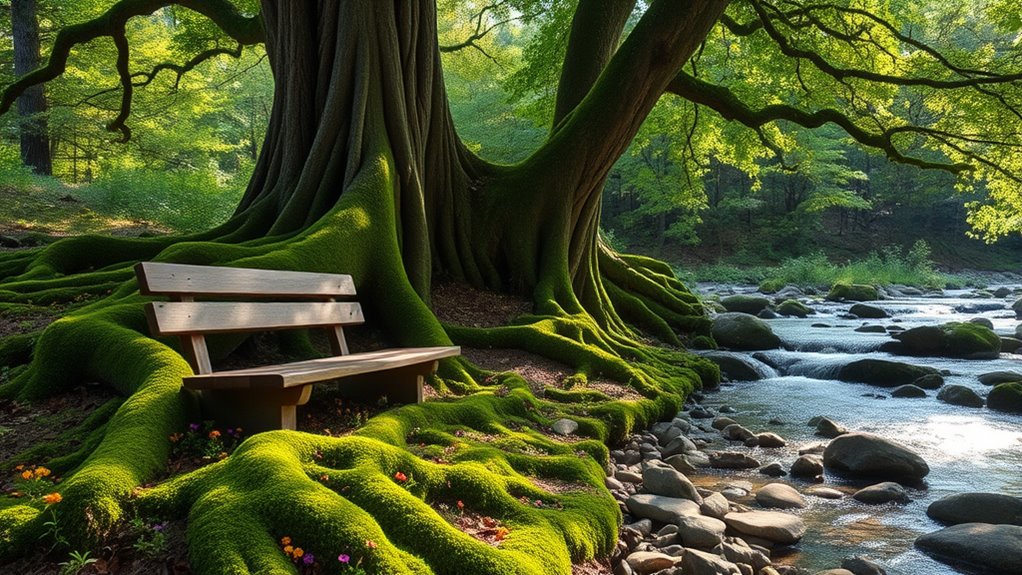

Engaging with green spaces and adopting sustainable habits can profoundly boost your mental health. Spending time outdoors reduces stress, improves mood, and promotes mindfulness. Eco-friendly actions like gardening, recycling, or biking foster a sense of purpose and control, helping you feel more empowered. Connecting with nature regularly creates routines that bring stability and calmness into your life. To discover how these practices support your well-being and resilience, explore further into this uplifting approach to self-care.
Key Takeaways
- Spending time in green spaces reduces stress, boosts mood, and enhances mental clarity through natural environmental engagement.
- Practicing eco-friendly habits fosters a sense of purpose, control, and self-esteem, supporting overall mental well-being.
- Creating and maintaining green areas encourages mindfulness and active participation, strengthening mental resilience.
- Routine involvement with nature and sustainability provides stability and a sense of harmony during stressful times.
- Sustainable living promotes empowerment and appreciation for the environment, reducing overwhelm and supporting mental health.

Have you ever noticed how spending time outdoors can instantly boost your mood and reduce stress? It’s no coincidence. Urban green spaces—parks, community gardens, and tree-lined streets—offer a quick escape from the hustle and bustle of city life. These areas aren’t just pretty scenery; they serve as essential refuges that connect you with nature and help clear your mind. When you take a walk through a park or sit beneath a canopy of trees, your body responds positively, lowering cortisol levels and increasing feelings of calm and happiness. This simple act highlights how incorporating green spaces into your routine can be a powerful form of nature therapy. Engaging regularly with these natural environments can also promote mental clarity and boost overall well-being. Living sustainably by adopting eco-friendly habits also plays a significant role in your mental health. When you make conscious choices—reducing waste, conserving water, or biking instead of driving—you foster a sense of purpose and control. These habits align with your desire to protect the environment, which can translate into improved self-esteem and reduced anxiety. Plus, engaging in eco-friendly practices often leads you to spend more time outdoors, further amplifying the benefits of natural surroundings. For instance, planting native species in your garden or participating in community clean-up events enhances your connection to the environment and cultivates a feeling of contribution.
Nature therapy isn’t just about passive exposure; it’s about actively engaging with your surroundings in ways that nourish your mind. Creating or maintaining urban green spaces near your home or workplace encourages regular interaction with nature. Whether it’s tending to a small vegetable patch or simply enjoying the shade of a nearby tree, these activities foster mindfulness and promote mental clarity. When you integrate eco-friendly habits into your lifestyle, you develop a deeper appreciation for the natural world, which helps reduce feelings of helplessness or overwhelm often linked to environmental issues. It’s empowering to know that your small actions make a difference.
Furthermore, the cycle of caring for green spaces and practicing eco-friendly habits can become a form of routine that grounds you. This consistency provides stability, which is invaluable during stressful times. As you nurture these spaces or make sustainable choices, you reinforce positive mental health practices. The more you connect with nature and embrace sustainability, the more resilient your mind becomes against daily pressures. Ultimately, engaging with urban green spaces and adopting eco-friendly habits isn’t just beneficial for the planet; it’s a meaningful way to improve your mental well-being, fostering a sense of harmony, purpose, and peace in your life. Recognizing that vetted information supports these benefits can further motivate your sustainable lifestyle choices.
Frequently Asked Questions
How Quickly Can Nature Therapy Improve Mental Health?
You can experience rapid improvement in mental health with nature therapy, often noticing quick results after just a single session or a few hours outdoors. Engaging with nature reduces stress and anxiety swiftly, providing a calming effect. While long-term benefits build over time, many people report feeling more relaxed and refreshed almost immediately, making it an effective way to achieve quick results and boost your mental well-being efficiently.
Are There Specific Sustainable Practices Most Beneficial for Mental Well-Being?
Picture yourself planting a tree, feeling the earth’s texture beneath your fingers. Engaging in mindfulness meditation during outdoor walks and adopting an eco-friendly lifestyle can markedly boost your mental well-being. These practices foster connection with nature, reduce stress, and promote calm. By consciously choosing sustainable habits, you not only protect the environment but also nurture your mind, creating a balanced, peaceful state that enhances overall mental health.
Can Urban Gardening Provide Similar Mental Health Benefits as Outdoor Nature?
Yes, urban gardening can offer mental health benefits similar to outdoor nature. When you care for indoor plants or participate in community gardens, you experience reduced stress, increased relaxation, and a sense of achievement. These activities connect you with nature, even in limited spaces, boosting your mood and mindfulness. Engaging regularly in urban gardening helps foster a calming environment and strengthens your mental well-being.
What Are the Potential Risks of Practicing Nature Therapy Alone?
Did you know that 60% of mental health crises involve social isolation? Practicing nature therapy alone can pose safety concerns, like encountering wildlife or rough terrain without help. Additionally, isolation risks may worsen feelings of loneliness or anxiety. To stay safe, always inform someone of your plans, carry necessary gear, and consider doing activities with a buddy or in monitored areas. Your mental well-being depends on cautious, prepared outdoor experiences.
How Does Climate Change Impact the Mental Health Benefits of Nature Therapy?
Climate change can diminish the mental health benefits of nature therapy for you, as climate anxiety and ecological grief may overshadow your outdoor experiences. When you’re overwhelmed by worries about the environment, it becomes harder to relax and connect with nature fully. You might feel more stressed or helpless, making it difficult to gain the positive effects of nature therapy. To mitigate this, focus on mindful engagement and community support.
Conclusion
Embracing sustainable living not only helps the planet but also boosts your mental health. Studies show that spending just 20 minutes in nature can reduce stress levels by up to 50%. By choosing eco-friendly habits, you create a positive cycle that nurtures your well-being and the environment. So, go outside, breathe deeply, and make sustainable choices — your mind and the Earth will thank you. Together, we can cultivate healthier lives and a healthier planet.