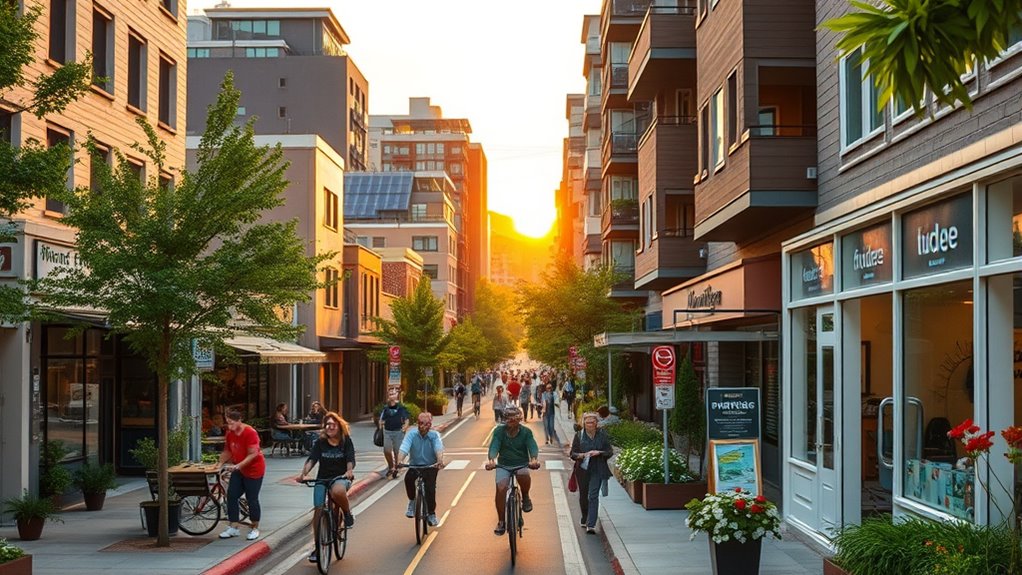

The 15-minute city is a way to rethink urban life by making everything you need—like work, shops, parks, and schools—reachable within a 15-minute walk or bike ride. It aims to create compact, mixed-use neighborhoods that reduce your reliance on cars, cutting pollution and greenhouse gases. By fostering strong community ties and involving residents in planning, it makes cities more sustainable and livable. If you’re curious about how this approach can transform your experience of city living, there’s more to explore.

Prime made for students and young adults
- Fast, free delivery for dorm and study essentials
- Prime Video and Amazon Music included
- Member-only deals
Key Takeaways
- The 15-Minute City promotes accessible neighborhoods where residents can reach work, shops, parks, and schools within 15 minutes by walking or biking.
- It reduces reliance on cars, lowering pollution and greenhouse gas emissions, thereby supporting environmental sustainability.
- Community engagement is vital, ensuring urban development reflects residents’ needs and fosters ownership and social cohesion.
- Urban planning focuses on mixed-use, compact neighborhoods that encourage social interactions and create vibrant, interconnected communities.
- Successful implementation requires collaboration among city officials, planners, and residents to develop sustainable, equitable, and resilient urban spaces.
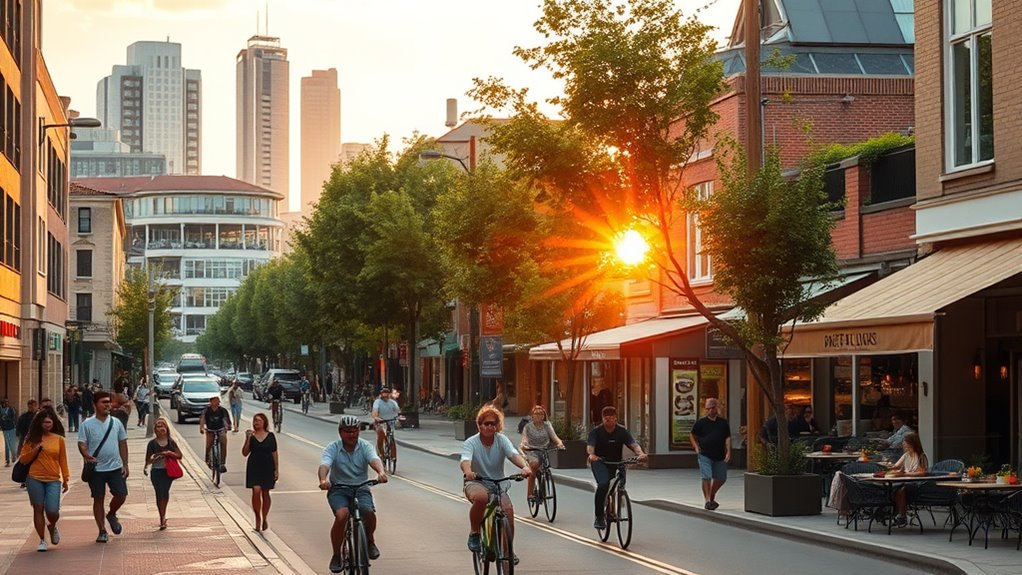
Imagine a city where everything you need—work, groceries, parks, and schools—is just a 15-minute walk or bike ride away. This isn’t a distant dream; it’s the core idea behind the 15-minute city. At its heart, this concept challenges traditional urban planning, which often separates residential areas from commercial, recreational, and business zones. Instead, it promotes designing neighborhoods that prioritize accessibility and convenience. When urban planning focuses on creating compact, mixed-use communities, you spend less time commuting and more time enjoying your surroundings. Streets become friendlier for pedestrians and cyclists, reducing reliance on cars and lowering pollution. This shift not only benefits your daily life but also helps combat climate change by decreasing greenhouse gas emissions.
A 15-minute city creates walkable, mixed-use neighborhoods that reduce commutes and promote sustainability.
Community engagement plays a vital role in making these cities work. When residents actively participate in planning processes, they bring valuable insights about their needs and preferences. Your voice matters in shaping the development of your neighborhood. By involving community members, planners can craft spaces that truly serve the people living there, whether that means designing parks that reflect local interests or ensuring local shops meet everyday needs. Community engagement fosters a sense of ownership and pride, encouraging residents to take care of shared spaces and support local businesses. This collective approach makes the city more resilient and inclusive, where everyone’s input helps shape a sustainable future. Furthermore, community involvement ensures that urban development aligns with residents’ needs, making cities more adaptable and responsive.
In a 15-minute city, urban planning isn’t just about building infrastructure; it’s about creating a vibrant, interconnected community. You’ll find that local markets, coffee shops, and parks become more than just amenities—they’re integral parts of your daily life. When planning emphasizes proximity and diversity of land use, you gain the convenience of running errands, working, and relaxing without the hassle of long commutes. This model also promotes healthier lifestyles, as you’re more likely to walk or bike instead of drive. It encourages social interactions and strengthens community bonds, making your neighborhood a safer, more welcoming place.
Achieving this vision requires collaboration between city officials, urban planners, and residents like you. Your feedback can influence zoning laws, transportation options, and public space design. When community engagement is a priority, the city becomes a reflection of your needs and aspirations. The 15-minute city isn’t just about efficiency; it’s about rethinking urban life to be more sustainable, equitable, and connected. By participating actively and supporting thoughtful urban planning, you help create neighborhoods where everyone can thrive—closer, greener, and more vibrant.
As an affiliate, we earn on qualifying purchases.
Frequently Asked Questions
How Does the 15-Minute City Impact Property Values?
You’ll likely see property appreciation increase in a 15-minute city, as its convenient, walkable neighborhoods attract buyers. This positive change can boost neighborhood dynamics, fostering a stronger sense of community and safety. As amenities and transit options improve, property values tend to rise, making the area more desirable. Overall, the 15-minute city encourages sustainable growth while enhancing property values and creating vibrant, connected communities.
What Are the Challenges in Implementing 15-Minute City Plans?
You’ll face challenges like updating urban infrastructure to support mixed-use development and ensuring seamless connectivity. Community engagement is essential, but gaining widespread support can be tough due to differing priorities or resistance to change. Balancing infrastructure improvements with residents’ needs requires careful planning and communication, making the implementation process complex. Ultimately, success depends on your ability to foster collaboration and adapt strategies to local contexts.
How Does It Address Social Equity and Inclusivity?
You see the 15-minute city promoting social equity by prioritizing community engagement to understand diverse needs. It fosters inclusivity through policies supporting affordable housing, ensuring everyone can access essential services within a short walk or bike ride. By involving residents in planning, it helps address disparities and creates a more equitable urban environment where all community members feel valued and included in shaping their neighborhood’s future.
Can Existing Cities Be Retrofitted Into 15-Minute Cities?
You can retrofit existing cities into 15-minute cities by focusing on densifying neighborhoods and improving transit infrastructure. For example, Portland has revitalized its inner neighborhoods by adding mixed-use developments and bike lanes, reducing urban sprawl. You’ll need to enhance transit options and create accessible local amenities, making everything reachable within a 15-minute walk or bike ride. This approach transforms sprawling areas into vibrant, sustainable communities.
What Role Does Technology Play in Enabling This Concept?
Technology plays a vital role in enabling 15-minute cities by providing smart infrastructure and data analytics. You can rely on smart infrastructure to optimize transportation, energy, and public services, making neighborhoods more efficient and accessible. Data analytics helps you understand residents’ needs, monitor urban dynamics, and plan improvements effectively. This combination allows you to create a more sustainable, convenient, and responsive urban environment where everything you need is within a short walk or bike ride.
As an affiliate, we earn on qualifying purchases.
Conclusion
Imagine your city as a well-organized puzzle where everything fits within a 15-minute walk or bike ride. Embracing this concept means you can enjoy a more sustainable, vibrant life—like a garden blooming with convenience and community. By rethinking urban design, you’re not just changing streets, but transforming how you live, work, and connect. The 15-minute city invites you to be part of a smarter, greener future—where every moment feels just right, like a perfectly timed heartbeat.
community engagement planning tools
As an affiliate, we earn on qualifying purchases.
As an affiliate, we earn on qualifying purchases.
As an affiliate, we earn on qualifying purchases.
Halloween Picks
halloween
As an affiliate, we earn on qualifying purchases.