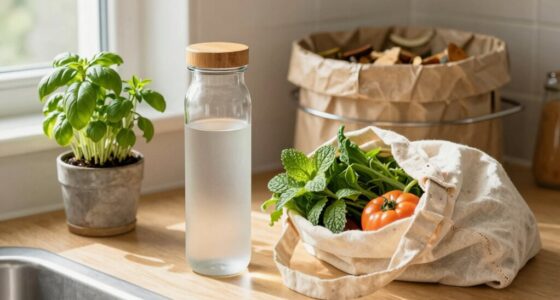

To stay eco-friendly and efficient during busy weeks, plan your meals around versatile, plant-based ingredients like beans, grains, and seasonal veggies. Prepare large batches and use leftovers creatively to save time and reduce waste. Shop with a reusable bag, make a detailed grocery list, and buy in bulk to cut packaging waste. Store ingredients properly and label them for quick access. Keep exploring simple tips to make your meal prep more sustainable and stress-free.

Prime made for students and young adults
- Fast, free delivery for dorm and study essentials
- Prime Video and Amazon Music included
- Member-only deals
Key Takeaways
- Plan weekly meals around versatile, plant-based ingredients like grains and legumes to save time and reduce waste.
- Batch-prepare large portions of meals and leftovers to streamline busy week cooking.
- Use reusable containers and labels to organize prepped ingredients for quick access and minimal spoilage.
- Shop with a detailed list from bulk sections and choose local, organic produce to minimize packaging waste.
- Make snacks and staples at home to avoid pre-packaged items and control ingredient quality.
Planning your meals with sustainability in mind not only benefits the environment but also makes your routines more efficient and cost-effective. When you focus on zero waste practices, you minimize food scraps and packaging waste, helping reduce your ecological footprint. Incorporating plant-based ingredients into your meal prep is a smart move because these foods generally require fewer resources to produce, making your meals more sustainable. Plus, plant-based diets often cost less, so you save money while supporting environmental health.
To start, create a weekly plan that emphasizes versatile ingredients. By choosing foods like beans, lentils, grains, and seasonal vegetables, you can prepare a variety of dishes without overbuying or wasting leftovers. Preparing large batches of plant-based meals means you only cook once or twice a week, saving both time and energy. Use leftovers creatively—turn roasted vegetables into soups, or grain bowls into wraps—to prevent waste and keep your meals interesting. This approach not only reduces waste but also ensures you always have nutritious options ready to go. Additionally, meal planning can help you better manage your grocery shopping and reduce impulsive purchases that lead to spoilage.
When shopping, bring reusable bags and containers to avoid single-use plastics. Stick to a shopping list based on your meal plan to prevent impulse buys that often lead to spoilage. Opt for bulk sections when possible, as they typically use less packaging and allow you to buy only what you need. Focus on organic, local produce when available, which tends to be fresher and has a smaller carbon footprint. These small choices add up, making your meal prep more sustainable overall. Additionally, choosing sustainable food sources supports biodiversity and helps conserve natural resources.
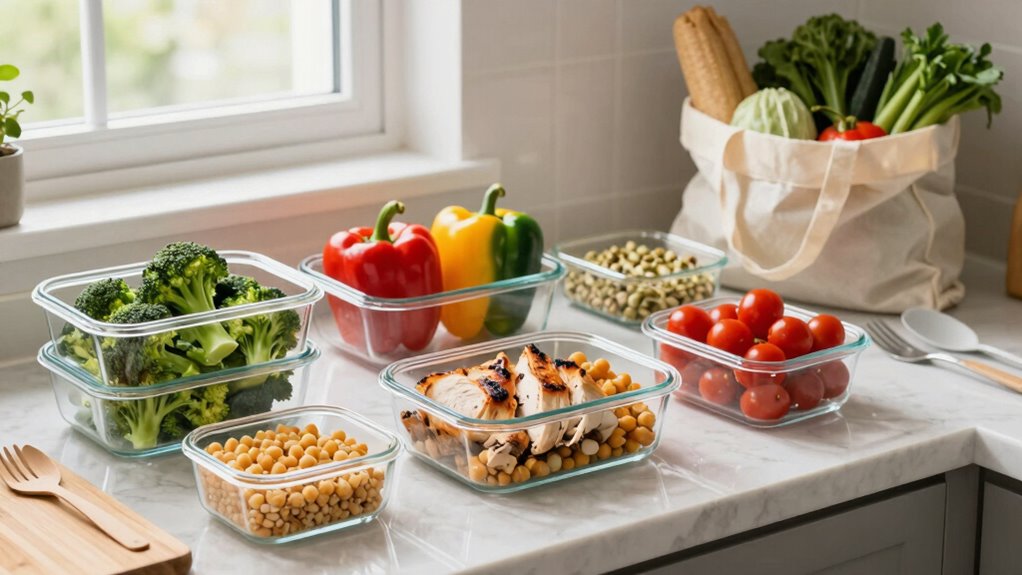
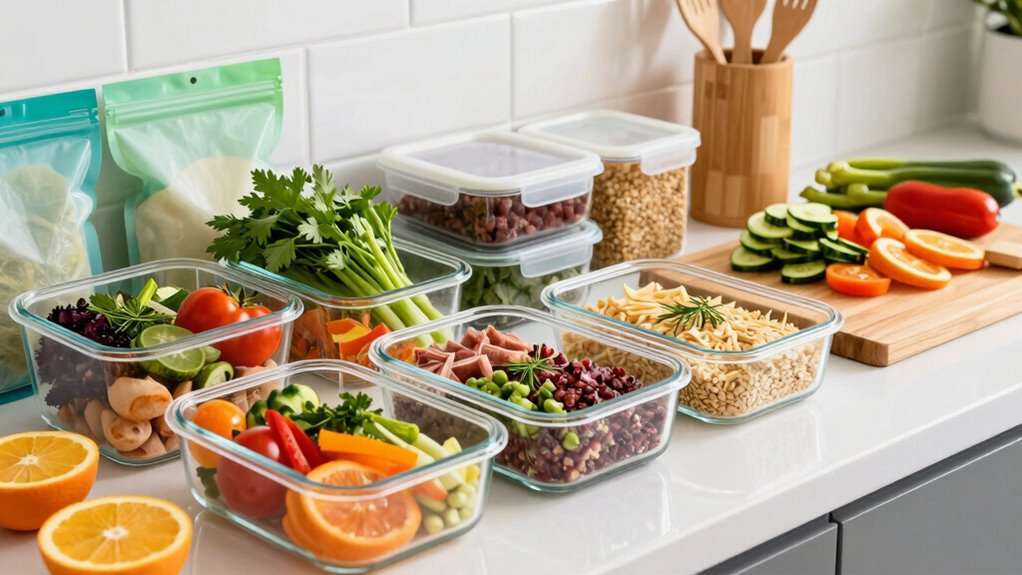
Storage is key to maintaining fresh, delicious meals throughout the week. Invest in glass containers with airtight lids, which are durable, reusable, and free of harmful chemicals. Store prepped ingredients in clear containers so you can easily see what you have, reducing the chance of forgotten produce spoiling. Label everything with dates so you consume items while they’re still fresh, helping you avoid unnecessary waste. Proper storage techniques also help you plan your meals more effectively, minimizing waste.
Finally, embrace the idea of minimal packaging by preparing your own snacks and lunches. Making hummus, energy bites, or salads at home not only reduces waste but also allows you to control ingredients, ensuring they’re healthy and eco-friendly. Incorporating a plant-based diet into your weekly routine amplifies your sustainability efforts, lowering your carbon footprint. With a little planning and mindful shopping, you can make your busy week both eco-conscious and hassle-free, all while enjoying nutritious, delicious meals.
Popular right now

Dyson Cyclone V10 Origin Cordless Vacuum

TCL 85-Inch QM6K Series QLED Mini LED 4K HDR Smart Google TV

Vitamix Propel Series 510 Professional-Grade Blender, 3 Programs, Black
As an affiliate, we earn on qualifying purchases.
Frequently Asked Questions
How Can I Reduce Food Waste During Meal Prep?
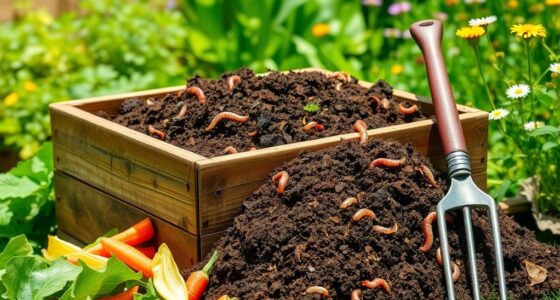
To reduce food waste during meal prep, plan your meals carefully and buy only what you’ll use. Store leftovers properly to prevent spoilage and get creative with ingredients nearing their expiration. You can also practice composting techniques for food scraps like vegetable peels and coffee grounds, turning waste into nutrient-rich soil. This approach not only minimizes waste but also supports sustainable food practices and reduces your environmental impact.
What Are Eco-Friendly Packaging Options for Meal Storage?
Think of eco-friendly packaging options like a garden of choices. You can use reusable containers, which are like sturdy pots that last season after season, reducing waste. Compostable wraps act like biodegradable mulch, breaking down naturally after use. These options help you cut down on single-use plastics, making your meal prep more sustainable. Embracing these alternatives supports eco-conscious habits and keeps your environment healthy.
How Do I Plan Meals to Minimize Energy Use?
You can plan meals to minimize energy use by focusing on meal portioning to avoid waste and cooking only what you’ll consume. Use energy-efficient appliances like pressure cookers or microwave ovens instead of large stoves, and batch cook to save time and energy. Prep multiple meals at once, reducing overall appliance use, and choose ingredients that require less cooking time. This approach helps cut energy consumption while keeping your meals sustainable.
Are There Sustainable Protein Sources Suitable for Meal Prep?
Yes, there are sustainable protein sources perfect for meal prep. You should consider plant-based options like lentils, chickpeas, and tofu, which are energy-efficient to produce. Additionally, choosing locally sourced eggs or dairy reduces transportation emissions. Incorporate these into your meals, prep in advance, and you’ll enjoy nutritious, eco-friendly proteins that support your busy schedule and contribute to a more sustainable lifestyle.
How Can I Incorporate Seasonal Produce Into Weekly Meals?
You can incorporate seasonal produce into your weekly meals by choosing fresh ingredients at their peak, which offers seasonal flavor and maximizes taste. Plan your meals around what’s available locally, and get creative with versatile ingredients like roasted vegetables, salads, or stir-fries. Store leftovers properly to reduce waste, and experiment with new recipes that highlight the unique flavors of each season. This approach keeps your meals exciting and environmentally friendly.
Conclusion
By embracing these sustainable meal prep tips, you’re planting seeds for a healthier planet and a more organized week ahead. Think of it as nurturing a garden—you’ll see your efforts grow into delicious, eco-friendly habits that flourish over time. Remember, small changes can ripple outward, making a big impact. So, stay committed, keep experimenting, and watch your sustainable lifestyle blossom into something truly rewarding. Your future self—and the Earth—will thank you.