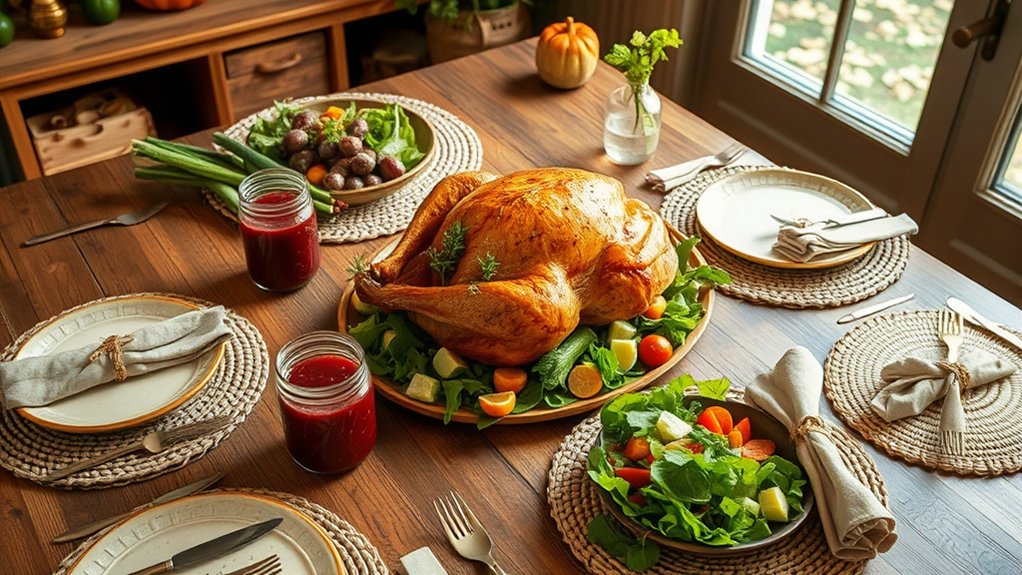

To make your Thanksgiving more eco-friendly, focus on sourcing local, seasonal ingredients from farmers’ markets or farm stands, which reduces transportation emissions and supports your community. Choose sustainable proteins like ethically raised meats or plant-based options, and plan meals around what’s in season to minimize waste and packaging. Use online delivery services or bulk purchases to cut down on packaging further. Keep sustainability in mind with smart planning—learn more for a greener feast.
Key Takeaways
- Plan your menu around seasonal, locally sourced ingredients to reduce transportation and energy use.
- Support local farmers by shopping at farmers’ markets or farm stands for fresh, sustainable produce.
- Choose sustainable proteins from local farms practicing humane and eco-friendly animal husbandry.
- Minimize packaging waste by bulk buying and using reusable or compostable containers.
- Incorporate plant-based dishes to lower environmental impact and promote biodiversity.

Have you ever wondered how your Thanksgiving celebration can be more eco-friendly? One of the simplest ways to make your feast greener is by focusing on farm to table practices and local sourcing. When you choose ingredients directly from nearby farms, you reduce the carbon footprint associated with long-distance transportation and packaging. Plus, shopping locally often means fresher, more seasonal produce, which requires less energy to grow and store. By supporting local farmers, you also help sustain the community and promote sustainable agricultural practices, ensuring that your holiday meal aligns with environmentally conscious values.
Switching to a farm to table approach means you’re more likely to buy in bulk and choose in-season foods, which minimizes waste and reduces the need for preservatives or extensive packaging. When you visit farmers’ markets or join a community-supported agriculture (CSA) program, you get access to a variety of fresh, local ingredients, from vegetables and fruits to meats and dairy. This not only enhances the flavor of your dishes but also guarantees that you’re consuming products harvested at peak ripeness, which is better for both taste and nutrition. Additionally, buying locally typically involves less plastic and packaging waste, helping you cut down on landfill contributions.
Buying local and in-season reduces waste, improves flavor, and cuts packaging for a more eco-friendly feast.
To implement local sourcing easily, plan ahead. Check out farmers’ markets early in the season or explore local farm stands. Many farms now offer online orders or delivery options, making it convenient to incorporate local ingredients into your Thanksgiving menu. When planning your meal, prioritize dishes that highlight seasonal produce, which is often more affordable and plentiful during the fall. For example, use locally grown squash, sweet potatoes, and apples, which not only taste better but also support sustainable farming methods that prioritize soil health and biodiversity.
Another way to embrace farm to table and local sourcing is by choosing meats from local farms that practice humane and sustainable animal husbandry. This reduces the environmental impact compared to mass-produced options and ensures you’re eating ethically. If you’re vegetarian or vegan, focus on seasonal vegetables and grains sourced from nearby farms. This approach not only minimizes your meal’s ecological footprint but also encourages a more mindful, connected dining experience.

Bmboryxa 25Pack(50pcs) Meal Prep Containers Reusable, 32oz Bamboo-Powder Food Containers with Lids, Plant-based To Go Containers for Lunch – Microwave, Freezer, Dishwasher Safe
Bamboo-Powder Biobased Meal Prep Containers: Made from bamboo-powder biobased material, it naturally contains bamboo quinone—a compound that allows…
As an affiliate, we earn on qualifying purchases.
As an affiliate, we earn on qualifying purchases.
Frequently Asked Questions
How Can I Reduce Food Waste During Thanksgiving?
To reduce food waste this Thanksgiving, practice portion control tips to serve just enough and avoid leftovers. Get creative with food donation ideas by sharing surplus dishes with neighbors or local charities. Plan your menu carefully to buy only what you need, and store leftovers properly for future meals. These steps help minimize waste, save money, and support your community during the holiday season.
What Are Eco-Friendly Alternatives to Traditional Thanksgiving Decorations?
You can choose eco-friendly alternatives by creating DIY centerpieces from recycled materials or seasonal flowers, which add a personal touch and reduce waste. Use reusable garlands made from fabric or natural elements like pinecones and dried leaves to decorate your space. These options not only look beautiful but also minimize environmental impact, helping you celebrate Thanksgiving sustainably while adding a warm, festive atmosphere to your home.
How Can I Make My Thanksgiving Travel More Sustainable?
To make your Thanksgiving travel more sustainable, consider choosing eco-friendly travel options like train or bus instead of flying. Carpool with friends or family to reduce emissions, and pack efficiently to minimize waste. You can also buy carbon offsets for your trip to balance out your carbon footprint. Planning ahead and selecting low-impact transportation not only helps the environment but also makes your holiday more eco-conscious.
Are There Sustainable Options for Thanksgiving Beverages?
Think of your Thanksgiving beverage choices as planting seeds for a greener future. You can sip sustainably by choosing local wine and organic beverages, which are like fresh, unspoiled harvests from nearby fields. These options reduce your carbon footprint and support local farmers. Opt for glass bottles over plastic, and consider making your own herbal teas or infusions at home. Every mindful sip helps nurture a more eco-friendly celebration.
How Do I Compost Thanksgiving Leftovers Effectively?
To compost Thanksgiving leftovers effectively, start by setting up a compost bin in your yard or a designated area, ensuring it has proper aeration and drainage. Use kitchen composting tips like layering food scraps with yard waste and avoiding meat or dairy, which can attract pests. Regularly turn the compost to speed up decomposition. This way, your leftovers transform into nutrient-rich soil, helping you reduce waste sustainably.
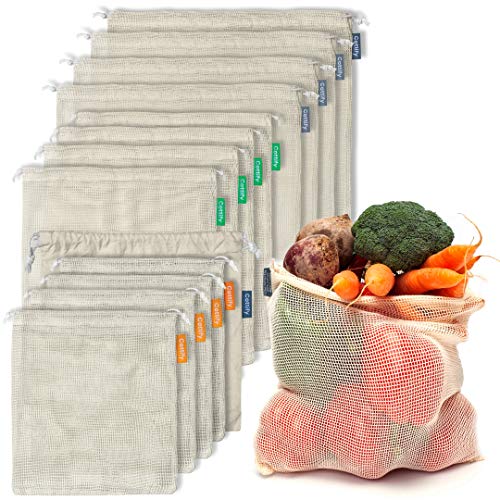
12+1 Reusable Produce Bags Grocery Washable, Organic Cotton Mesh Produce Bags, Double-Stitched & Tare Weigh, Mesh bags for vegetables, Cotton Produce Bags Reusable Washable, Produce bag 4xS, 4xM, 4xL
🍏 LIGHTWEIGHT AND STRONG: The weight of these reusable vegetable bags for refrigerator is among the lowest on…
As an affiliate, we earn on qualifying purchases.
As an affiliate, we earn on qualifying purchases.
Conclusion
As you gather around your table, remember that your choices echo beyond this moment. Like a seed planted with care, your eco-friendly efforts grow into a future where gratitude and sustainability flourish side by side. Each mindful decision, from composting scraps to choosing local produce, sows hope for a healthier planet. Let your Thanksgiving be a symbol of renewal—an act of kindness that ripples outward, nurturing not just your loved ones, but the world we all share.

Chic Leaf Palm Leaf Plates 8 Inch – Disposable Bamboo Style Square for Winter Events, Rustic Dinner – Heavy Duty, Compostable Serving Dish for Appetizers & Dessert, Elegant Easter Tableware
Winter Comfort Ready: Our natural palm leaf plates are heavy-duty to hold hot chili, grilled paninis, and your…
As an affiliate, we earn on qualifying purchases.
As an affiliate, we earn on qualifying purchases.

Orgain Organic Vegan Protein Powder, Natural Unsweetened – 21g of Unflavored Plant Protein, 4g Prebiotic Fiber, Low Net Carbs, No Added Sugar, Non-GMO, For Shakes & Recipes, 1.59 lb
CLEANER INGREDIENTS: 21g of Organic plant based protein and 0g sugar. Our protein blend contains Organic peas, brown…
As an affiliate, we earn on qualifying purchases.
As an affiliate, we earn on qualifying purchases.