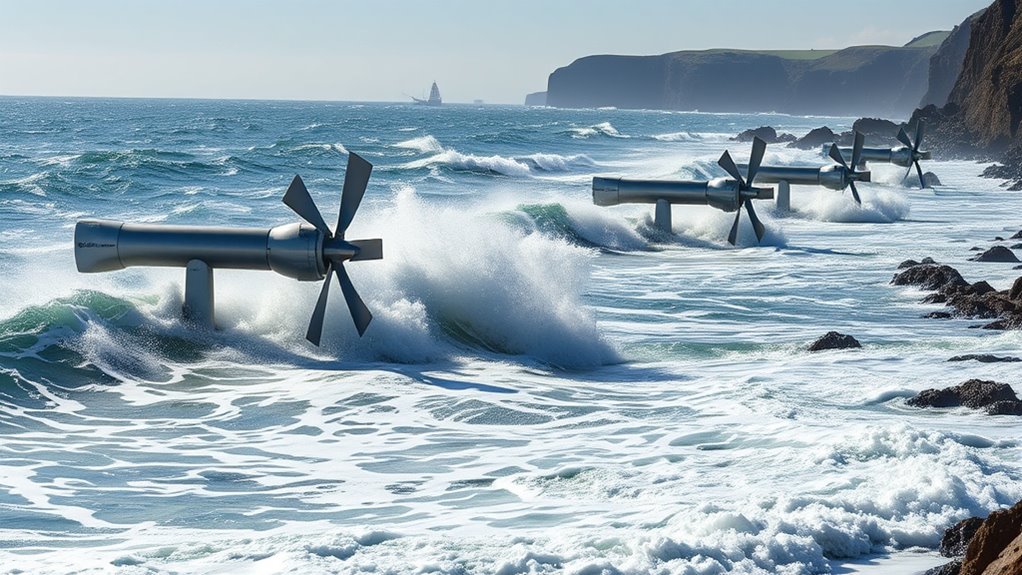

Harnessing wave and tidal energy allows you to tap into the ocean’s immense power to generate clean, renewable electricity. By carefully selecting sites and designing installations to minimize ecological impacts, you can protect marine life and coastal environments. This sustainable approach reduces reliance on fossil fuels and cuts greenhouse gas emissions. If you want to understand how these technologies balance energy needs with environmental preservation, exploring further will reveal the key strategies across this exciting field.
Key Takeaways
- Wave and tidal energy harness ocean movements to generate renewable electricity, reducing reliance on fossil fuels.
- Proper site selection and environmental assessments are essential to protect marine biodiversity and prevent habitat disruption.
- Infrastructure can influence coastal erosion and shoreline stability, requiring careful engineering to minimize negative impacts.
- Advances like AI monitoring optimize system performance while ensuring ecological preservation and minimal environmental disruption.
- Sustainable development of ocean energy relies on balancing energy production with ecological and shoreline protection through ongoing oversight.
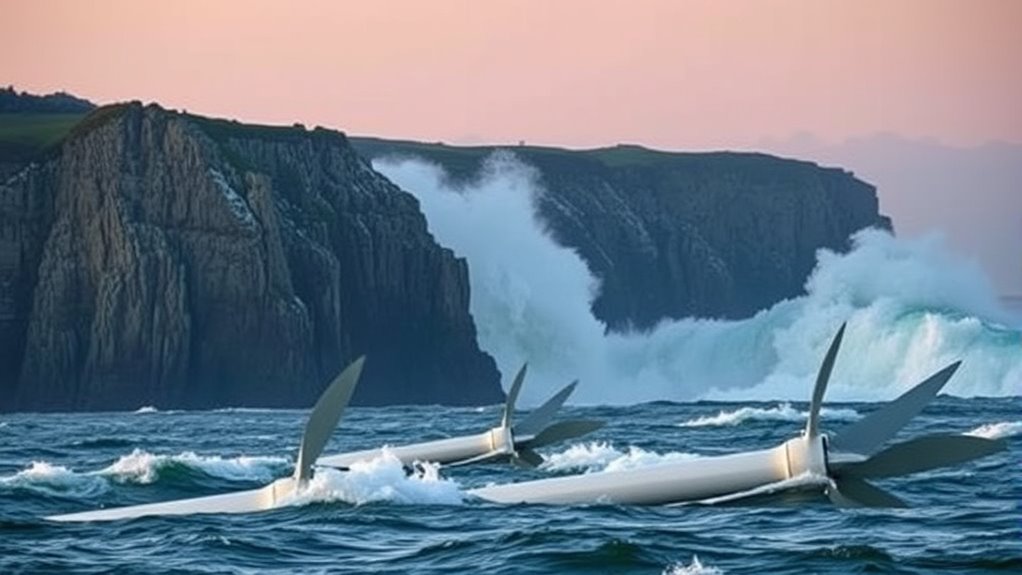
Wave and tidal energy harness the power of the ocean to generate clean, renewable electricity. As you explore this innovative energy source, you’ll find it offers a promising way to reduce reliance on fossil fuels while tapping into a vast, untapped resource. When harnessed properly, wave and tidal systems can produce significant amounts of power without emitting greenhouse gases, making them essential components of a sustainable energy future. However, implementing these technologies involves understanding their impact on the marine environment and coastal areas.
One key aspect to contemplate is how wave and tidal projects can influence marine biodiversity. These energy systems are typically installed in coastal regions rich in marine life, so their development must avoid disrupting habitats or migration patterns of fish, marine mammals, and seabirds. Proper site selection and environmental assessments help guarantee that these projects coexist with local ecosystems. When designed thoughtfully, wave and tidal farms can minimize their footprint, preserving biodiversity while providing renewable energy. You should also be aware that, if not managed carefully, these installations could potentially disturb breeding grounds or nesting sites, which could threaten local species. Thus, ongoing monitoring and adaptive management are essential to balancing energy development with ecological preservation.
Wave and tidal projects must carefully avoid disrupting marine habitats and migration patterns.
Another important factor is the impact on coastal erosion. Coastal regions are naturally dynamic environments, and the construction of wave and tidal infrastructure can alter local hydrodynamics. If these systems change wave patterns or disrupt sediment flows, they could either exacerbate erosion or, conversely, help stabilize beaches depending on their placement and design. For example, some tidal barriers may serve as natural sediment traps, reducing erosion in vulnerable areas. Conversely, poorly planned installations might accelerate erosion by interrupting natural currents. As you consider deploying wave and tidal energy devices, it’s indispensable to assess their potential to influence shoreline stability. Proper engineering solutions, combined with environmental safeguards, can help mitigate negative effects and even contribute to coastal resilience. Additionally, advancements in AI security are increasingly being utilized to monitor and optimize the operation of these energy systems, ensuring their environmental impact remains minimal.
In essence, harnessing the ocean’s energy through wave and tidal technologies offers a clean, sustainable way to generate power. Yet, it demands careful planning to protect marine biodiversity and prevent unintended coastal erosion. When you approach these projects with a focus on environmental stewardship, they can become a harmonious part of the coastal landscape—delivering renewable energy while maintaining the health and stability of marine and shoreline ecosystems. As you navigate this emerging field, remember that thoughtful integration and ongoing environmental oversight are key to releasing the ocean’s full potential responsibly.
Frequently Asked Questions
What Environmental Impacts Do Wave and Tidal Energy Projects Have?
Wave and tidal energy projects can impact marine wildlife by disrupting habitats and migration patterns. They may also cause coastal erosion if not properly managed, altering shoreline stability. While these projects offer clean energy, you should consider these environmental impacts to minimize harm. Proper planning and technology improvements can help protect marine ecosystems and reduce negative effects on coastlines, ensuring sustainable energy development without damaging the environment.
How Cost-Effective Are Wave and Tidal Energy Compared to Other Renewables?
Wave and tidal energy can be more cost-effective than you think, with some projects reaching a levelized cost of around $0.10 per kWh, comparable to or lower than offshore wind. When you compare the cost, these sources show promising economic viability, especially in coastal regions with consistent tides or waves. While initial investments remain high, ongoing technological advances could make wave and tidal energy more competitive in the future.
What Are the Main Technological Challenges in Harnessing Ocean Energy?
You face significant technological challenges in harnessing ocean energy, mainly due to resource variability and the need for seamless technology integration. The unpredictable nature of waves and tides makes consistent energy generation difficult, requiring advanced control systems. Additionally, integrating these systems with existing energy grids demands innovative solutions to guarantee durability and efficiency, especially in harsh marine environments. Overcoming these challenges is essential to making ocean energy a reliable renewable source.
How Long Is the Typical Lifespan of Wave and Tidal Energy Infrastructure?
Sure, your wave and tidal energy infrastructure typically lasts about 20 to 25 years, assuming it doesn’t succumb to the ocean’s relentless charm. You’ll need to constantly monitor infrastructure durability and schedule maintenance to keep everything running smoothly. Think of it as a seaworthy marriage—long-lasting but requiring regular care and occasional repairs—otherwise, it’ll become just another underwater relic, a sad proof to nature’s playful yet punishing attitude.
Are There Any Existing Large-Scale Commercial Wave and Tidal Energy Plants?
Yes, you’ll find some large-scale commercial wave and tidal energy plants operating today. These projects often integrate marine energy technologies like ocean current turbines to maximize efficiency. For example, in regions with strong tidal flows, such plants harness the power of ocean currents, contributing considerably to renewable energy supplies. As you explore marine energy integration, you’ll see that these large-scale implementations demonstrate the potential of ocean-based renewable power sources.
Conclusion
By tapping into the ocean’s vast energy, you’re opening the door to a cleaner, sustainable future. Wave and tidal power offer promising solutions that could turn the tide against fossil fuels. While challenges remain, embracing this technology means you’re riding the wave of innovation rather than being left behind. Remember, in the race for renewable energy, it’s better to be a part of the solution than stuck on the sidelines, watching opportunities wash away.