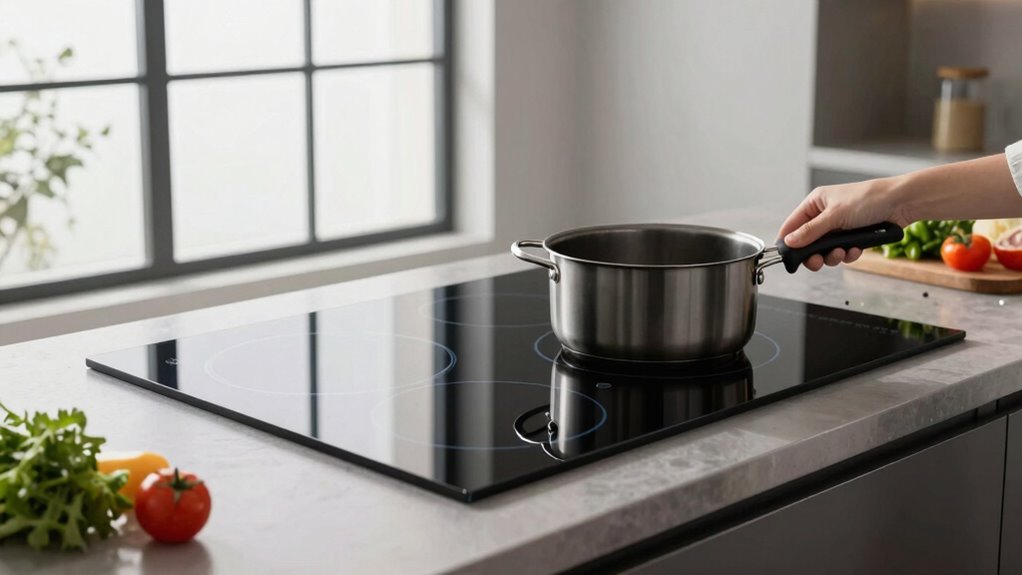

Induction cooking became a sustainability trend because it heats cookware directly, cutting down on energy waste and use. Its instant adjustments and rapid heating save time and resources, while the absence of open flames or hazardous gases reduces safety risks and emissions. Plus, its smooth, easy-to-clean surface promotes better maintenance and less waste. If you keep exploring, you’ll discover even more ways induction cooking supports eco-friendly living and reduces environmental impact.

Prime made for students and young adults
- Fast, free delivery for dorm and study essentials
- Prime Video and Amazon Music included
- Member-only deals
Key Takeaways
- Induction cooking’s energy efficiency reduces household energy consumption and greenhouse gas emissions, supporting sustainability efforts.
- Its rapid heating and precise control minimize resource waste and preheating, promoting eco-friendly cooking practices.
- The elimination of open flames and hazardous gases enhances safety and environmental health in kitchens.
- Smooth, easy-to-clean surfaces decrease water and cleaning product use, aligning with sustainable cleaning habits.
- Growing awareness of eco-conscious living has driven demand for energy-saving appliances like induction cooktops.
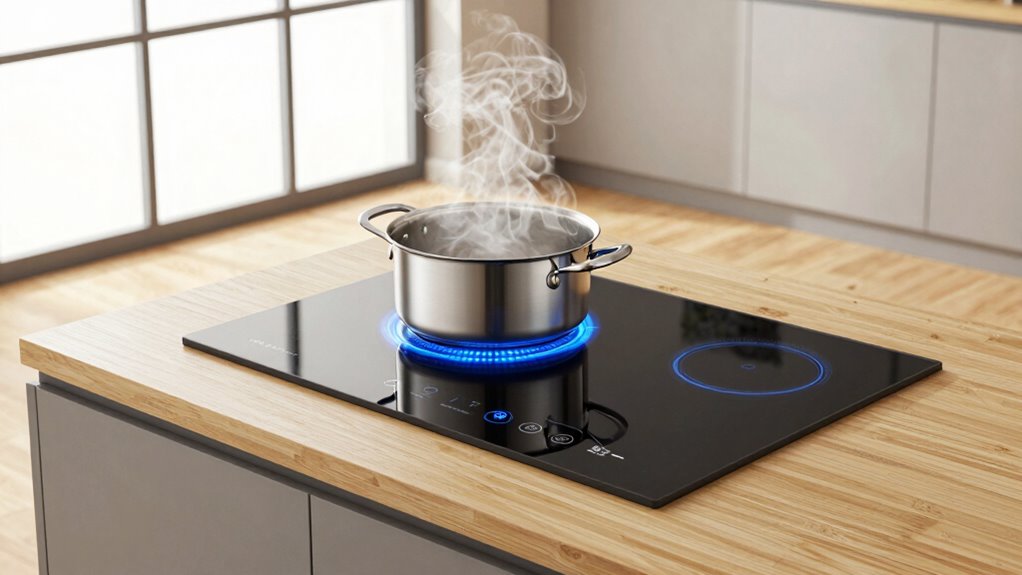
As more people seek eco-friendly kitchen solutions, induction cooking has emerged as a leading sustainability trend. You might wonder what makes it stand out in a world increasingly focused on reducing environmental impact. The answer lies in its impressive energy efficiency and capacity for resource conservation. Unlike traditional gas or electric stoves, induction cooktops use electromagnetic fields to directly heat your cookware. This means less energy is wasted, as heat is generated precisely where you need it, without losing energy to surrounding air or cookware surfaces. When you switch to induction, you’re actively reducing your household’s energy consumption, which not only benefits your utility bills but also lessens the strain on power grids and reduces greenhouse gas emissions. Additionally, induction technology’s electromagnetic fields ensure only the cookware heats up, making it a safer option in the kitchen. In terms of resource conservation, induction cooking is a game-changer. Because it heats cookware directly, it requires less time and energy to bring food to temperature. This efficiency translates into shorter cooking times, which means you’re using fewer resources overall. Additionally, induction cooktops are highly responsive; they adjust heat instantly, so you avoid wasting energy on prolonged preheating or overheating. This precision helps you cook more efficiently and minimizes excess use of electricity. The rapid heating and cooling also mean less wear and tear on your appliances, extending their lifespan and reducing electronic waste. Another aspect of resource conservation is that induction cooktops tend to be safer and cleaner. You don’t need to keep an open flame or use potentially hazardous gases, reducing risks and emissions associated with traditional cooking methods. Plus, the smooth surface of induction stoves makes cleaning easier, which encourages better maintenance and less water or cleaning product waste. Since induction cooktops only heat the cookware and not the surrounding surface, you’re less likely to waste energy through heat loss, making your cooking process more sustainable overall. Furthermore, the energy efficiency of induction technology means less overall energy consumption in your household, contributing to a more sustainable lifestyle. A sustainable kitchen technology like induction cooking can also inspire more environmentally conscious habits in your daily routine. Incorporating energy-saving appliances into your kitchen not only benefits the environment but can also lead to significant savings over time. Moreover, the adoption of sustainable technology like induction cooking supports broader efforts to minimize environmental impact.
induction cooktop energy efficient
As an affiliate, we earn on qualifying purchases.
As an affiliate, we earn on qualifying purchases.
Frequently Asked Questions
How Does Induction Cooking Impact Energy Consumption Compared to Traditional Methods?
Induction cooking reduces your energy consumption considerably compared to traditional methods. It’s highly energy-efficient because it directly heats your cookware, minimizing wasted heat. Plus, you enjoy faster cooking speeds, saving you time and energy. You’ll notice quicker heat-up times and precise temperature control, making your cooking more efficient. Overall, induction helps you cut down on energy use while still delivering faster, safer, and more controlled cooking experiences.
Are Induction Cooktops Easily Recyclable at the End of Their Lifespan?
Induction cooktops are like fragile leaves—easily broken but recyclable. You can recycle them through specialized processes that separate components efficiently. While their material durability varies, most parts are made from metals and plastics that can be reclaimed. Recycling processes help reduce waste, making induction cooktops more sustainable at the end of their lifespan. Proper disposal guarantees valuable materials are reused, supporting eco-friendly practices and reducing environmental impact.
What Materials Are Used in the Manufacturing of Induction Cooktops?
Induction cooktops are made from durable materials like glass-ceramic surfaces, copper coils, and aluminum or steel components. These materials are chosen for their material durability and efficient heat transfer. The manufacturing process emphasizes sustainability by using eco-friendly practices and recyclable materials. By selecting high-quality components, manufacturers guarantee longer product life, reducing waste and environmental impact, making induction cooking not only efficient but also aligned with sustainability goals.
How Does Induction Cooking Influence Indoor Air Quality and Emissions?
Induction cooking improves indoor air quality by producing minimal emissions compared to traditional methods. Since it heats cookware directly through magnetic fields, it reduces the release of airborne pollutants like smoke and fumes. This technology promotes emission reduction, creating a cleaner, healthier indoor environment. You’ll notice less lingering odor and fewer airborne particles, making your cooking space safer and more environmentally friendly.
What Are the Long-Term Environmental Benefits of Adopting Induction Technology?
By adopting induction technology, you promote powerful, precise, and pollution-free cooking, producing long-term environmental benefits. Induction’s energy efficiency minimizes resource consumption, reducing greenhouse gases and fossil fuel reliance. This sustainable switch conserves resources, curbs carbon footprints, and champions eco-friendly practices. Over time, you contribute to a cleaner climate, support energy conservation, and foster a future where efficient, eco-conscious cooking becomes the standard for greener living.
As an affiliate, we earn on qualifying purchases.
Conclusion
So, next time you marvel at how induction cooking saves energy and reduces waste, just remember—it’s all part of the trendy sustainability game. Who knew that something so sleek and fast could also be eco-friendly? Ironically, embracing this high-tech kitchen marvel might just make you feel a little more virtuous while still enjoying a perfectly cooked meal. After all, saving the planet has never been so stylish—and deliciously convenient.
safety features induction cooktop
As an affiliate, we earn on qualifying purchases.
As an affiliate, we earn on qualifying purchases.
As an affiliate, we earn on qualifying purchases.
Halloween Picks
halloween
As an affiliate, we earn on qualifying purchases.