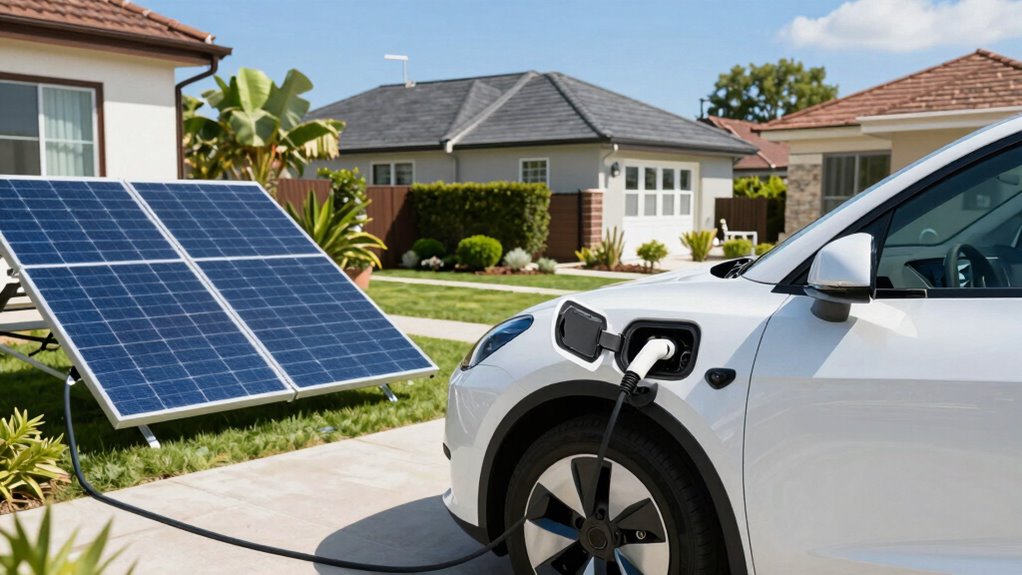

Bidirectional charging lets you turn your EV into a mobile energy source that can send power back to your home, the grid, or other devices. This technology helps you save money by charging during off-peak times and discharging during peak demand. It also supports renewable energy use and can provide backup power during outages. As this system grows, you’ll see more ways to manage your energy better—keep exploring to find out more about its potential.
Key Takeaways
- EV owners can use their vehicles as mobile energy storage to power their homes or devices.
- It enables saving costs by charging during off-peak hours and discharging during peak demand.
- Owners can earn money by supplying excess energy back to the grid through vehicle-to-grid technology.
- Bidirectional charging provides backup power during outages, increasing energy security.
- It supports environmental sustainability by utilizing renewable energy and reducing carbon footprint.
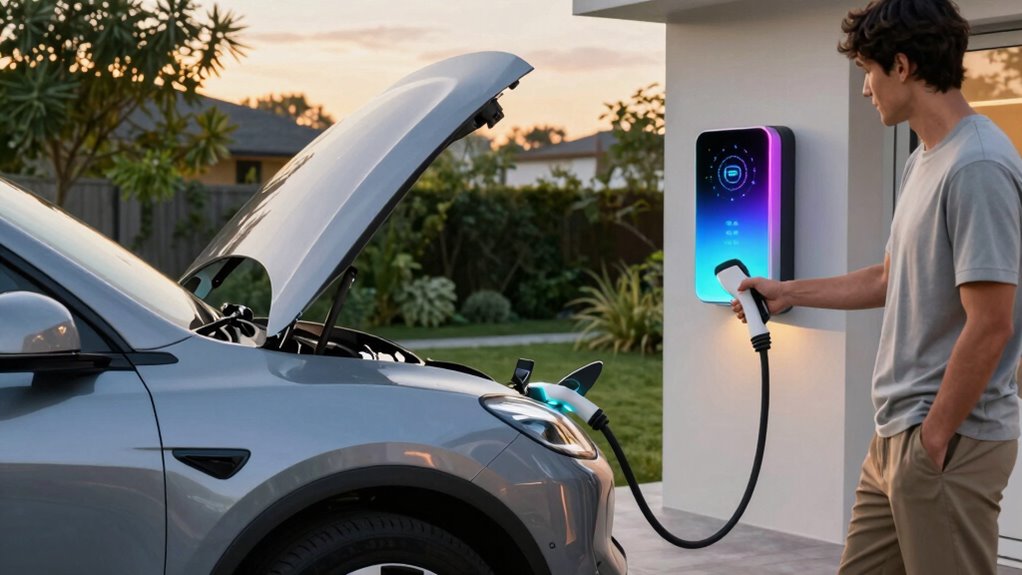
Have you ever considered how your electric vehicle could do more than just get you from point A to point B? With bidirectional charging, your EV becomes a flexible energy resource, transforming how you think about vehicle infrastructure and energy management. Instead of simply drawing power when you need it, your car can send electricity back to your home, the grid, or even neighboring devices. This concept, often called vehicle-to-grid (V2G), leverages the advanced technology within your EV and the supporting infrastructure to create a more integrated, efficient energy ecosystem.
At its core, bidirectional charging lets your vehicle act as a mobile energy storage unit. When your car is plugged in, it doesn’t have to sit idle; instead, it can supply power during peak demand times or outages. This is especially valuable in areas with evolving vehicle infrastructure, where the grid might experience stress during high usage periods. By feeding energy back into the system, you help balance load demands and reduce strain on the grid, which benefits everyone. As an EV owner, you gain a sense of control over your energy consumption and costs, knowing that your vehicle can serve as a backup power source if needed.
Energy management becomes more dynamic with bidirectional charging. You can program your vehicle to charge during off-peak hours when electricity is cheaper and discharge during peak times to save money. This smart energy flow helps optimize your household’s energy use, making your EV a key part of your overall energy strategy. Additionally, as more renewable sources like solar and wind are integrated into the grid, your EV can act as a buffer—storing excess green energy during sunny or windy days and releasing it when production dips. This not only helps reduce your carbon footprint but also encourages a cleaner, more sustainable energy system. Moreover, the development of vehicle infrastructure is critical to unlocking the full potential of bidirectional charging technology. As the infrastructure expands, smart grid integration becomes more feasible, allowing for more seamless energy exchange between your EV and the broader system. Developing standardized protocols is also essential to ensure compatibility across different vehicle and charging systems, further facilitating widespread adoption. Additionally, establishing robust charging standards will help accelerate the deployment of bidirectional charging stations and ensure compatibility across various EV models. Facilitating greater public awareness of these technologies can also accelerate adoption and infrastructure development, creating a more resilient energy ecosystem.
However, the adoption of bidirectional charging depends heavily on the development of vehicle infrastructure. Charging stations need to support two-way power flow, and your home’s electrical system might require upgrades to handle the additional load. As this infrastructure expands, more EV owners will be able to participate in energy sharing, making the concept of vehicle-to-everything (V2X) a reality. Essentially, bidirectional charging empowers you to manage your energy more proactively, turning your EV into a versatile tool that benefits your wallet, your community, and the environment. It’s a forward-thinking technology that redefines what an electric vehicle can do, making it a crucial component of smarter, greener energy management.
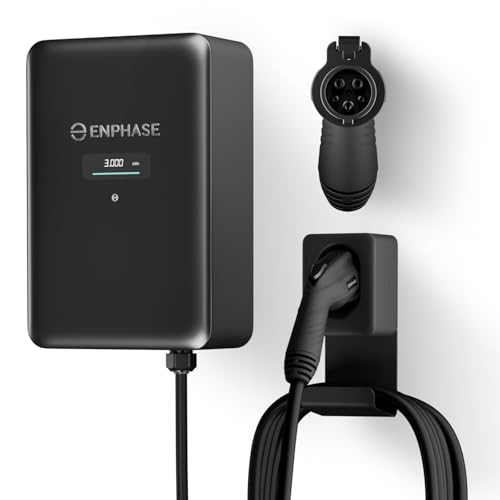
Enphase IQ EV Charger 2 | 48A Smart Level 2 Charger (up to 11.5 kW, 240 V) | Wi-Fi + Bluetooth | Hardwired | UL Certified | 25 ft Cable | J1772 | Indoor/Outdoor
- Fast Charging Power: Up to 11.5 kW (46 miles/hour)
- Utility Rebate Ready: Revenue grade energy monitoring
- Solar Compatible: Integrates with home solar systems
As an affiliate, we earn on qualifying purchases.
As an affiliate, we earn on qualifying purchases.
Frequently Asked Questions
How Does Bidirectional Charging Affect EV Battery Lifespan?
Bidirectional charging can impact your EV battery lifespan by increasing battery degradation over time. Each charging cycle, whether charging or discharging, wears down the battery slightly. While it allows you to use your EV as a power source, frequent or improper use may accelerate battery degradation. To protect your battery, it’s essential to balance bidirectional charging with regular, careful charging habits, minimizing unnecessary charging cycles and prolonging battery health.
Are There Any Additional Costs for Installing Bidirectional Chargers?
You might face additional costs for installing bidirectional chargers, mainly due to installation costs and compatibility requirements. These chargers often need special wiring or upgraded electrical systems, which can increase expenses. Not all EVs and home setups are compatible, so you’ll want to check compatibility requirements first. While the initial investment can be higher, some rebates or incentives could help offset these costs, making bidirectional charging more affordable.
Can Bidirectional Charging Be Used During Power Outages?
Yes, you can use bidirectional charging during power outages, which enhances your emergency preparedness. It allows you to power essential devices or your home, providing energy independence when the grid is down. This feature makes your EV a reliable backup power source, ensuring you stay connected and safe during emergencies. Just make sure your charger and vehicle are compatible for such backup use, and follow safety guidelines for outdoor or emergency power setups.
What Safety Measures Are in Place for Bidirectional Energy Transfer?
You might worry about safety risks, but advanced safety protocols and protection mechanisms are in place to keep you safe during bidirectional energy transfer. These systems automatically detect faults, disconnect power if needed, and prevent electrical hazards. Manufacturers design these features to guarantee reliable, secure operation, giving you peace of mind that your vehicle and home are protected when energy flows in either direction.
How Does Bidirectional Charging Impact Electricity Rates and Billing?
Bidirectional charging can lower your electricity costs by enabling smart grid integration and energy trading. You can sell excess energy from your EV back to the grid during peak times, earning credits or reducing your bills. This process allows you to actively participate in energy markets, making your charging and discharging decisions more cost-effective. Overall, it offers greater control over your energy usage and potential savings on your electricity rates.

EV Charging Infrastructure Design: NEC 2026 Compliance, Load Management, and Fleet Charging Solutions (Electric Vehicle & Battery Engineering Series)
As an affiliate, we earn on qualifying purchases.
As an affiliate, we earn on qualifying purchases.
Conclusion
As an EV owner, bidirectional charging opens up exciting possibilities, allowing you to power your home or sell electricity back to the grid. Imagine saving an average of $200 annually on energy costs—just by using your car as a battery. With over 10 million electric vehicles on the road worldwide by 2023, this technology could revolutionize how you think about energy and vehicle ownership. Embrace bidirectional charging and take control of your energy future.

ChargePoint HomeFlex Level 2 EV Charger, Hardwired NACS Charging Station – Tesla Compatible, Fast Charge Solution for Electric Vehicles
- Reliable Home Charging: Builds dependable EV charging stations for various settings
- Mobile App Control: Manage charger, reminders, and smart home integration
- Extensive Charging Network: Access 274,000+ stations across North America and Europe
As an affiliate, we earn on qualifying purchases.
As an affiliate, we earn on qualifying purchases.

Wallbox Pulsar Plus Level 2 Ev Charger 48A, Electric Car Charger EVSE J1772
- Fast Charging Speed: Up to 45 miles of range per hour
- High Power Output: 11.5 kWh with adjustable current
- Universal Compatibility: Works with all EVs (adapter for Tesla)
As an affiliate, we earn on qualifying purchases.
As an affiliate, we earn on qualifying purchases.