
AgriTech is booming with innovations like vertical farms and precision agriculture that boost efficiency and sustainability. Vertical farms let you grow fresh produce year-round in urban spaces, reducing transportation and environmental impact. Meanwhile, drone monitoring helps you optimize water, nutrients, and pest control with real-time data. These advancements make food production smarter, cleaner, and more local. If you want to see how these technologies are shaping the future of farming, keep exploring these exciting innovations.
Key Takeaways
- Vertical farms maximize urban space, enabling year-round crop production with minimal land use.
- Precision agriculture leverages drone monitoring for real-time crop health assessment and resource optimization.
- Combining vertical farming and precision tech reduces environmental impact and enhances local food security.
- Advanced technologies improve crop yields, nutritional quality, and sustainability in urban agriculture.
- Growing adoption of AgriTech promotes sustainable, efficient, and resilient food systems worldwide.
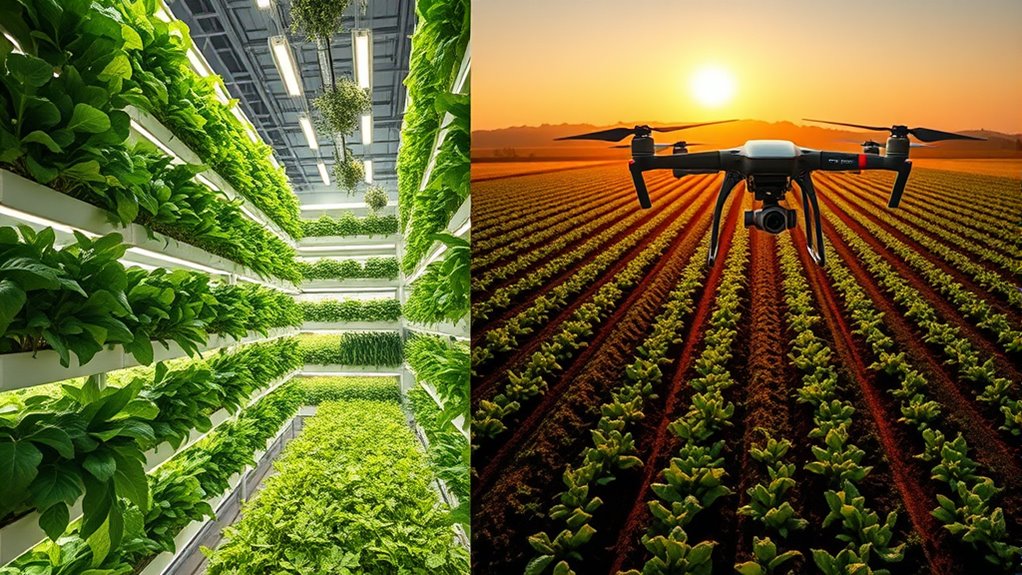
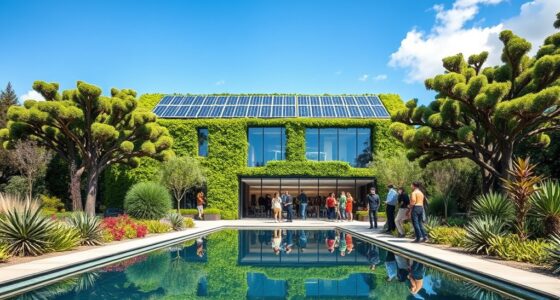
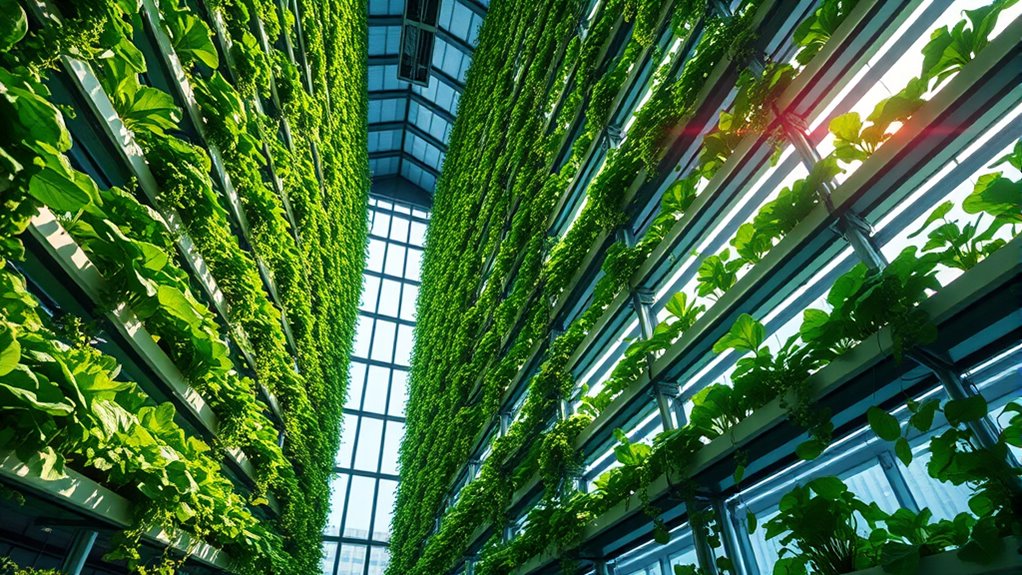
As the global population continues to grow and climate challenges intensify, innovative farming technologies are transforming agriculture. You’re now living in a time where urban farming plays a vital role in ensuring fresh produce reaches city dwellers efficiently. These vertical farms, often nestled within urban environments, use minimal space while maximizing output. By stacking layers of crops vertically, you can grow food year-round, regardless of external weather conditions. This approach not only reduces transportation emissions but also brings food production closer to consumers. With urban farming gaining momentum, you’re empowered to participate in local food systems, reducing your carbon footprint and supporting sustainability initiatives. Freshly harvested produce from these systems often boasts higher nutritional content due to shorter storage times and controlled growing conditions.
Drone monitoring is another groundbreaking development that enhances agricultural productivity and resource management. You might see drones flying over fields, gathering real-time data on crop health, soil conditions, and water usage. This technology allows you to identify issues early, such as pest infestations or nutrient deficiencies, so you can act swiftly. Drones provide high-resolution images and multispectral data that help optimize irrigation schedules and fertilization plans, saving resources and boosting yields. As drone monitoring becomes more accessible, you’re able to make smarter, data-driven decisions that improve crop quality and reduce waste.
Vertical farms and drone monitoring together exemplify how precision agriculture is reshaping the future of farming. Instead of traditional methods that often rely on guesswork, you now have the tools to monitor and manage crops with pinpoint accuracy. This integration allows for targeted interventions, reducing the need for chemical inputs and conserving water. You can witness how these technologies enable local food production even in densely populated cities, making agriculture more sustainable and resilient against climate variability. Additionally, understanding the importance of spoiled lemon juice and proper storage can help promote food safety and reduce waste in your own household.
Top picks for "agritech rise vertical"
Open Amazon search results for this keyword.
As an affiliate, we earn on qualifying purchases.
Frequently Asked Questions
How Do Vertical Farms Impact Local Economies?
Vertical farms boost local economies by creating new job opportunities in urban dining and agriculture. You’ll see increased local employment as these farms need staff for operations, maintenance, and distribution. Plus, they attract consumers who prefer fresh, locally grown produce, supporting nearby businesses. As a result, vertical farms stimulate economic growth, enhance food security, and foster community engagement, making your city more vibrant and sustainable.
What Are the Energy Requirements for Vertical Farming?
Imagine bright LED lights illuminating lush green crops in a vertical farm. You need significant energy consumption for lighting efficiency, as these lights mimic sunlight to support plant growth. While vertical farms use advanced systems to optimize energy use, they still require substantial power for lighting, climate control, and automation. Managing energy efficiently is essential to keep operations sustainable and cost-effective, ensuring your farm thrives without excessive energy demands.
How Does Precision Agriculture Address Water Scarcity?
You can address water scarcity through precision agriculture by implementing water conservation techniques like drip irrigation and soil moisture sensors. These tools help you monitor and optimize water use, reducing waste while maintaining healthy crops. By focusing on crop optimization, you guarantee each plant receives the right amount of water at the right time, making your farming more sustainable and efficient, especially in regions facing limited water resources.
Are There Any Health Risks Associated With Agritech Products?
You might worry about health risks from agritech products, but rest assured, strict regulations keep you safe. Genetically modified crops undergo rigorous testing, ensuring they won’t harm you. However, be mindful of pesticide residues, which can linger like shadows on produce. While technology aims to improve food security, always wash fruits and vegetables thoroughly to keep your health in check and enjoy the bounty safely.
What Challenges Face Scaling Vertical Farm Technology Globally?
You’ll face challenges like maneuvering urban zoning laws that can restrict vertical farm setups. Additionally, scaling globally requires addressing crop genetic modification concerns, which vary by region and acceptance. High startup costs and technological complexity also pose hurdles, making it difficult to expand quickly. To succeed, you need to adapt to local regulations, develop innovative solutions, and engage communities to overcome these barriers effectively.
Conclusion
As you step into the future of farming, these innovations are like the sun’s gentle touch on a budding seed—nurturing growth in unexpected places. Vertical farms and precision agriculture act as the sculptors of a sustainable tomorrow, shaping abundance from the smallest detail. Embrace this transformation, for you’re witnessing the dawn of an agricultural renaissance—where technology and nature dance in perfect harmony, cultivating hope and resilience in every harvest yet to come.