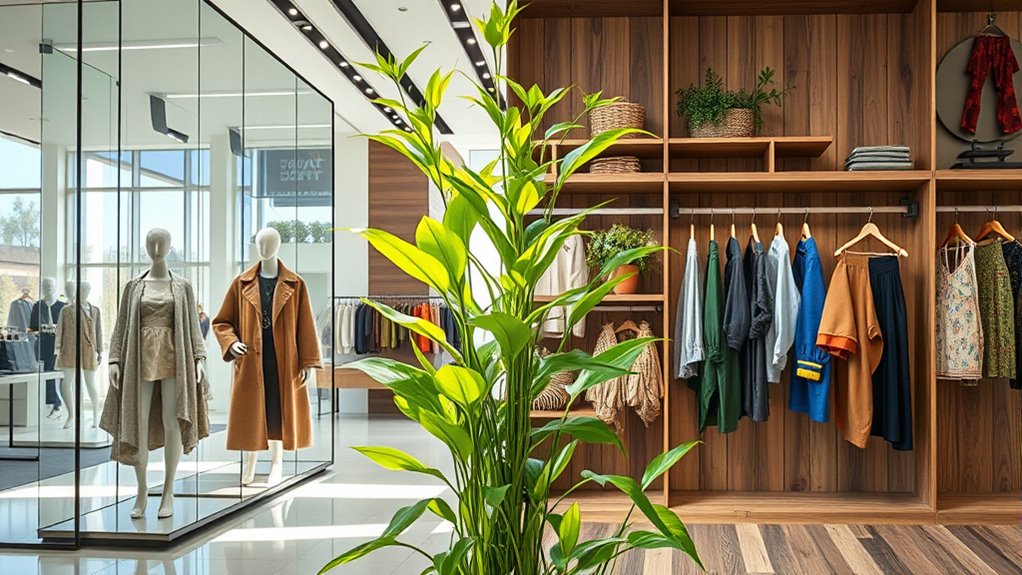

In 2025, both big and small brands are shaping sustainable fashion, but they do so differently. Large brands leverage their resources to implement widespread initiatives and influence industry standards, yet may struggle with transparency. Small brands often lead with authentic practices, local sourcing, and genuine storytelling that build trust. If you want to understand how both types are transforming fashion and how you can support responsible choices, there’s more to discover below.
Key Takeaways
- Big brands leverage their scale for widespread industry influence, but may struggle with transparency and greenwashing concerns.
- Small brands excel in transparency, authentic storytelling, and using local or recycled materials, demonstrating genuine sustainability.
- Both types drive sustainable innovation: big brands through industry-wide initiatives, small brands via local sourcing and limited editions.
- Consumer support for small brands encourages responsible practices and shifts market trends toward sustainability.
- Large brands enable large-scale sustainability efforts, while small brands provide tangible proof of ethical practices through handcrafted products.
When choosing between a big brand and a small brand, your decision often hinges on factors like trust, quality, and personal experience. In the sphere of sustainable fashion in 2025, these choices are even more critical because they reflect your values and influence the environment. Big brands typically have more resources to invest in ethical sourcing, which means they can implement thorough supplier audits, fair labor practices, and eco-friendly materials. Their scale allows for widespread impact, setting industry standards that ripple through the supply chain. However, their size can sometimes make it harder to guarantee transparency at every step, leaving consumers wary of greenwashing or superficial sustainability efforts. Small brands, on the other hand, often excel at building consumer loyalty through authentic storytelling and close-knit relationships. They tend to prioritize ethical sourcing because they are directly involved in every part of their supply chain, ensuring that their products are made responsibly. When you support a small brand, you’re more likely to see transparent practices and genuine commitments to sustainability, which can foster a stronger sense of trust. Your purchase becomes a statement of shared values, encouraging brands to uphold higher standards.
Sustainable fashion is about more than just the product; it’s about the ethos behind it. Big brands may have the advantage of scale, allowing them to push for industry-wide change, but small brands often lead by example through innovative, ethical approaches that challenge traditional practices. They might source locally or use recycled materials, cultivating a sense of community and accountability that appeals to conscious consumers. Your loyalty to these brands can help shift the market, rewarding those who prioritize ethical sourcing and transparency. In addition, understanding the role of ethical hacking in verifying claims can help consumers make more informed choices about sustainability. Your loyalty to these brands can help shift the market, rewarding those who prioritize ethical sourcing and transparency. Small brands often offer limited editions or handcrafted items, reinforcing their commitment to quality and sustainability.
Ultimately, your choice influences not only the environment but also the future of fashion. Big brands have the capacity to drive large-scale change, but small brands can often provide more immediate, tangible proof of sustainable practices. Your support—whether through purchasing, sharing stories, or advocating—can tip the scales toward a more ethical industry. As sustainability continues to evolve in 2025, it’s clear that both big and small brands play crucial roles. Your preferences and loyalty send powerful messages, encouraging brands of all sizes to prioritize ethical sourcing and build consumer trust. In this way, your choices help shape a more responsible, transparent, and sustainable fashion landscape.

Build Your Sustainable Fashion Brand: A Guided Workbook to Plan, Design & Launch Your Eco-Friendly Fashion Brand: A printable workbook for ethical fashion designers, students, and entrepreneurs
As an affiliate, we earn on qualifying purchases.
As an affiliate, we earn on qualifying purchases.
Frequently Asked Questions
How Do Small Brands Ensure Supply Chain Transparency?
To guarantee supply chain transparency, you focus on supply chain ethics by thoroughly auditing your suppliers and demanding clear documentation. You implement transparency reporting to share your sourcing practices openly, building trust with consumers. Regularly monitoring and updating your supply chain processes helps you identify and address issues promptly. By prioritizing ethical practices and clear communication, you demonstrate your commitment to sustainability and responsible fashion, setting a standard for others to follow.
What Innovative Materials Are Big Brands Investing In?
Imagine big brands investing in materials so groundbreaking, they might as well be from the future! They’re pouring resources into recycled textiles that turn waste into runway-ready fabrics, and bio-based fibers that sprout from nature itself. These innovations aren’t just trends; they’re revolutionizing fashion. By embracing these materials, big brands are leading the charge toward sustainability, making your wardrobe more eco-friendly and cutting-edge than ever before.
How Do Consumer Perceptions Differ Between Big and Small Brands?
You might notice that consumer perceptions vary between big and small brands. With big brands, you often see a focus on brand loyalty and widespread recognition, but some may question their eco consciousness. Small brands, on the other hand, tend to be seen as more authentic and eco-friendly, which appeals to your eco-conscious values. Your perception is shaped by how genuine and committed each brand appears in their sustainability efforts.
Which Brands Have the Most Ambitious Sustainability Goals?
You’ll find that brands with the most ambitious sustainability goals prioritize sustainable sourcing and eco-friendly packaging. They actively work to reduce their environmental impact by sourcing materials responsibly and adopting innovative packaging solutions. These brands often set clear targets for carbon reduction and waste management, inspiring you to support companies that genuinely commit to sustainability. By choosing such brands, you’re contributing to a more eco-conscious fashion industry, making a positive difference with your choices.
How Does Pricing Impact Sustainable Choices for Consumers?
It’s no coincidence that your choices often hinge on price sensitivity, as affordability barriers can steer you away from sustainable fashion. When eco-friendly options cost more, you might opt for cheaper, less sustainable pieces, making your decision less about values and more about budget. This dynamic impacts your ability to support brands committed to sustainability, highlighting how pricing directly influences sustainable choices and your overall impact.

Organic Basics Mens True Organic Cotton Short-Sleeve Crewneck Tee Shirt 3-Pack, White, X-Large
Short-sleeve crewneck tee shirt.
As an affiliate, we earn on qualifying purchases.
As an affiliate, we earn on qualifying purchases.
Conclusion
In 2025, you see big brands racing to go green, but small brands still hold the torch for authenticity. While the giants have the resources, it’s the tiny brands that often lead with genuine passion—like the OG artisans from the Renaissance, reminding us that sustainability isn’t just a trend but a timeless value. So, stay savvy and support those who prioritize the planet; true change happens when you choose wisely, not just widely.

Goktvai Natural Bodhi Wood Beaded Keychain, Brown Handmade Lucky Key Ring Handcraft Purse Charms Pendant Decoration for Women Bag Phone Charms
Package Lists: You will receive 1 piece of wood beaded keychain, measuring 3.2cm/1.26in diameter. It is perfect as…
As an affiliate, we earn on qualifying purchases.
As an affiliate, we earn on qualifying purchases.

Local Egg Dealer Chicken Sustainable Farming T-Shirt, Small, Black
Egg Dealer! Show your support for local egg farmers and promote responsible farming methods! Whether you're an urban…
As an affiliate, we earn on qualifying purchases.
As an affiliate, we earn on qualifying purchases.