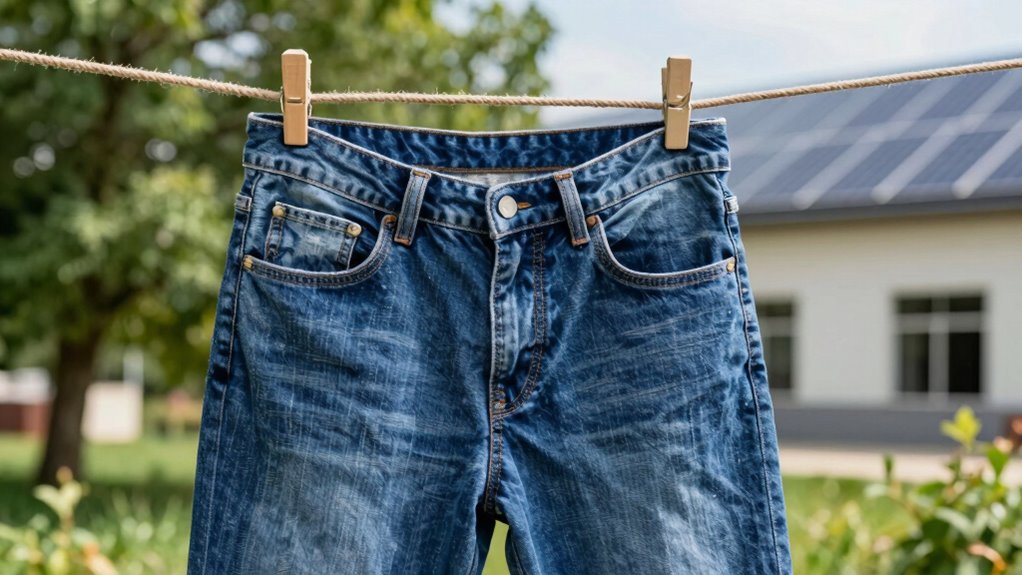
Sustainable denim production is evolving with new water-saving techniques like closed-loop systems that recycle water, cutting overall use. Eco-friendly dyes, including natural and biodegradable options, reduce pollution and chemical waste. Advanced technologies such as digital printing and ozone washing lower dye and chemical use while minimizing environmental harm. Plus, sustainable materials like recycled fibers and organic cotton are gaining popularity. If you want to see how these innovations are shaping the future of denim, keep exploring this exciting progress.
Key Takeaways
- Water-saving techniques like closed-loop systems significantly reduce water consumption during denim manufacturing.
- Adoption of eco-friendly, biodegradable dyes minimizes chemical pollution in production processes.
- Innovative technologies such as digital printing and ozone washing lessen dye and chemical use.
- Increased use of recycled fibers, organic cotton, and sustainable fabrics decreases environmental impact.
- Consumer demand for eco-conscious denim drives industry innovation and promotes sustainable practices.
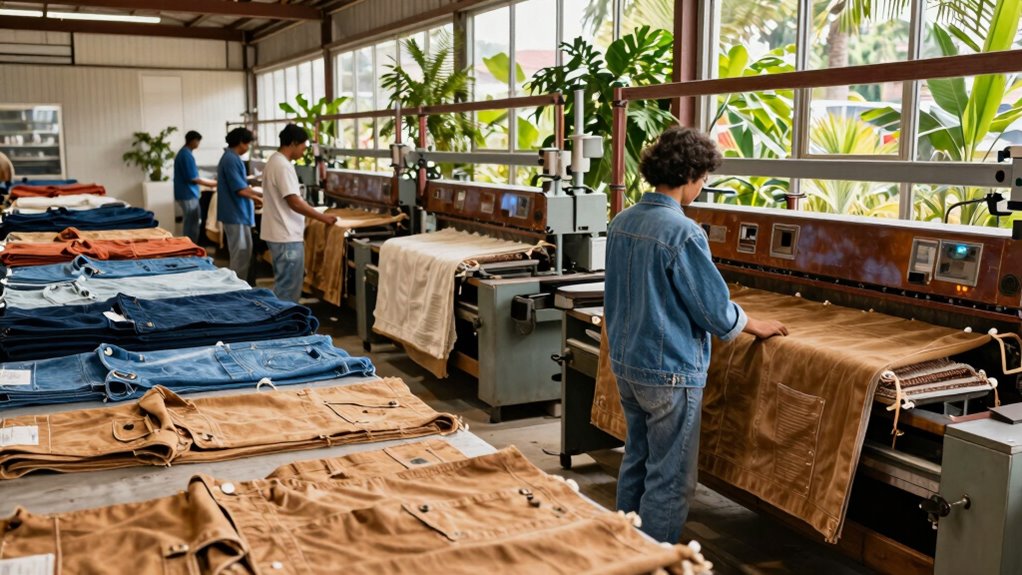
As awareness of environmental impacts grows, sustainable denim production has become more than just a trend—it’s a necessity. You’re now part of a movement that values eco-conscious choices, and manufacturers are responding by adopting innovative practices. One of the biggest shifts is the focus on water conservation. Traditional denim manufacturing consumes vast amounts of water, often wasting it during processes like washing and dyeing. Today, many brands are implementing water-saving techniques such as closed-loop systems, which recycle water repeatedly to minimize waste. These methods drastically reduce water consumption, helping conserve this vital resource and lessen the environmental footprint of your favorite jeans.
Sustainable denim minimizes water waste through innovative techniques like closed-loop systems, reducing environmental impact and conserving vital resources.
Alongside water conservation, eco-friendly dyes are transforming denim production. Conventional dyes can be toxic, polluting waterways and harming ecosystems. In response, producers are shifting toward natural, plant-based, and low-impact dyes that are safer for the environment. These eco-friendly dyes require less energy and water during application and often produce less wastewater contaminated with harmful chemicals. When you choose denim made with these dyes, you reduce the release of pollutants and support sustainable practices. It’s a small change on your part, but it signifies a larger move toward cleaner, greener fashion. Additionally, some manufacturers are exploring biodegradable dyes that break down more easily in the environment, further reducing ecological impacts.
You also notice that brands are investing in technology to make dyeing processes more sustainable. For example, digital printing techniques use less dye overall and allow for more precise application, decreasing waste. Similarly, techniques like ozone washing reduce the need for harsh chemicals and excessive water, further supporting sustainability. Incorporating advanced manufacturing techniques helps further decrease the environmental impact of denim production.
Beyond water and dyes, the industry is exploring new materials and methods. Recycled fibers, organic cotton, and innovative fabrics made from renewable resources are becoming more common. These alternatives lessen the reliance on conventional cotton, which often involves heavy pesticide and water use. By choosing denim produced with these sustainable materials, you’re advocating for a more sustainable supply chain that prioritizes environmental health. As the industry continues to innovate, these materials also improve the durability and comfort of your jeans, making sustainable choices more appealing and practical.
The evolution of sustainable denim production isn’t just about adopting new technology — it’s about rethinking how jeans are made from start to finish. As a consumer, your demand for responsibly produced denim encourages brands to continue innovating. When you select eco-friendly options, you’re contributing to a cycle of positive change, supporting practices that conserve water, reduce pollution, and promote environmental stewardship. By being conscious of these advancements, you help shape a future where denim is not only stylish but also sustainable in every stitch.
sustainable denim jeans
As an affiliate, we earn on qualifying purchases.
As an affiliate, we earn on qualifying purchases.
Frequently Asked Questions
How Does Sustainable Denim Impact Overall Fashion Industry Practices?
You see sustainable denim pushing the fashion industry toward more eco-friendly practices. By adopting eco-friendly dyes, brands reduce chemical waste and lessen environmental harm. Water conservation efforts in denim production mean less water usage, helping preserve essential resources. As you support sustainable denim, you encourage brands to prioritize eco-conscious methods, leading to broader industry changes. This shift promotes a greener, more responsible fashion industry that values environmental health and sustainability.
What Are the Main Challenges in Scaling Sustainable Denim Production?
Scaling sustainable denim production is like trying to tame a wild horse—challenging but rewarding. You face obstacles like limited access to eco-friendly dyes and the high costs of water conservation methods. Achieving large-scale change requires balancing environmental benefits with affordability. Overcoming these hurdles means investing in innovative technologies and fostering industry collaboration, helping you turn sustainable practices into the new standard rather than an exception.
How Do Consumers Influence Sustainable Denim Innovation?
Your awareness of eco-friendly materials and sustainability drives innovation in denim. When you choose sustainable denim options, you encourage brands to invest in eco-conscious practices and materials. Your demand for transparency pushes companies to develop new, sustainable technologies. By prioritizing eco-friendly materials, you directly influence the industry to create more sustainable, innovative denim products that align with your values, fostering a greener future for fashion.
Are There Certifications to Verify Sustainable Denim Claims?
The proof is in the pudding, and certifications verify sustainable denim claims. You should look for certifications like GOTS, Fair Trade, and OEKO-TEX, which guarantee compliance with strict standards. These standards focus on supply chain transparency, eco-friendly processes, and fair labor practices. By checking for these certifications, you can confidently support brands committed to genuine sustainability and avoid greenwashing.
What Future Technologies Could Revolutionize Denim Sustainability?
Future technologies like innovative dyes and waterless finishes could revolutionize denim sustainability. You might see dyes that use less water and energy, reducing pollution and resource consumption. Waterless finishes eliminate the need for large amounts of water in the processing stage, making production more eco-friendly. These advancements help you choose denim that’s better for the planet, supporting sustainable practices while still enjoying stylish, high-quality jeans.
eco-friendly organic cotton denim
As an affiliate, we earn on qualifying purchases.
As an affiliate, we earn on qualifying purchases.
Conclusion
As you explore the evolving world of sustainable denim, remember that change often starts with small steps. Innovations like eco-friendly dyes and recycled materials are making a big difference. Keep in mind the saying, “A journey of a thousand miles begins with a single step.” By supporting brands committed to sustainability, you contribute to a greener future. Embrace these changes, and together, we can turn the tide toward more responsible denim production.
recycled fiber denim jacket
As an affiliate, we earn on qualifying purchases.
As an affiliate, we earn on qualifying purchases.
biodegradable dye denim
As an affiliate, we earn on qualifying purchases.
As an affiliate, we earn on qualifying purchases.