
TL;DR

Prime made for students and young adults
- Fast, free delivery for dorm and study essentials
- Prime Video and Amazon Music included
- Member-only deals
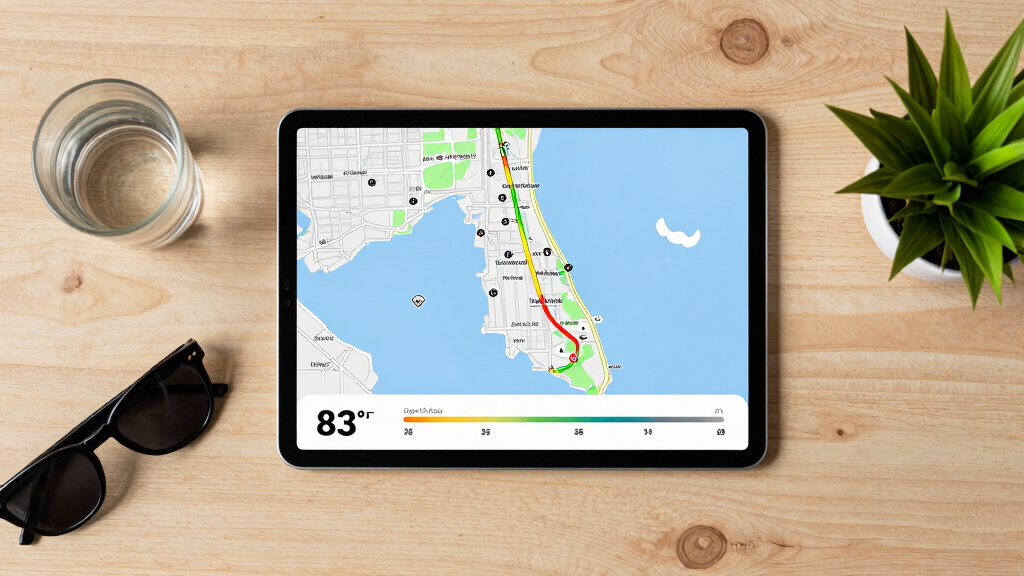
A market-based prediction indicates ongoing speculation about whether Chicago’s temperature will be below 83°F on July 20, 2026. No official weather forecast or scientific projection confirms this yet, making the outcome uncertain.
Market activity on Kalshi indicates ongoing speculation about whether Chicago’s high temperature on July 20, 2026, will be below 83°F. No official meteorological forecast or scientific projection currently confirms this temperature threshold, making the outcome uncertain.
Recent trading on Kalshi, a prediction market platform, shows 21 trades related to whether Chicago’s temperature will be below 83°F on July 20, 2026. These trades reflect market participants’ expectations but do not constitute scientific forecasts or official weather predictions.
There is no publicly available, authoritative forecast from meteorological agencies or climate models for that specific date, as it is nearly three years in the future. Weather predictions at such long lead times are inherently uncertain and typically unreliable. For example, you can check the forecast for LA’s high temperature or other specific locations.
The market’s activity suggests some level of interest or speculation, but it remains a form of betting rather than an evidence-based forecast. Experts emphasize that climate and weather predictions beyond a few months are highly uncertain and should be interpreted with caution.
Implications of Market-Based Weather Predictions for Public Understanding
This situation highlights how prediction markets can reflect public sentiment or speculation about future weather conditions but are not substitutes for scientific forecasts. The uncertainty underscores the limitations of long-term weather and climate predictions, which are critical for planning and policy decisions.
For residents and policymakers, understanding that such market bets do not confirm actual weather outcomes is essential. It also illustrates the growing role of financial markets in gauging expectations, even if they lack scientific validation.
Popular right now

KitchenAid Artisan 5-Qt Tilt Head Stand Mixer, Milkshake

Samsung 48 4K OLED Smart TV (2026) with WireLogic 8ft Ultra High Speed HDMI Cable

Dyson V8 Cyclone Cordless Vacuum
As an affiliate, we earn on qualifying purchases.
Long-Term Weather Forecasting Challenges for July 2026
Forecasting weather three years in advance is not currently feasible with existing meteorological science. While climate models can project long-term trends, they cannot predict specific daily temperatures with precision that far ahead.
The current market activity is likely driven by speculation, curiosity, or attempts to gauge public sentiment rather than scientific evidence. Historically, weather forecasts beyond a year are unreliable, and predictions for specific days are usually only accurate within a few days to weeks.
Kalshi’s prediction market for this event is part of a broader trend where financial instruments are used to speculate on future events, including weather, but these are not scientifically validated forecasts.
“Long-range weather predictions for a specific day three years out are not scientifically reliable. Markets may reflect speculation, but they do not replace meteorological science.”
— Dr. Lisa Reynolds, Meteorologist
Limitations of Long-Term Temperature Forecasts for 2026
There is no scientific consensus or official forecast confirming whether Chicago’s temperature will be below 83°F on July 20, 2026. Weather prediction models cannot reliably forecast specific daily temperatures beyond a few weeks, let alone years.
Market activity reflects speculation, not scientific certainty, and should not be interpreted as an authoritative forecast. The actual weather outcome remains highly uncertain at this stage.
Monitoring Scientific Forecasts and Market Trends for July 2026
In the coming months, meteorological agencies will provide seasonal outlooks that may give general climate trends but will not specify daily temperatures for July 2026. As the date approaches, more precise weather forecasts will become available, typically within a week or so of the event.
Market activity may continue to fluctuate based on speculation, but it will not replace scientific forecast updates. Stakeholders should rely on official weather services for accurate information as the date nears.
Key Questions
Can the weather forecast for July 20, 2026, be accurate now?
No, current meteorological science does not support accurate predictions of specific daily temperatures three years in advance. Forecasts at this scale are inherently unreliable.
What does the market activity indicate about future weather expectations?
The market activity reflects speculation and public interest but does not constitute a scientific forecast. It shows what participants believe might happen, not what will definitely occur.
Why is there no official forecast for July 2026 now?
Weather models cannot reliably predict specific conditions so far in advance. Seasonal outlooks may provide general trends but not precise daily temperatures for that date.
Should I trust market bets on future weather conditions?
No, prediction markets are for entertainment and speculation. They are not substitutes for scientific weather forecasts from trusted agencies.
When will we know the actual weather for July 20, 2026?
Official forecasts are typically available within a week of the date, with increasing accuracy as the date approaches.
Source: kalshi