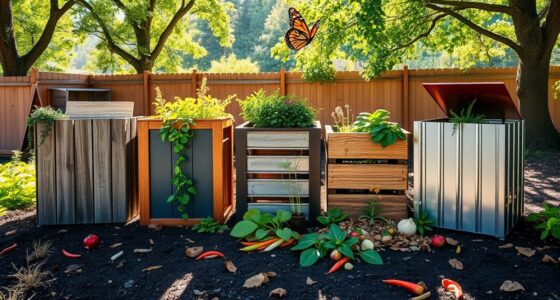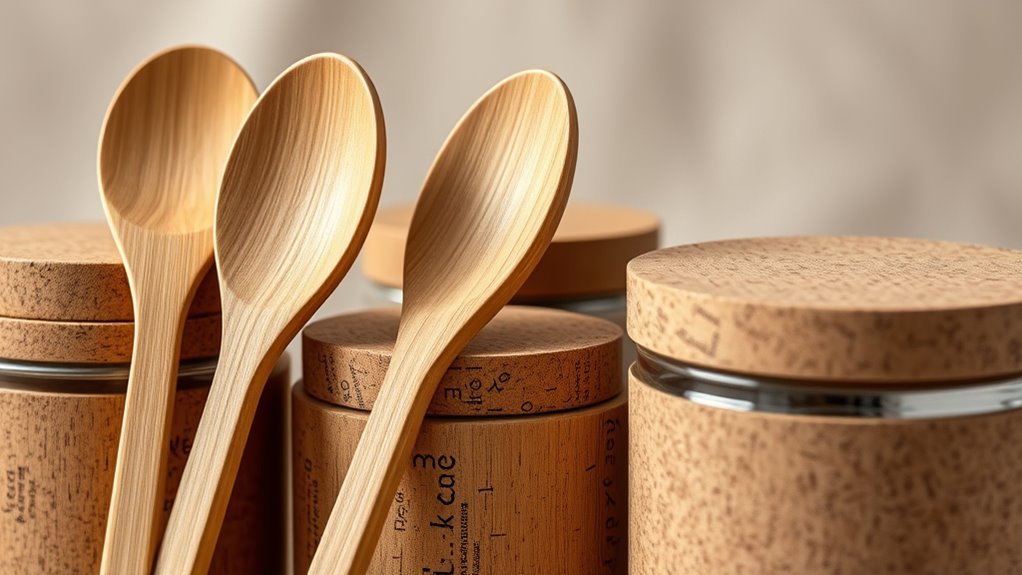

Bamboo and cork are transforming products you use daily because they’re renewable and eco-friendly. Bamboo grows quickly and can be harvested without damaging the plant, making it a sustainable choice. Cork is harvested from bark without harming trees, ensuring long-term growth and environment health. Both materials help reduce plastic waste and support climate change efforts through carbon capture. Keep exploring how these versatile resources are making a positive difference for your world.
Key Takeaways
- Bamboo and cork are rapidly renewable resources, supporting sustainable production and reducing environmental impact.
- Both materials are biodegradable, recyclable, and suitable for eco-friendly packaging and product design.
- Their harvesting methods promote biodiversity and do not harm mature trees or ecosystems.
- These materials help mitigate climate change through carbon sequestration and sustainable land management.
- Increasing adoption of bamboo and cork in various industries underscores their role as eco-conscious alternatives.

As the world seeks sustainable alternatives, bamboo and cork stand out as renewable materials with versatile uses. These natural resources are transforming industries by offering eco-friendly options that help reduce environmental impact. When you choose products made from bamboo or cork, you’re supporting sustainable farming practices that emphasize responsible harvesting and minimal land disturbance. Bamboo, in particular, grows incredibly fast—some varieties can reach maturity in just three to five years—making it a highly renewable resource. Its rapid growth means you can harvest it without depleting the plant, ensuring the land remains healthy and productive. Similarly, cork is harvested from the bark of cork oak trees without cutting them down, allowing the trees to continue absorbing carbon dioxide and thriving for decades. This sustainable harvesting method not only preserves the trees but also encourages the ongoing growth of cork forests, which play a crucial role in maintaining biodiversity and combating climate change. Additionally, the cultivation of these materials supports carbon sequestration efforts, helping mitigate climate change impacts.
In the domain of packaging, bamboo and cork shine as eco-friendly alternatives to traditional materials like plastic and cardboard. When you opt for eco-friendly packaging made from bamboo, you choose a product that’s biodegradable and often produced with a lower carbon footprint. Bamboo packaging options include everything from cutlery to boxes, all designed to decompose naturally once disposed of, reducing landfill waste. Cork also excels in packaging solutions, especially as a lightweight, durable, and sustainable material. Cork stoppers, for example, have long been used in wine bottles, but now you can also find cork-based packaging materials that provide cushioning and protection without harming the environment. Both materials are easily recyclable and can be reused in multiple ways, aligning perfectly with zero-waste initiatives.

ChangBERT Induction Cooktop NSF Certified Professional Chef Edition Stove, 1800W Commericial Induction Burner with Schott Glass, Large Heating Coil Electric Hot Plate for Restaurant Hotel Food Station
HIGH EFFICIENCY AND NO HOT KITCHEN. Induction technology delivers energy directly to the cookware—with 83% energy efficiency rating,...
As an affiliate, we earn on qualifying purchases.
Frequently Asked Questions
How Long Does It Take for Bamboo and Cork to Mature?
Bamboo typically reaches its harvesting age within 3 to 5 years, depending on the species and growth conditions, making its growth timeline quite rapid. Cork trees, on the other hand, take about 25 years to mature enough for the first harvest, with regular harvesting occurring every 9 to 12 years afterward. You can expect a faster growth timeline for bamboo, whereas cork requires patience for sustainable harvesting.
Are Bamboo and Cork Environmentally Friendly to Harvest Sustainably?
You’ll be pleased to know that bamboo and cork are highly environmentally friendly to harvest sustainably. For example, over 90% of bamboo is harvested annually without killing the plant, allowing for continuous growth. Sustainable harvesting practices minimize environmental impact by reducing deforestation and conserving ecosystems. By choosing these materials, you actively support eco-friendly initiatives, promoting renewable resources with a lower environmental footprint and encouraging responsible management of natural resources.
Can Bamboo and Cork Be Recycled or Composted After Use?
You can recycle bamboo and cork, but recycling processes vary depending on the product and local facilities. Cork, especially natural cork, has good composting potential since it’s biodegradable and can break down naturally over time. Bamboo items may be composted if they’re untreated, but processed bamboo often isn’t suitable for composting. Always check local guidelines to guarantee proper disposal, and consider repurposing or recycling options first.
What Are the Cost Differences Between Bamboo, Cork, and Traditional Materials?
You’ll find that bamboo generally offers a cost comparison favoring affordability, making it a budget-friendly choice for many products. Cork tends to be slightly more expensive due to its harvesting process, but it still remains a sustainable option. Traditional materials like hardwood or plastics often cost more or less depending on quality and sourcing. Overall, bamboo and cork provide eco-friendly alternatives that can be more cost-effective, especially when considering long-term environmental benefits.
How Do Bamboo and Cork Perform in Extreme Weather Conditions?
You’ll find that bamboo and cork perform well in extreme weather conditions due to their weather resilience and material durability. Bamboo resists moisture and pests, making it suitable for humid environments, while cork’s natural elasticity helps it withstand temperature fluctuations and heavy impacts. Both materials maintain their integrity over time, offering reliable durability. However, proper treatment and installation are essential to maximize their performance in severe weather.

Jackery Portable Power Station Explorer 300, 293Wh Backup Lithium Battery, Solar Generator for Outdoors Camping Travel Hunting Blackout (Solar Panel Optional)
SPEED UP YOUR RECHARGEABILITY: It takes only 2 hours to recharge 80% battery of the power station through...
As an affiliate, we earn on qualifying purchases.
Conclusion
As you embrace bamboo and cork, you’re supporting sustainable choices that help reduce environmental impact. Did you know that bamboo can grow up to 35 inches in a single day, making it one of the fastest-growing plants on Earth? By choosing products made from these renewable materials, you’re not only benefiting the planet but also embracing innovation and eco-friendly living. Every small step counts—so go ahead, make the switch today!

Anker 737 Power Bank, 140W Max 3-Port Laptop Portable Charger, 24,000mAh, Smart Display, Compatible with iPhone 16 / 15 / 14 Series, Vision Pro, Samsung, MacBook, and More
Power Through Your Day: With a 24,000mAh capacity, this laptop power bank can charge an iPhone 16 Pro...
As an affiliate, we earn on qualifying purchases.

Jackery Explorer 2000 v2 Portable Power Station, 2042Wh LiFePO4 Home Backup Battery, 2200W Solar Generator, USB-C PD 100W Fast Charging for Emergencies, Power Outages, Camping(Solar Panel Optional)
High-Capacity Power Solution: With 3 AC ports delivering a total output of 2200W and a massive 2042Wh capacity,...
As an affiliate, we earn on qualifying purchases.